

Getting the roofline dimensions right
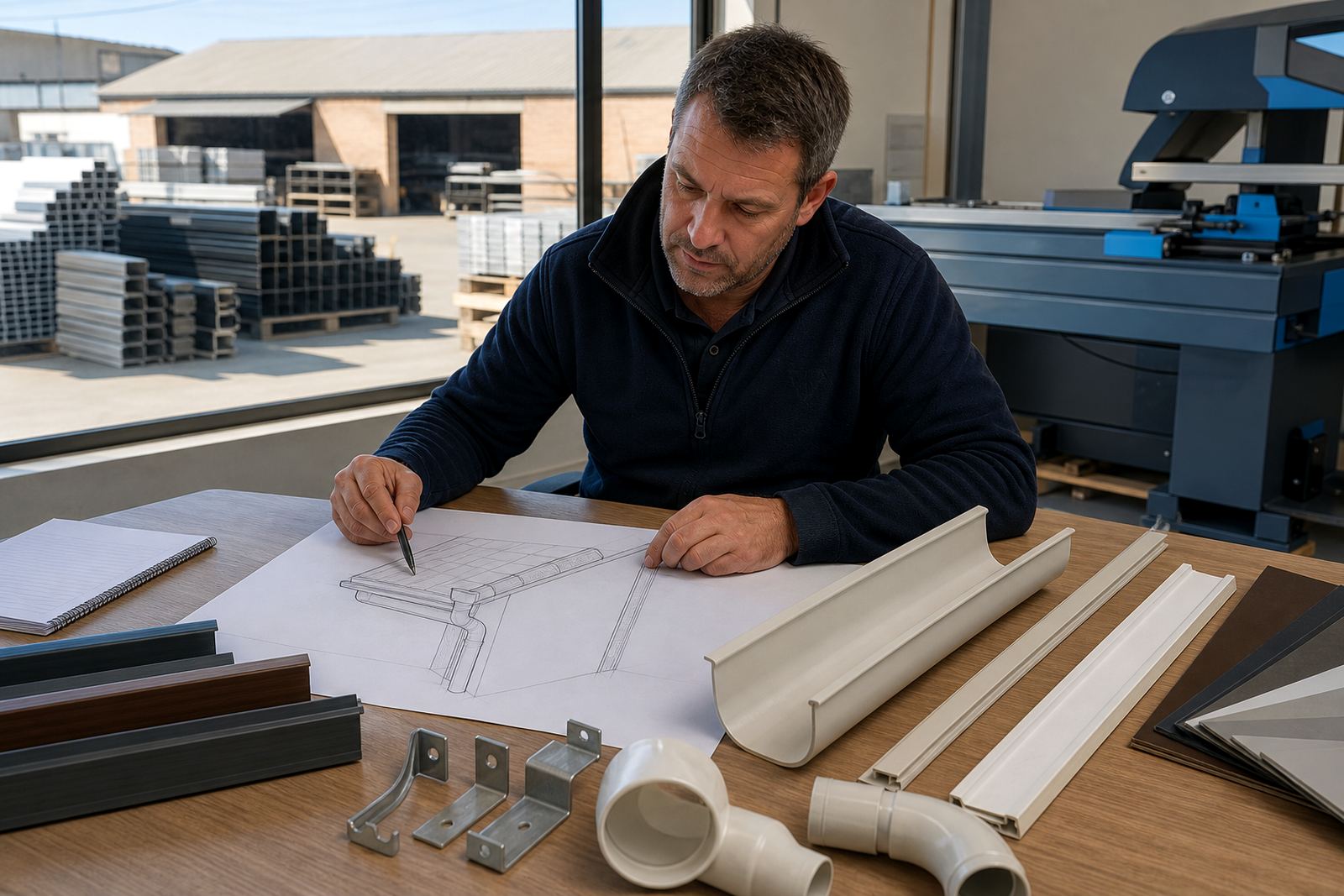
Good roofline work starts with accurate measuring. The gutter run, fascia length, corner returns and downpipe positions all need to match the roof shape, pitch and outlet points. On homes in Johannesburg or Pretoria, a neat install usually depends on clean lines and correct fall. On coastal jobs in Durban or Cape Town, the fixing layout also has to cope with wind, salt and heavier weather shifts.
Avoiding short cuts on the first measure is where both builders and homeowners are better off. A proper takeoff helps with ordering the right lengths, joins, outlets and brackets, and it reduces waste on site.
Choosing between gutter, fascia and downpipe options
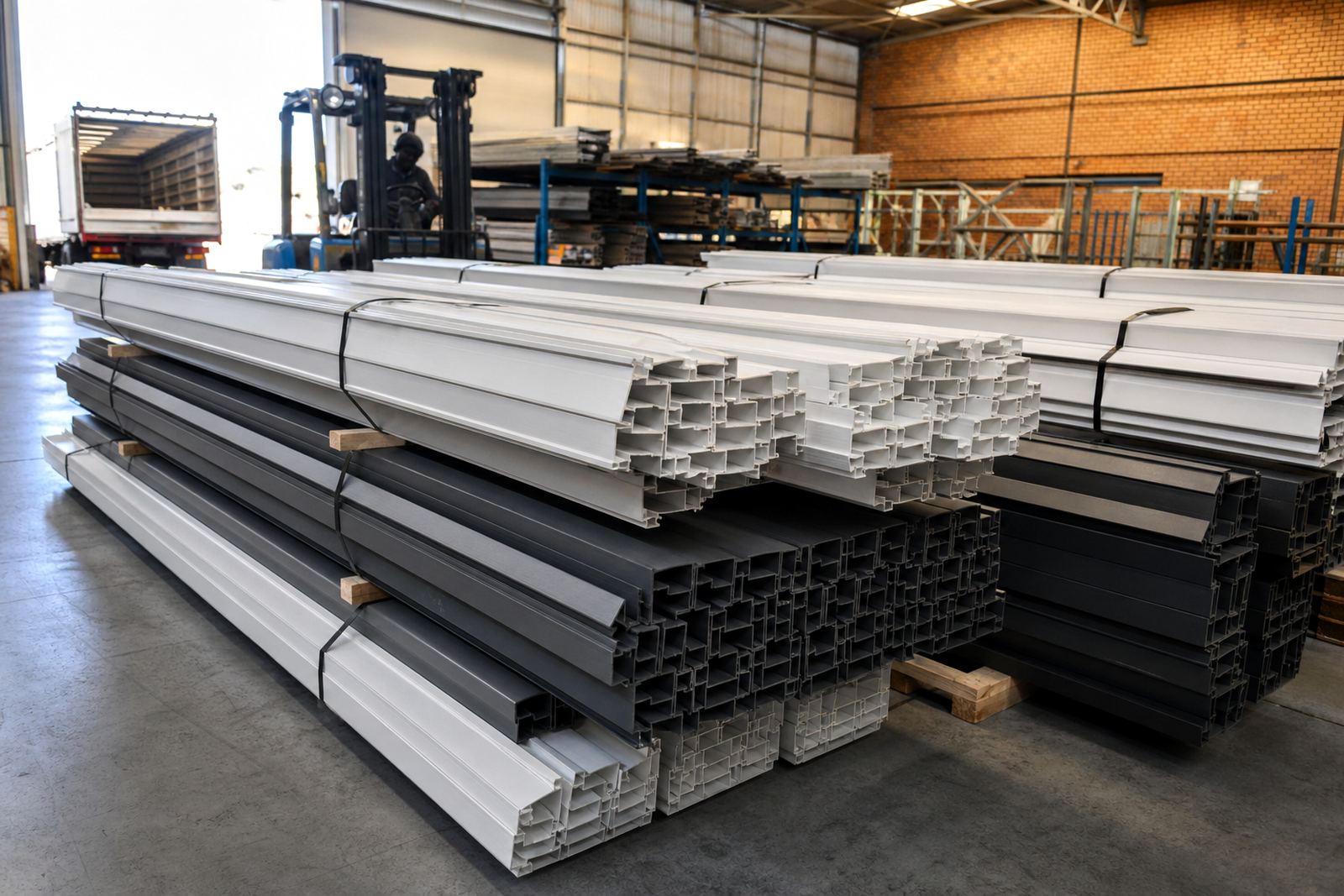
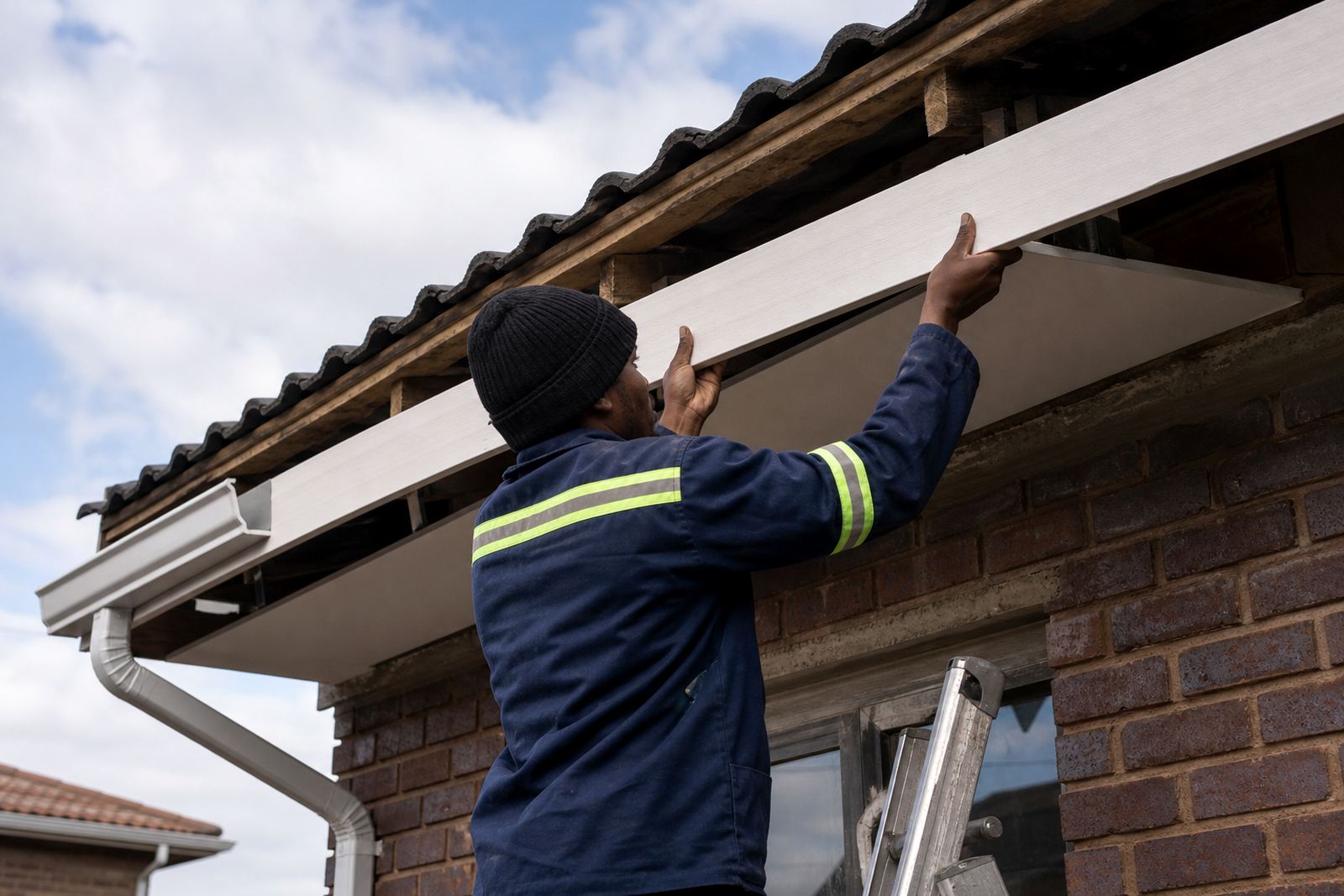
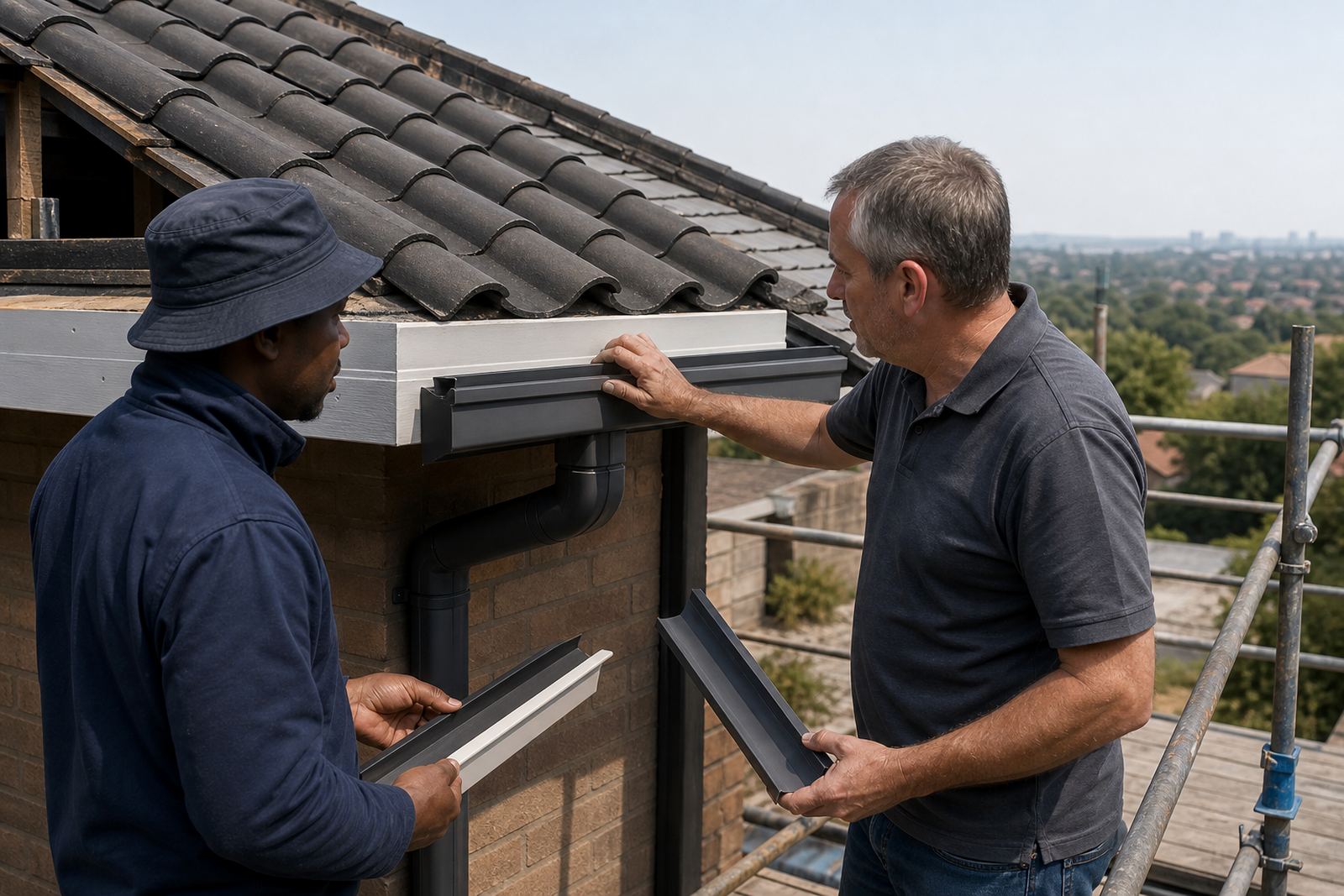
Plastic-steel composite roofline materials are used where a strong, neat finish is needed with less fuss than heavy metal systems. Fascia boards cover the rafter ends and carry the gutter line, while gutters collect rainwater and downpipes move it away from the building. The right choice depends on roof size, exposure and the way the water must discharge.
- Standard domestic runs often suit 125 mm gutters with 75 mm downpipes.
- Larger roof areas may need wider gutters or additional outlets to handle heavy rain.
- Longer runs need planned falls so water moves steadily to the outlet.
- Corner pieces, stop ends and unions must match the layout, not just the roof length.
Falls, brackets and the details that keep water moving
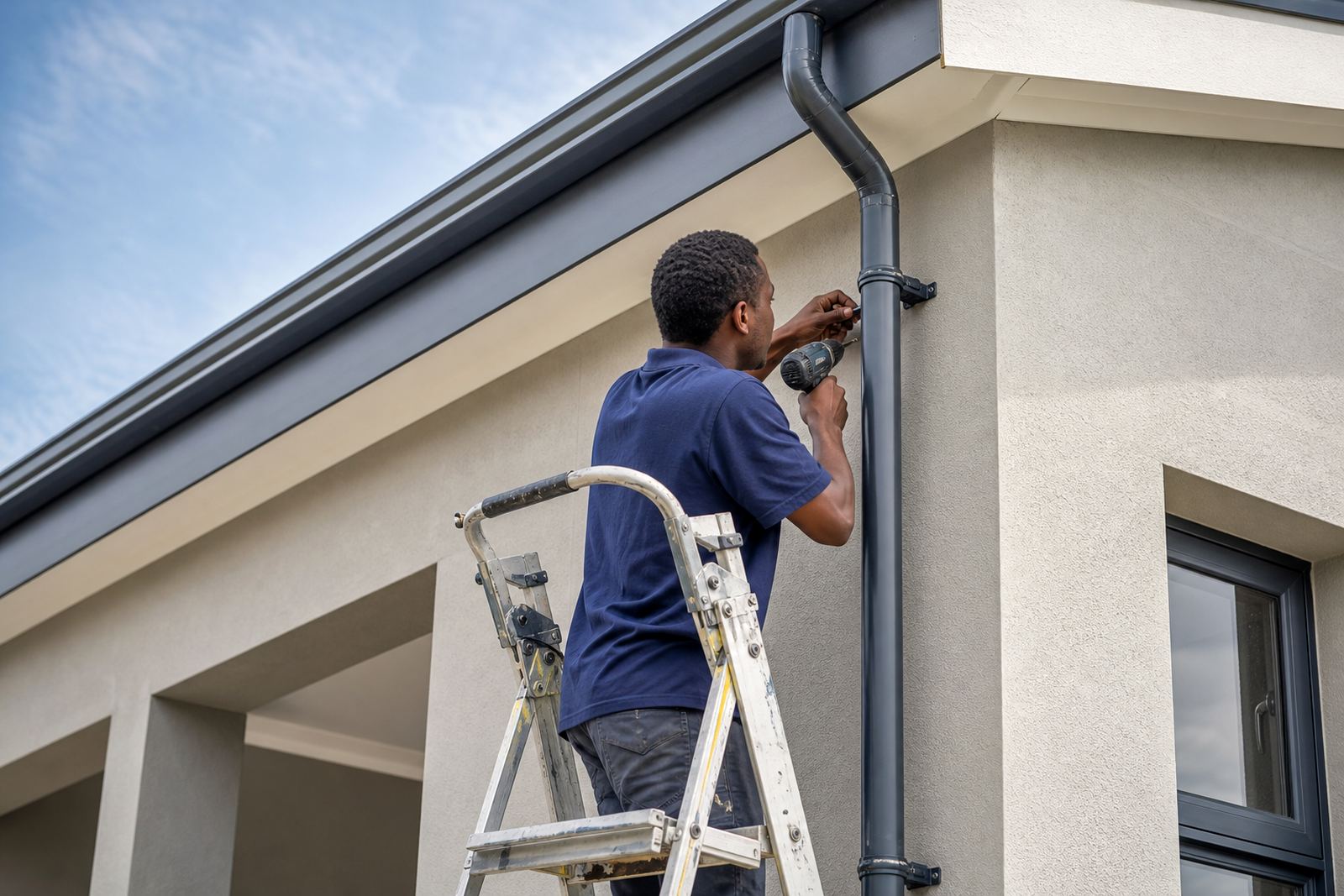
Gutters need a measured fall towards the outlet so standing water does not sit in the line. If the fall is too flat, leaves and silt collect. If it is too steep, the line can look uneven and the water may move too fast at the outlet point. Brackets should be spaced to suit the profile and the expected load, with extra support near joints, ends and downpipe drops.
In high rainfall areas and on long roof runs, spacing and alignment matter even more. A clean bracket line also helps the fascia board stay straight and the gutter sit properly against the roof edge.
Safe installation at height
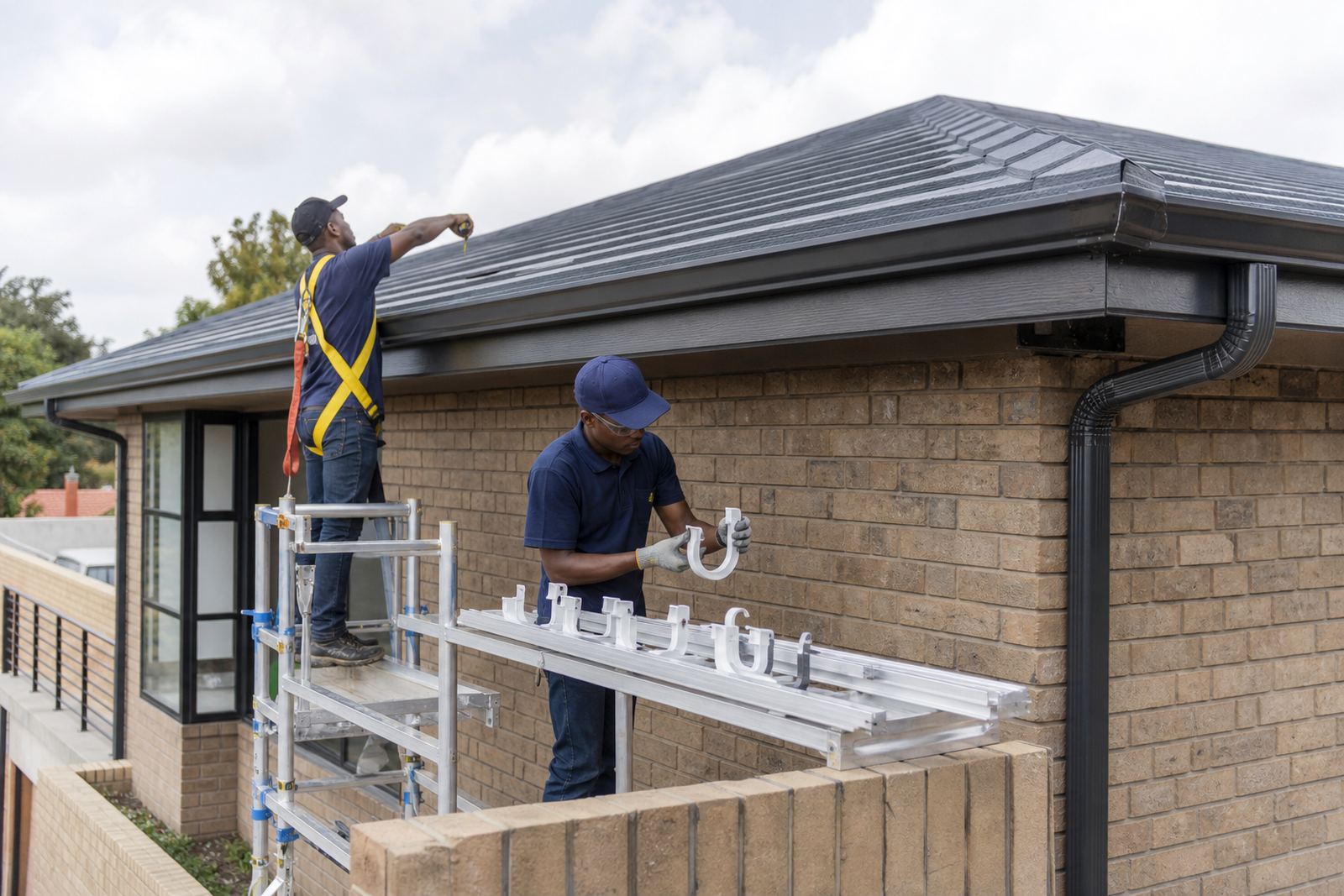
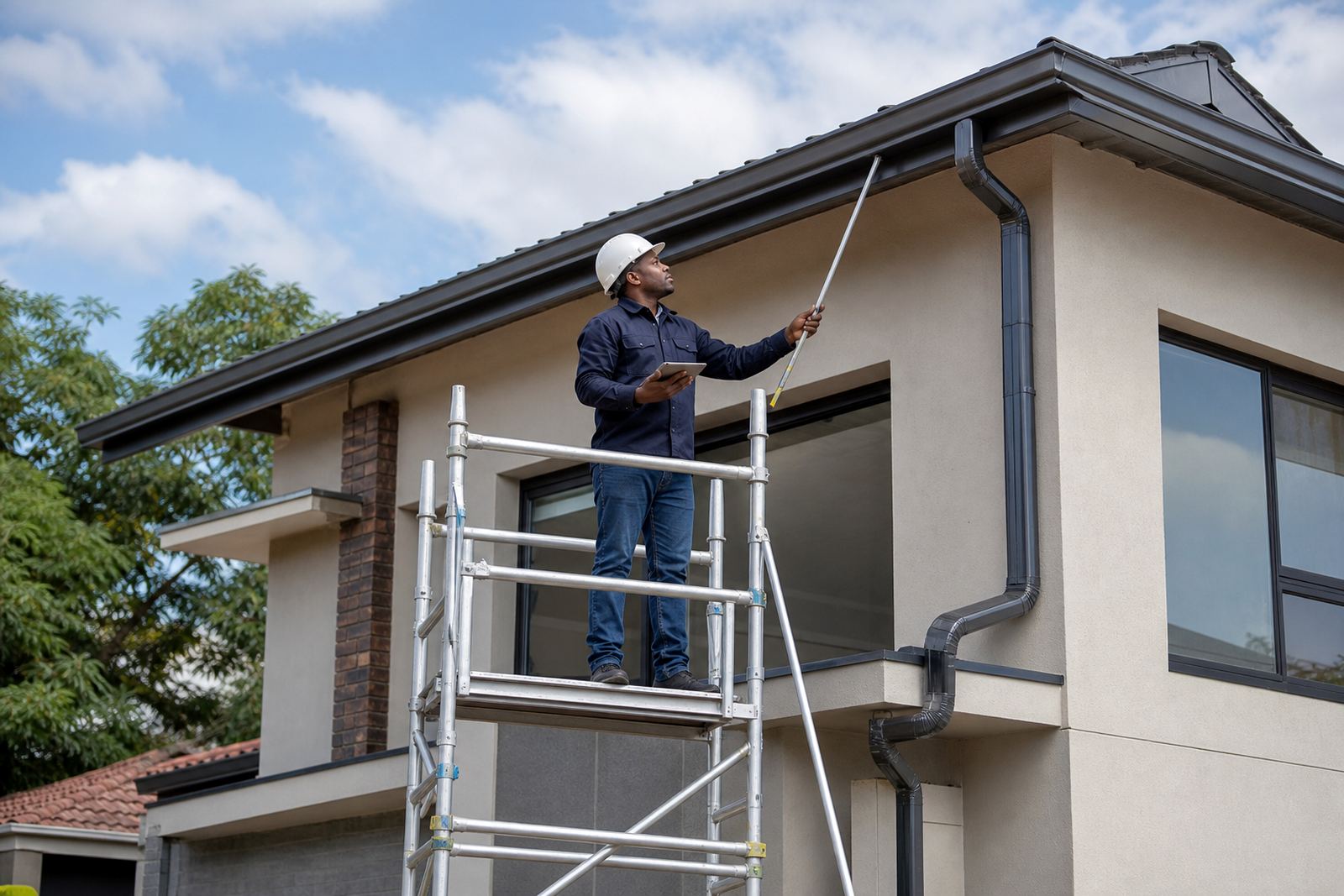
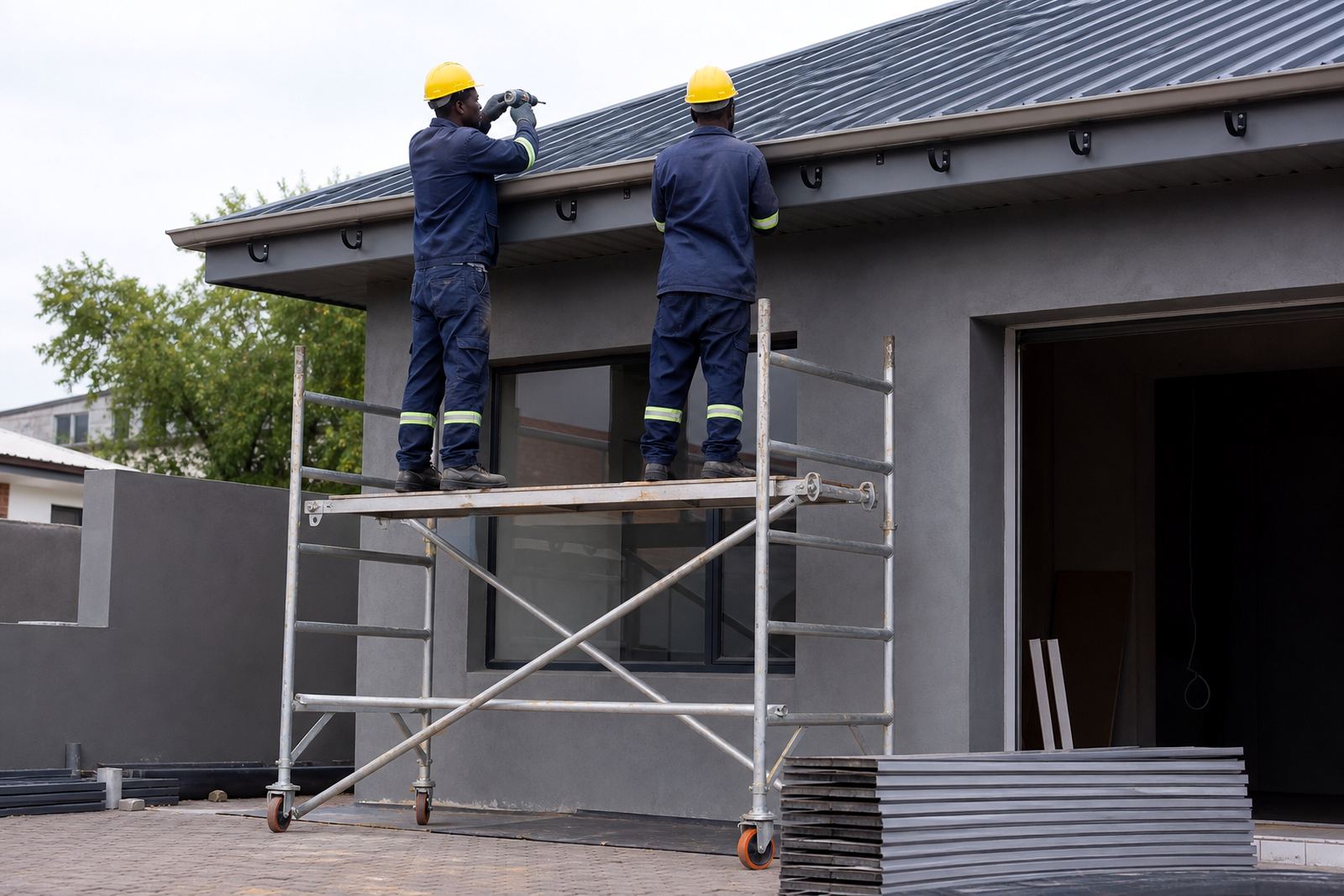
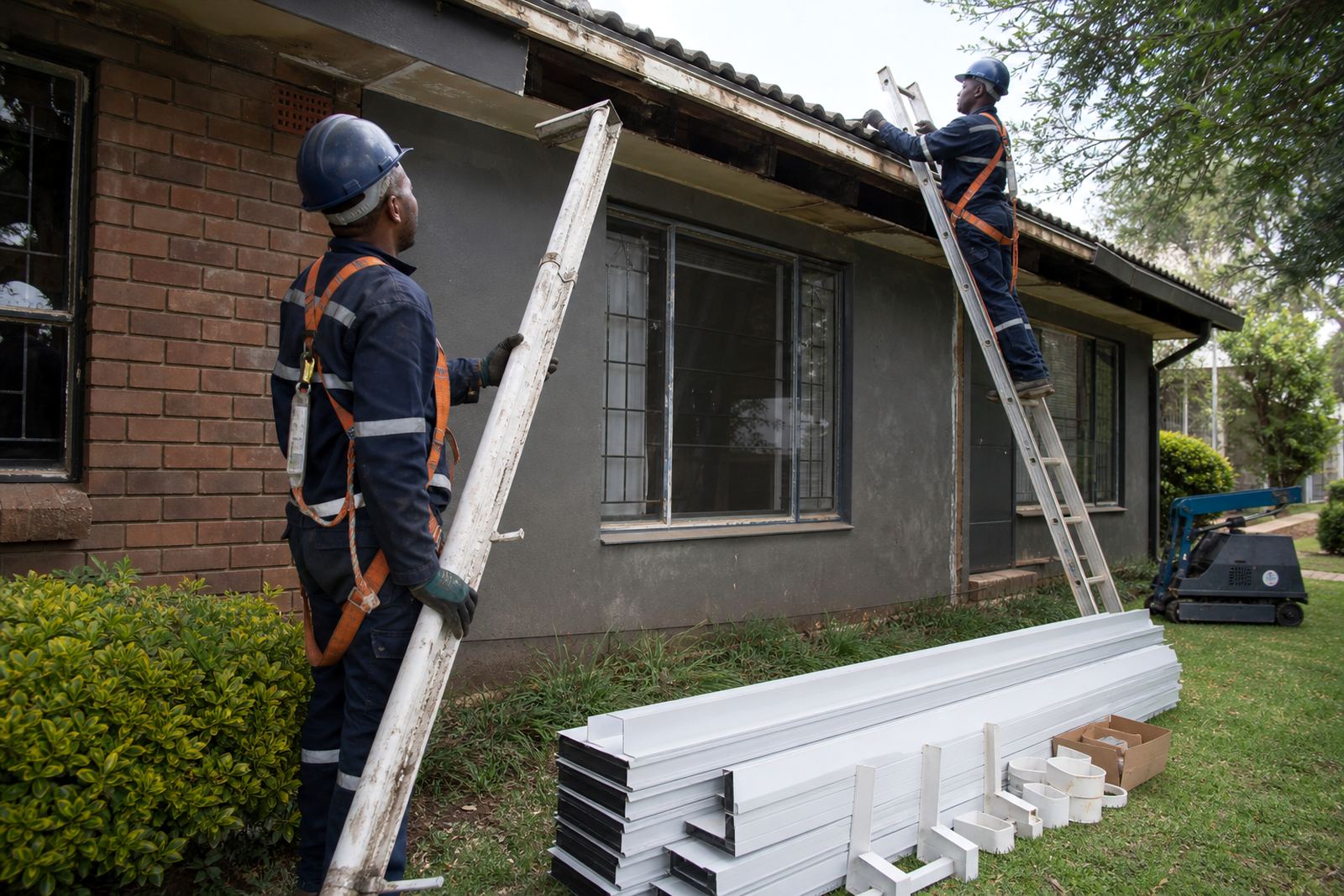
Roofline installation must be done safely by competent people using suitable equipment and methods. That includes safe access, stable ladders or access platforms, correct fall protection where needed, and careful handling of long lengths on site. Loose debris, slippery surfaces and sudden wind can make height work hazardous, especially on steep roofs or during wet weather.
- Check access around the building before lifting materials up.
- Keep tools and fixings organised to avoid dropped items.
- Protect finished wall surfaces and paving during installation.
- Use the right method for the roof pitch and the working height.
What maintenance usually involves
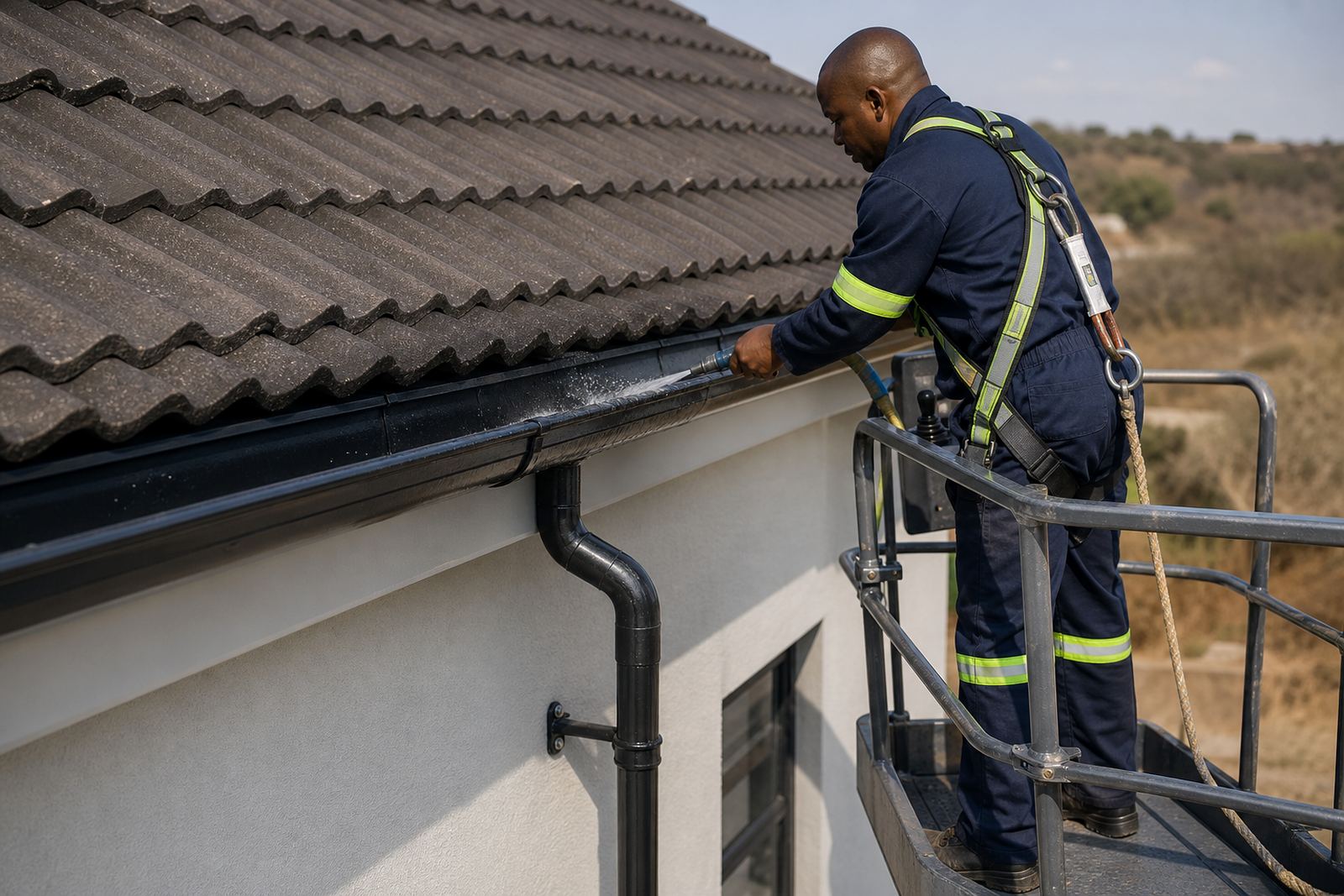
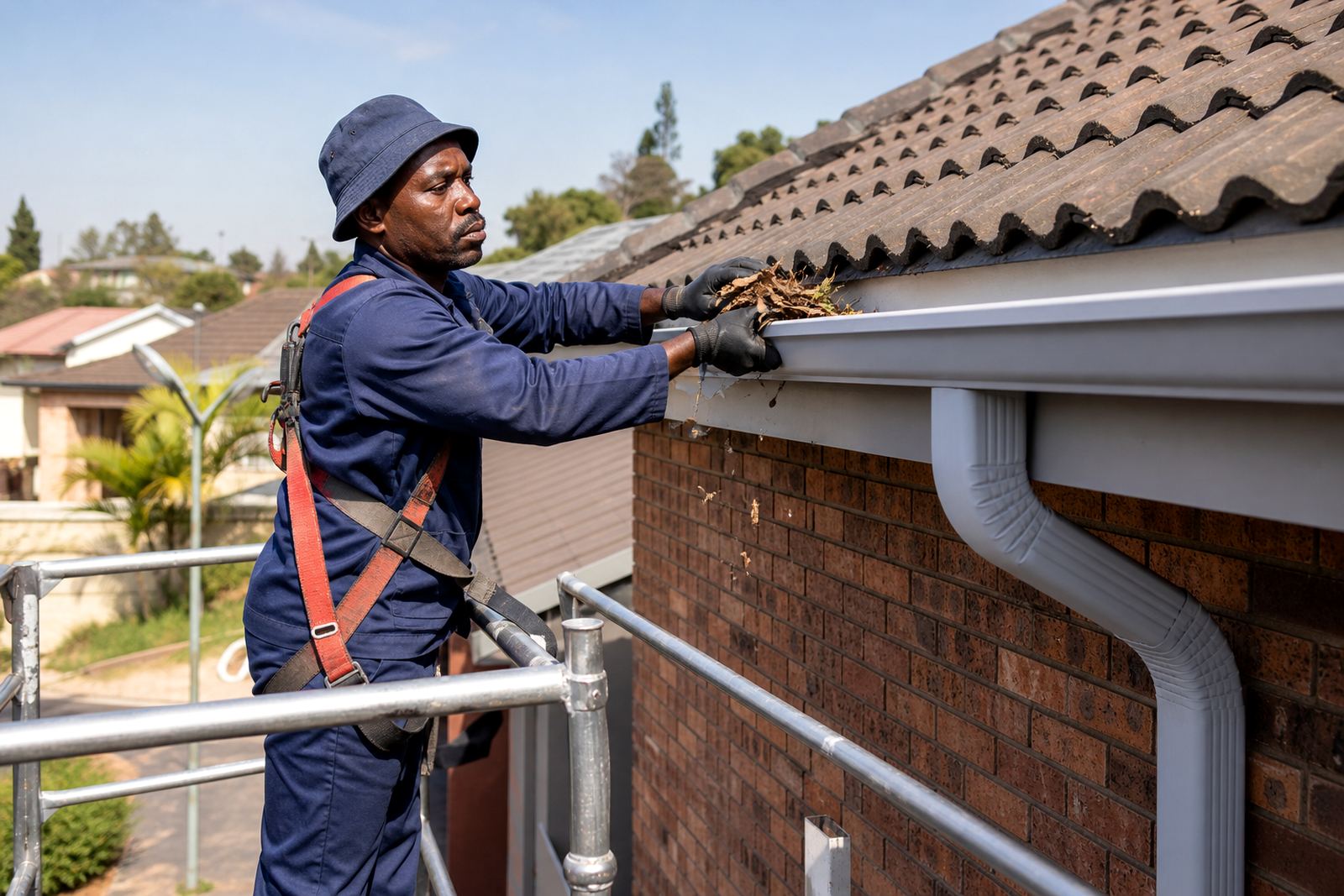
Even a well fitted gutter system needs routine care. Leaves, seed pods, dust and moss can block outlets and downpipes, especially near trees or in windy areas. A basic maintenance visit usually includes clearing the line, checking brackets, inspecting joints, confirming the fall and looking for leaks at corners and outlets.
In coastal towns, salt-laden air can also speed up surface wear on fixings and adjoining metal parts, so regular checks help catch small issues before they become costly repairs.
Support for builders and homeowners across the country
Plasteel works with builders, plumbers and homeowners from Kya Sand, Randburg to projects in Johannesburg, Pretoria, Durban, Cape Town and Polokwane. Support can include site measuring, material takeoff, product supply, delivery coordination and advice on roofline replacement or leak checks. That makes it easier to plan the right materials before the install starts.
For larger projects, the details matter: roofline length, fascia depth, downpipe position, access, wall finish and water discharge points. Good planning at the start helps the finished line look tidy and perform properly.