
What We Measure On The Roofline
We measure the roof edge, fascia runs, corners, outlets and downpipe drops so the material list reflects the actual structure, not a rough guess. That matters on long houses, complex commercial blocks and older properties where wall lines are not perfectly square.
Our measuring covers gutter lengths, fascia board coverage, stop ends, unions, brackets and downpipe positions. We also check where water should be moved off the roof and where the drainage line can run cleanly down the wall to reduce splashback and overspill. On coastal properties in Durban and Cape Town, we pay extra attention to exposed edges and fixing points because wind and salt air can be hard on lighter fittings.
How A Measuring Visit Is Done
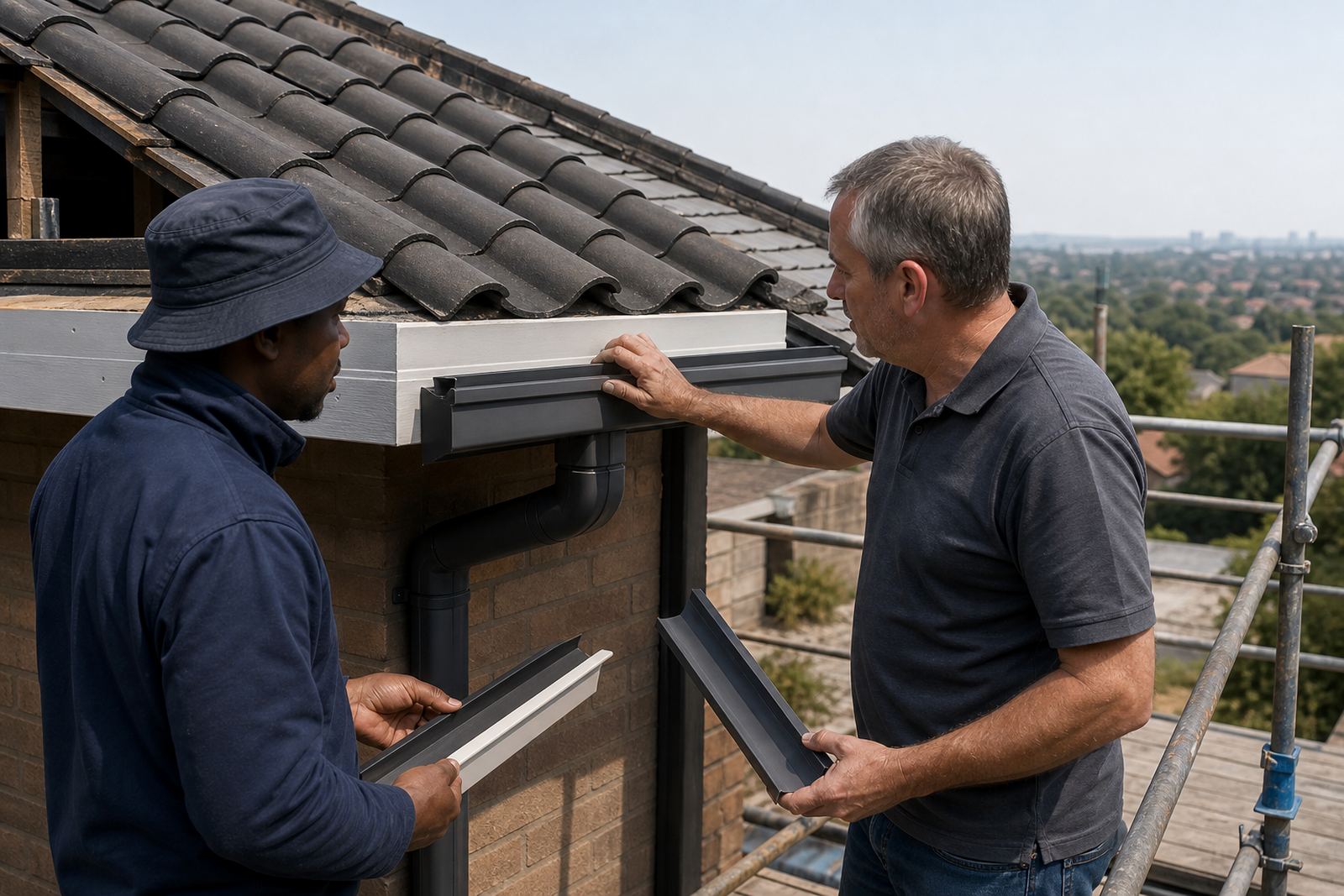
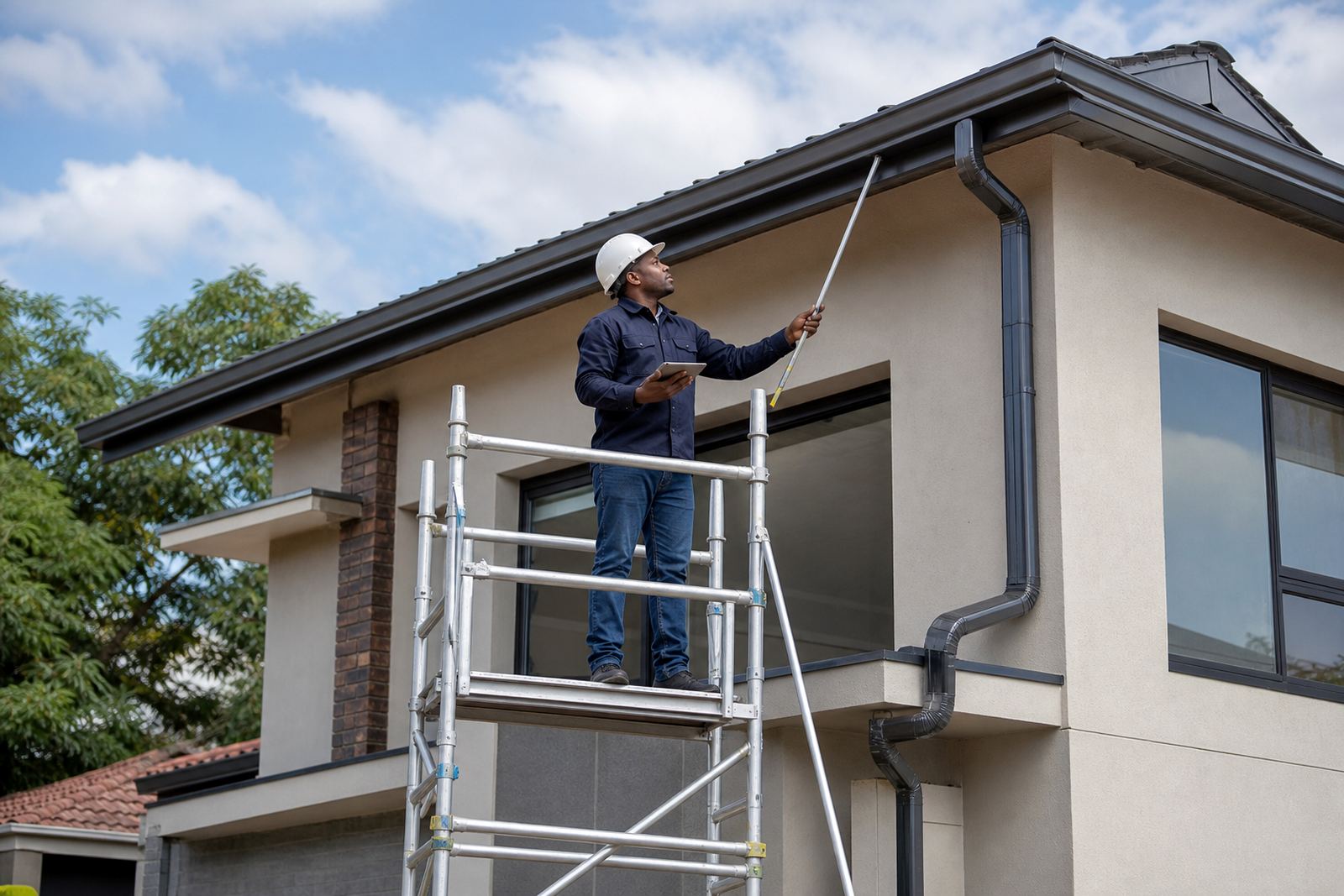
A proper visit starts with a walk around the building to note roof type, access, height, existing water stains and any damaged sections. We then record the dimensions needed for supply and installation, including front and back elevations where the roof line changes.
- Measure the full gutter run in metres, including returns and corners
- Confirm fascia board height, overlaps and joint positions
- Mark outlet points so downpipes land where water can drain safely
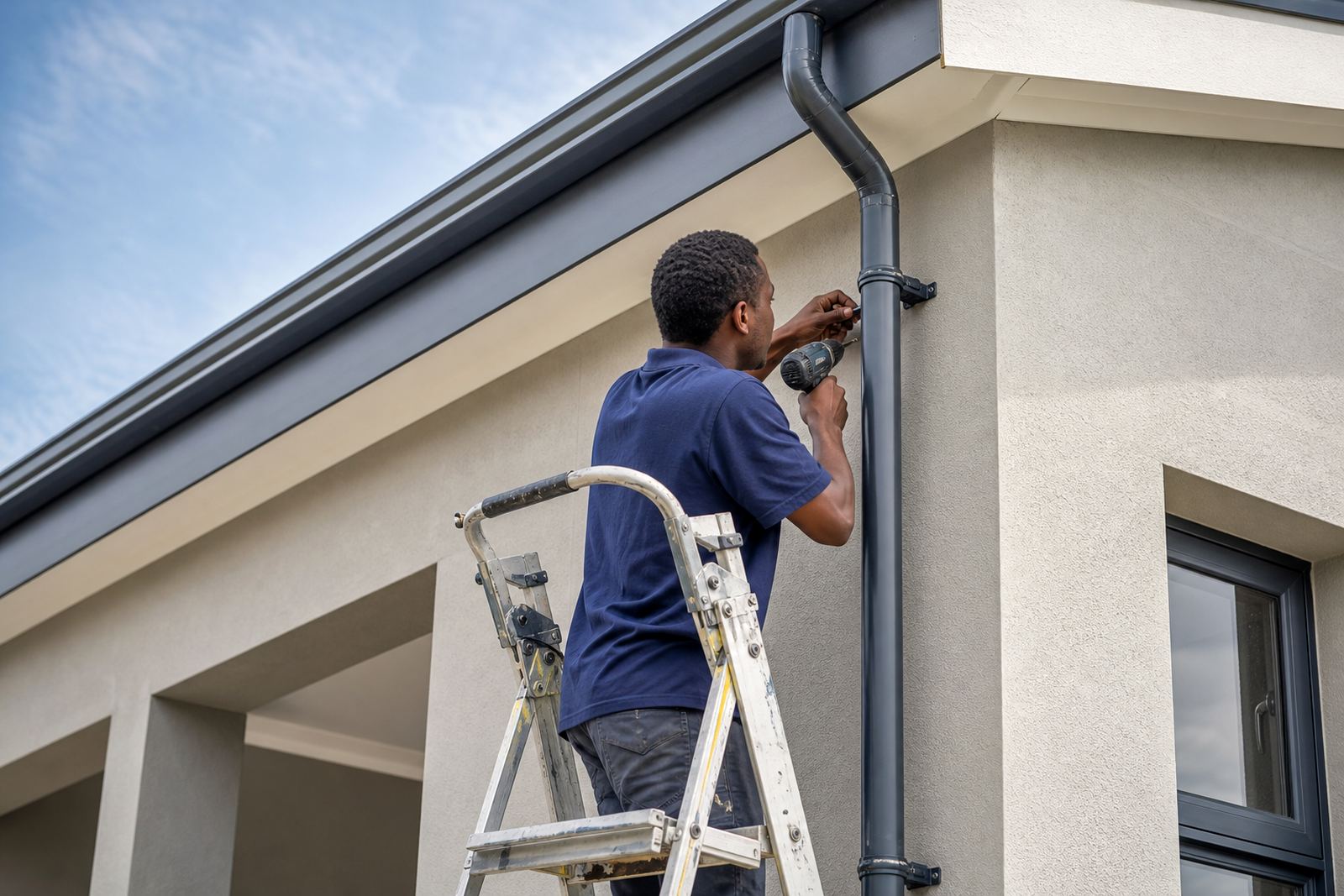
- Check the spacing needed for brackets and support points
- Note access issues, boundary walls and any areas that need ladder planning
The person on site may also flag places where a section should be replaced before a new gutter is fitted. That saves time later and helps avoid patchwork fixing over weak timber or warped fascia boards.
Sizes, Falls And Fixing Points We Check
Gutter work only performs well when the fall, outlet size and bracket spacing are matched to the roof area. Too little fall slows the flow, while too much can make the line look uneven or pull water away from the front edge. We measure these details so the system works properly in heavy rain and does not back up at the outlets.
Common residential gutter runs use lengths cut to suit the building with outlets placed at the low points. Downpipes are measured from the outlet to the discharge point, allowing for bends and wall offsets. Brackets are spaced to suit the material profile and the span, with tighter support needed where the run is long or where the site gets strong wind. In Johannesburg and Pretoria, where summer storms can arrive fast, the outlet position and fall need to be right the first time.
- Gutter lengths recorded in linear metres
- Downpipe drops recorded from outlet to ground discharge point
- Fascia board quantities recorded by full run and corner sections
- Bracket spacing noted for straight and angled roof edges
- Joint and corner positions mapped for accurate supply
What Builders And Homeowners Receive From The Visit
Our measuring notes are meant to be practical on site. Builders can use them for material takeoff and ordering, while homeowners get a clearer picture of what needs to be installed and where the vulnerable points sit. If there is a leak stain, a loose section or a sagging run, that gets noted too.
The result is a cleaner material count and fewer surprises during installation. It also helps with roofline replacement jobs where the old setup has changed over time and the original dimensions no longer match the current opening sizes. For large homes in Midrand or Roodepoort, a measured plan can prevent shortfalls in gutter sections and reduce waste from over ordering.
Timing And Pricing For Measuring Work
Measuring work is priced according to site size, roof height, complexity and access conditions. A single-storey home with a straightforward roofline is different from a multi level commercial property with several corners and drainage points. Sites with tight yard access, high walls or difficult ladder placement may need extra time on the day.
We do not use a flat guess for this work because no two roofs are the same. The charge is built around the actual time on site, the amount of detail needed and whether the job is for supply only or for a full install with gutter, fascia and downpipe components. Small repairs can be measured quickly, while larger properties may need a fuller takeoff for accurate ordering.
Aftercare Once The Measurements Are Taken
After the visit, the measurements are used to guide material supply, installation planning or a repair scope. If anything on the roofline changes before work starts, such as a damaged section or a blocked outlet, those details can be updated before materials are cut. That keeps the job cleaner and reduces waste.
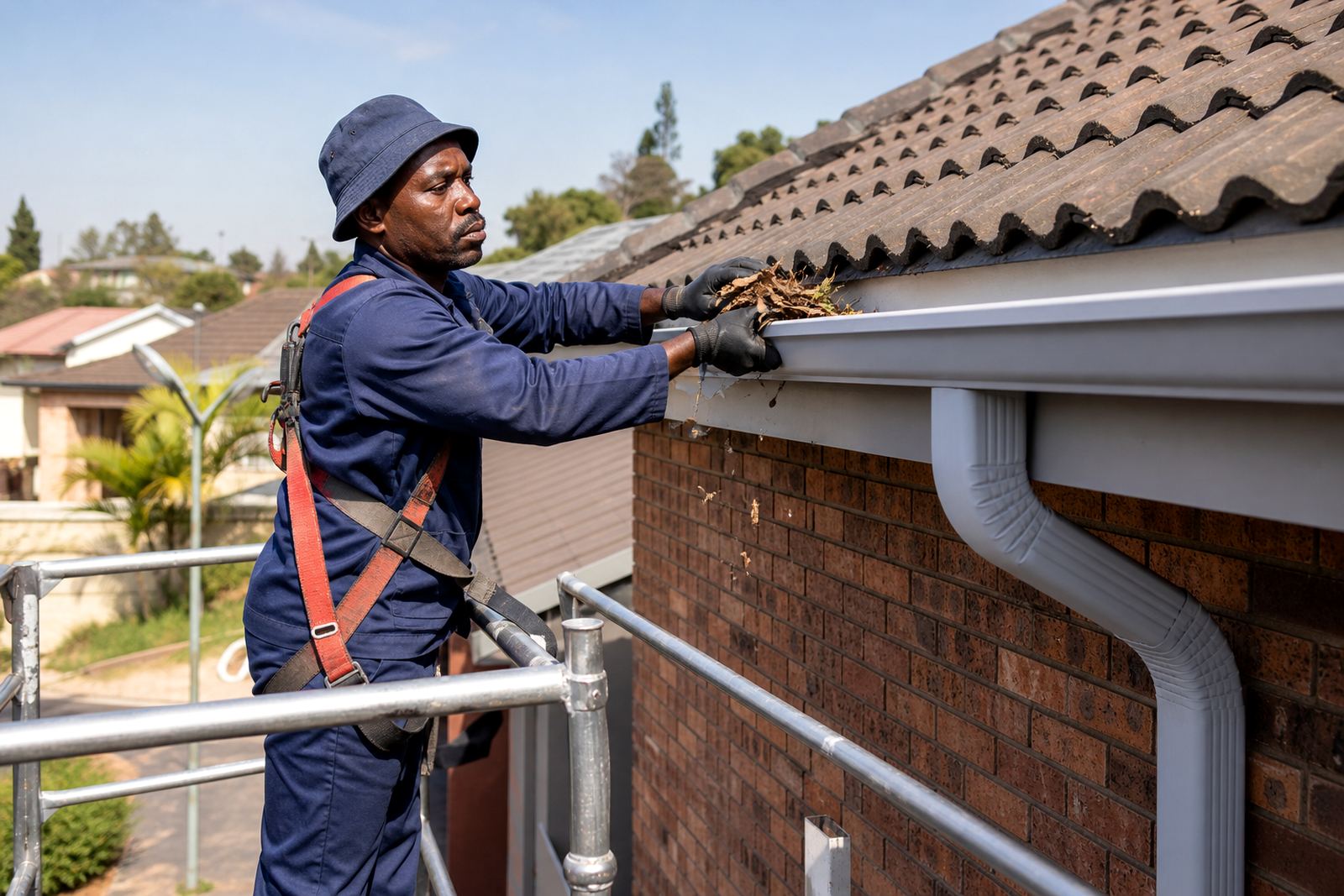
We also point out any areas that need routine attention after the job is complete, such as leaf build up near valleys, loose brackets or cracked seal points. Gutter systems in dusty inland areas and leafy suburbs can clog faster than expected, so a quick visual check after heavy rain is sensible. If a section needs cleaning or a bracket has shifted, it is better dealt with early instead of waiting for overflow and damp walls.
Where We Measure And Support Work
Plasteel works from Kya Sand, Randburg and supports site measuring for builders and homeowners in Johannesburg, Pretoria, Durban, Cape Town, Polokwane, Midrand and Roodepoort. Delivery and supply can be aligned to the measured schedule so the right lengths and quantities arrive without unnecessary handling.
Roofline work at height must be done safely by competent people with the right access equipment. Good measuring is the first step, because it helps the team plan safe ladder use, bracket positions and material handling before anyone starts fitting components.
Key facts
| Material types | Plastic-steel composite gutters, downpipes and fascia boards |
|---|---|
| Common measure units | Linear metres, outlet counts, drops and corner sections |
| Key sizing checks | Roof edge length, fascia height, gutter fall, downpipe height |
| Fixing details | Bracket spacing, joint positions and outlet placement |
| Site types | Homes, apartment blocks, retail buildings and light commercial roofs |
| Base area | Kya Sand, Randburg with supply and delivery support nationwide |