

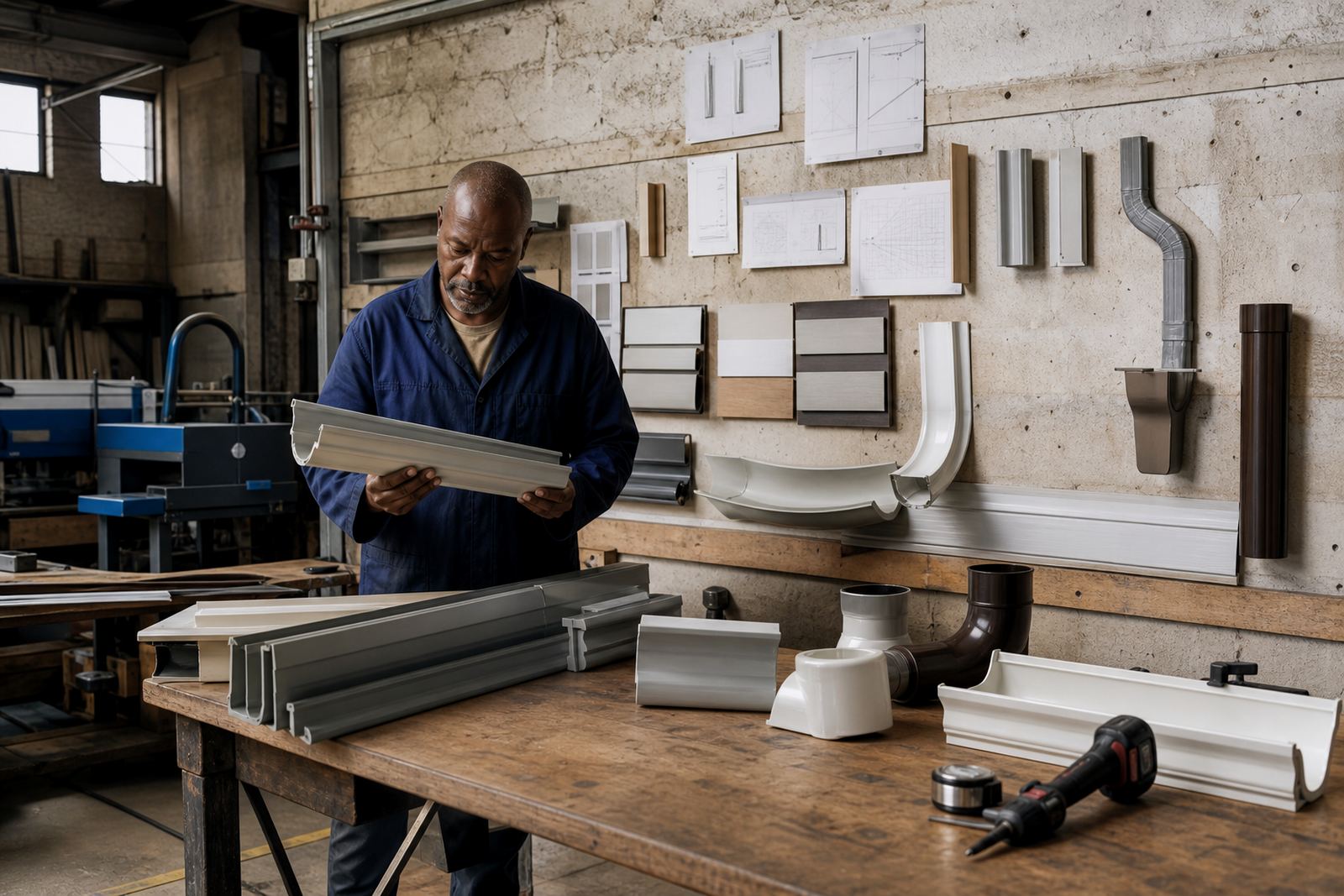
A Kya Sand workshop with a practical brief
The first orders went out of a single bay in Kya Sand, Randburg, where lengths of composite gutter were measured and trimmed on trestles beside the roller door. Later the team set itself a plain target: roofline parts that stay straight through Highveld hail, dry winter dust and the sharp afternoon storms that follow a hot summer day. That target still decides which profiles, brackets and fascia boards make it onto the Plasteel shelf.
What shaped the early work was not theory, but the day to day problems that builders run into on site. A gutter that sags under water load, a fascia board that warps at the eaves, or a downpipe that does not suit the roofline adds extra labour and extra cost. Plasteel developed around those practical needs, with products that fit the job and make installation cleaner for the people doing the work.
From first orders to a wider roofline range
As the customer base grew, the work grew with it. Builders wanted material supply that matched different roof sizes and layouts, while homeowners wanted advice that made sense without jargon. That is where the range broadened from a basic supply line into a fuller roofline service with site measuring, material takeoff, product supply, gutter installation, fascia installation, downpipe installation, roofline replacement, leak checks and maintenance visits.
The roofline components themselves still follow familiar principles. Gutters need the right fall so water moves toward the outlet without pooling. Downpipes need suitable sizing and fixing points so discharge is controlled. Fascia boards need a clean edge, solid support and enough strength to carry the gutter brackets correctly. Those details matter on a small townhouse, a suburban home or a larger warehouse, and they are often where a neat finish is won or lost.
- Gutters are selected to suit the roof edge and the volume of water expected.
- Downpipes are positioned to reduce overflow and direct rainwater safely away from walls.
- Fascia boards help support the roofline and give the gutter line a straight finish.
- Brackets, joints and seals need regular checking where wind, heat and rain all work on the same run.
Customers who need the work to fit the building
Plasteel’s customers are a mix of builders, contractors and homeowners, each with a different reason for calling on roofline material and support. Builders often need reliable supply and clear measurements before work starts on a housing development, an extension or a maintenance contract. Homeowners may be dealing with a leaking section, a tired roof edge or damage after a storm. Whether the job is a housing development, a maintenance contract or a leaking roof edge at home, the expectation from Plasteel is much the same: materials that fit properly and a result that lasts through the weather.
The branch and delivery areas reflect that spread of work. Randburg Supply serves the local base, while Johannesburg Delivery, Pretoria Delivery, Durban Delivery, Cape Town Delivery and Polokwane Delivery help reach other centres. Midrand Supply and Roodepoort Supply support projects in the inland corridor where building activity remains steady. It is a practical way of working, because roofline materials are often needed close to the job and at the right time, not after a long delay.
- Residential homes with ageing gutters and fascia boards.
- Commercial roofs where drainage must be orderly and easy to maintain.
- Builders needing measured supply for new work or repairs.
- Property owners wanting advice on leaks, downpipes and roof edge condition.
How the team works on the roofline
The team today is built around people who know the different parts of the job and how they fit together. Mandla Johannes Mokoena leads the business as Managing Director, with Naledi Faith Khumalo overseeing operations, Pieter Willem Smit managing production, Ayanda Zanele Dlamini handling sales, Ruan Jacobus van der Merwe offering technical guidance and Lerato Masego Molefe leading customer care. That mix matters because roofline work is rarely just about one product. It is about matching the right material to the right roof, and making sure the supply is ordered, cut, delivered and fitted with care.
On site, competent people must handle work at height safely. Roof edges, ladders and elevated fixings demand proper access, stable footing and the right tools. This is not the sort of work that should be rushed or improvised. Gutter falls need checking, brackets need spacing that supports the load, and joints should be neat enough to reduce future call-backs. A tidy install saves time later, and that is something both builders and homeowners notice.
The same discipline applies to maintenance. Leaves, dirt and windblown debris build up in gutters and can block flow, especially in areas with trees or during seasonal rain. A maintenance visit may include cleaning, leak checks, seal inspection and a review of brackets or outlets. Small faults are easier to handle when they are spotted early, before water starts finding its own path over walls or into the roofline.
Materials chosen for South African conditions
Plasteel’s plastic-steel composite approach speaks to the local climate. In many parts of South Africa, roofline materials are exposed to strong ultraviolet light, temperature changes and heavy rainfall. Inland dust can collect quickly, while coastal moisture can shorten the life of weak fittings. Materials that are made to keep their shape and stay serviceable under these conditions help reduce repeat repairs and make everyday upkeep less of a chore.
That is also why the business keeps the conversation grounded in measurements and fit. Fascia board width, gutter capacity, downpipe size and bracket spacing all have to work together. A good roofline system is not about one single component carrying the load. It is the sum of the parts, from the fall of the gutter to the last screw or fixing point. When those parts are matched properly, the building handles rain better and the finish looks straight, not patchy or rushed.
A trade business built on straight talk
Plasteel’s history is really a history of practical trade service: supply what is needed, measure properly, fit it neatly and keep it maintainable. That approach suits builders who need dependable material flow and homeowners who want the work explained in plain terms. It also suits a country where roofs vary a great deal, from compact suburban houses to larger industrial buildings, and where local weather can change the demands on a roofline in a matter of hours.
Today the business keeps its work close to the basics that matter most. Clear site measuring, correct material takeoff, sensible delivery coordination and support on the roofline details all help the end result. The story from Kya Sand to a wider South African service area has not been about flash. It has been about making roofline materials and support that fit the work, and fit the buildings they are made for.