
What a maintenance visit covers on site
A maintenance visit starts with a full visual check of the roof edge, gutter run, fascia line and downpipe route. The aim is to spot debris build-up, sagging sections, movement at brackets, open joints, rust staining on fixings and signs of water escaping where it should be flowing to the outlets. In coastal areas like Durban and Cape Town we also look for salt exposure and faster wear on exposed fittings, while inland dust and tree litter can clog outlets after a dry spell or a windy week.
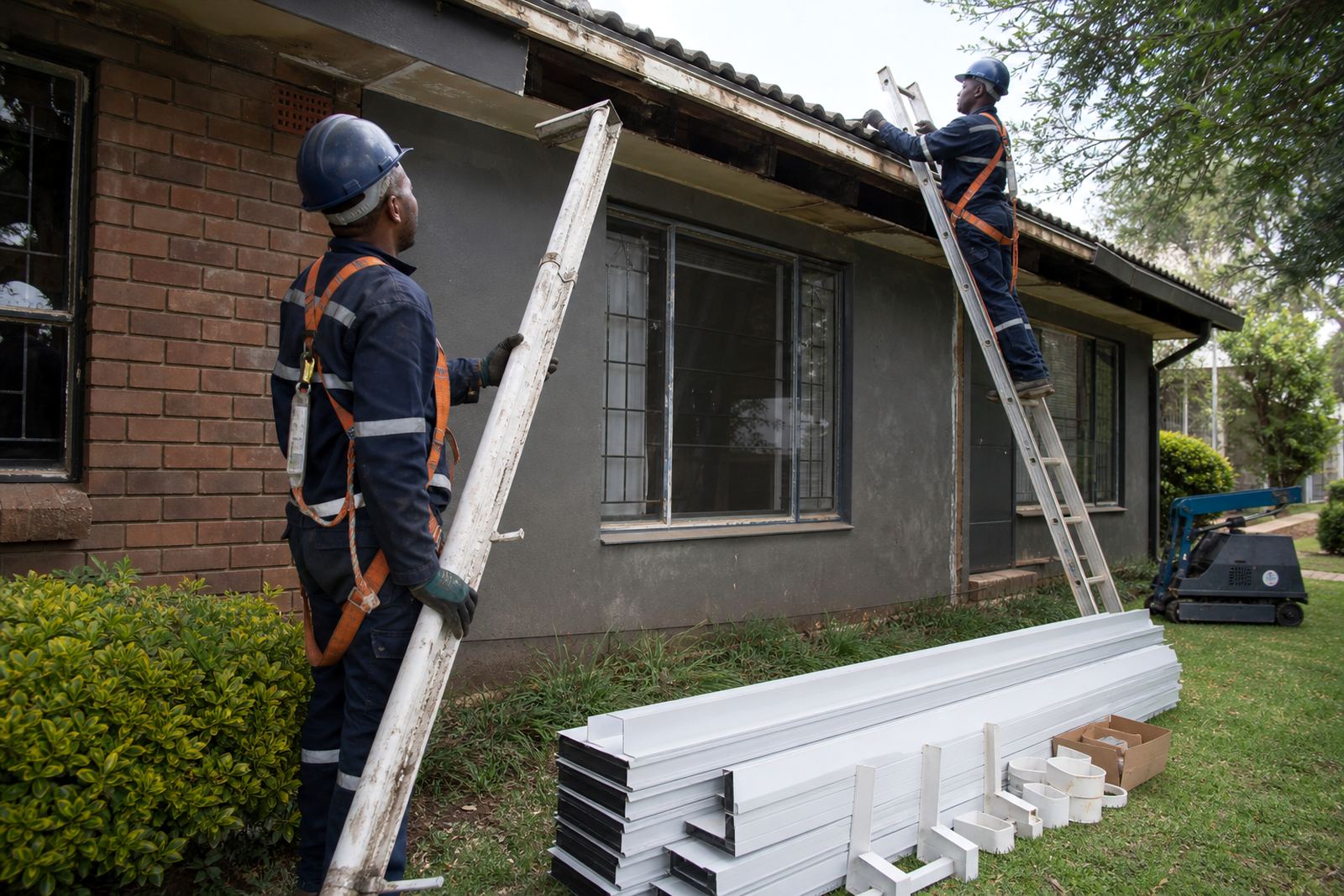
Our team works with plastic-steel composite guttering, downpipes and fascia boards in common building sizes, and checks that the run still carries water evenly. Where there is movement or wear, we note the section, measure the affected length and assess whether cleaning, re-fixing or part replacement is needed. Roofing work at height must be handled safely by competent people, so access and fall protection are part of the job, not an extra afterthought.
- Gutter cleaning and outlet clearing
- Bracket, clip and fixing inspection
- Joint, end cap and corner checks
- Downpipe alignment and discharge check
- Fascia board condition review
How the visit is carried out
We begin with a brief walkaround and ask about any overflow marks, damp patches, dripping corners or recent storms. Then we check the roofline in sections, paying attention to the fall of the gutter, the spacing of brackets and whether water is sitting in low spots. A gutter with the wrong fall can hold water and debris, which adds strain to the fixings and may leave standing water after rain.
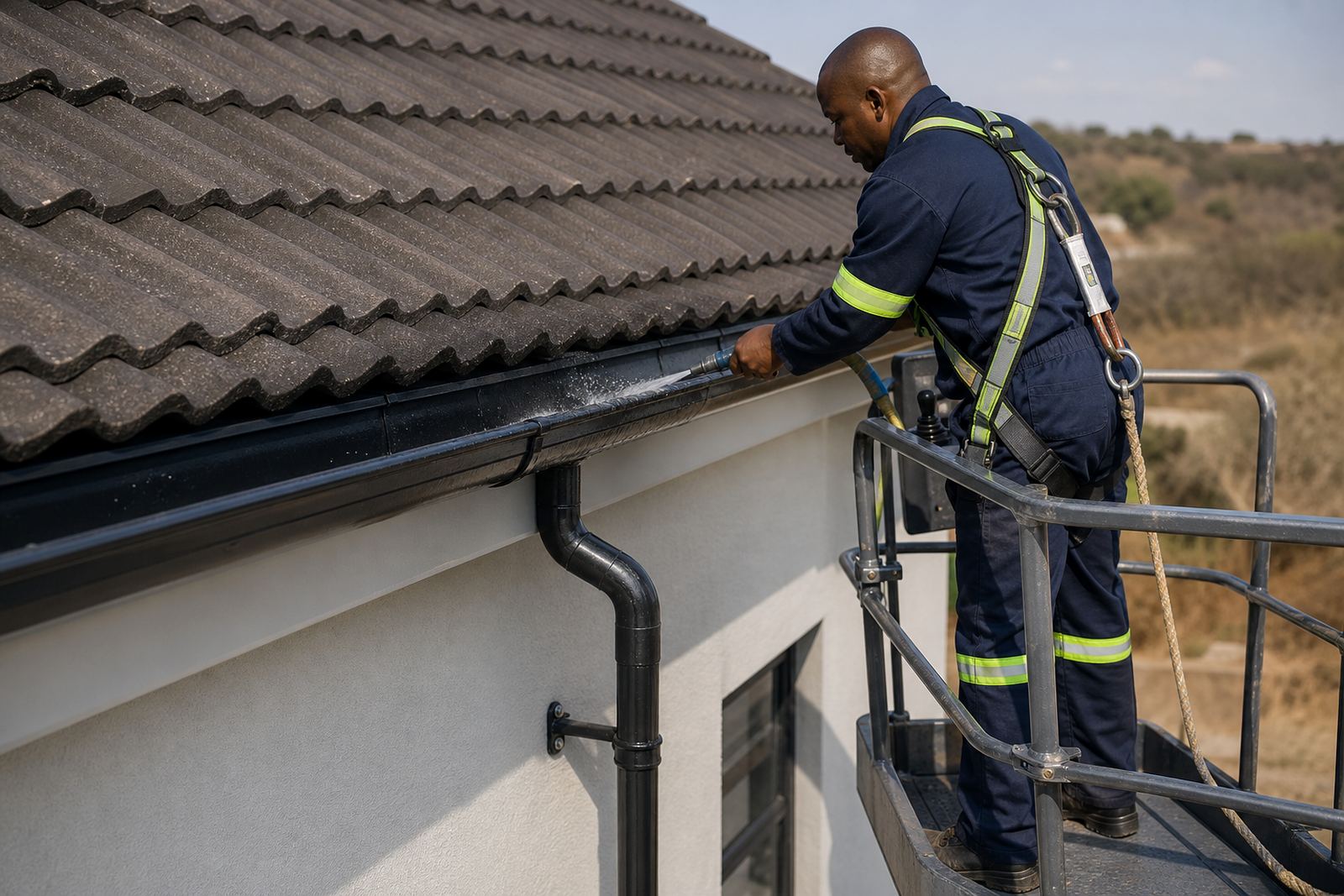
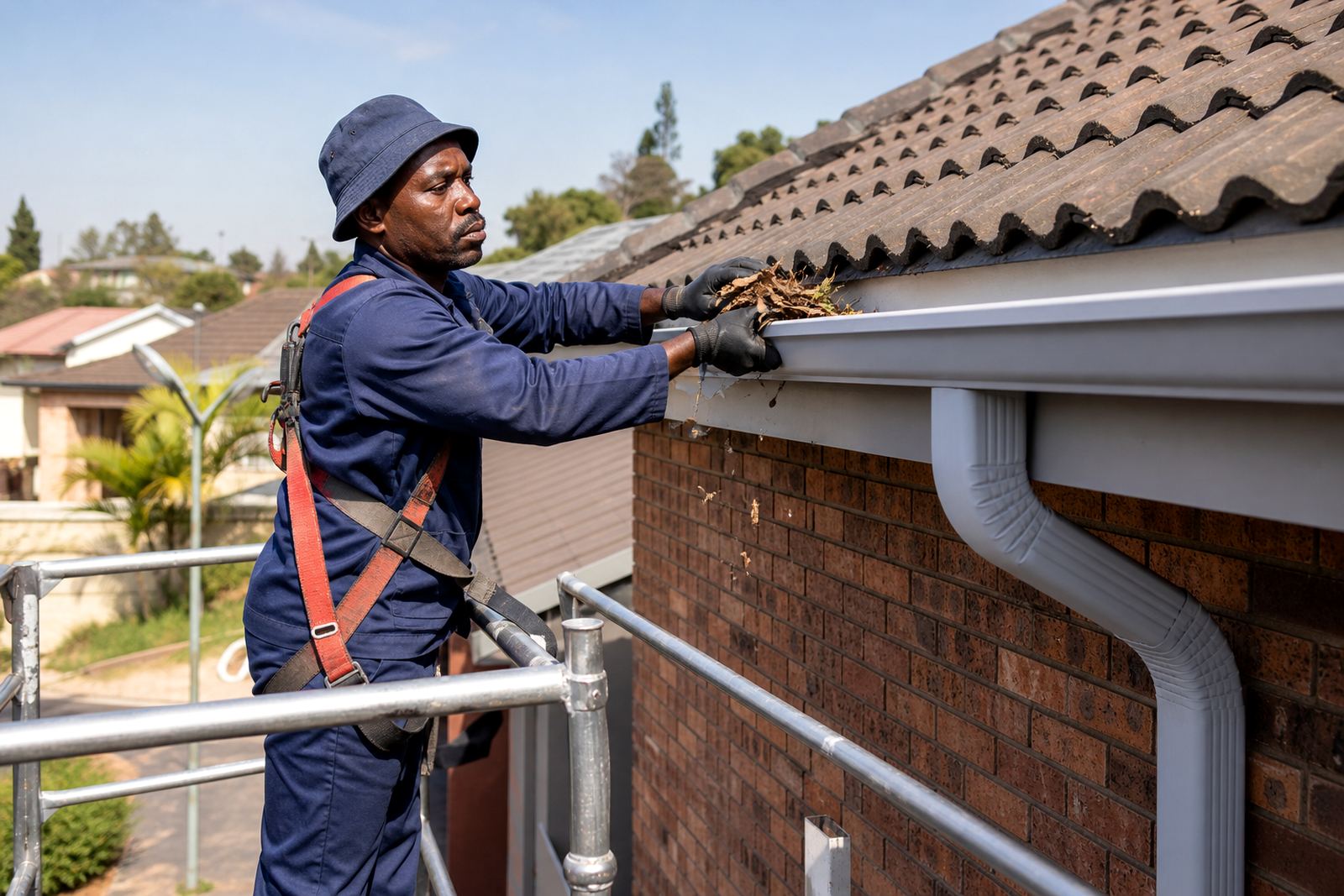
If access allows, we open up the visible run, remove leaves and silt, and inspect the inside surface for grit, algae and impact marks. We also look at the downpipe entry points and the discharge area at ground level because a blocked outlet can push water back into the gutter and over the edge. Small issues are often easier to sort early, before they lead to fascia staining, ceiling damp or loose sections pulling away from the roof edge.
- Checking fall, bracket spacing and outlet flow
- Removing visible debris and light silt build-up
- Testing water path where practical and safe
- Recording wear points and repair needs
Sizes, materials and fittings we assess
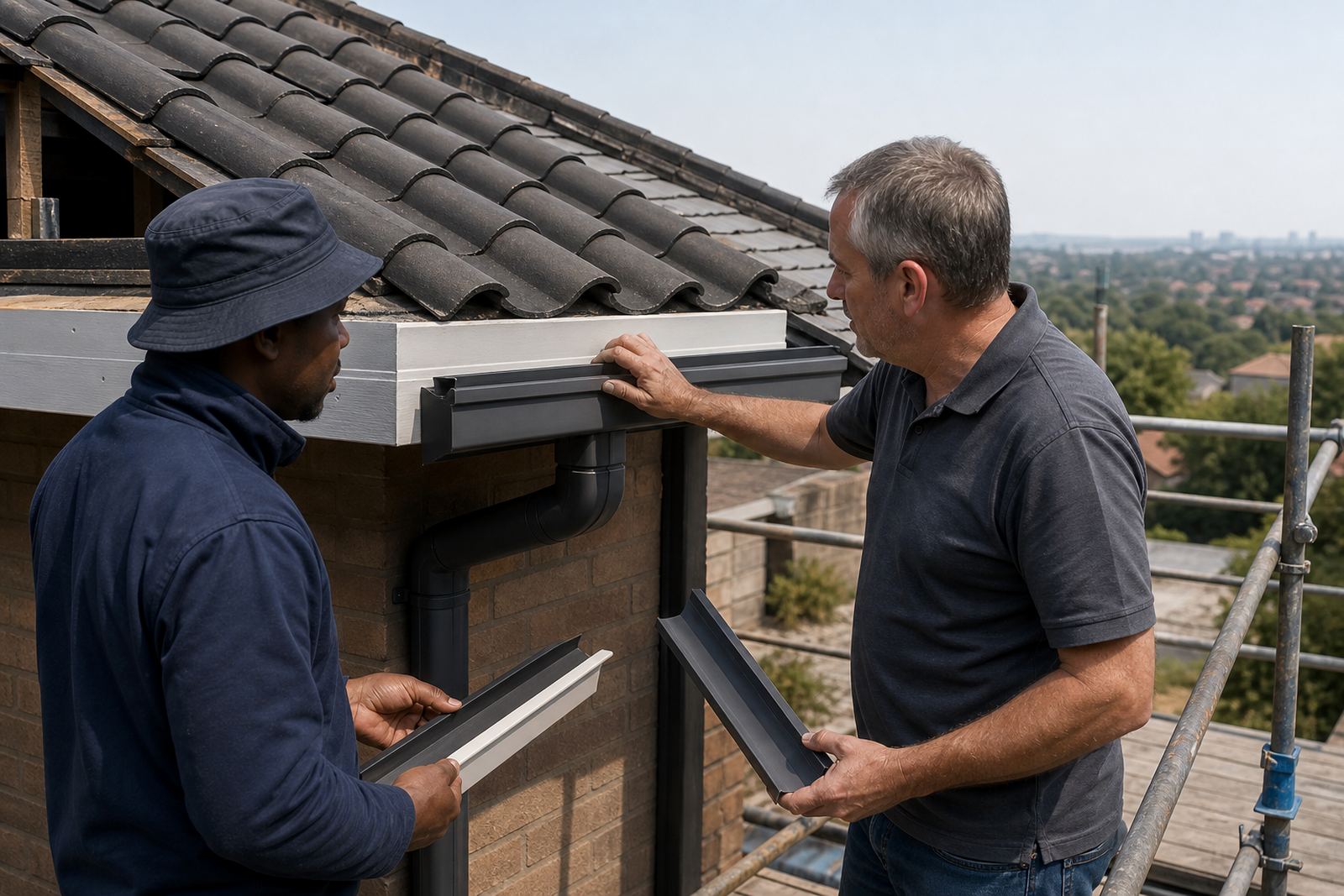
Composite gutter and fascia systems are usually assessed by profile, length and fixing pattern rather than by a one size approach. Common gutter runs are measured in metres, with downpipes checked for diameter, connection points and support brackets. The material itself should stay straight, hold its shape under heat and UV exposure, and resist the swelling and rot that can affect timber fascia in wet weather. For homes near the coast, the condition of metal fasteners and joiners matters as much as the profile itself because humidity and salt can shorten the life of the weak parts first.
During a maintenance visit we look at whether the gutter profile matches the roof edge and whether the fascia board is still sound enough to support the system. We also check that the downpipe is sized to move water away without restriction. If the run was installed with too few brackets, we flag it before the gutter starts to belly or twist. The result is a practical report on the parts that need attention now and the parts that can stay in service.
- Profile fit against the roof edge and fascia line
- Downpipe size and support condition
- Fixing points and bracket spacing
- Signs of UV wear, distortion or staining
What happens after the inspection
After the visit, we go through what was found and set out the next steps in plain terms. That may mean a clean, a re-fix, a joint repair, a downpipe adjustment or a section replacement if wear is beyond normal maintenance. For builders, we can also note the line items needed for a roofline repair or replacement schedule, which helps with material takeoff and site planning. For homeowners, the focus is usually on keeping water off the walls, away from the eaves and clear of the paving.
We keep the follow-up practical: no overcomplicated report language, just the condition of the system, the likely cause of the problem and the sensible remedy. If there are signs of repeated blockage from nearby trees or roof debris, we note that too so the same issue does not keep returning after the first clean. Where minor adjustments can prevent bigger problems, we point them out before they become expensive work.
- Clear findings on condition and cause
- Notes on cleaning, fixing or replacement needs
- Practical guidance for builders and homeowners
- Support for repair quotes or phased work
Pricing approach for maintenance visits
Pricing depends on roofline length, access, height, the number of gutter runs and whether the visit is a basic inspection or includes cleaning and minor corrective work. A straightforward visit on a small home in Randburg will not be priced the same as a larger commercial frontage in Pretoria or a long coastal run in Durban. We quote on the actual site conditions, because fixed pricing without measuring the work usually misses something important.
For many properties, the best value comes from combining inspection with light cleaning and a short repair list. That keeps labour focused and reduces repeat call-outs for the same issue. Where the job needs more than routine maintenance, we separate supply and installation items clearly so builders and homeowners can plan properly.
- Charged by site condition and scope
- Separate line items for cleaning, repair and replacement
- Measured work for gutter, downpipe and fascia items
Aftercare that keeps the roof edge working
Aftercare is about keeping the roof edge dry, the flow path open and the fixing points stable. We can advise on simple upkeep such as checking for leaves after heavy wind, watching for overspill at the corners and keeping discharge points clear of soil, paving build-up or plant growth. In areas with frequent dust, tree cover or coastal air, a quick visual check after a storm can catch a blocked outlet before the next rain turns it into a leak.
Where we have carried out a repair or replacement, we also note the parts that should be watched closely, such as a joint near a valley, a bracket that took strain or a fascia section that has already been exposed to water. That gives the owner or site manager a clear picture of what is stable and what needs attention next. It is a practical way to protect the building without overcomplicating the roofline.
- Advice on clearing leaves and outlet blockage
- Checks for movement after heavy rain or wind
- Notes for site managers, builders and homeowners
Key facts
| Service type | Maintenance visits for gutters, downpipes and fascia boards |
|---|---|
| Material focus | Plastic-steel composite roofline systems |
| Common work areas | Johannesburg, Pretoria, Durban, Cape Town, Polokwane |
| Typical checks | Debris build-up, bracket movement, wear, fall, leakage points |
| Access note | Roofing work at height handled by competent people with safe access |
| Base | Kya Sand, Randburg |