What gets checked on site
A proper leak check starts at the point where water is seen to drip, overflow or run behind the fascia. We look at gutter runs, end caps, mitres, outlets, stop ends and downpipe connections, then trace the system back to see where water is collecting. In many cases the fault is small, like a loose joint or a blocked outlet, but the symptoms show up further along the line.
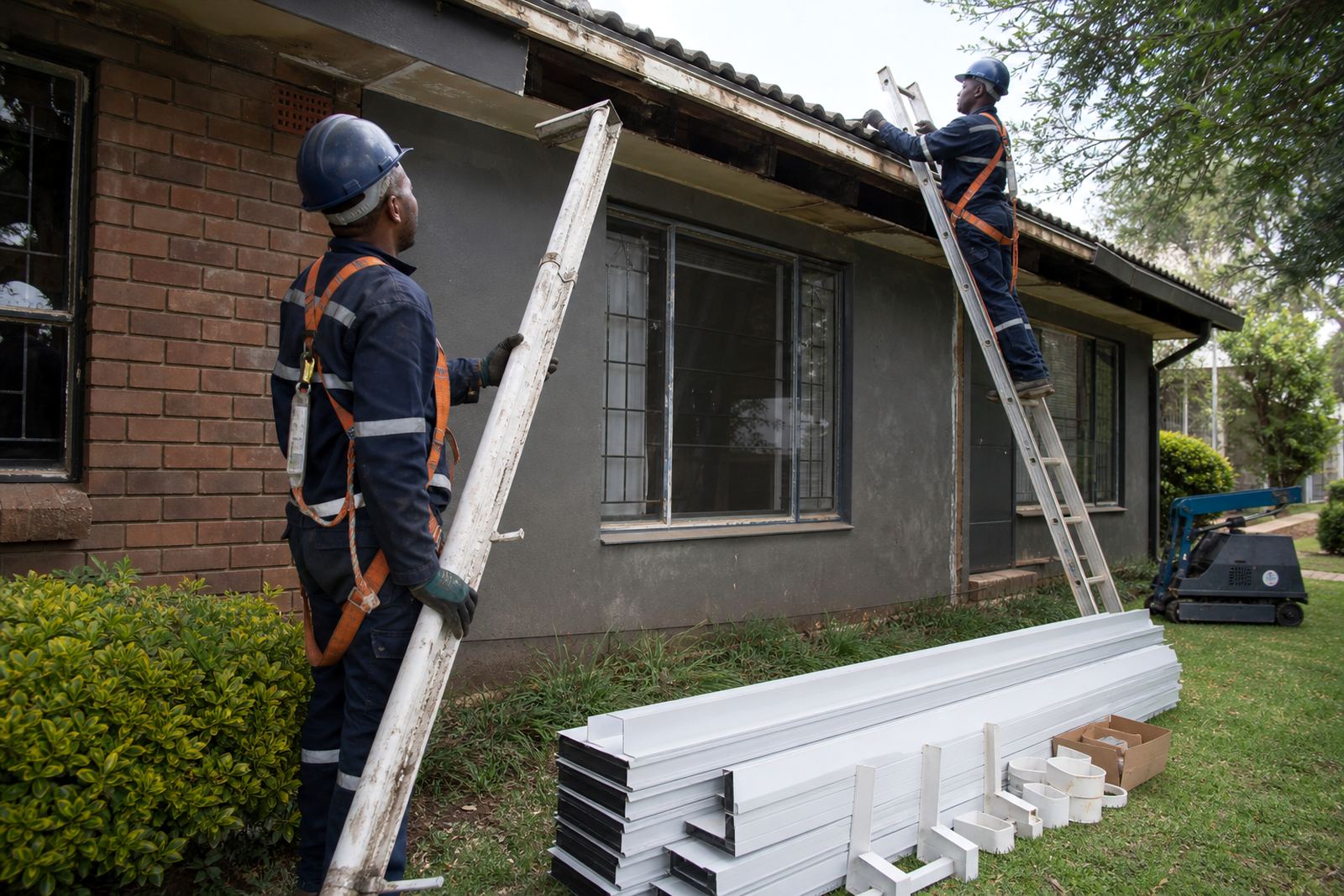
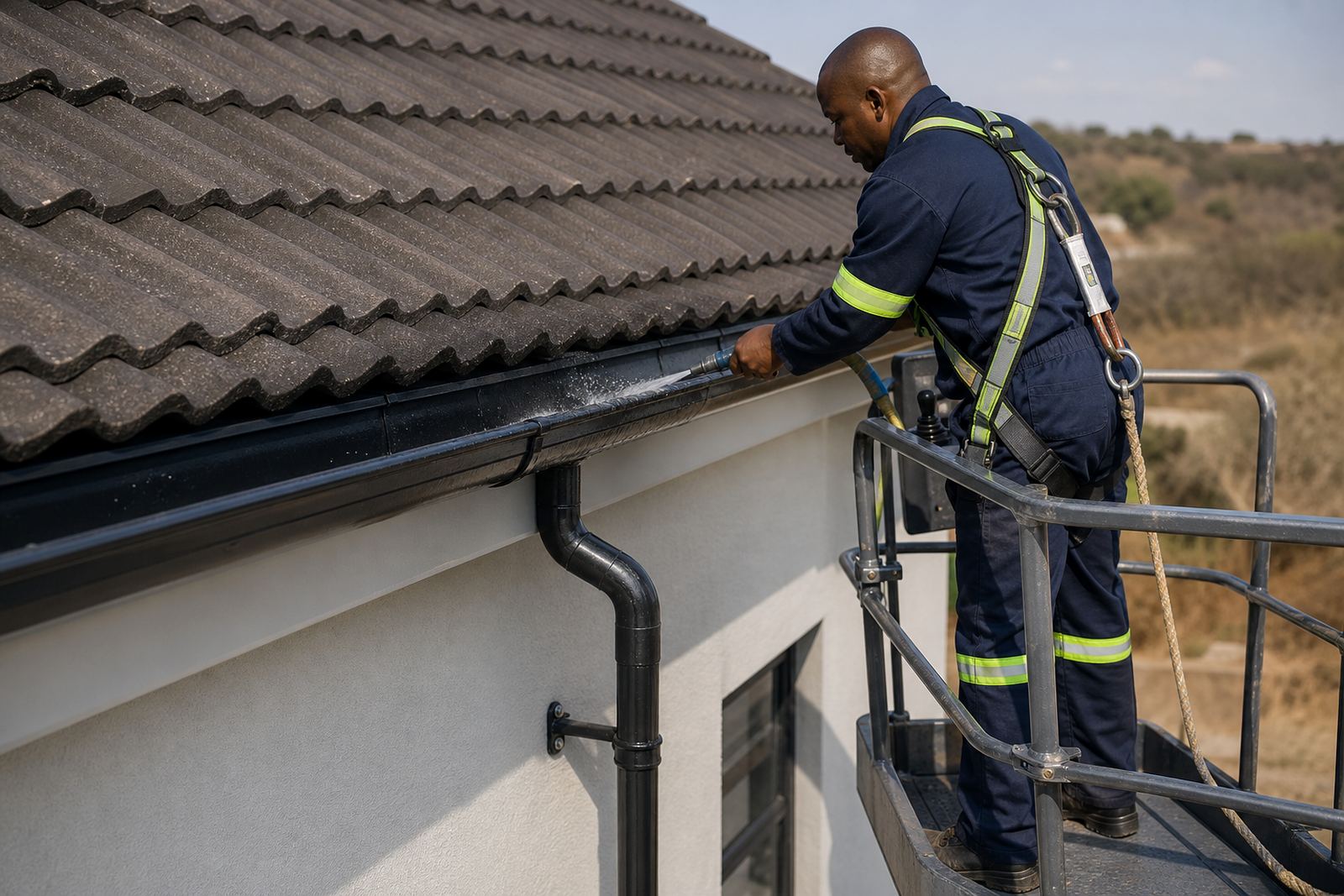
We also look at the support layout. If a gutter has sagged even a little, water can sit in the low spot and spill over the front edge during a storm. On longer runs, the fall should guide water steadily toward the outlet. If the fall is uneven or reversed, dripping and overflow become common. Roofline checks must be carried out safely by competent people, especially where access is high or the surface is slippery after rain.
Signs the gutter or downpipe needs attention
Leak checks are usually requested when water is already causing a problem. The signs are not always dramatic. A stain on a wall, a wet patch near the foundation, or water dripping from a joint long after the rain has stopped can point to a roofline fault. In coastal areas, salt in the air can speed up wear on metal fittings and fasteners, while in high-rainfall towns the first sign may simply be overflow at the first heavy downpour.
- Overflow at the front lip of the gutter
- Water dripping from joins, corners or outlets
- Staining on fascia boards or wall surfaces
- Downpipes that back up or run slowly during rain
- Sagging sections where brackets have shifted
- Debris build-up near the outlet or first bend
If the system is filled with leaves, roofing grit or broken sealant, the leak may not be at the point where the water appears. That is why the full run needs checking, not only the visible drip.
How the inspection is carried out
We begin by mapping the visible roofline and identifying the gutter profile, downpipe size and support spacing. Then we inspect the joints and outlets, test for standing water where possible, and look for signs of movement around the brackets and fascia boards. Where access allows, we check the rear edge of the gutter, because water can track behind a poorly seated section and appear somewhere else entirely.
- Confirm gutter size and profile matched to the roof area
- Check outlet position and downpipe take-off alignment
- Inspect joint sealing, end caps and corner pieces
- Assess support spacing and bracket condition
- Look for blockages, debris and signs of trapped water
- Identify sections that need replacement or re-seating
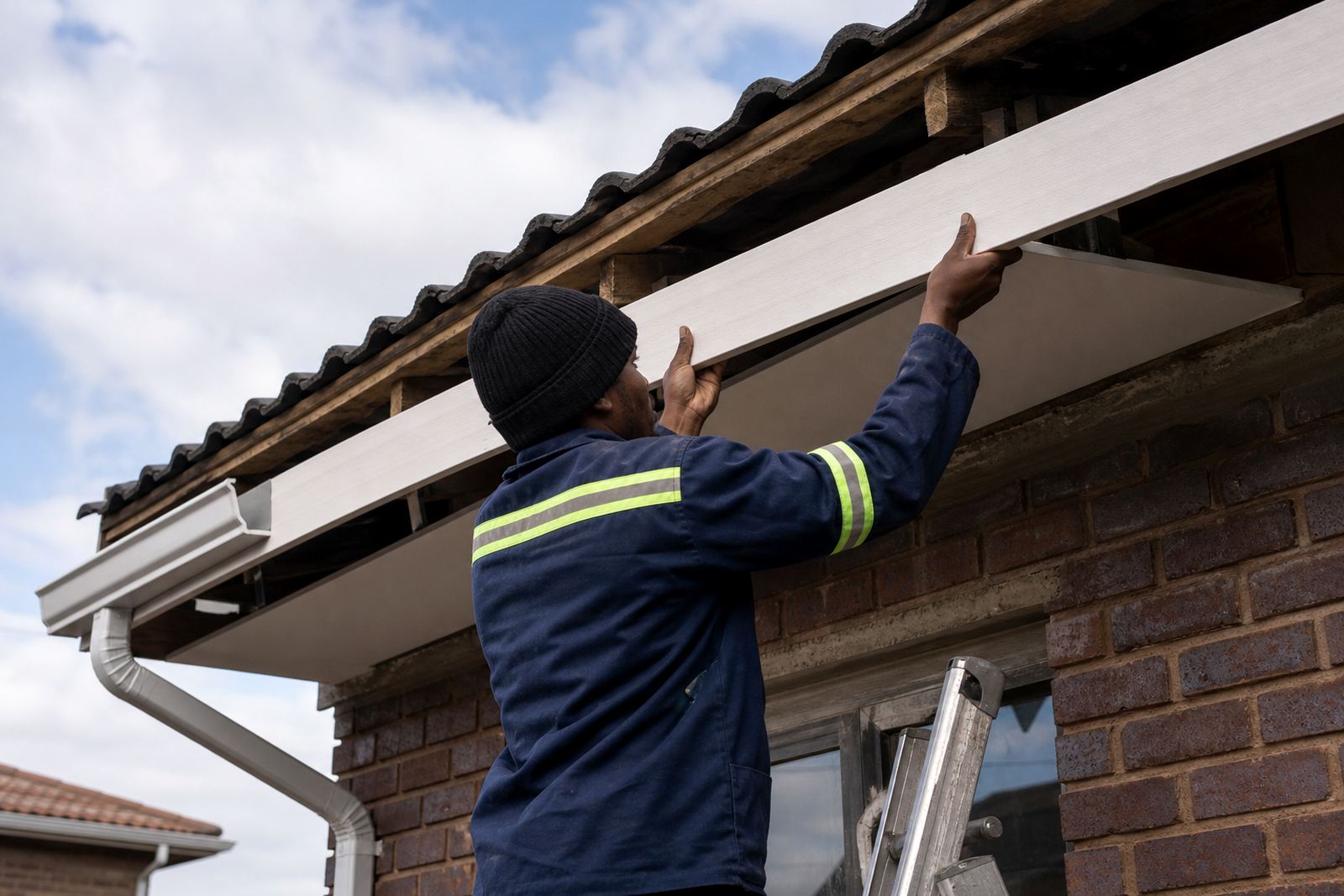
For composite gutter and fascia systems, we pay attention to how the materials meet, how they are fixed and whether the line is still straight. If the fascia is uneven or the fixings have shifted, the gutter can pull out of line and start leaking at the joins.
Common faults we find and what they mean
A leaking roofline does not always mean the gutter itself is cracked. More often the cause is a small installation or wear issue that has built up over time. In Johannesburg and Pretoria, dust and roof debris can collect at outlets. In Durban and along the coast, moisture and humidity can keep sealant soft for too long or speed up corrosion on older fittings. In dry inland areas, wind-blown leaves and grit can block the downpipe bend.
Typical faults include poor fall, loose brackets, failed sealant at the joint, a missing stopper, a blocked outlet, or a downpipe that is too small for the roof area it serves. If the gutter section is undersized for the catchment area, water can overflow even when the fittings are sound. Sometimes the answer is a full replacement of one run, not just a patch at the drip point.
What happens after the fault is found
Once the cause is confirmed, we explain the condition of the gutter, fascia and downpipe in plain terms. If the issue is minor, a cleaning, re-alignment or joint repair may be enough. If the material has warped, split or pulled away from the support line, replacement of the affected section is usually the cleaner fix. We can also advise on roofline replacement work where the existing system has reached the end of its useful service.
We keep the work practical and measured. That means choosing the smallest effective repair, then checking that water now flows through the system without pooling or backing up. Where the problem involves a larger run, we will talk through material lengths, support points and the correct outlet positions before any supply is arranged.
Pricing and timing for leak checks
Leak check pricing is handled according to site access, roof height, the number of runs to be inspected and whether the issue is on a single section or across several sides of the building. A straightforward check on a small home is different from a commercial roofline with multiple outlets, corners and long runs. If replacement parts, brackets or extra labour are needed, those items are dealt with separately and kept clear on the quotation.
Timing depends on the location, site conditions and the amount of inspection needed. In busy areas such as Randburg, Midrand and Roodepoort, the job is often scheduled around delivery routes and access needs. For homes and buildings in Johannesburg, Pretoria, Durban, Cape Town and Polokwane, we plan according to area and the site details provided.
- Single run or multiple runs inspected
- Ground level or access equipment needed
- Repair only, or repair plus replacement parts
- Residential, commercial or builder support work
Aftercare once the roofline is dry
After the leak check, we leave practical notes on the condition of the system and the points that should be watched after the next heavy rain. Good aftercare starts with keeping outlets clear, checking that downpipe bends are not full of debris and watching for movement where the gutter meets the fascia. In areas with trees, a quick clean after wind or storm debris can save a lot of water damage later.
If a section was repaired, rechecked or replaced, we recommend a follow-up look after the next proper rainfall. That is often the best test of whether the fall, support spacing and joint sealing are working as they should. For builders and homeowners alike, the aim is a roofline that carries water off the roof cleanly and does not drip back into places it should not.
Key facts
| Service type | Leak checks for gutters, downpipes and fascia board lines |
|---|---|
| Faults checked | Overflow, dripping joints, blocked outlets, sagging runs and failed support points |
| Materials assessed | Plastic-steel composite guttering, downpipes, fascia boards, brackets and fittings |
| Typical sizes checked | Common residential and commercial roofline profiles with matched outlet and downpipe sizes |
| Site access | Ground floor, multi-storey and roof edge access handled by competent people using safe methods |
| Coverage | Kya Sand, Randburg and delivery areas across Johannesburg, Pretoria, Durban, Cape Town, Polokwane, Midrand and Roodepoort |