What Roofline Replacement Covers
Roofline replacement covers the removal of worn gutters, damaged fascia boards and tired downpipes, then fitting new composite parts that suit the roof edge and drainage run. The work is commonly needed where timber fascia has softened, metal has corroded, joints are leaking, or a system has become uneven after years of heat, coastal humidity and general weather exposure.
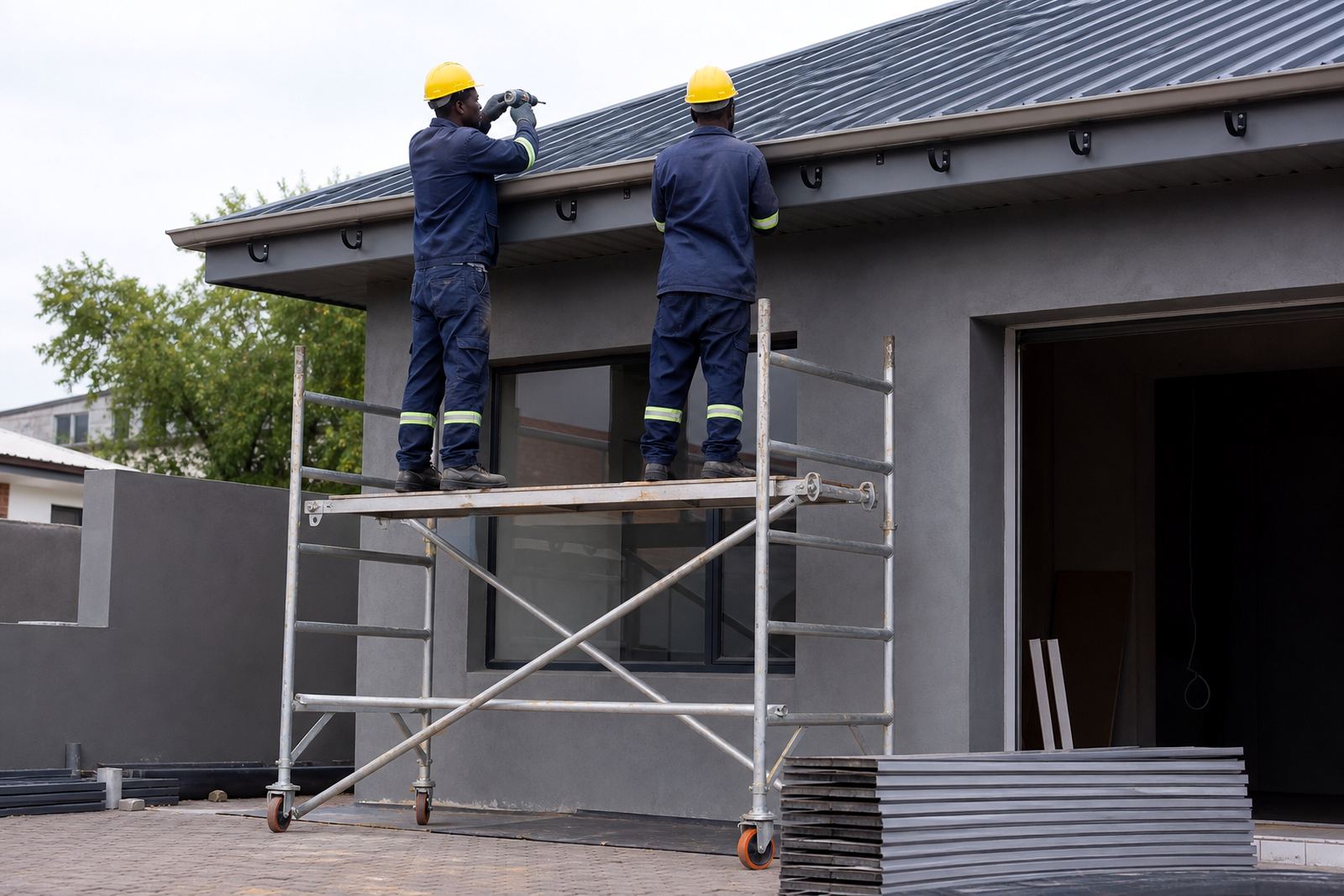
On homes and smaller commercial buildings, replacement usually includes new fascia boards, gutter lengths, outlets, stop ends, brackets and downpipes. On larger roofs, extra support pieces and longer runs may be needed to keep the line straight and the fall correct. Roof work at height must be handled by competent people using safe access methods, because a neat finish depends on more than just the materials.
- Removal of damaged gutters, fascias and downpipes
- Supply of plastic-steel composite replacement components
- Refit of brackets, joints, outlets and end caps
- Re-alignment of the roofline for proper water flow
Sizing, Falls and Fixing Details
Replacement work starts with measurements, because a gutter that is too small or too flat will overflow in a heavy downpour. Common residential gutter sizes are selected to suit the roof area and outlet positions, while downpipes are matched to the gutter width and the likely water load. In many cases, rectangular or round downpipes are used at 75 mm, 80 mm, 100 mm or similar sizes depending on the building layout.
The gutter line must carry a steady fall towards the outlet so water moves cleanly without sitting in the channel. Brackets are spaced to support the load and keep the run straight, especially on long eaves and where wind can push against the edge. Fascia boards are fitted true to line because any twist or dip shows up quickly in the finished gutter run. Small errors in line or fall can lead to standing water, so the details matter.
- Measured fall for reliable drainage
- Bracket spacing matched to run length and support needs
- Outlet positions planned before cutting and fixing
- Downpipes sized to reduce bottlenecks at discharge points
How The Replacement Work Is Carried Out
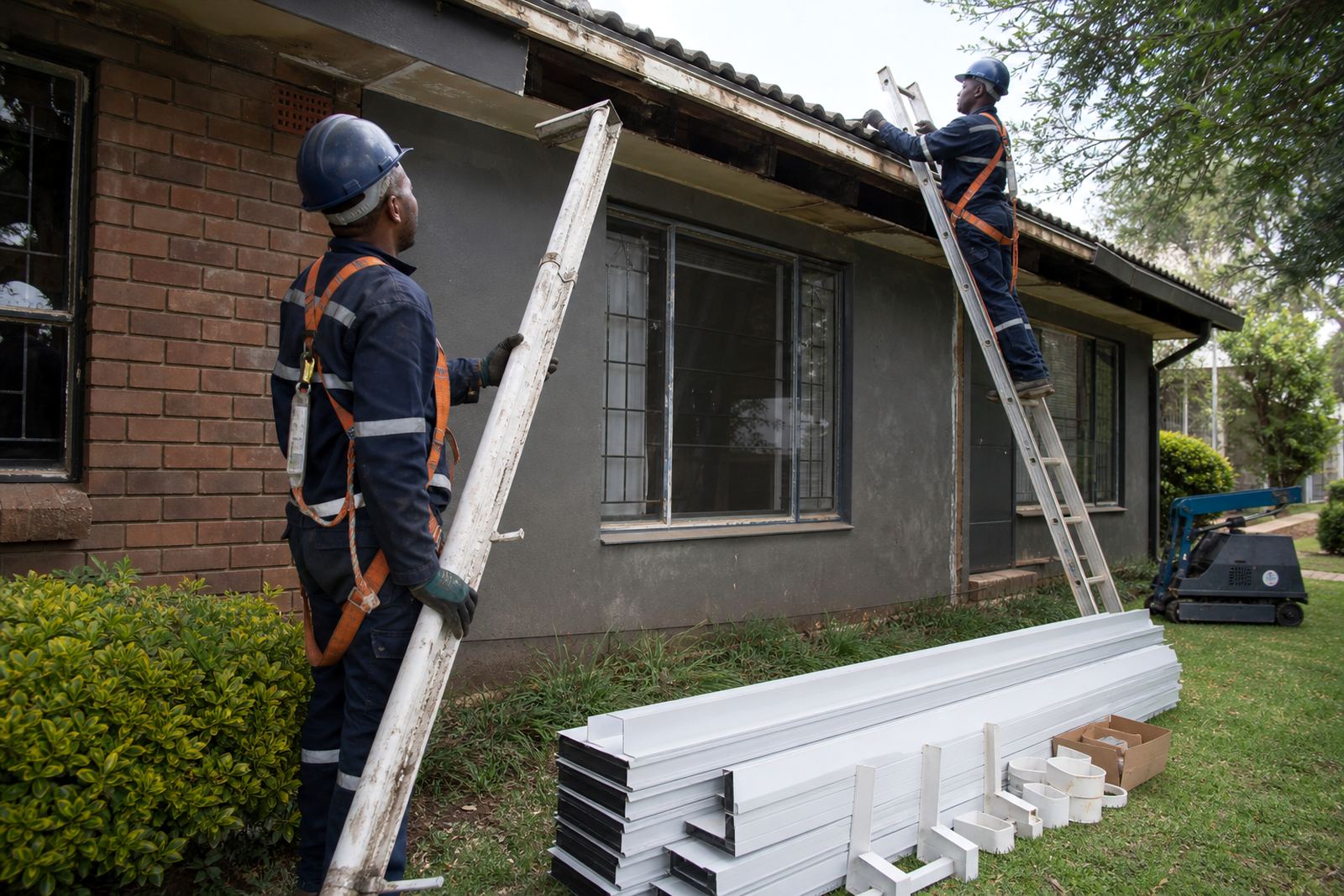
The process usually begins with a site measure and a look at the existing roof edge, soffit condition and any water damage below the gutters. Once the lengths, corners and outlet points are confirmed, the old roofline parts are removed carefully so the roof edge is not damaged further. Where timber is still sound, it can sometimes be retained, but if the fascia is soft or split it is better replaced at the same time.
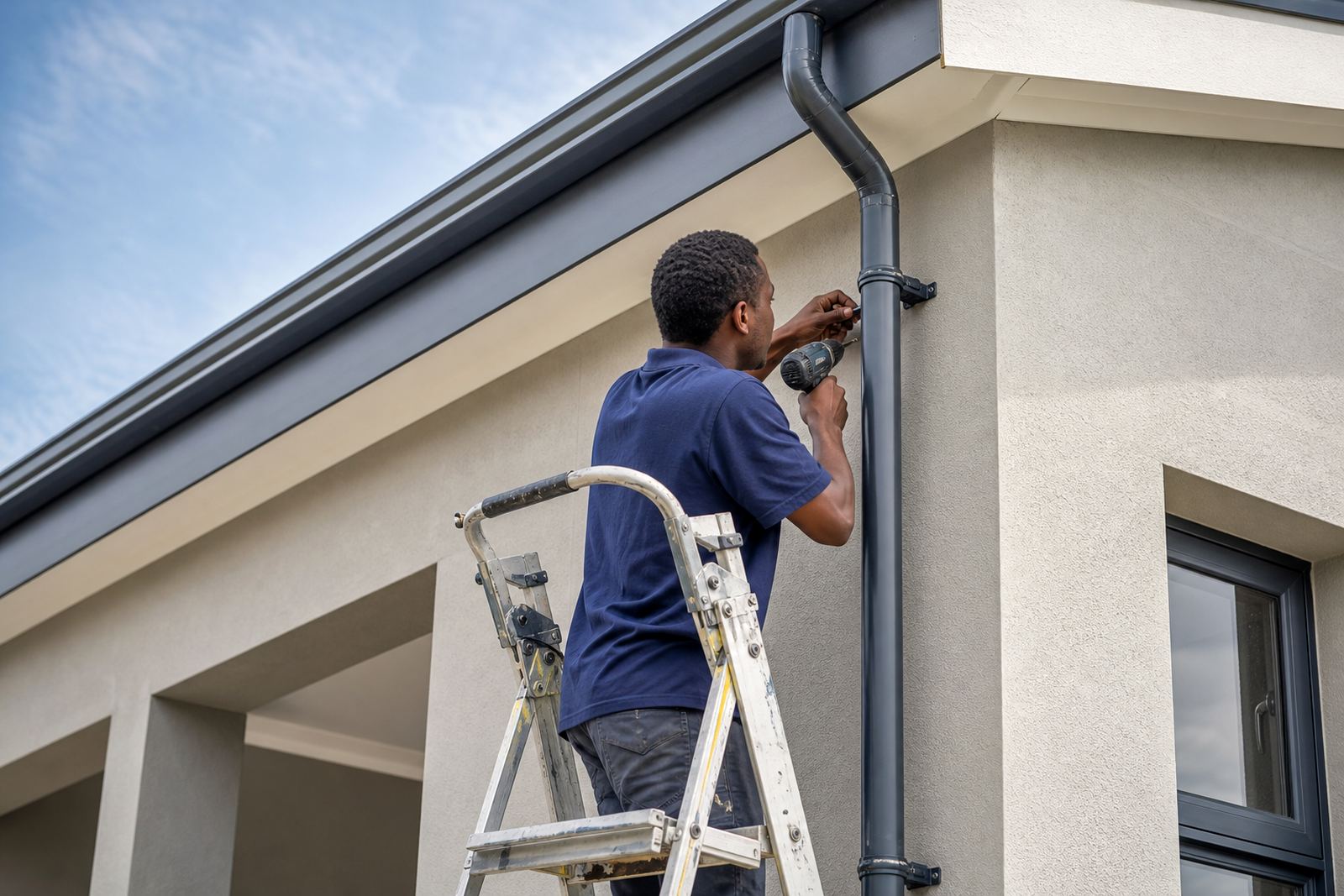
New composite fascia boards are fixed first, then the gutter line is set out and brackets are installed to the correct spacing. Downpipes are connected last, with joints aligned and secured so they can handle normal movement and seasonal expansion. Before handover, the line is checked for leaks, correct fall and clean discharge through the outlets.
- Site measuring and material takeoff
- Removal of failed roofline components
- Installation of fascia, gutters and downpipes
- Final leak check and flow test where practical
Where Composite Roofline Parts Help Most
Plastic-steel composite roofline parts are useful where moisture and sun have worked on older materials. They are practical for coastal towns with salt in the air, inland homes that get strong afternoon heat, and commercial buildings that need a cleaner looking edge with less ongoing patching. The material choice is helpful where timber fascia keeps needing paint or where metal parts have begun to rust at joints and cut ends.
For builders, the main benefit is consistency of size and a tidy finish across longer runs. For homeowners, it means less time spent on constant repairs to split boards, leaking corners or sagging gutters. The result is a roof edge that looks straight and moves water away from the building more reliably.
- Suitable for residential and commercial roof edges
- Useful in humid, coastal and high-sun areas
- Helps reduce rust, rot and repeated repainting
- Supports a cleaner line along the eaves
Pricing That Follows The Roof, Not A Guess
Roofline replacement pricing depends on the measured lengths, the number of corners and joins, the gutter profile, the number of downpipes, and how much old material must be removed. Access also affects the job, because a single-storey eave is not the same as a higher roof with restricted access or awkward corners. A proper takeoff gives a fairer figure than a rough estimate over the phone.
Plasteel handles supply as well as fitting support for builders and homeowners, so the material list can be matched to the actual roof edge rather than over-ordering. Where a project is part of a larger roof repair, the team can also coordinate delivery to the relevant area, including Randburg, Johannesburg, Pretoria, Durban, Cape Town, Polokwane and surrounding suburbs.
- Measured pricing based on roof length and component count
- Adjustments for access, corners and outlet positions
- Supply and installation options available
- Delivery coordination available for project planning
Aftercare After The New Line Is In Place
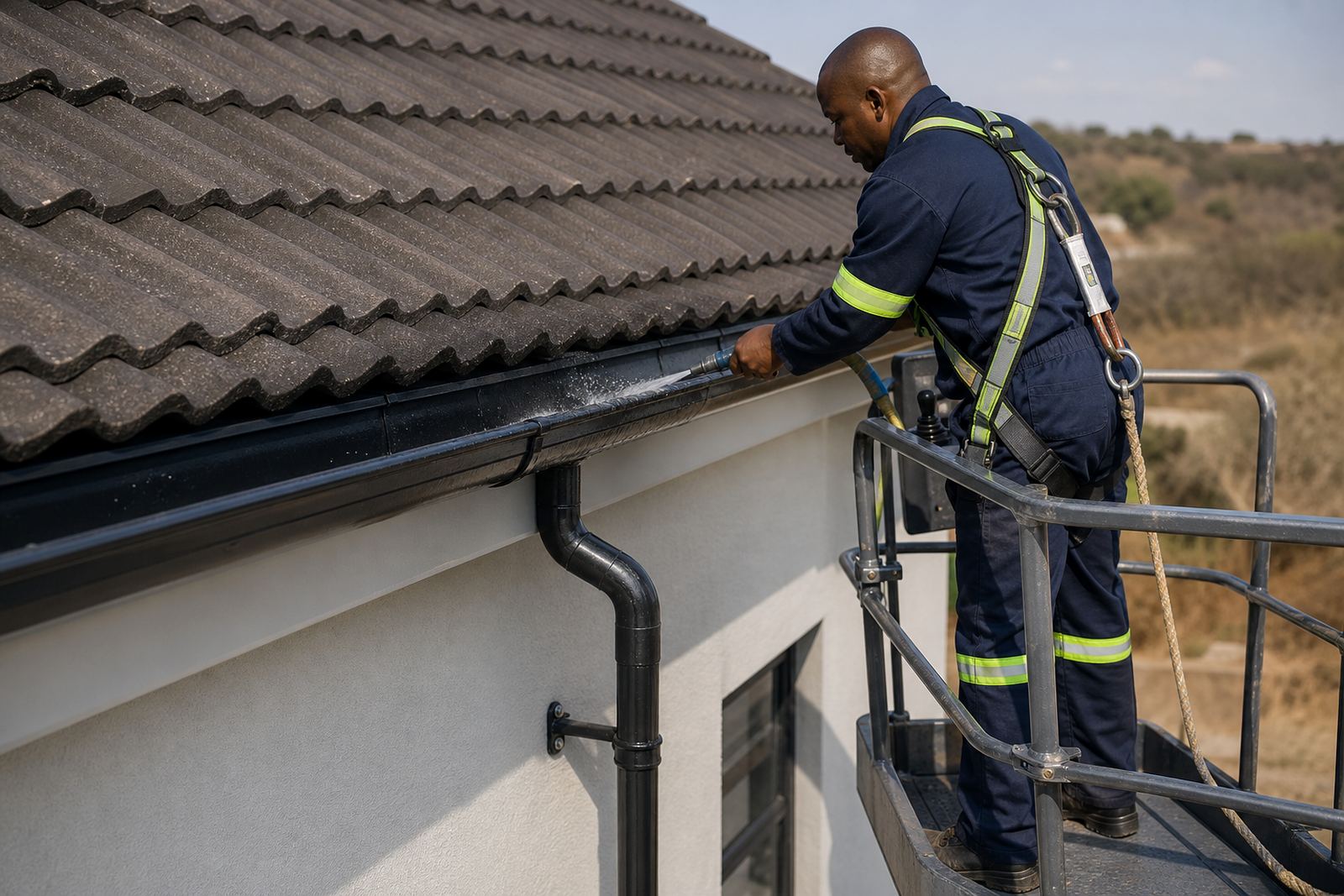
Once the new roofline is fitted, the main aftercare is straightforward. Keep gutters clear of leaves, grit and roof moss so water can move freely, and check that outlets are not blocked after heavy rain. If a branch, ladder or strong wind has disturbed the line, it is worth inspecting the brackets and joints before a small issue becomes a leak.
For builder support or homeowner advice, Plasteel can assist with replacement parts, follow-up leak checks and maintenance visits where needed. The aim is to keep the roof edge working cleanly, not to turn a simple roofline into a repeat repair job. In many cases, a well set composite system needs only basic cleaning and the occasional check of fixings and seals.
- Remove leaves and dirt from gutter runs
- Watch outlets and downpipes after major rain
- Check for movement where brackets carry long spans
- Use competent people for any work done at height
Key facts
| Composite gutter lengths | Selected to suit the measured roof run and outlet positions |
|---|---|
| Downpipe sizes | Commonly matched to the roof load, often 75 mm to 100 mm equivalent |
| Fascia board use | Replacement of rotten, split or weathered roof edge boards |
| Fixing method | Brackets, joints and outlets set to maintain line and fall |
| Project scope | Homes, complexes, shops, workshops and light commercial roofs |
| Coverage | Kya Sand, Randburg plus deliveries to major South African centres |