Roofline planning that suits the building
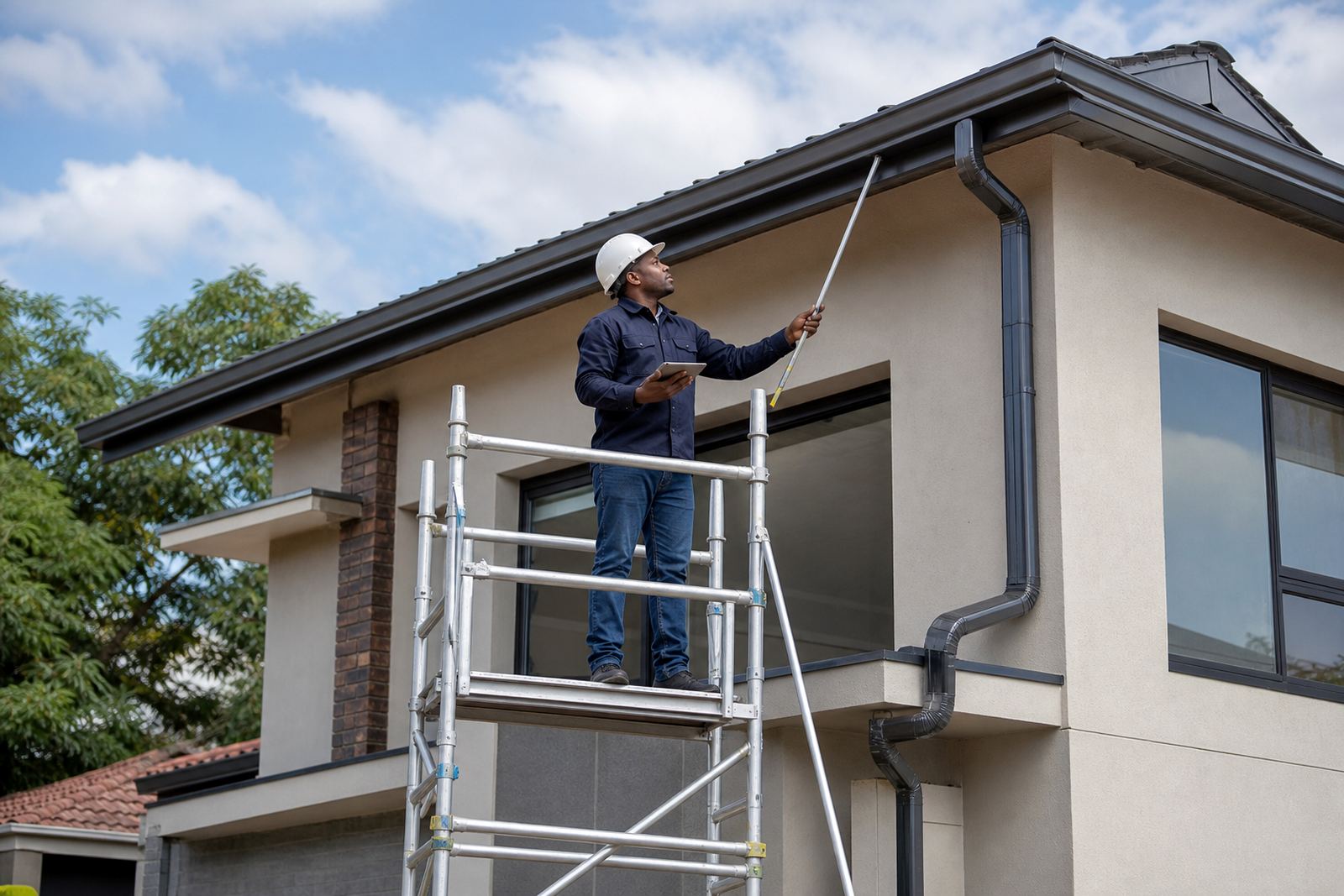
Good builder support begins with the roof itself. A straight gutter run on a small home is very different from a long commercial roof with several valleys, changes in fall and more downpipes. We assess the roof edges, fascia line, eaves projection, outlet positions and the way water should move off the roof without pooling or overshooting. That helps reduce rework and keeps the job moving on site.
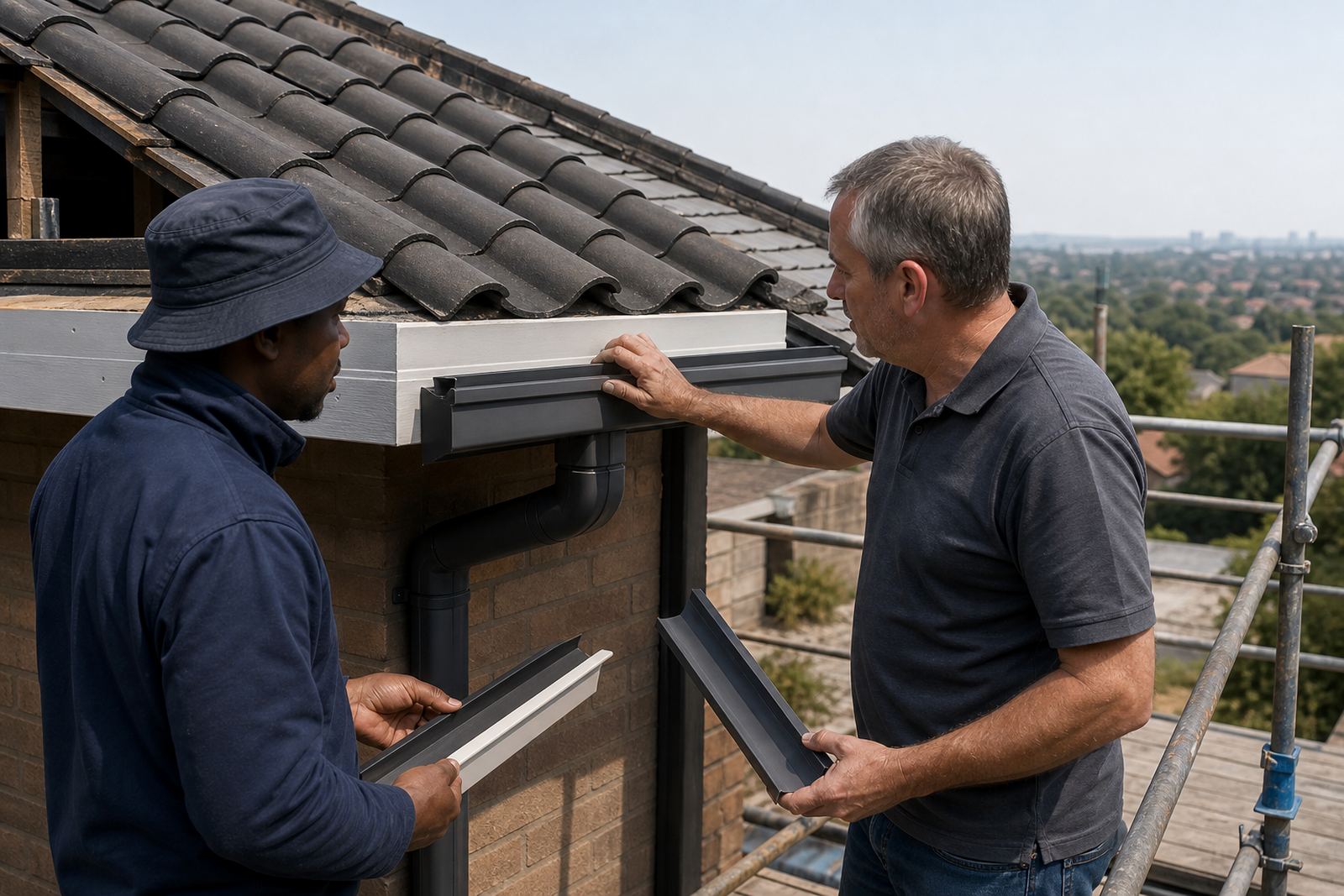
For most projects, gutter size is chosen against roof area and expected rainfall, while downpipe size is matched to outlet demand and the length of each run. Fascia boards need to carry the line cleanly, cover the roof edge neatly and give a firm fixing point for the gutter brackets. On coastal jobs in Durban or Cape Town, material choice also needs to consider humid air and salt exposure, while inland jobs often need attention to UV and heat.
- Roofline checks for lengths, corners, end caps and outlet positions
- Gutter and downpipe sizing suited to the roof area
- Fascia board selection for a neat, stable edge line
- Material advice for inland, coastal and high-exposure sites
What builder support covers on site and off site
Builder support covers the practical items that make a gutter project run properly. That includes material takeoff, product selection, roofline layout planning, delivery coordination and advice on installation sequence. If the site has mixed roof heights, long eaves or awkward junctions, we help flag the details before the first bracket goes up.
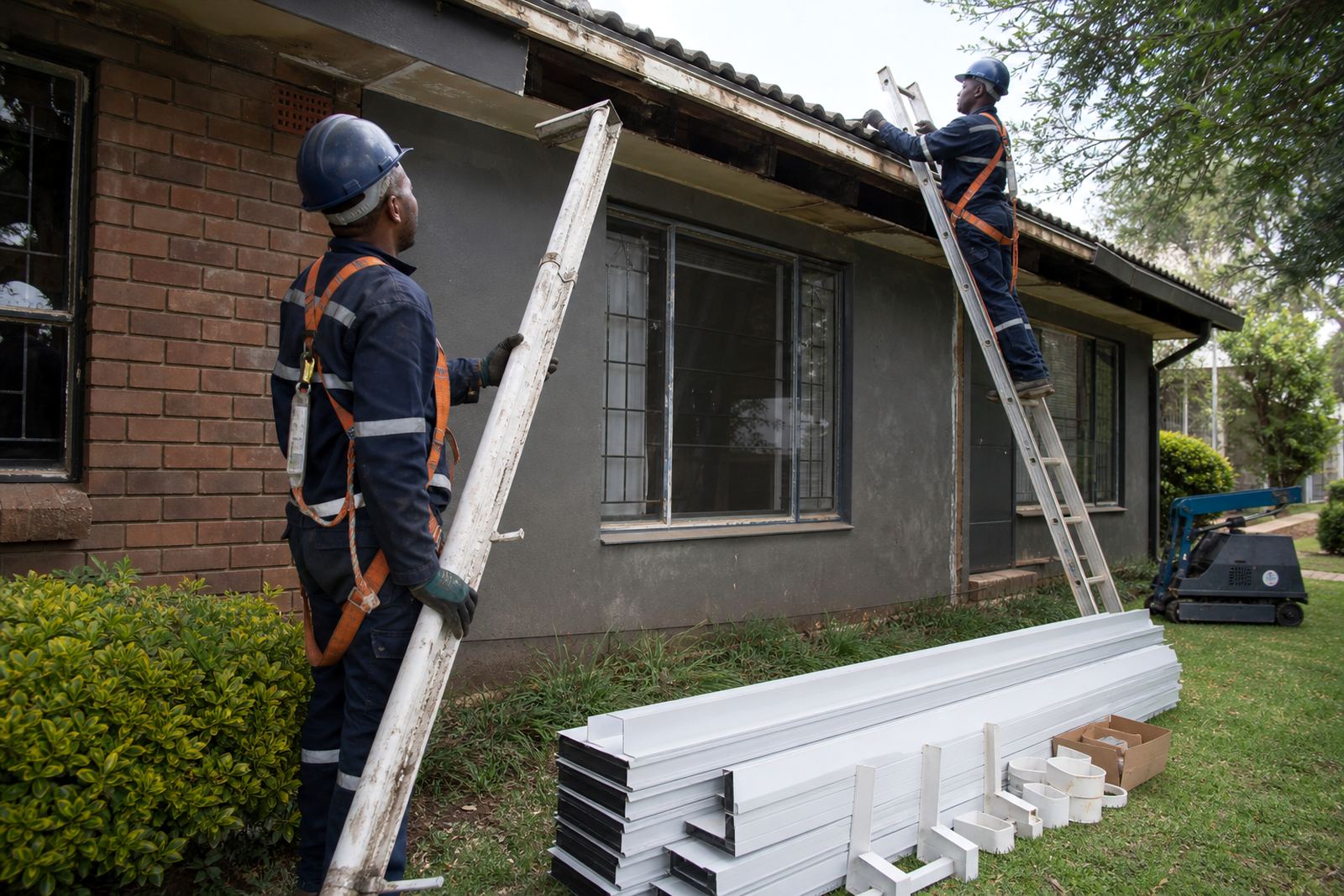
We also assist with replacement work where old gutters, fascia boards or downpipes are being changed during a roofline renewal. In those cases, fixing points, old timber condition and existing falls have to be checked carefully. Roofing work at height must be done safely by competent people with proper access equipment and safe handling practices. That is not the place for guesswork.
- Site measuring for lengths, offsets and roofline changes
- Material takeoff for gutters, downpipes, connectors and brackets
- Layout advice for falls, corners and outlets
- Support for new builds, repairs and roofline replacement
Sizes, falls and fittings that matter
The right profile and size depend on the building. In practice, gutters are selected to suit the roof pitch, catchment area and number of outlets. Downpipes must be large enough to move water away quickly, especially where one outlet serves a longer run. Fascia boards must be straight, secure and sized to support the gutter line without sagging.
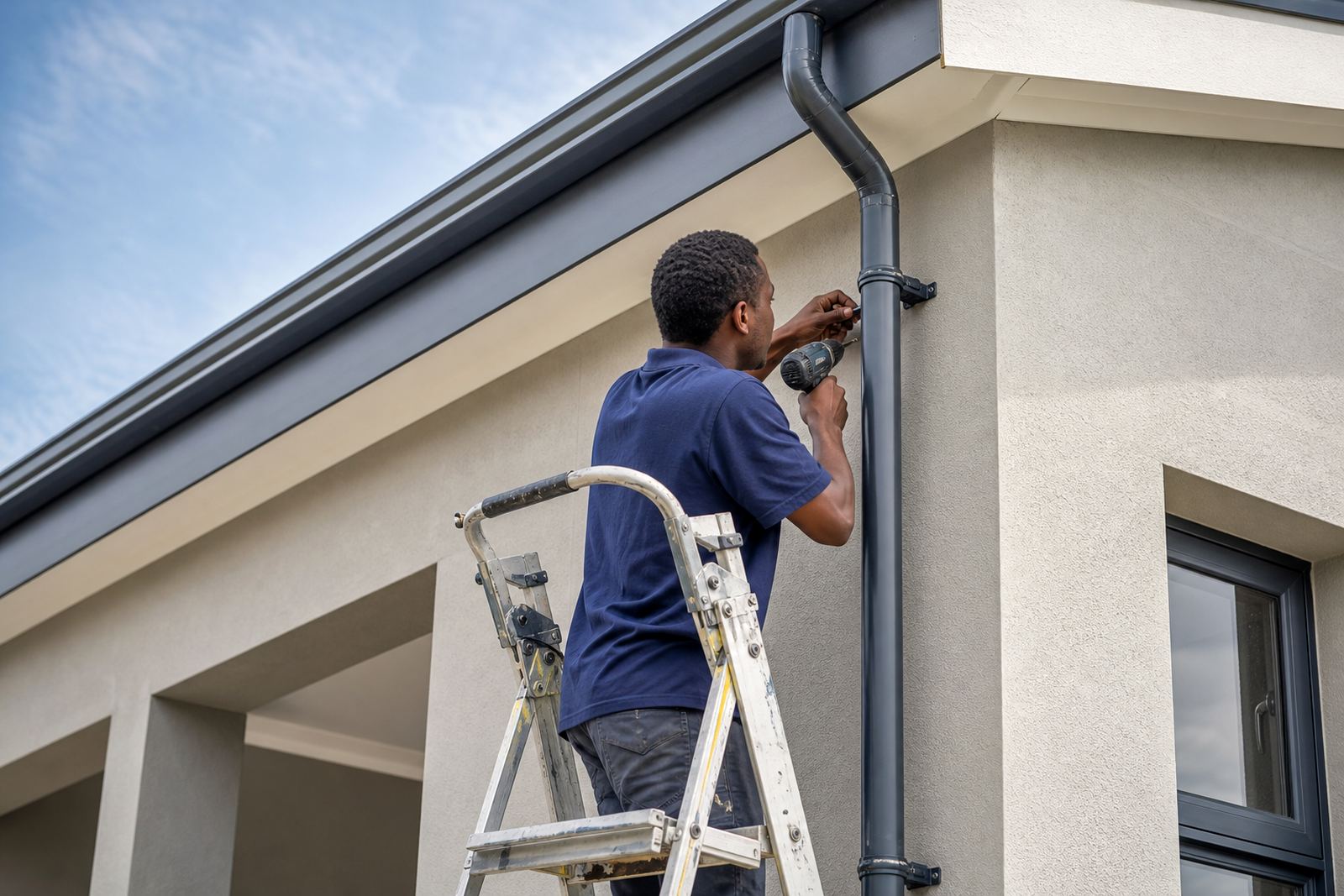
Falls matter just as much as size. A gutter should be laid to a steady fall toward the outlet so water keeps moving and does not sit in low spots. Too little fall can leave water standing, while too much can look uneven and stress the line. Brackets need to be spaced properly and fixed into sound structure, not just whatever timber happens to be close by. Clean joints, correct seal points and accurate cuts make the difference between a tidy roofline and a troublesome one.
- Typical items include gutter lengths, angles, outlets, brackets and end caps
- Downpipes are planned with bends, straps and discharge points in mind
- Fascia boards should align with the roof edge and support bracket fixing
- Falls are set to keep water moving without sharp dips or visible distortion
How the support process works
Most projects begin with a site measure or a plan review. From there, the roofline is mapped, quantities are worked out and the product list is matched to the job. If the project is in Randburg, Midrand or Roodepoort, supply can be arranged from Kya Sand. For other areas such as Pretoria, Durban, Cape Town and Polokwane, delivery coordination is set up around the site programme.
Once the materials are confirmed, the job can move into installation planning or direct supply, depending on what the contractor needs. Some builders only need the material schedule and a layout suggestion. Others want fuller support, including replacement guidance for a tricky roof edge, or advice on where to place outlets to deal with heavy rainfall. The process stays practical and focused on the site conditions, not a one-size-fits-all package.
- Measure or review the drawings and roofline details
- Confirm gutter, fascia and downpipe quantities
- Set the layout for falls, joins and outlet positions
- Arrange supply or delivery to the site
Pricing approach for builders and homeowners
Pricing is shaped by the scope of the roofline work, the lengths required, the number of corners and outlets, and whether the job is a new install or a replacement. A simple straight run with few fittings is different from a multi-side roof with several downpipes and fascia changes. Material selection also affects cost, especially where the project calls for specific sizes or more fittings to handle the layout.
Builder support pricing is approached on a practical basis, with the aim of matching the product list to the job so there is less waste and fewer unexpected extras. For homeowners, that means getting a realistic picture before the work starts. For contractors, it helps with quoting, ordering and sequencing on site. Where a project has access limits, higher roof sections or more complicated junctions, those details are taken into account during planning.
- Costs depend on lengths, fittings, roof complexity and access
- Replacement work may need extra items for fixing and alignment
- Delivery can be coordinated with the site schedule
- Material takeoff helps reduce shortages and excess stock
Aftercare once the gutter line is in place
Once the system is fitted, aftercare is mostly about checking the roofline after heavy rain and keeping the flow path clear. Leaves, grit and roof debris can build up at outlets and in corners, especially where trees are close or there is dust from nearby construction. A quick visual check after storms can catch a loose bracket, a blocked downpipe or a joint that needs attention.
We can also assist with maintenance visits, leak checks and general advice on keeping the line working properly. Fascia boards should be kept sound and dry, and any damaged fixings should be replaced before they affect the gutter line. In humid or coastal areas, regular inspection is helpful because fasteners and joints can be under more stress from the weather.
- Check for blockages at outlets and downpipe entries
- Watch for sagging, loose brackets or standing water
- Inspect joints, corners and fascia fixings after heavy rain
- Arrange support if the roofline needs repair or adjustment
Local supply for active building sites
Plasteel works from Kya Sand, Randburg and supports building projects across Johannesburg, Pretoria, Durban, Cape Town and Polokwane. That includes supply for contractors who need reliable quantities and homeowners who want a cleaner, better planned roof edge. The team handles builder support alongside delivery coordination, so materials can be matched to the site without unnecessary back-and-forth.
For practical project help, the focus is on the roofline details that matter: the right profile, the right size, a proper fall, sound brackets and clear discharge points. Whether the job is a small home, an office block or a larger residential development, the aim is the same, a gutter and fascia line that fits the building and holds up to local weather conditions.
- Support for residential and commercial roofline work
- Supply across major South African centres and surrounding areas
- Advice for new work, replacements and mixed-material projects
- Contact through the enquiry form on the contact page
Key facts
| Gutter options | Composite gutter materials for residential and commercial rooflines |
|---|---|
| Downpipe sizing | Matched to outlet demand and roof area |
| Fascia boards | Straight, fixed boards for gutter support and edge finish |
| Fixings | Brackets, joints, outlets, angles, straps and end caps |
| Layout factors | Falls, corners, roof pitch and discharge points |
| Project support | Measuring, takeoff, supply, installation guidance and delivery coordination |