
Working above ground level without shortcuts
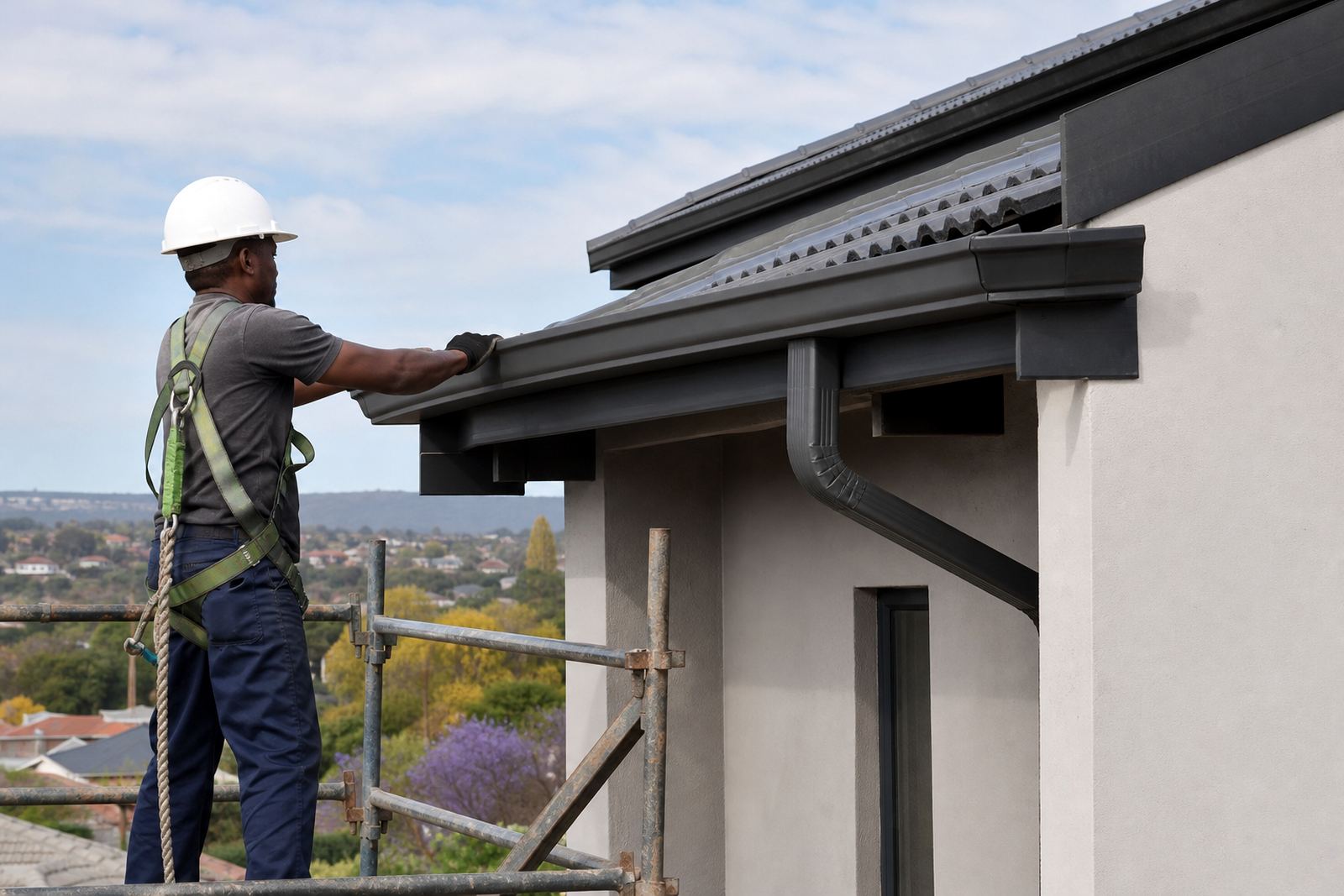
Any gutter, fascia or downpipe job that takes a person onto a roof, ladder or elevated platform carries risk. Slips happen quickly on dusty tiles, metal roofing, damp timber and coastal humidity can make surfaces slick. The safe approach is to plan the work before anyone climbs up, check the access route, and keep the area below clear of people, vehicles and loose materials.
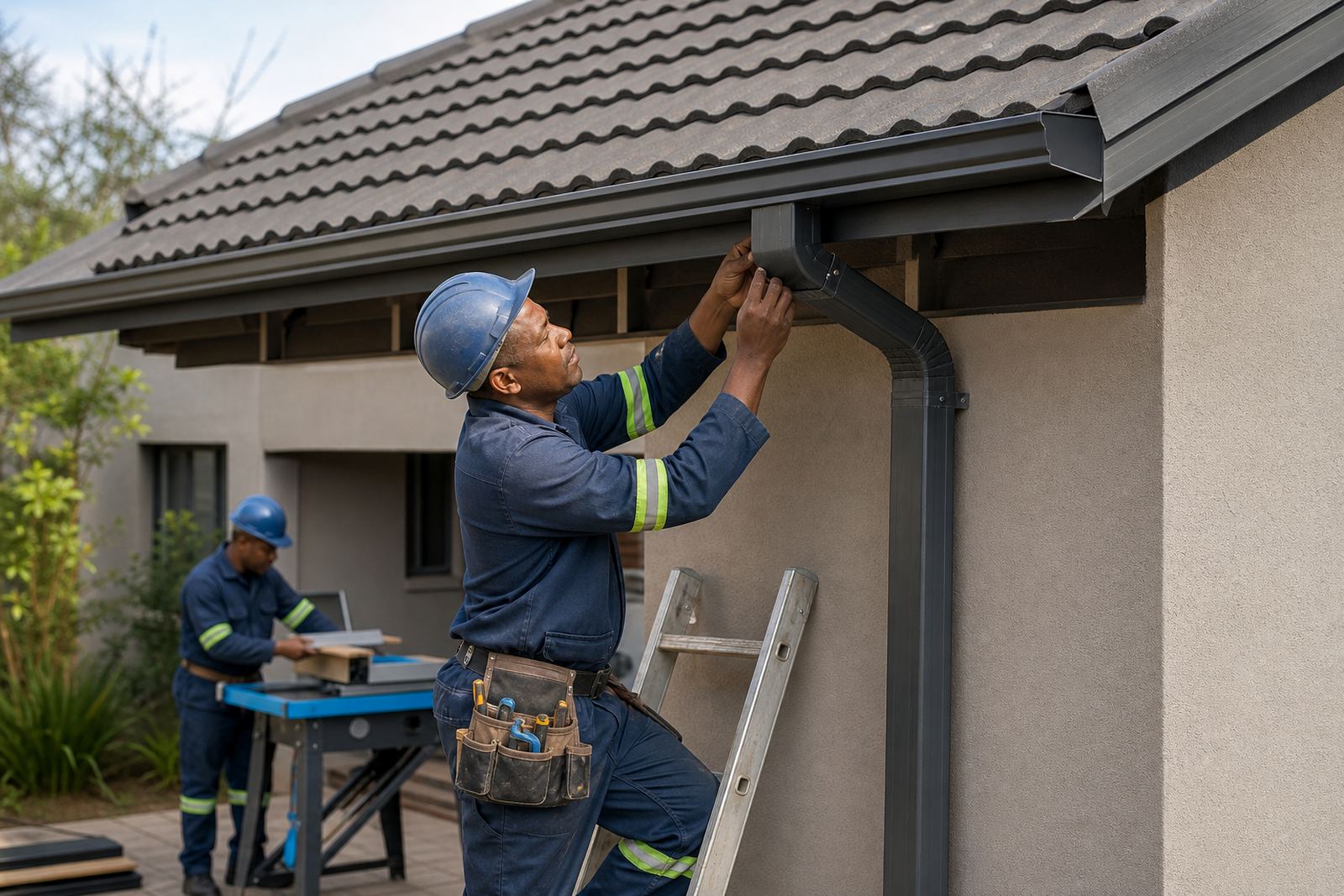
Competent installers know how to move along a roofline without overreaching, how to position ladders correctly, and how to secure tools so nothing falls. If a section looks awkward to reach, it is better to stop and use the correct access method than to stretch from an unsafe position.
- Set ladders on firm ground and keep the angle stable.
- Do not work in wind, rain or on wet roof surfaces.
- Keep one person on the ground to manage tools and movement.
- Use fall protection and edge control where the job requires it.
What to check before gutters are lifted into place
Before fitting new gutters, the roof edge, fascia line and fixing points should be inspected properly. A gutter only drains well if the fall is set correctly from the start. On long runs, the fall is usually gradual, not steep, so water moves toward the outlet without standing in the channel. If the slope is uneven, water pools, dirt builds up and the gutter can overflow at the wrong point.
Composite gutter and fascia materials should be handled with care during transport and installation. Check lengths against the roofline, confirm bracket spacing, and make sure joins, unions and stop ends are placed where they can be maintained later. On larger homes and commercial buildings in Johannesburg, Pretoria or Durban, access planning matters even more because roof sections can be higher and longer than expected.
- Measure the run before cutting any material.
- Check the fascia for rot, movement or loose fixings.
- Confirm outlet positions and downpipe routes.
- Allow for expansion and movement at joins where needed.
Safe handling of gutters, downpipes and fascia boards
Plastic-steel composite components are practical for South African conditions, but they still need correct handling. Long boards can flex if carried badly, and gutter sections can crack if they are dropped onto hard ground. Lift with two people where the length demands it, especially on site in windy areas such as Cape Town or coastal towns where gusts can catch a loose piece. Keep cut edges neat and remove swarf, offcuts and fixings from the roofline before moving on.
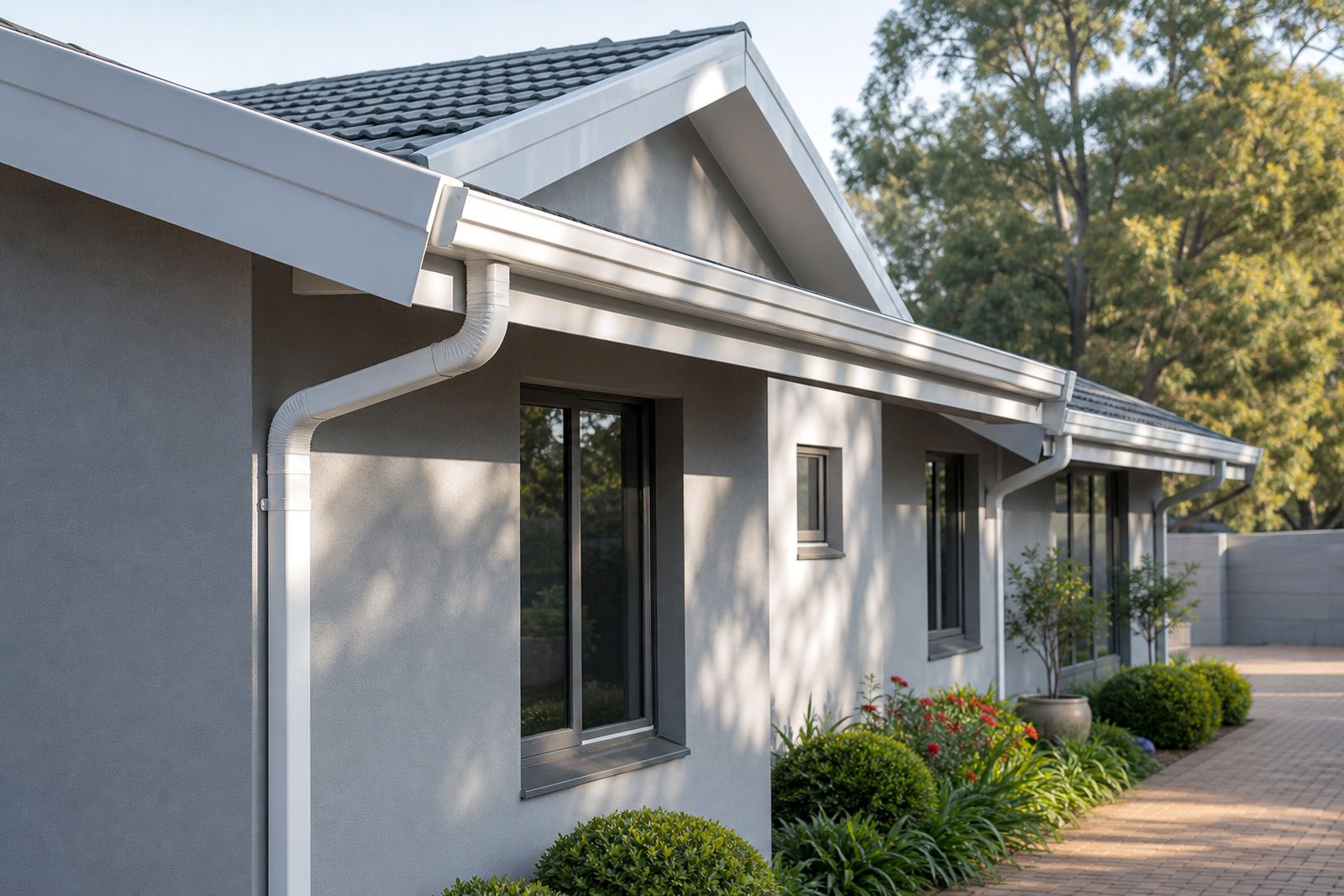
Downpipes should be secured with proper brackets so they do not rattle or pull away in strong wind. Fascia boards must sit straight, with fixings placed into sound backing where possible. If the existing timber is damaged, the fix may need repair before the new material goes on. A neat finish depends on the structure behind it, not only the visible face.
- Carry long pieces flat and supported at both ends.
- Store materials off the ground and out of direct traffic paths.
- Use the correct fixings for the substrate and local conditions.
- Trim ends square so joints close properly.
Signs the roofline needs attention before water damage grows
Homeowners and builders should look out for early signs that a roofline has gone out of shape. Water marks on walls, sagging gutters, drip lines over entrances, damp fascia boards and overflowing corners usually point to a drainage issue. In parts of KwaZulu-Natal and the Eastern Cape, heavy rain can expose a small problem very fast. In drier inland areas, dust and leaves can block outlets until the first proper storm arrives.
If a gutter is filling too slowly, the fall may be incorrect or the outlet may be restricted. If a downpipe keeps loosening, the brackets may be too far apart or the wall fixings may not be holding. A maintenance visit should always include a full visual check of the roof edge, not only the obvious leak point.
- Look for standing water after rain.
- Check for rust, splits, warping or movement at joins.
- Inspect leaf build-up near outlets and corners.
- Watch for staining on brickwork, plaster or paving below.
Maintenance that keeps the system working properly
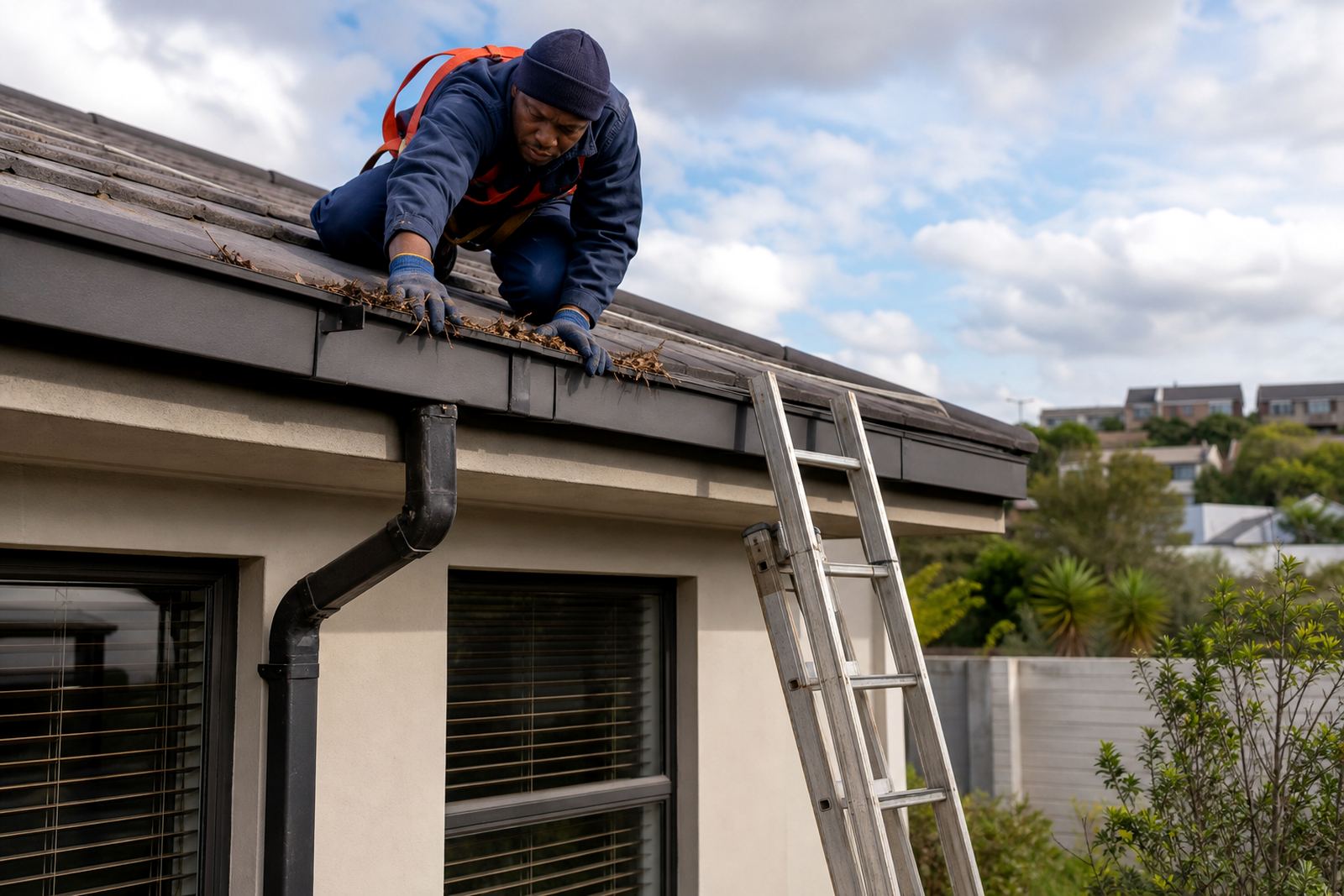
Routine maintenance is part of safe roofline ownership. Gutters should be cleared of leaves, dust and roof debris so the water can flow freely. Downpipes should be checked for blockages and fascia boards should be inspected for soft spots, movement or loose fasteners. A simple clean-out and inspection can prevent a much larger repair later. It also helps when maintenance is done by someone who understands how the whole run is set out.
For buildings in coastal or high-rainfall areas, maintenance may need to happen more often because moisture, salt and windborne debris affect the roofline faster. In estates and business parks around Randburg, Midrand and Roodepoort, safe access and site control matter too, especially where vehicles or pedestrians pass close to the building.
- Clear gutters before the rainy season and after heavy wind.
- Check brackets, outlet heads and end caps for movement.
- Keep ladders and access points away from walkways and parked cars.
- Report any sagging or leaks before they spread.
When to call in competent roofline installers
If the job needs roof access, fall protection, accurate setting-out or replacement of damaged sections, it should be handled by people who work safely at height and understand roofline fitting. That includes site measuring, material takeoff, gutter installation, fascia installation, downpipe installation and roofline replacement. It also includes checking the structure behind the visible finish, because a neat gutter line is only as sound as the fixing behind it.
Good planning keeps the work safer and the result cleaner across Johannesburg, Pretoria, Durban, Cape Town and Polokwane. Safe access, correct falls, proper brackets and regular maintenance all play a part. If the roofline needs attention, deal with it before the next storm tests every weak point.