Start With A Safe Ground-Level Check
Before climbing a ladder, walk around the building and look for obvious trouble spots. Check for sagging gutters, downpipes that are leaning, joints that have opened, and water marks on fascia boards or exterior walls. If you notice overflow after rain, the gutter may be blocked or the fall may not be carrying water correctly.
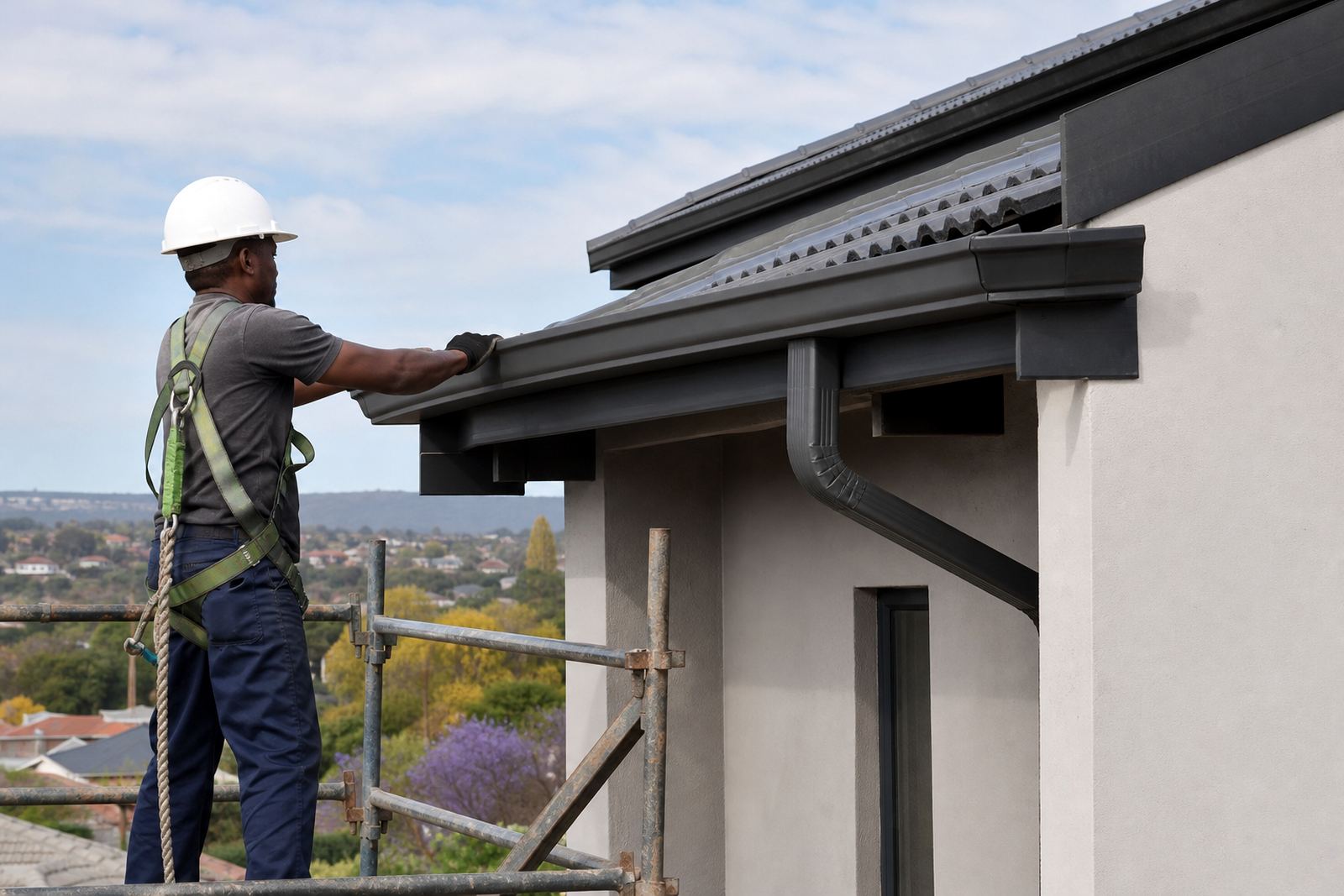
For anything higher up, work at height must be done safely by competent people with the right access equipment. A quick visual check from the ground is often enough to decide whether a closer inspection is needed, and it reduces the chance of small faults being missed.
Cleaning Gutters Without Damaging The Profile
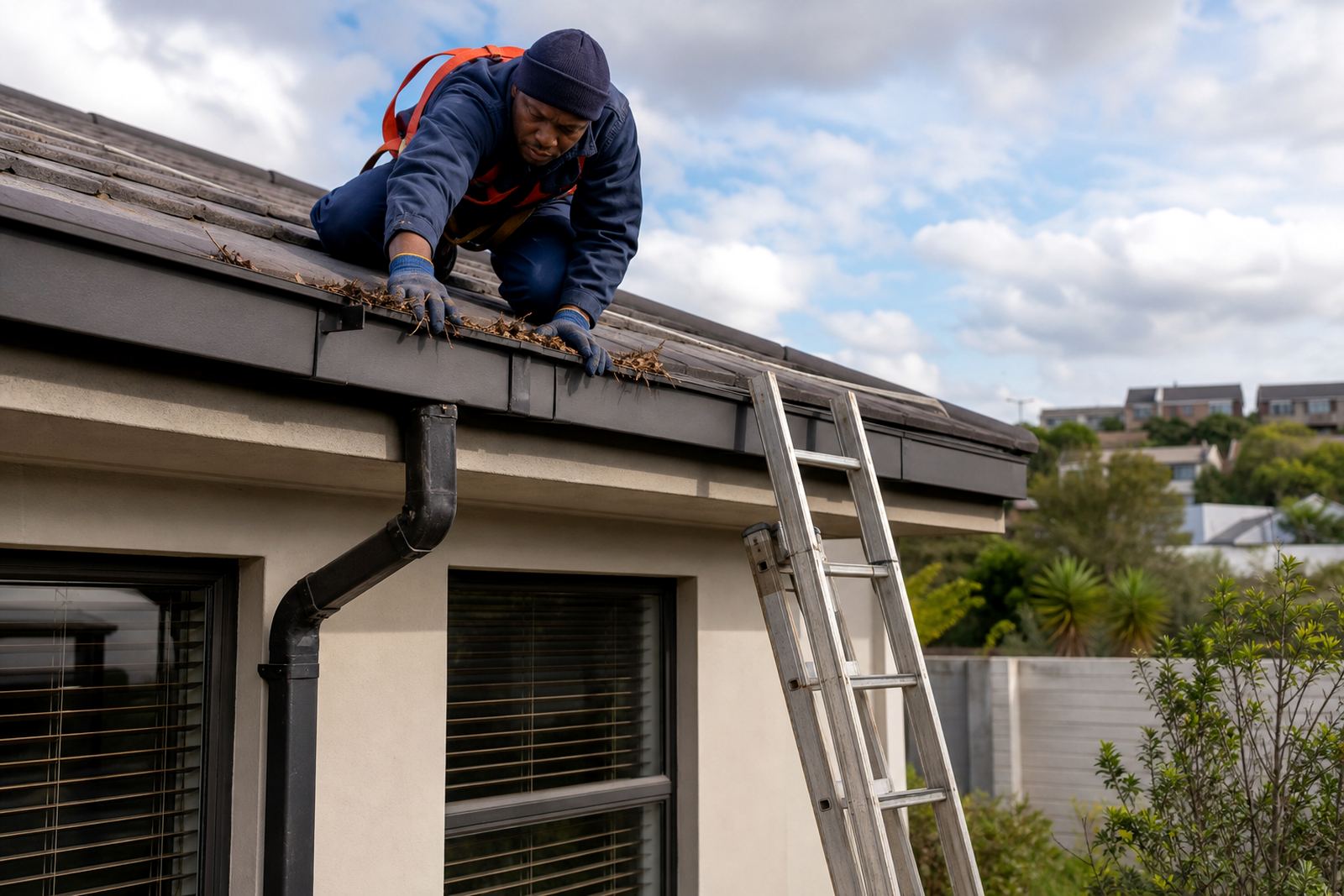
Leaves, twigs, roof grit and mud build up faster than many property owners expect, especially near trees and in windy coastal areas. Clean gutters with hand tools or low pressure water and avoid sharp edges that can scratch the surface or loosen the fixing points. If the system has leaf screens, inspect them as well because they can trap dirt if left for too long.
- Clear visible debris first, then flush the gutter to see where water pools.
- Check mitres, stop ends and outlet points for leaks or blockages.
- Remove moss and silt that sit near the roof edge and wash back into the channel.
- Do not overfill the gutter with hose water, a light flush is enough to test flow.
Seasonal Checks That Save Repair Work
Before the heavy summer rains and again after windy winter spells, give the roofline a proper look. In places like Johannesburg and Pretoria, storm run-off can test the system in a short time. In Durban and Cape Town, salt air and moisture can affect metal fixings and finish, so fittings need a closer look for corrosion or loosened screws.
Watch the slope of each run. A gutter should carry water towards the outlet without holding standing water along the length. If water sits in the same section after rain, the fall may be wrong or the brackets may have shifted a bit.
What To Watch For On Fascia Boards
Fascia boards support the edge of the roofline and help hold the gutter in place. Look for swelling, cracking, staining, peeling paint or soft spots where moisture may have entered. If the board is warped, the gutter can lose its line and water may spill behind the system instead of into it.
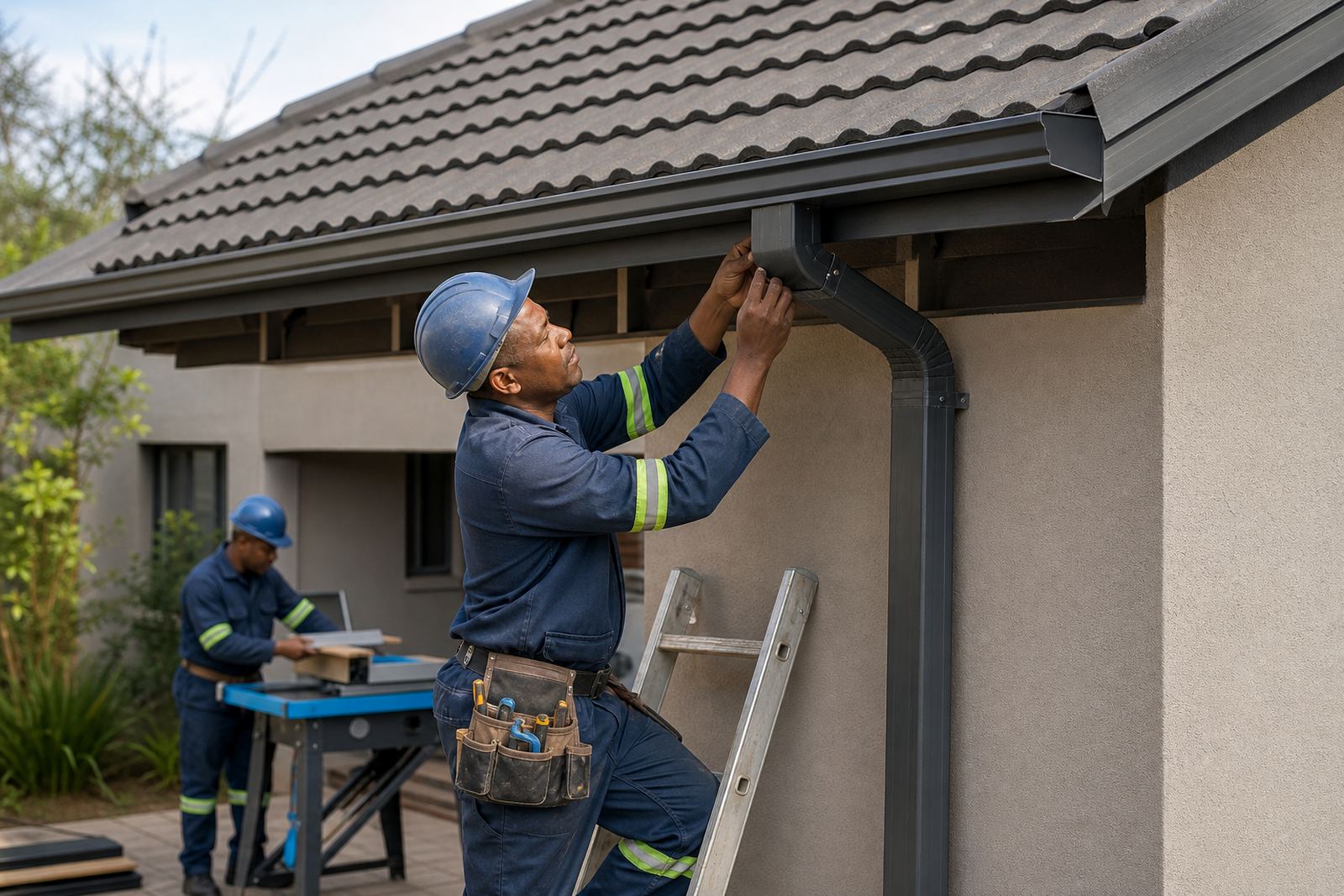
When replacing or repairing fascia, the new board should sit straight and match the roof edge cleanly. Fasteners must be secure, but not so tight that they split the board. Poorly fitted fascia can shift the gutter alignment and make future maintenance harder.
- Check for nail pops, loose screws or gaps at joins.
- Look for dark staining beneath joints, which can show repeated leaks.
- Inspect paint or coating breakdown near the roof edge first.
- Where boards are damaged, replace the affected section instead of patching over rot.
Downpipes Need Clear Flow All The Way Through
A blocked downpipe can send water back into the gutter and over the edge. Start by checking the top inlet and the bottom discharge point for leaves, mud or small stones. If the pipe runs underground or into a drain, make sure it is not backing up at the outlet. In areas with hard summer storms, one blocked pipe can overload the whole run very quickly.
Joints should be tight and aligned, with brackets holding the pipe close to the wall. Loose brackets let the pipe move in wind and can crack the joints over time. If a pipe rattles or pulls away from the wall, the fixing points need attention.
When Maintenance Turns Into Replacement
Some faults can be cleaned and tightened, but repeated leaks, rust-through, split corners or warped sections usually point to deeper wear. If brackets have torn out, the gutters may no longer hold the correct line and the same blockage problem can return after each rain. At that stage, a roofline replacement or section repair is usually more practical than patching the same spot again.
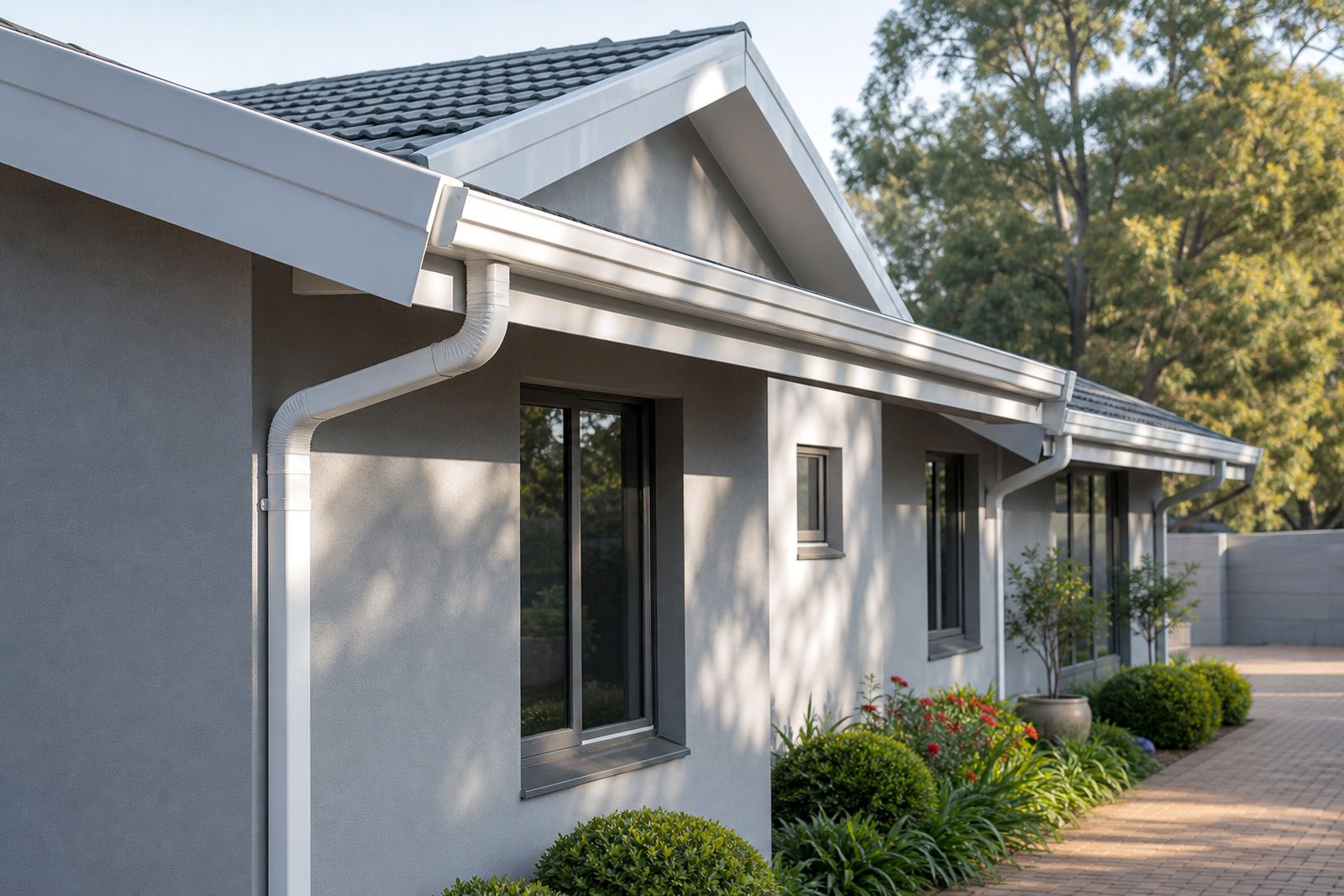
Builders often ask for material checks before new work starts, while homeowners want a clear view of what can be repaired and what should be changed. A proper site measure and material takeoff helps match gutter size, downpipe size and fascia lengths to the building, so the parts fit the roofline properly and the water can move where it should.