Picking the right gutter profile for the roof edge
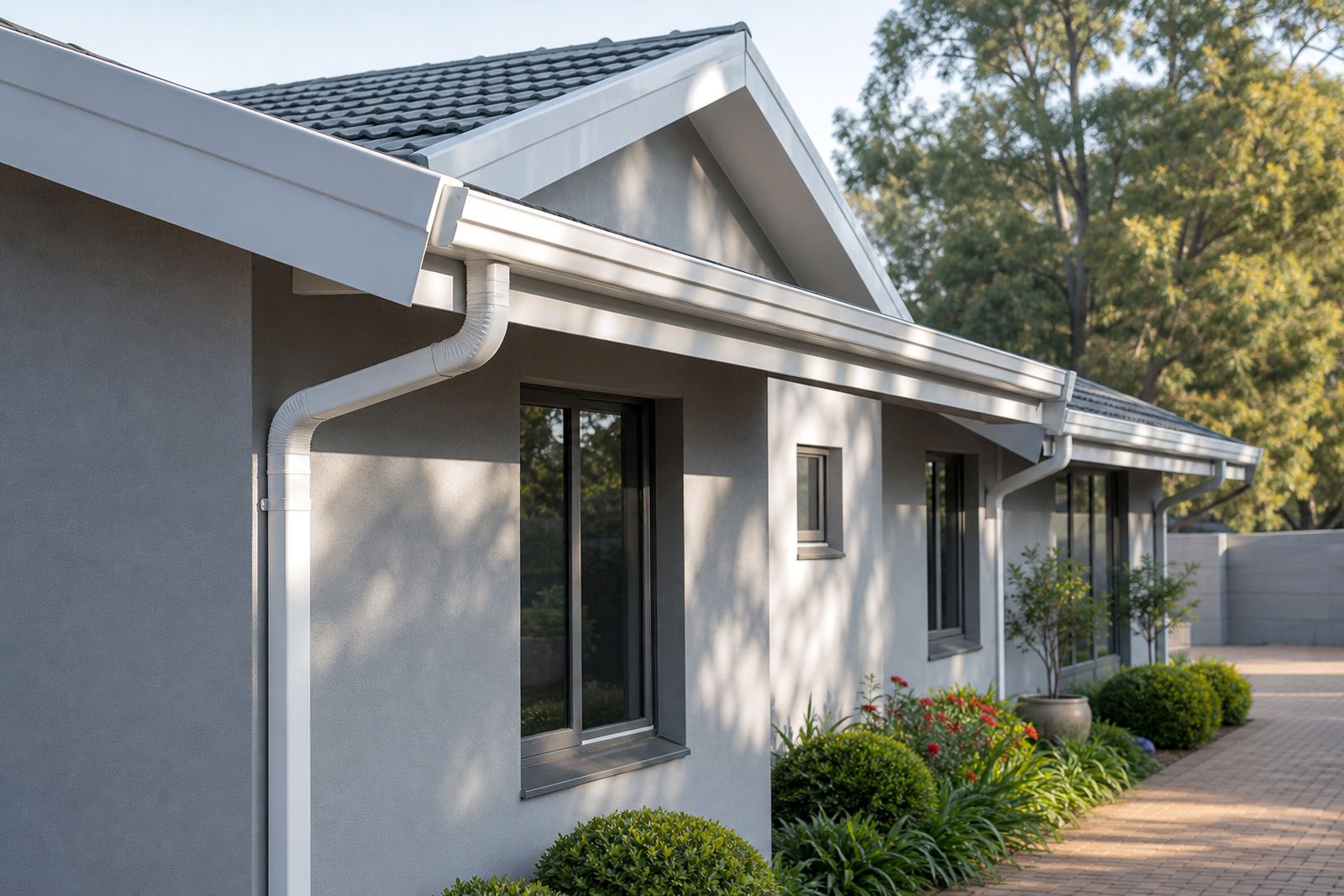
Gutters need to suit the roof edge, the rainfall in the area and the way water leaves the roof. A small patio roof may take a narrower profile, while a larger house or commercial roof often needs a deeper gutter to move water more comfortably during heavy rain. In coastal towns, salt in the air can also mean more frequent checks on fixings and joints.
When matching a gutter profile, measure the roof width, look at the number of roof valleys feeding into one line and check where the outlet will sit. A gutter that is too shallow can overflow during a storm, while one that is too large for the roofline may look awkward and collect more debris than needed.
- Small roof sections usually need a compact profile and fewer outlets.
- Longer roof runs need careful fall planning to keep water moving.
- Boxes, parapets and valleys often need extra attention at the corners.
Downpipe choices and where they should discharge
Downpipes move rainwater away from the roofline and must be sized to suit the gutter volume. A short roof run may cope with a single downpipe, while a longer building often needs several drop points to reduce backup. The position matters too, because a downpipe placed too far from the outlet can trap water in the gutter and leave marks on fascia boards.
For most homes, installers look at the roof area, the expected rainfall load and the route to stormwater or another approved discharge point. Where the building has paving, boundary walls or narrow side passages, the discharge route needs planning so water does not pool against walls or run onto neighbouring stands.
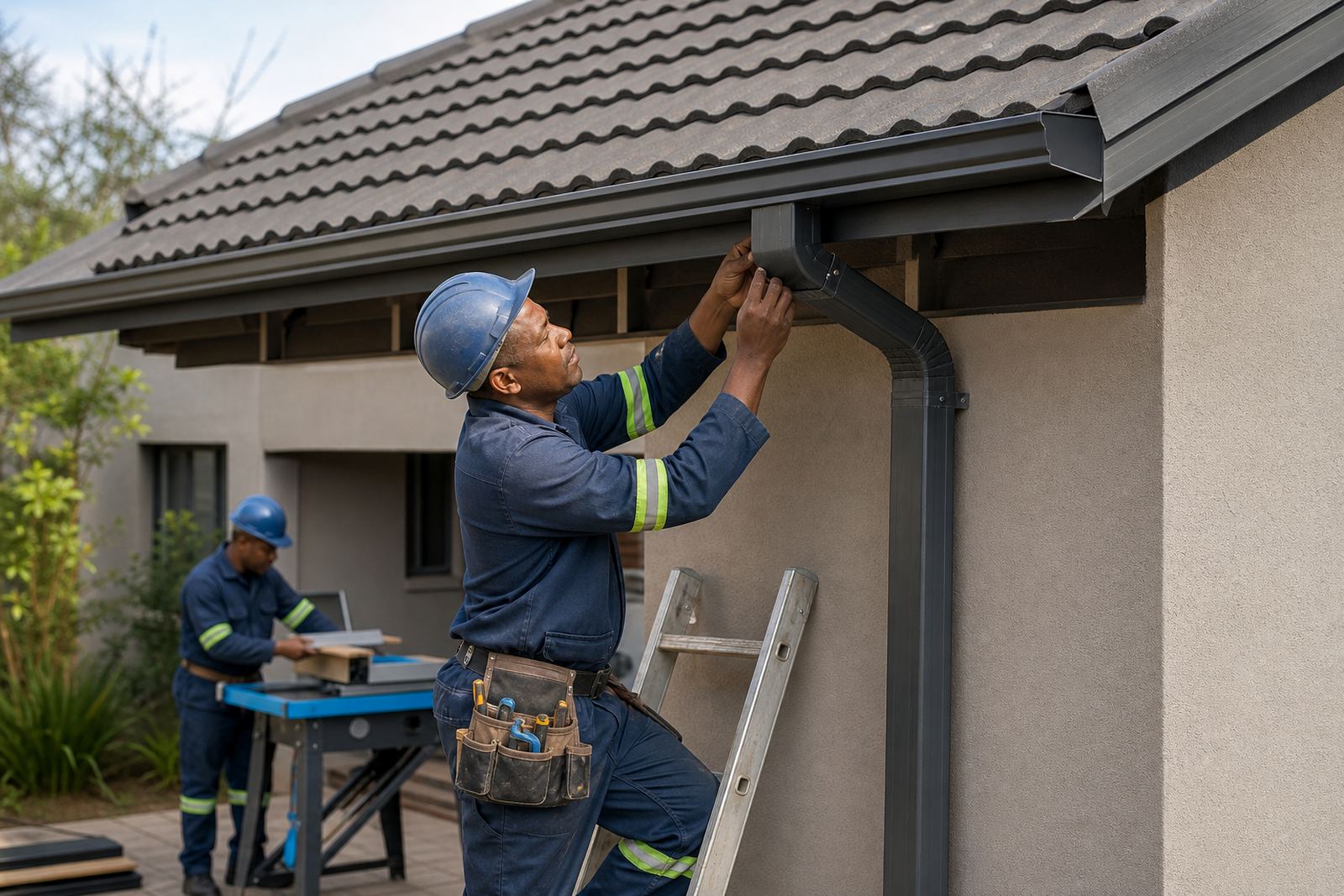
- Check that the outlet and elbow align cleanly with the wall line.
- Allow enough clearance for clamps and brackets along the wall.
- Make sure the final discharge point does not erode soil or splash against paintwork.
How fascia boards support the roof edge
Fascia boards carry the visual finish of the roof edge and give the gutter a straight fixing line. They also help close off the gap under the roof covering, which keeps birds, dust and wind-driven debris from working into the eaves. In humid coastal conditions, a fascia board should keep its shape and stay neat around joints and corners.
Good fascia work depends on straight lines, secure fixings and a clean finish at joints. If the board has bowed, split or gone soft from long-term moisture exposure, it can pull the gutter out of line and cause leaks at the joints. Replacement is often best when the board no longer holds a screw firmly.
Falls, brackets and the small details that stop overflow
Even a strong gutter will struggle if the fall is wrong. A slight fall helps water move towards the outlet without standing still in the channel. Too little fall lets silt collect, while too much can leave the gutter looking uneven and may place extra load on one fixing point.
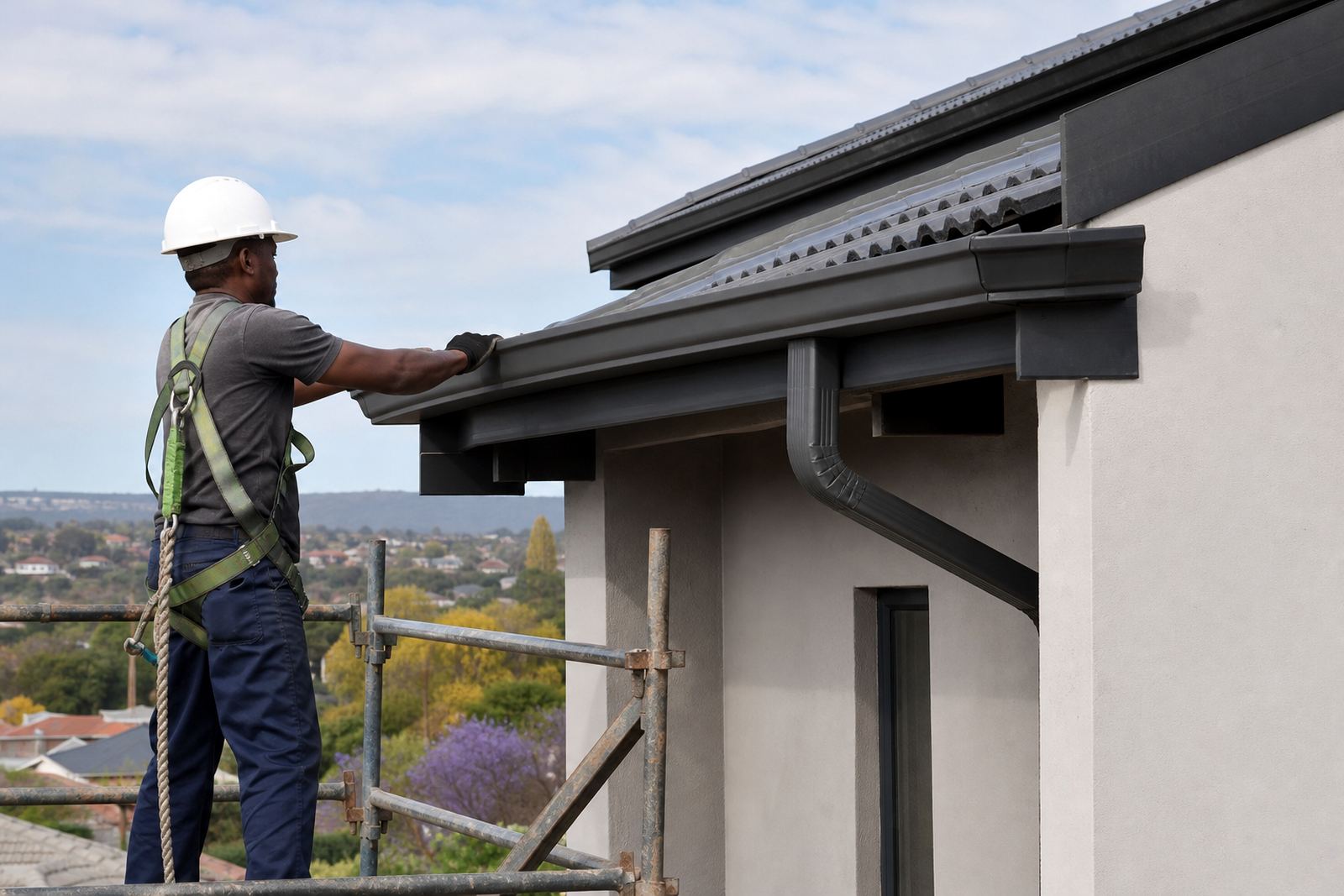
Brackets should be spaced to suit the gutter size and the expected water load. More brackets are usually needed near corners, outlets and long spans. Roofline work at height must be done safely by competent people with proper access and fall protection. If the roof is steep, high or awkward to reach, do not work from unstable ladders or improvised platforms.
- Set the fall before fixing the full length of the gutter.
- Use enough brackets to prevent sagging after heavy rain.
- Check corner joints and outlet areas first, as these are common leak points.
Maintenance checks for homes and busy building sites
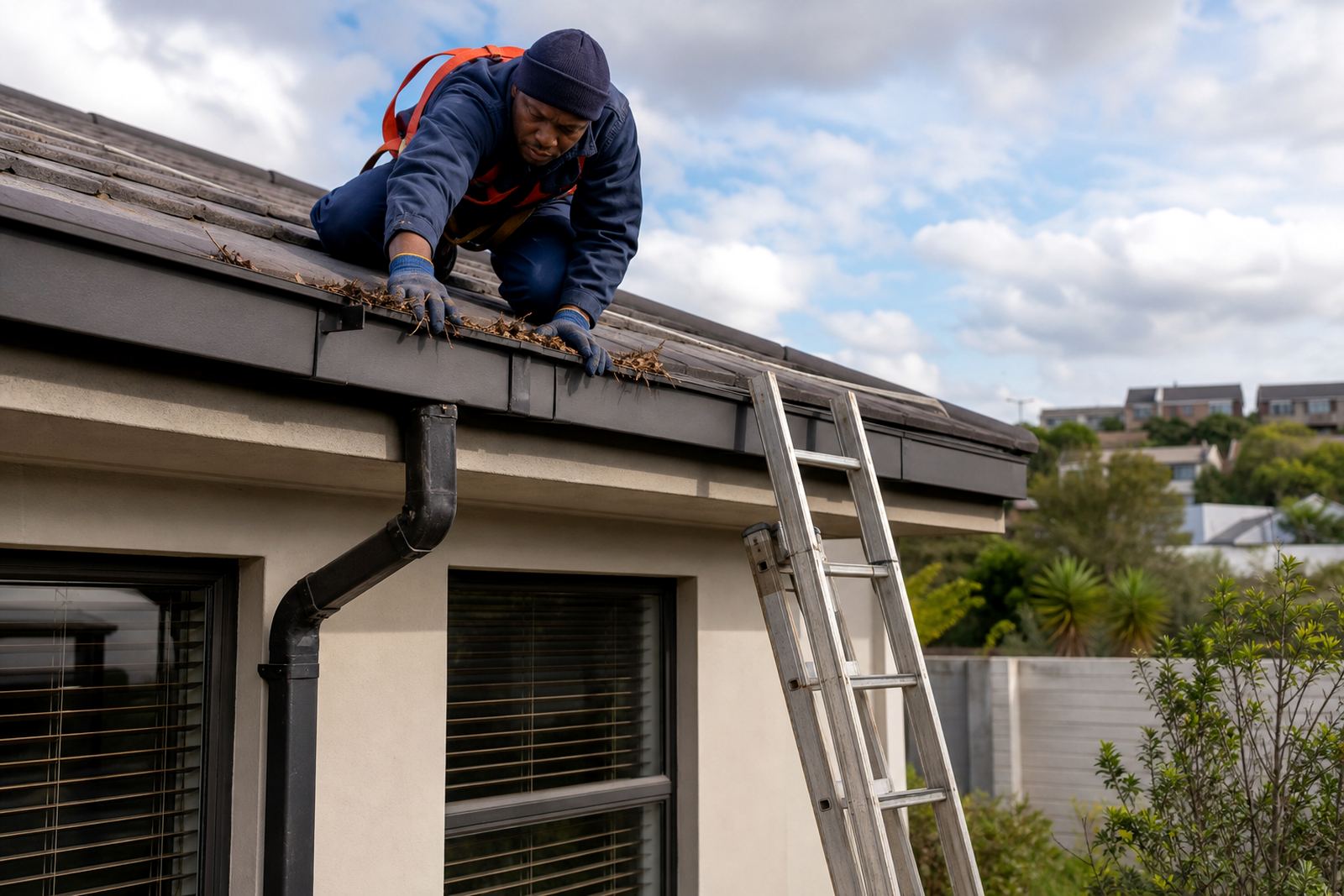
Regular maintenance keeps gutters and downpipes working properly. Leaves, dust, roof grit and nesting material can slow water flow, especially on trees-lined streets in Johannesburg, Pretoria and parts of Cape Town. On coastal properties, brackets and screws should be checked for corrosion more often.
A sensible maintenance visit usually includes a visual check, clearing loose debris, inspecting joints and confirming that water leaves the system without backing up. Small cracks, loose clips and lifting seal lines are easier to handle early than after the first summer storm.
- Look for water marks below joints or overflows at corners.
- Check that downpipes are still firm against the wall.
- Make sure outlets are not blocked by grit, leaves or roofing debris.
What builders and homeowners can send through for support
For site measuring, material takeoff, product supply or delivery coordination, it helps to have clear roofline details ready. A measured sketch, photos of the roof edge and note of the suburb can help the team work out what is needed for the job. That is useful for both new builds and roofline replacement work across Randburg, Midrand, Roodepoort, Pretoria, Durban, Cape Town and Polokwane.
If the request is for a home or a larger site, include the roof type, the approximate lengths of gutter required, the number of downpipes and whether fascia boards are being replaced too. For maintenance visits or leak checks, a quick note on where the overflow shows up saves time on site and helps the right person look at the right section.