Shopfronts Need Clean Water Control, Not Just Big Gutters
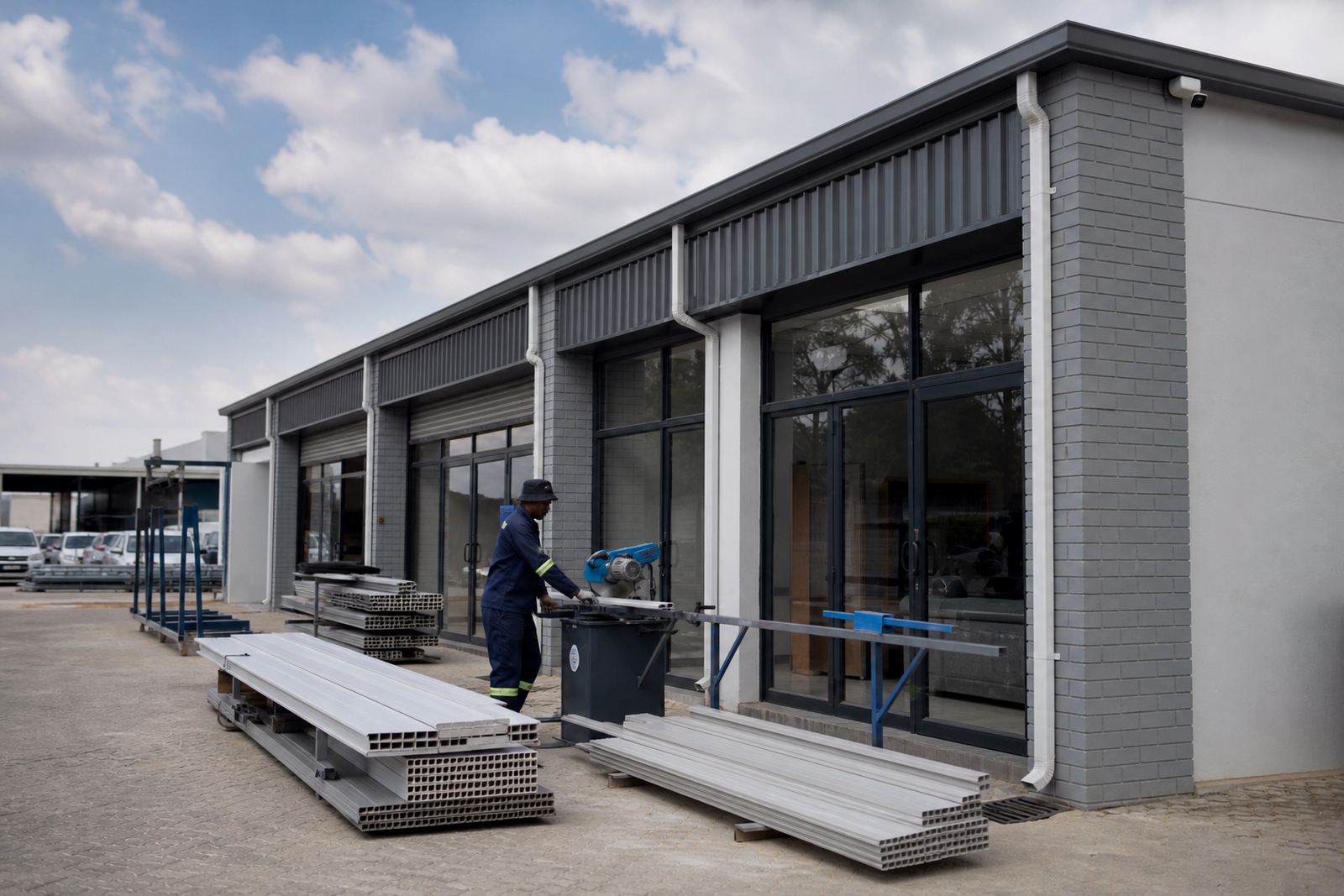
Retail properties often have short roof runs, sign bands, parapets and canopies that throw water into awkward places. A gutter that is too small can overflow in summer storms, while one that is badly set can send water straight across paving where customers walk. On a small retail building the goal is neat water control, clean frontage lines and fewer damp marks on walls and ceilings.
For most shopfronts, the practical answer is a matched system of gutter, downpipe and fascia material that suits the roof pitch and the size of the roof edge. A narrow strip shop in Randburg may need a lighter layout than a supermarket entrance in Pretoria, while coastal sites in Durban need materials that cope better with salt air and high humidity. The right profile helps keep the line of the roof tidy and the drainage point where it should be, not where the water decides to go.
- Short roof spans still need proper falls so water moves to the outlet.
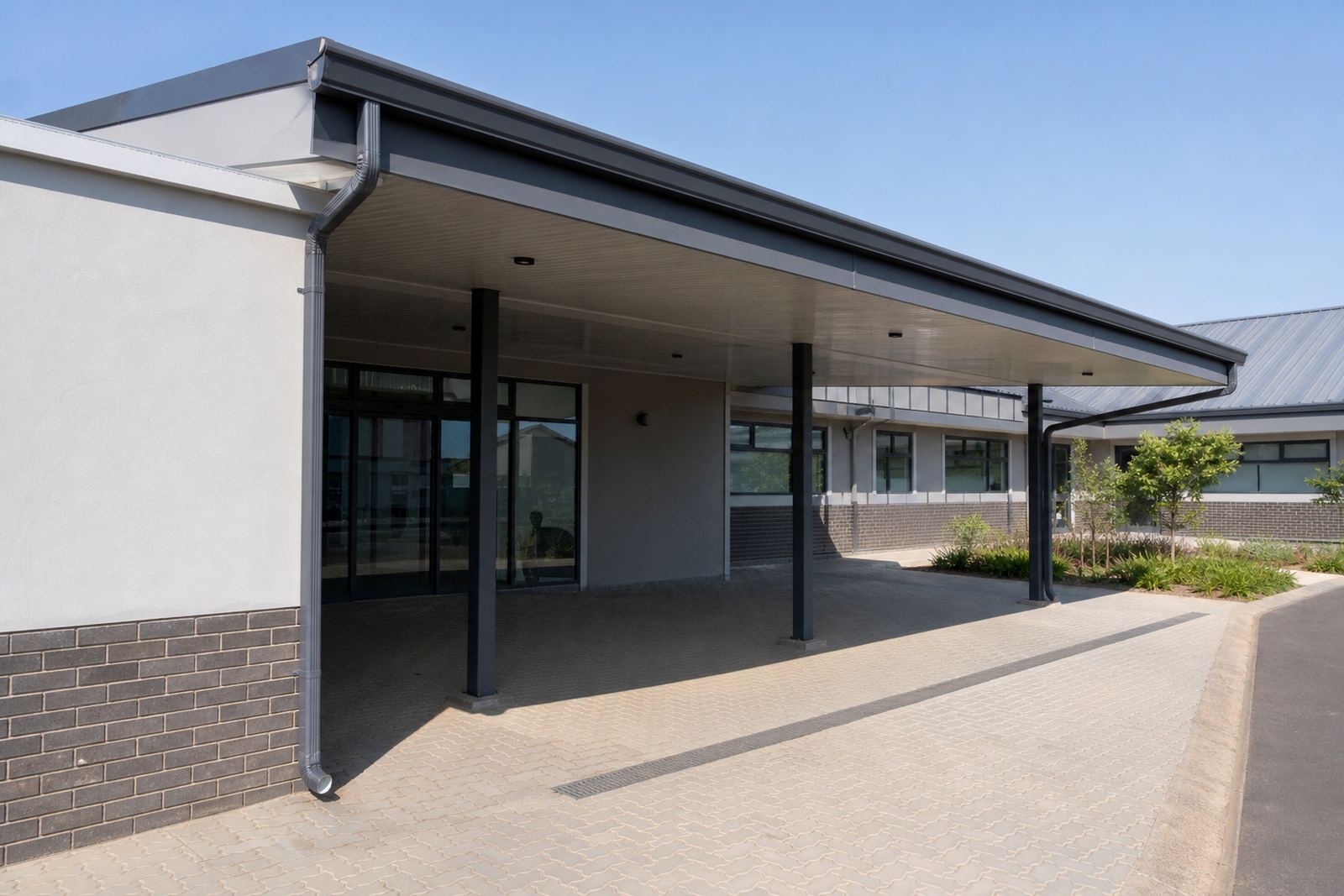
- Entrances and tiled walkways need discharge points placed clear of foot traffic.
- Front fascia lines should stay straight and neat for a presentable street view.
What Retail Builders Usually Spec for the Roof Edge
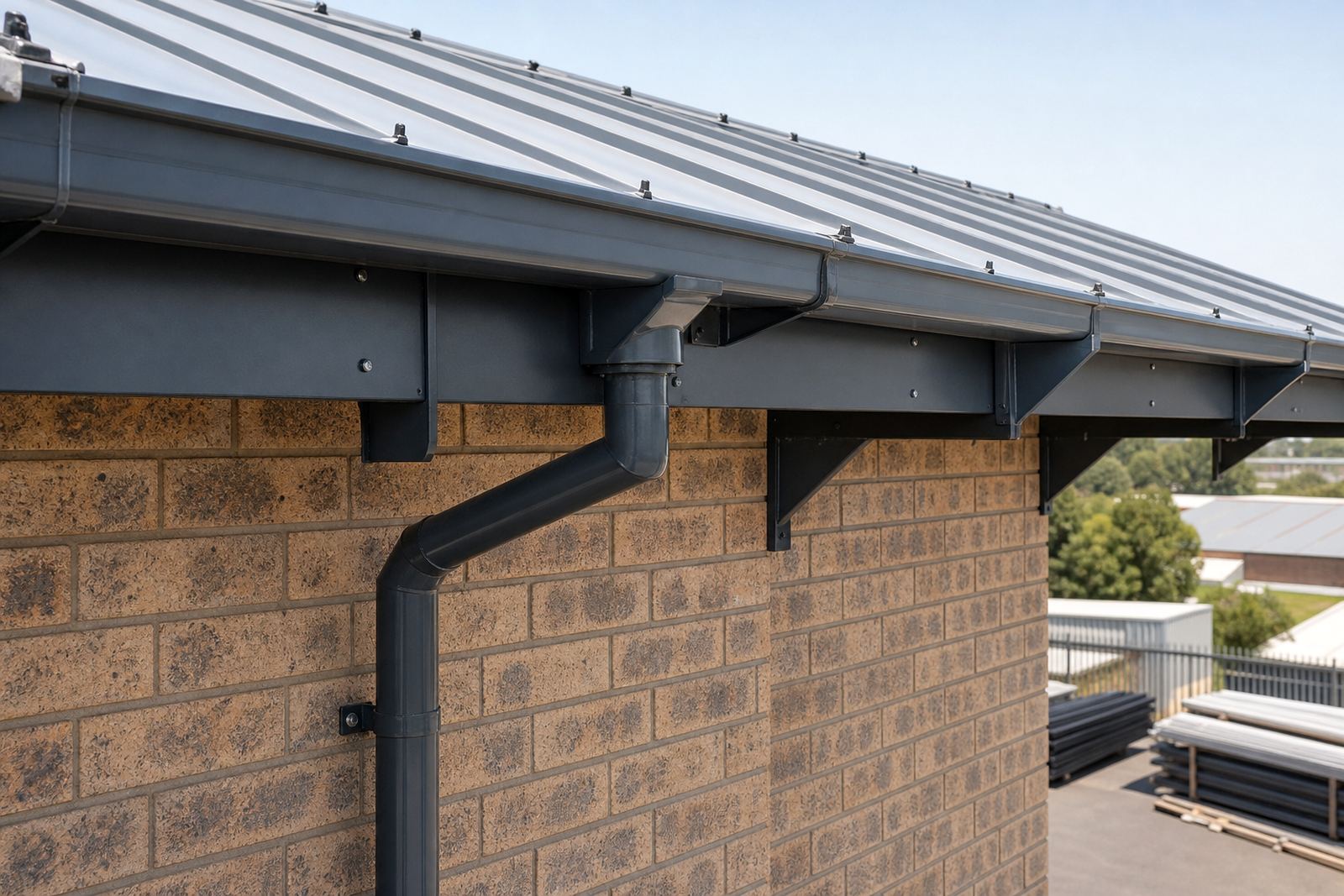
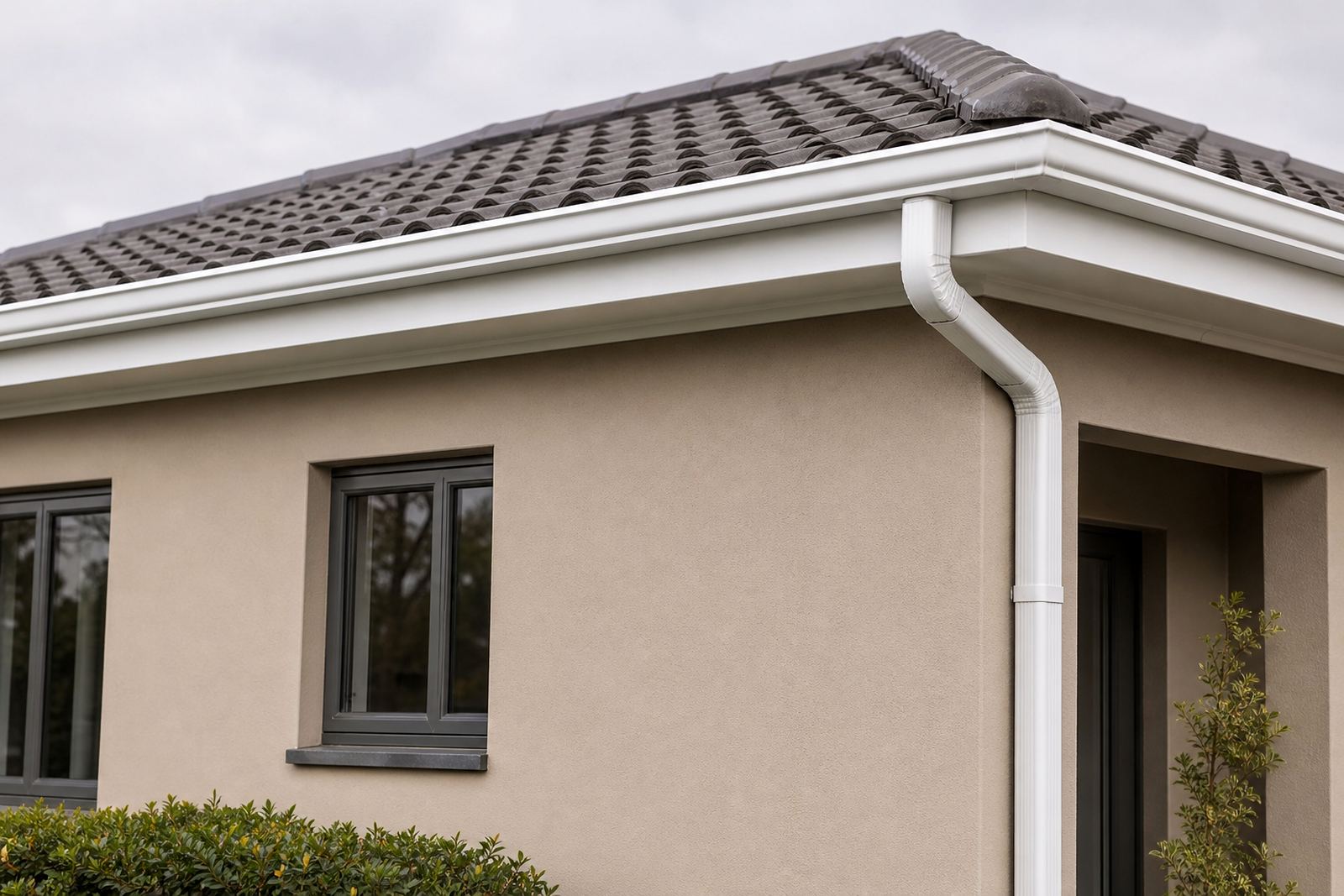
For retail work the usual set is gutter lengths, external and internal corners, brackets, stop ends, outlets, downpipes, clips and fascia boards. On many jobs the fascia board forms the visible edge that finishes the roofline and supports the gutter line. Where there is a parapet or a concealed edge, the detailing changes and the outlet position becomes more important. Good planning here saves time later because the water path is fixed before the first bracket goes up.
Plastic-steel composite parts are useful on retail properties because they are light enough to handle during installation yet practical for long term use. In warm inland areas they deal well with sun exposure, while in places like Cape Town and Durban there is added value in choosing materials that do not rust like plain metal can sometimes do. The finish also matters because shoppers and tenants notice the first things they see from the pavement.
- Typical retail gutters are matched to roof area and expected rainfall, not guessed by eye.
- Downpipes are placed to avoid signs, windows and entrance paths.
- Fascia boards should be straight, fixed securely and aligned to the roof edge.
Planning the Water Route Before Fixing the First Bracket
Site measuring is worth doing properly on retail buildings because a small mistake at the front door can turn into dripping, staining or pooling water at the entrance. The layout must allow for a proper fall in the gutter, sensible outlet positions and enough brackets to support the run. On longer fronts, extra consideration is needed where a roof changes direction or where one section feeds into another. If the outlet is too far from the low point, the gutter holds water and debris, and that leads to trouble after the first heavy storm.
We also look at access. Retail buildings often have high pedestrian movement, delivery bays, air-conditioning units and signage all fighting for the same wall space. That means the downpipe route has to be planned around the real building, not just the drawing. Roofing work at height must be done safely by competent people, especially where work is close to live entrances or operating shop units. Maintenance access matters too because a gutter hidden behind signage is hard to clean and hard to inspect.
- Set the fall before fixing long runs so water does not sit in the middle.
- Keep outlets where debris can be checked and cleared without difficulty.
- Make sure brackets are spaced correctly for the profile and roof edge condition.
Common Mistakes We See on Small Retail Properties
One of the most common problems is undersized drainage on the front face of a shop. A neat-looking gutter can still be too small for the roof area above it, especially where the roof sheet ends deliver a strong run of water. Another mistake is placing downpipes where customers queue, which leads to splashback on the paving and an untidy entrance after rain. People also forget that leaves, dust and wind-blown litter collect near retail roofs, so the system must be easy to inspect and clear.
Loose brackets and badly joined corners are another issue. If the fixings are too far apart or not suited to the wall material, the gutter can shift, sag or open at the joints. On older shop buildings there can also be damage at the fascia line from previous repairs, and that needs checking before new boards go up. In a few cases the old timber has softened from water entry, so the whole edge needs replacement rather than a patch. That is where roofline replacement makes more sense than chasing leaks one by one.
- Do not let the outlet sit too high, otherwise water backs up in heavy rain.
- Do not place downpipes where trolleys, deliveries or pedestrians will hit them.
- Do not ignore damaged fascia ends, because the gutter support is only as good as the board behind it.
Maintenance That Keeps the Frontage Looking Tidy
Retail gutters need a simple maintenance routine because these buildings are visible every day. Even a light blockage can spill water over the front and leave marks on painted walls, paving and signage. A maintenance visit normally includes checking joints, outlets, brackets, fascia boards and signs of movement after storms. In coastal towns, salt and wind can add extra wear, while inland dust and tree litter tend to build up after dry spells and summer rain.
For many shop owners the sensible approach is to treat gutter care as part of building upkeep, not an emergency repair. Cleaning should happen before the rainy season where possible, and again after any serious storm if there are nearby trees or construction works. Leak checks help spot minor failures before they stain the shopfront or work their way into the ceiling line. Small businesses in Midrand, Roodepoort and Polokwane often find that regular checks are cheaper than replacing damaged finishes after a long wet period.
- Inspect joints and outlets after heavy rain.
- Clear leaves, dust and loose debris from the gutter line.
- Check whether brackets have shifted or pulled away from the wall.
Budget Ranges for Retail Gutter and Fascia Work
Retail budgets vary with roof length, access, the number of corners and whether the work is a repair, partial replacement or full roofline change. A small shopfront with a simple run and one or two downpipes will cost less than a corner site with multiple faces, signage breaks and difficult access. Material choice matters as well, because fascia boards, outlets and brackets all add to the total. Labour can increase where safe access equipment is needed or where work has to be phased around trading hours.
As a working guide, small retail repairs can sit in the lower tens of thousands of Rand, while a full frontage replacement on a larger unit can move into the higher tens of thousands or beyond, depending on the roof edge and length of run. The best way to control spend is to measure accurately, decide the water path early and avoid over ordering parts that are not needed. Builders and homeowners managing mixed-use sites often prefer a measured supply approach, then add installation or delivery coordination where it suits the job plan.
- Small repair or extension work: often from about R8 000 to R20 000.
- Mid-sized retail frontage replacement: often from about R20 000 to R55 000.
- Larger or more complex retail roofline work: can move above R55 000 depending on access and scope.