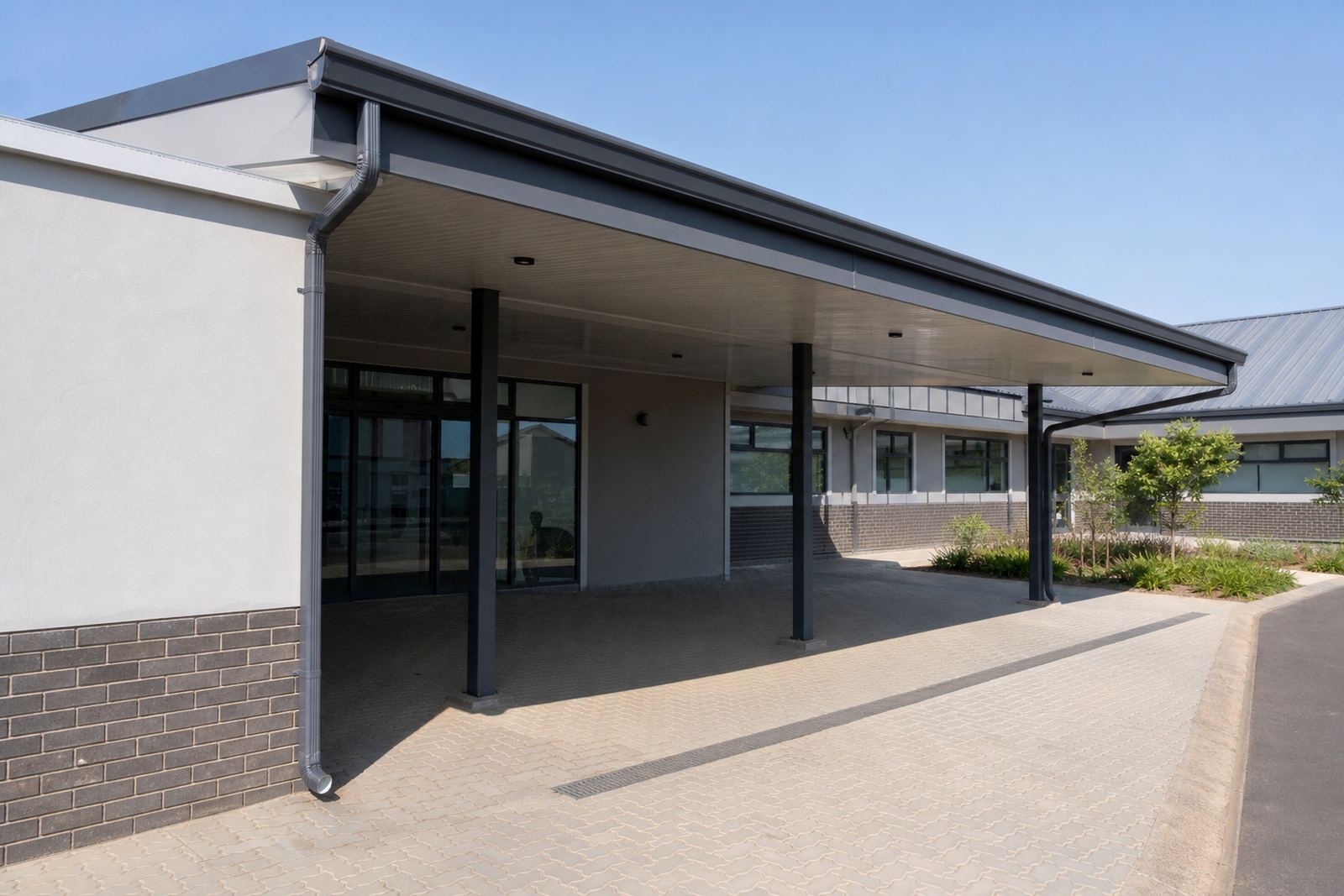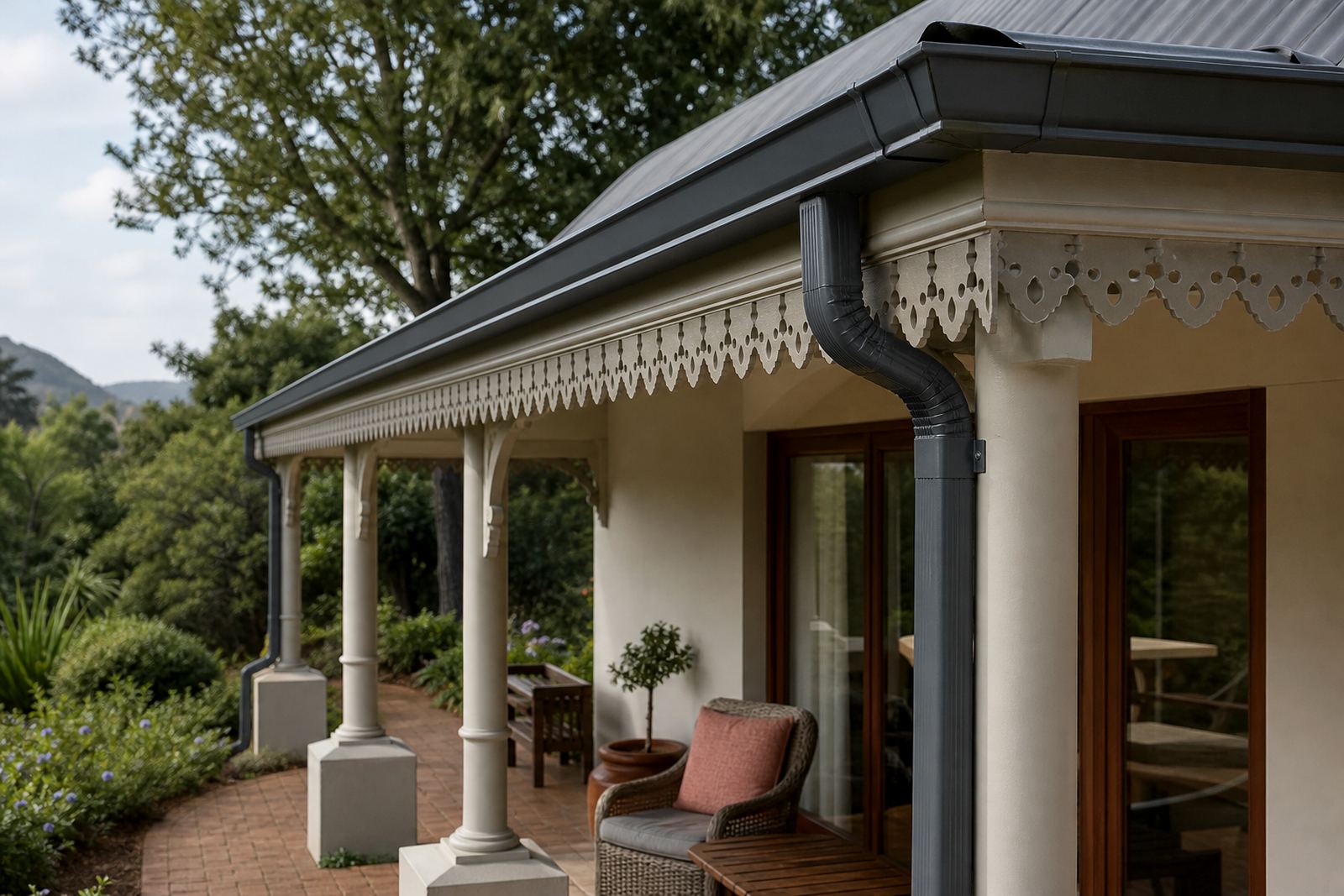

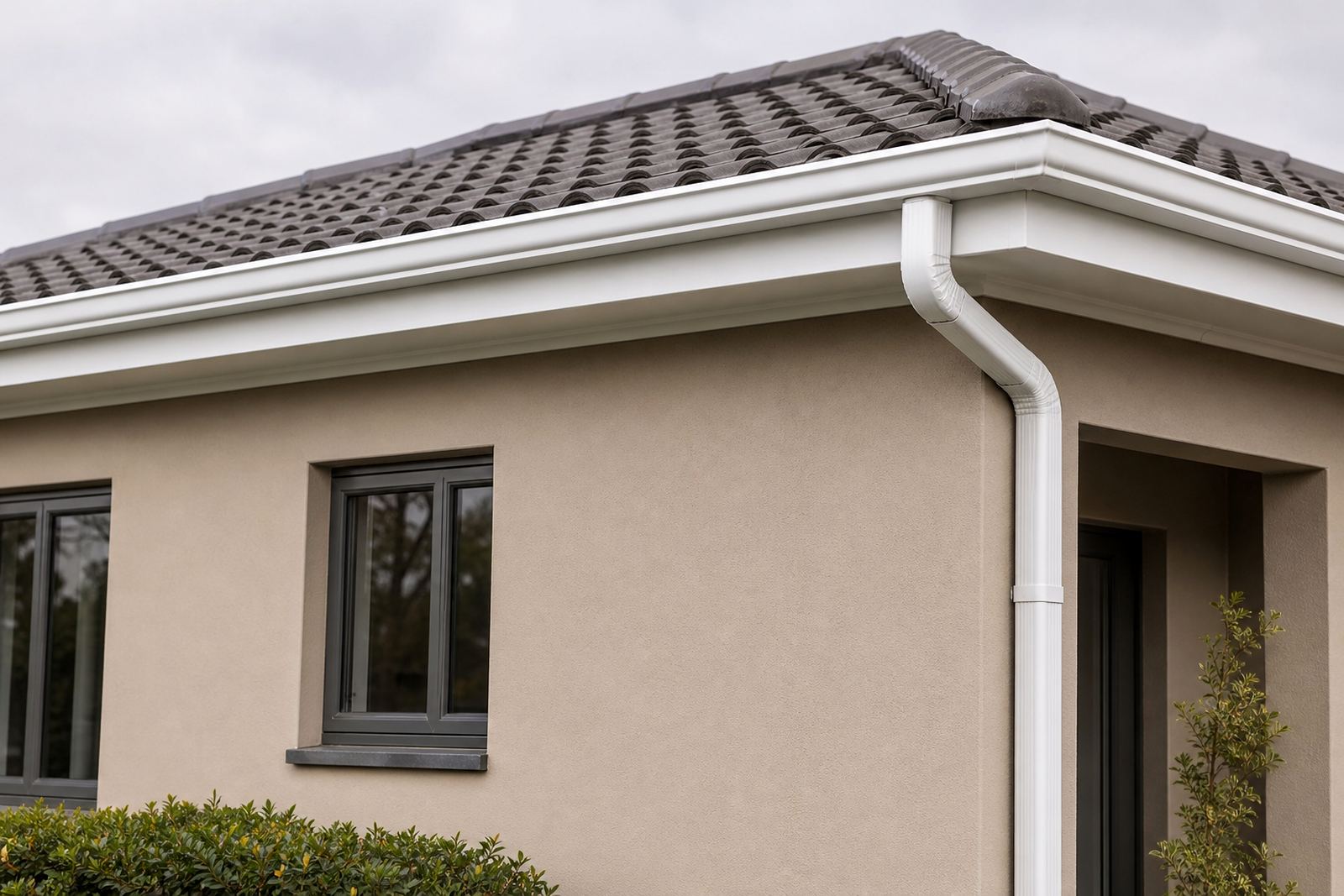
The roofline matters most on a lived-in home
A family house puts steady pressure on the roof edge. Water from long runs of roof sheeting or tiles must move away cleanly, and the eaves must stay tidy where children, pets and visitors pass below. In Johannesburg and Pretoria, sudden downpours can push weak gutters out of line. In Durban and Cape Town, damp air and salt in the breeze can shorten the life of thin metal parts if they are not chosen and fixed properly.
Composite gutters and fascia boards suit this work because they are made for everyday use, not just neat looks. The gutter should carry rain without sagging between brackets, the downpipe should take water to the right discharge point, and the fascia board should give a straight fixing line at the roof edge. On many homes, a careful replacement of the gutter run makes a bigger difference than patch repairs done one piece at a time.
For a typical family house, the first check is the roof shape. Straight eaves are easier to manage, but corners, valleys and changes in roof height all need proper planning. Roofing work at height must be done safely by competent people, with the right access equipment and fall protection where required.
What usually goes into a domestic gutter system
A sensible domestic set-up is not complicated, but every part has a job. The gutter profile must suit the roof edge and expected rain flow. The downpipes must be sized to take the water away without backing up. Brackets, unions, end caps and outlets must be fixed with care so the run stays aligned through heat, cold and heavy rain.
For homes in Kya Sand, Randburg and surrounding suburbs, the most common request is a straight replacement of tired guttering along the front and back of the house, with one or two downpipes redirected to a better point. For bigger family homes, patios, garages and outside rooms often need their own short runs. Fascia boards help when the existing timber has softened or the edge of the roof line looks uneven.
- Gutters: sized to match the roof area and rainfall pattern, with enough fall to move water to the outlet
- Downpipes: placed where water can discharge safely into a drain, soakaway or other approved point
- Brackets: spaced to suit the profile and load, so the gutter does not dip in the middle
- Fascia boards: fitted straight and fixed securely, giving a clean line under the roof edge
- Accessories: unions, corners, stops and outlets matched to the chosen profile
At Plasteel, the material set is geared to practical house work, with a finish that suits both plain brick homes and painted facades.
Planning the line before any fixing starts
Good roof drainage begins with measuring. A site measure shows the full length of each eave, the positions of corners and returns, and where the downpipes can run without crossing windows, paths or boundary walls. On a family home, the gutter line often needs to work around carports, room additions and solar changes on the roof. Those details matter because a small error in fall can leave standing water in the gutter after rain.
As a rule, the gutter should have a controlled fall towards each outlet, but not so much slope that it looks uneven from the ground. A level line with the right gradual drop is usually neater and performs better than a run that is forced too steep. Brackets must be fixed into sound material, and fascia boards must be checked for rot, movement or old screw holes before new work starts.
Where the house is in a coastal area such as Durban or Cape Town, planning should also consider fasteners, seal joints and regular inspection. Where the home is in hotter inland areas like Pretoria or Polokwane, movement from heat and direct sun can affect alignment over time, so spacing and fixing need care. Small details at the start save trouble later.
- Measure each roof edge separately, do not assume one side matches the other
- Check for old leak marks, soft timber and loose fixings before reuse
- Plan discharge points so water does not splash onto paving or into the neighbour’s yard
- Keep access safe around gardens, driveways and boundary walls
Common mistakes on family homes
The same faults show up on many houses. A gutter with too little fall holds water and dirt, then sags at the centre. A downpipe that is too small for the roof area can overflow during a heavy storm. Brackets that are spaced too far apart let the run twist, especially where long straight lengths face strong sun. Fascia work also goes wrong when old timber is left in place even though it has already softened.
Another common mistake is trying to match new parts to old pieces that have already warped or faded beyond useful life. A patch repair can be fine for a short damaged section, but if the rest of the run is weak, the house usually needs more than a quick fix. Open joints, poor seal detail and uneven corners also cause leaks that show up as damp patches along the wall or inside ceilings.
For homeowners, the warning signs are usually easy to spot: water overshooting the gutter edge, rust stains on the wall, drips at the joints, or sections that bow after rain. A maintenance visit can often sort small issues before they become roof damage. In many cases the repair is modest, but leaving it too long can push the job into a full roofline replacement.
Budget bands for a domestic roofline
Costs for family houses depend on the length of the run, the number of corners, the height of the building and whether fascia boards also need replacement. A short repair on a single side of a house is naturally less than a full perimeter replacement. Labour, access and the condition of the existing roof edge also affect the final figure.
As a rough guide, homeowners can expect a small sectional repair to start in the lower thousands of Rand, while a full gutter and fascia replacement on an average family home can move into the middle or higher thousands, depending on size and complexity. Homes with multiple storeys, attached outbuildings or difficult access need a more detailed quotation. If the work includes extra downpipes, new brackets, leak checks or remedial fascia work, the total rises accordingly.
It is usually better to budget for the full stretch that needs attention rather than trying to spread one weak section over several separate visits. That approach often cuts waste and gives a cleaner finish. Builder support is also available where a contractor needs material takeoff and delivery coordination for a housing project or extension.
- Small repair: limited section, one or two fittings, modest labour
- Partial replacement: one side of the house, several brackets and one downpipe change
- Full roofline job: complete gutter run, fascia boards and multiple outlets
Keeping the eaves in good order
Once the system is in place, basic upkeep keeps it working. Leaves, roof grit and bird nests can block outlets, especially after windy weather. In areas with trees or dusty roads, a seasonal clean helps. Check that water still runs toward the downpipe, that brackets stay tight, and that seal points have not opened at the joints. A small amount of staining is one thing, but repeated overflow is a sign that the line needs attention.
For family houses, maintenance is usually simple: inspect after heavy rain, clear debris, and look at the wall below each outlet for damp marks. If a gutter has shifted or a fascia board shows movement, it is best to deal with it before the next storm. The aim is steady roof drainage and a neat finish that holds up under normal use.
Plasteel works with homeowners and builders from Randburg Supply and Johannesburg Delivery through to Pretoria Delivery, Durban Delivery, Cape Town Delivery and Polokwane Delivery, with supply and coordination shaped around the needs of local homes.