
Rooflines that suit guest movement and daily presentation
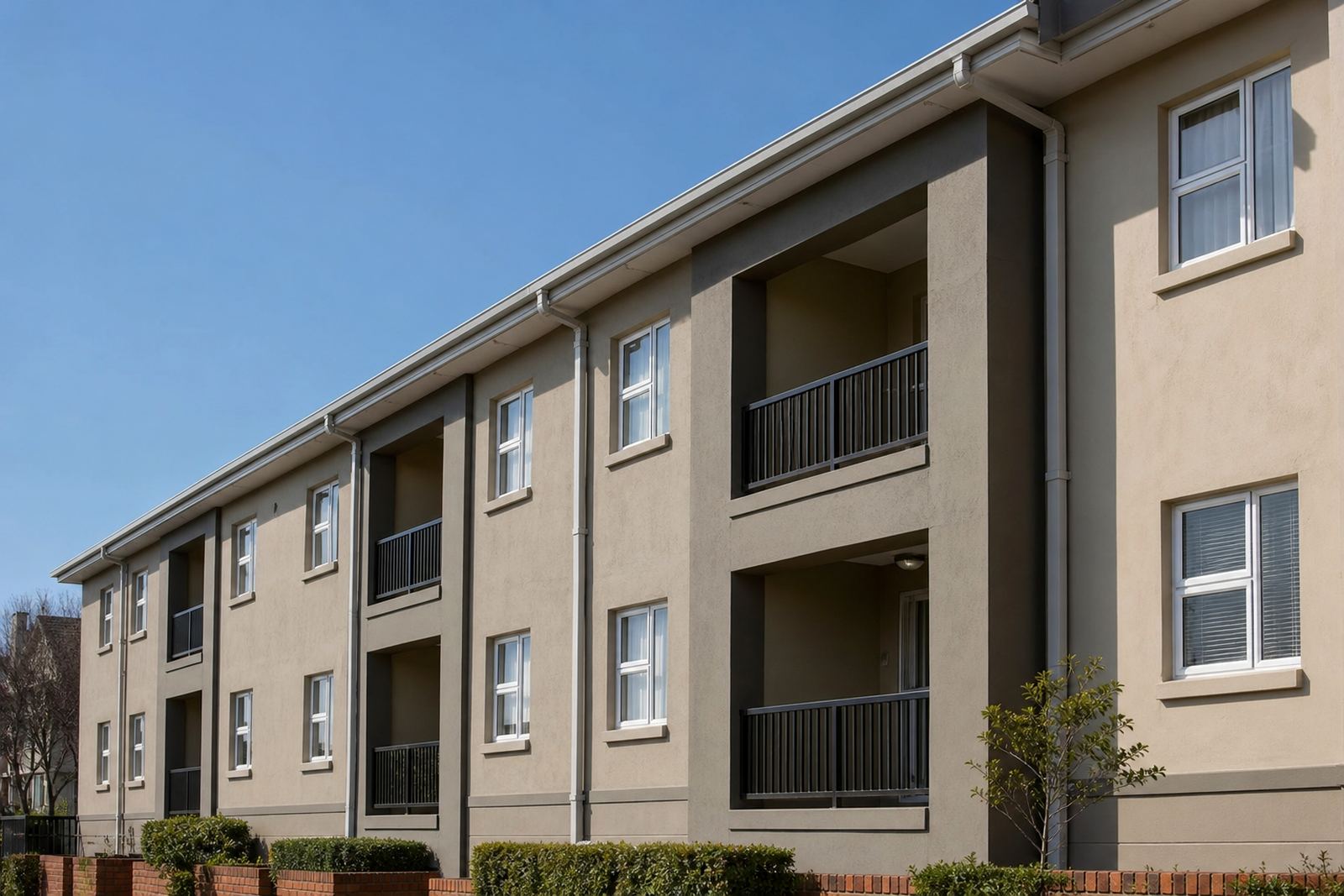
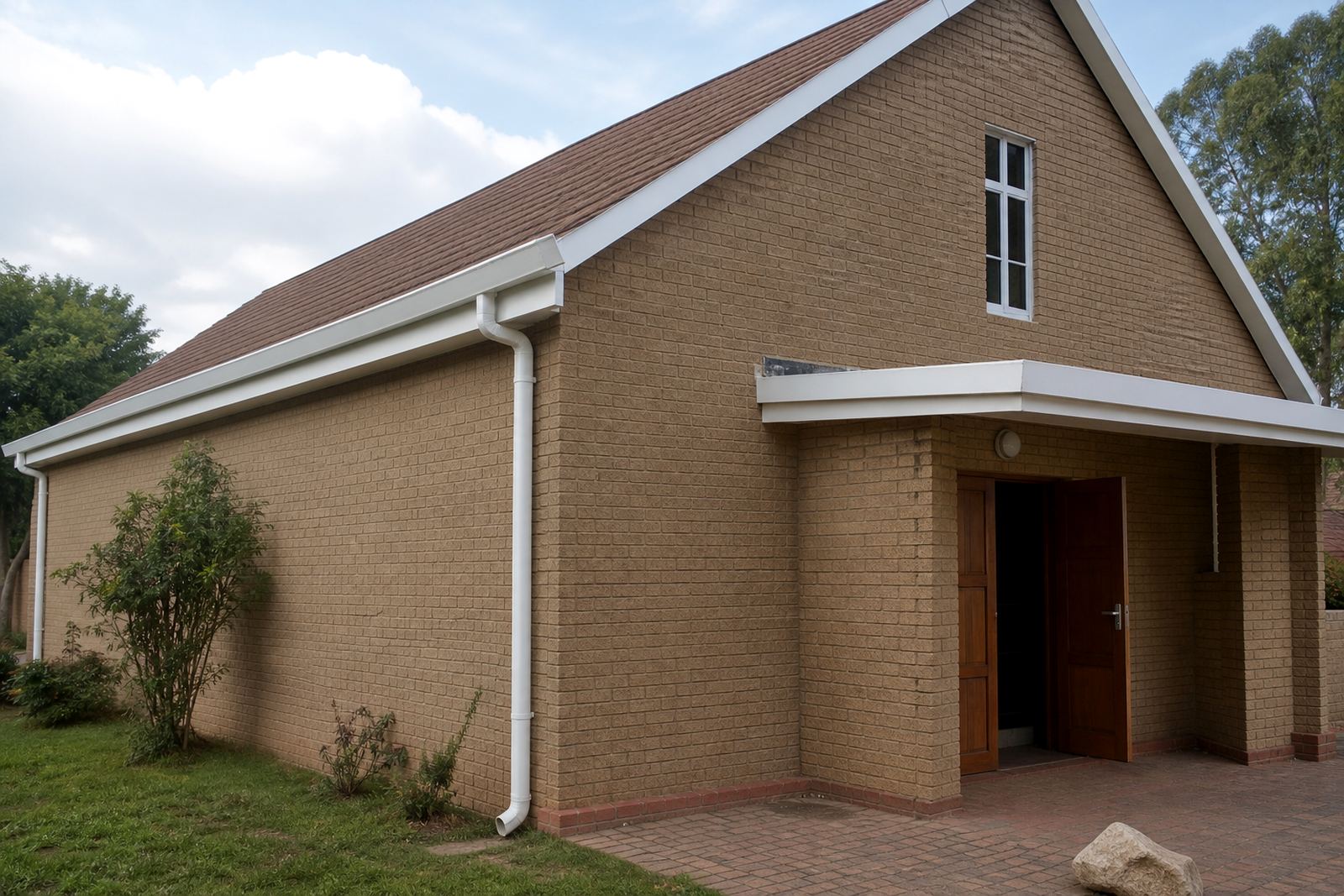
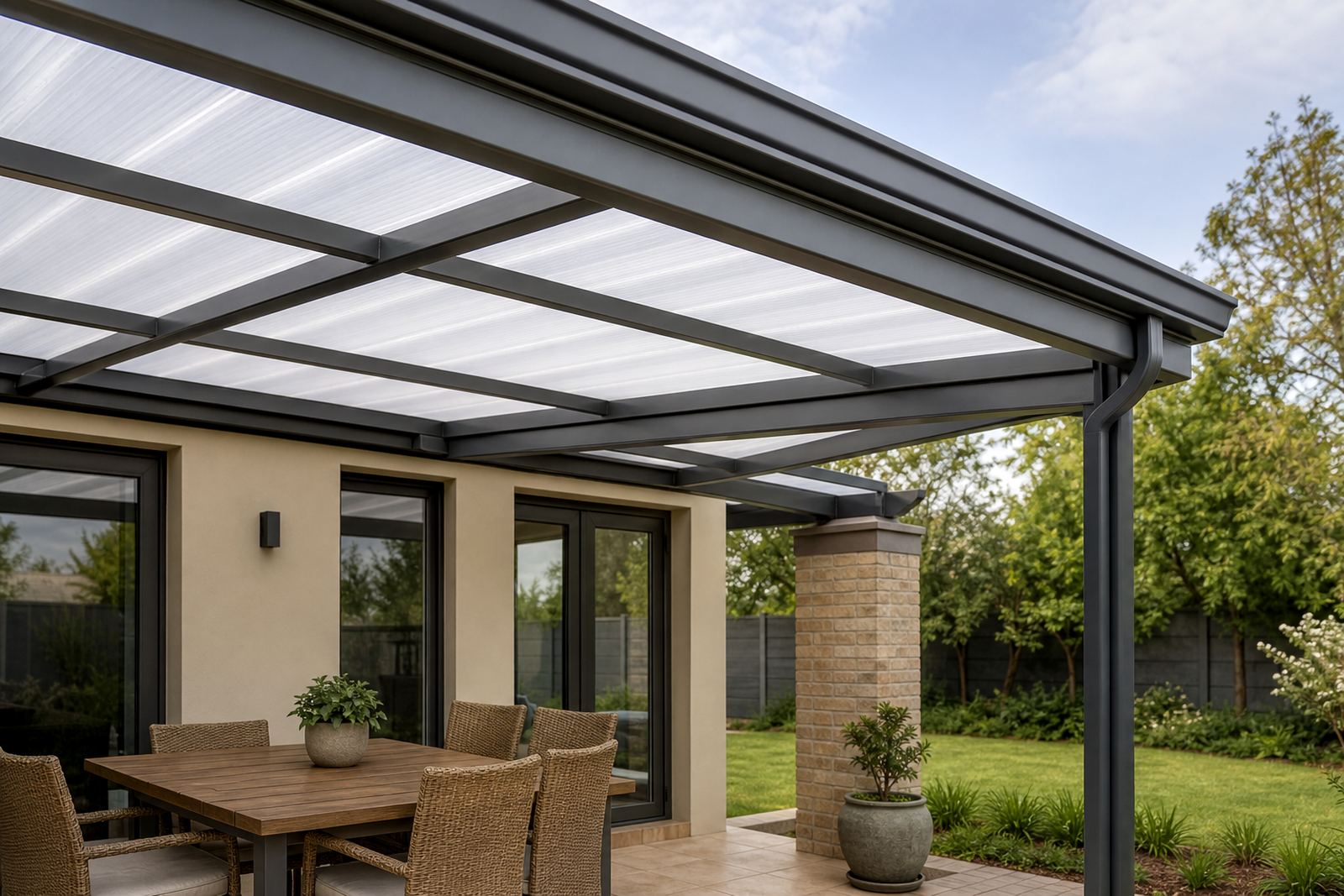
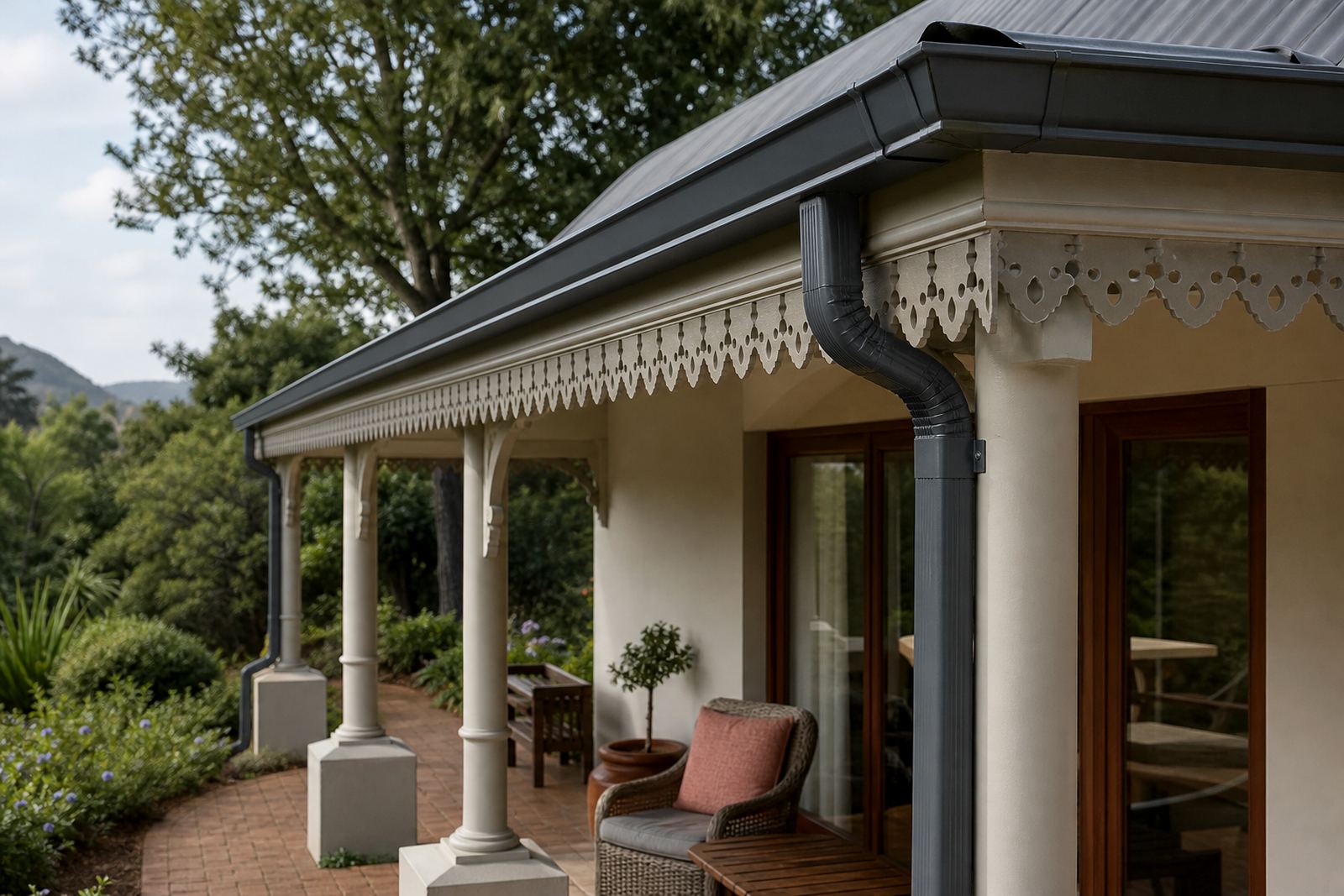
A lodge roofline is part of the first impression, especially where guests arrive under covered walkways, around courtyards or at rooms with visible eaves. Clean gutter runs and straight fascia lines help the building look cared for, while the right downpipe positions keep water away from entrances, paving and planted areas.
For guest lodges in coastal towns like Durban or windy areas near Cape Town, material choice matters because salt air, heat and UV exposure can shorten the life of poor roofline components. In inland areas such as Johannesburg, Pretoria and Polokwane, the focus is often on storm handling, expansion and making sure the system sheds water quickly during summer downpours.
- Match gutter profile to roof size and rainfall exposure
- Keep fascia boards straight and properly fixed for a tidy edge
- Place downpipes where they do not affect guest walkways or parking
- Allow for easy access when cleaning leaves and debris
Typical lodge roofline package and how it is sized
A guest lodge usually needs more than a single gutter size all round. Entrances, verandas and long bedroom wings can call for different lengths, outlets and bracket spacing. The usual parts include gutters, stop ends, unions, downpipes, brackets, fascia boards and matching clips or joiners where the profile changes around corners.
Common gutter sizes used on lodge buildings are the standard domestic profile for smaller roofs and the larger profile for long runs or larger roof areas. Downpipes are often selected to suit the expected water flow, with round or square profiles depending on the look of the building. For fascia boards, thickness and straightness matter because the board supports the gutter line and helps hide the roof edge.
- Short roof runs may use smaller gutter profiles and closer outlet spacing
- Large verandas often need bigger gutters and more downpipe points
- Bracket spacing should suit the load and the shape of the roof edge
- Joints should be placed where they are easy to inspect and maintain
Planning the layout before a tool goes up the ladder
Good planning avoids water issues later. On lodge properties, roofline work should start with a site measure, a material takeoff and a check of the roof fall, fascia condition and existing outlets. If the roof pitch is shallow or sections discharge into a central valley, water can move fast during heavy rain and the gutters need enough capacity to cope.
Falls in the gutter line are important because standing water leaves dirt marks, adds weight and can lead to overflow at the wrong point. A slight fall toward each outlet is normally preferred, but the exact line depends on the roof length and the building shape. Where the fascia is uneven or the rafter ends have moved, the support line may need correction before the new gutter is fitted.
Roof work at height must be done safely by competent people using proper access equipment. Guest properties often have guests, staff and vehicles nearby, so the work area needs to be kept clear and the installation planned around check-in times or service traffic.
Common mistakes on hospitality properties
Many lodge gutter failures come from small mistakes made early. A gutter that is too small for the roof area can overflow in a storm, while one fitted level with no effective fall can hold water and debris. Another common problem is placing downpipes too far from the main water path, which leaves sections of gutter overloaded.
Fascia boards also need proper support. If the board is fixed onto soft or damaged timber, the gutter line can sag over time and create ponding. In humid coastal conditions, trapped moisture and poor ventilation can shorten the life of the roof edge. Around Pretoria or Midrand, heat movement can loosen poorly fixed joints if there is no allowance for expansion.
- Using too few brackets on long runs
- Ignoring old timber damage behind the fascia
- Letting outlets discharge onto paths or guest areas
- Skipping a maintenance check after the first heavy rain
Maintenance that keeps the property looking orderly
Guest lodges need roofline maintenance that is regular but not disruptive. A maintenance visit usually includes clearing leaves, checking seals, looking for overflow marks and making sure downpipes are clear of blockages. Where trees overhang the roof, the gutters may need more frequent cleaning, especially in summer or after windy weather.
Small repairs are easier to handle before the system starts staining walls or dripping onto paving. If a bracket has loosened, or a joint has opened slightly, the issue should be sorted before it becomes visible to guests. For properties with several buildings, a simple roofline record helps track which section was serviced and when.
- Clear debris from gutters before the wet season peaks
- Check downpipe outlets for sand, leaves and nesting material
- Inspect fascia boards for swelling, cracks or movement
- Review overflow points after major rain
Budget ranges for lodge projects in Rand
Costs vary widely because lodge buildings differ in height, roof complexity and access. A small repair to a single section may sit in a lower bracket, while a full roofline replacement across rooms, walkways and reception areas will need a larger budget. Material choice, gutter length, number of downpipes and the amount of old work that must be removed all affect the final figure.
As a practical guide, minor maintenance or a short repair section may start in the low thousands of Rand. A partial replacement on one wing or veranda can move into the mid-range, while a full lodge roofline package with new gutters, fascia boards, downpipes and installation across several elevations can run from the high tens of thousands upward. A proper site measure and material takeoff are the best way to avoid under-ordering or over-buying.
For larger hospitality sites, delivery coordination matters too. Materials may need to arrive in stages so the contractor can work around guest occupancy and store lengths safely on site.
Support for builders, owners and lodge managers
Guest lodge projects often involve different people making decisions: the owner, the lodge manager, the builder and the maintenance team. That is why clear measurements and a practical material list help. When the roofline is being changed during a room upgrade or exterior repaint, it is worth checking the condition of the fascia, the alignment of the gutters and the path each downpipe will take before work starts.
Plasteel supports lodge projects with site measuring, material takeoff, product supply, gutter installation, fascia installation, downpipe installation, roofline replacement, leak checks, maintenance visits, builder support, homeowner advice and delivery coordination. From Kya Sand, Randburg, supply can be arranged for Johannesburg, Pretoria, Durban, Cape Town and Polokwane, with local delivery or supply support where needed.
For hospitality settings, the best outcome is a roof edge that looks tidy and works properly through heavy rain, salt air and everyday wear. That is what keeps the building presentable and the rainwater moving where it should.