Roofwater on Multi-Storey Buildings Needs Careful Routing
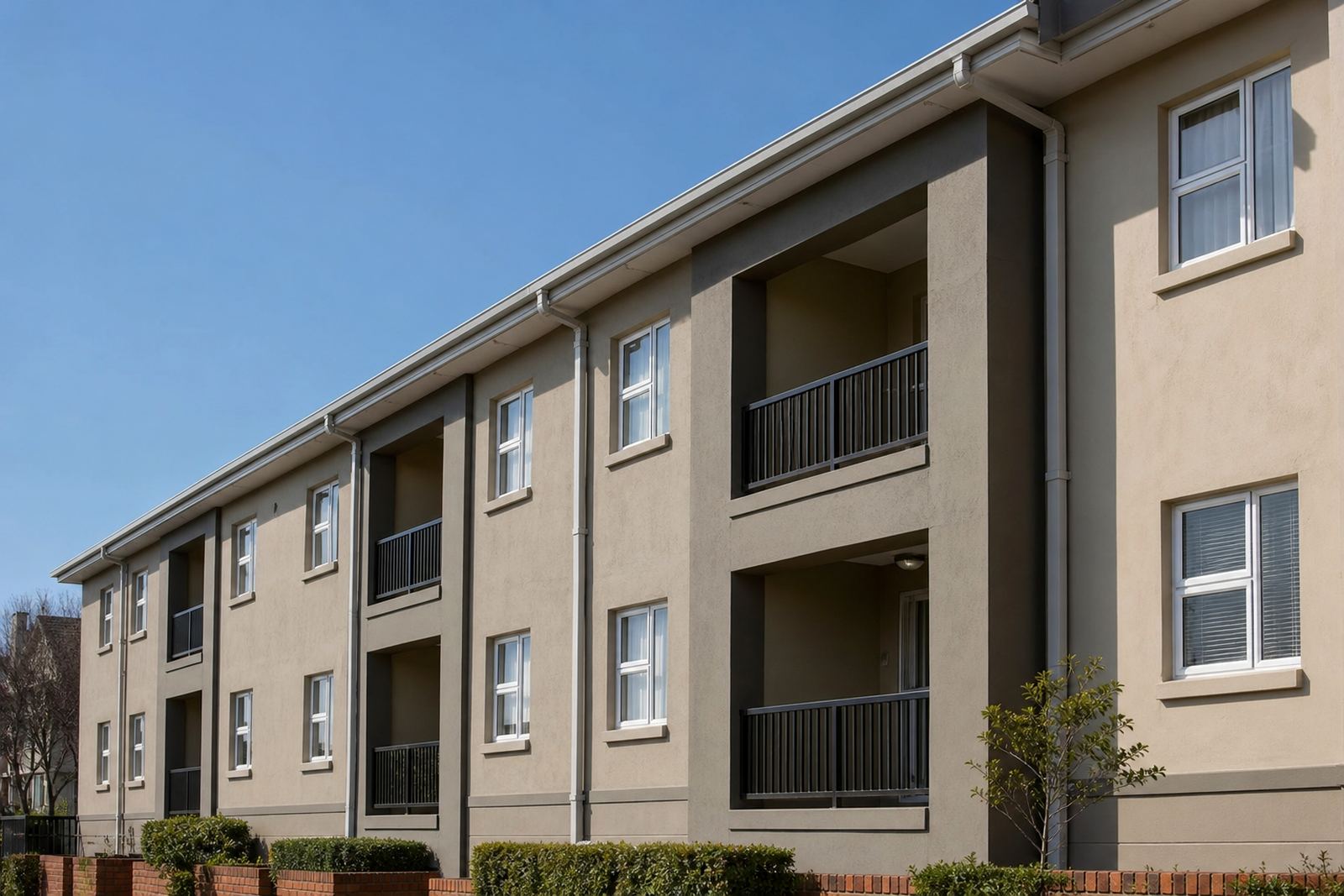
Apartment buildings collect rain from long roof runs, parapets and often several roof planes feeding into the same drainage line. That means one poorly placed outlet can leave water pooling along the eaves or running behind the fascia board. On higher blocks, wind-driven rain and the extra height also put more strain on joints and fixings, so the system has to be planned as a unit, not as a few separate lengths.
For blocks in Johannesburg, Pretoria, Durban, Cape Town and inland towns such as Polokwane, the roof pitch, rainfall pattern and exposure all matter. Coastal humidity in Durban and salt-laden air along parts of the Cape can be hard on ordinary fittings, so the material choice and bracket spacing should suit the site. When the gutter line, downpipe line and fascia line work together, maintenance stays manageable and block managers have fewer callouts for leaks, overflow and rust staining.
Typical Materials For Apartment Block Rooflines
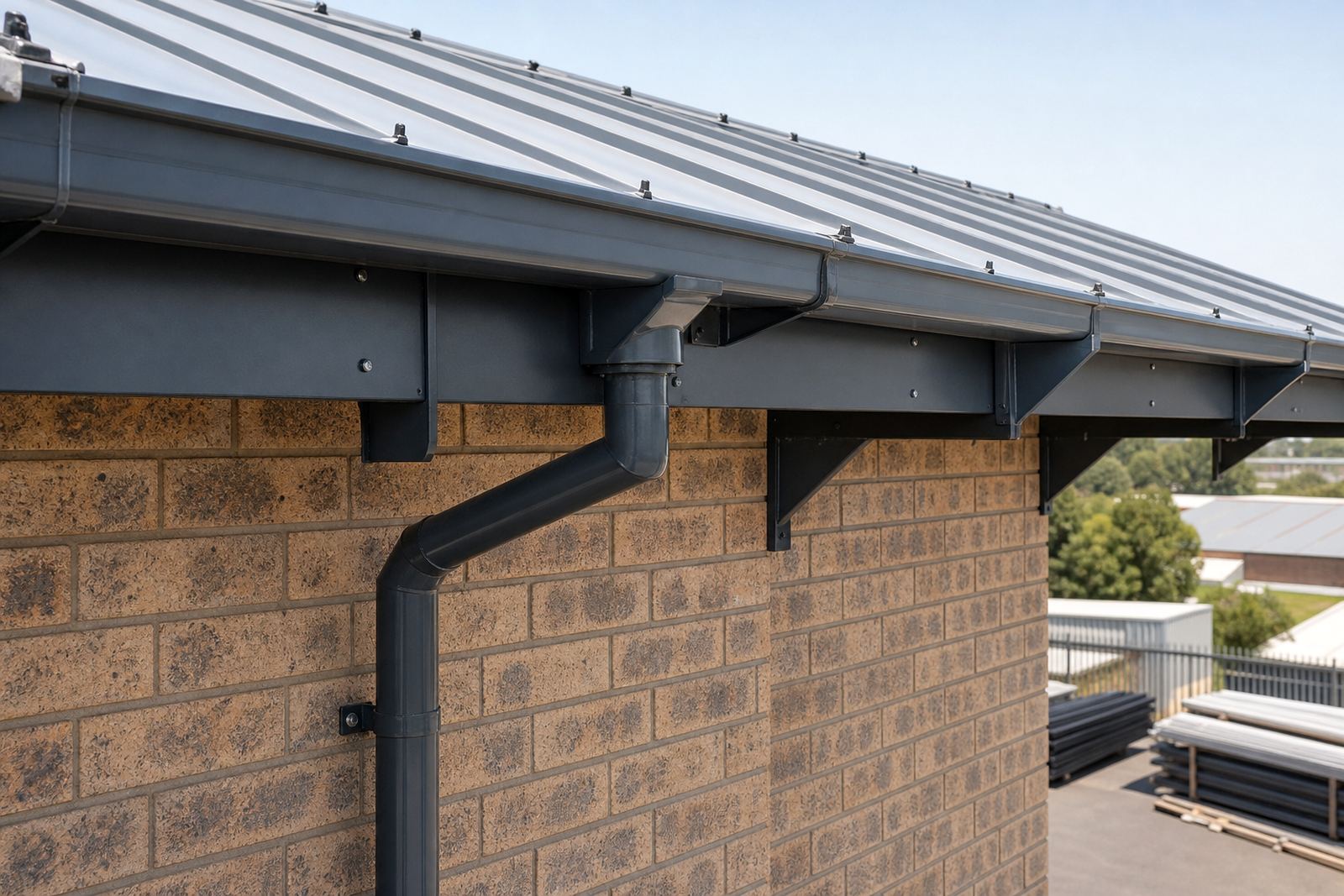
For apartment blocks, the usual set includes gutter runs, union joints, stop ends, brackets, outlet fittings, downpipes, bends, offsets, shoes and fascia boards. Plastic-steel composite products are often chosen where a lighter system is preferred but with more strength than basic plastic alone. They suit long runs, exposed balconies and service sides where access is tighter and the fixing points need to hold their line.
Common gutter profiles are selected to suit the catchment size and the look of the building. Wider gutters handle more roof water, while the downpipe diameter must match the outlet count and roof load. Fascia boards support the guttering and finish the roof edge neatly. On apartment blocks, that board is not just a trim piece, it helps keep the whole line straight and gives a secure fixing base for brackets and outlets.
- Gutter lengths matched to each roof section to reduce joins where possible
- Outlets placed near low points or planned falls, not wherever there is space
- Downpipes sized for roof area and routed clear of walkways, stairwells and balconies
- Brackets fixed at close enough centres to support long straight runs
- Fascia boards cut accurately so corners and joints stay tidy
Getting Falls, Outlets And Brackets Right
Apartment block drainage works best when the gutter fall is set from the start. A light fall toward each outlet helps water move off the roofline instead of sitting in the channel. If the fall is too flat, silt and leaves settle in the gutter. If it is too steep, the line can look uneven and water can rush too fast at the outlet. On a block with multiple bays or wings, each section may need its own calculation rather than one blanket approach.
Bracket spacing is just as important. Too few brackets and the gutter can sag once it is full of water, especially on long runs or where temperatures change between day and night. Too many joints and the line becomes harder to keep watertight. Downpipes should be routed so they do not dump water onto common paths, parking bays or plant rooms. Where a building has awkward corners, offsets and bends help the pipework move around the structure without stressing the connection points.
- Set the outlet position before fixing the first gutter section
- Use a consistent fall along each run so water drains cleanly
- Keep brackets aligned so the gutter does not twist
- Place downpipes where inspection and cleaning can be done safely
- Check that balcony edges and parapets do not block overflow paths
Planning For Access, Safety And Maintenance
Work on apartment blocks is not the same as a single-storey house. Access equipment, edge protection and competent roof workers are part of the job, especially where the roof edge is high or the building sits over busy common areas. Roofline replacement and leak checks should be arranged around safe access so the team can inspect the full gutter route, not only the easy sections. Any work at height must be done safely by competent people.
For body corporates and managing agents, maintenance planning should include a clear route for cleaning leaves, checking joints and testing for blockages after heavy rain. In areas with trees nearby, gutters may need more regular clearing. On coastal or humid sites, check for staining, fixings that have worked loose and seal points that may need attention after repeated weather exposure. A small fault at the top of a block can show up as damp inside units, staining down the wall or water tracking into common passages.
- Schedule inspections before the rainy season and after major storms
- Keep access points clear for ladders, towers or other approved access methods
- Look for sagging, backed-up outlets and rust marks on walls
- Inspect fascia boards for movement at joints and corners
- Record recurring leak points so repairs are targeted, not guessed
Common Mistakes On Apartment Blocks
The most common mistake is treating the block as if it were one short house roof. Apartment buildings often need more than one outlet line, and a single downpipe can become a bottleneck when the catchment is large. Another error is fixing gutters before checking the roof edge, which can leave the line uneven if the fascia is bowed or damaged. A blocked outlet or undersized downpipe can send water back over the gutter lip during a storm, especially on wide roof areas.
Loose brackets, weak joints and poor alignment also create trouble. If the gutter is not supported properly, it starts to twist and pool water. If fascia boards are cut too short, the corners show gaps and the fixing points lose grip. On apartment blocks, a neat finish matters because the roofline is visible from road level and from neighbouring units. A careful install saves repeated callouts and keeps the building looking in order.
Budget Ranges For Apartment Block Roofline Work
Budget on apartment blocks depends on roof height, access, length of gutter, number of outlets and the amount of fascia replacement required. Small blocks with straightforward access and limited roofline work can sit in the lower range, while taller buildings, complex corners and multiple downpipe runs move the figure up. Material choice also matters because wider gutters, more brackets and longer downpipes increase the total.
As a working guide, light maintenance or partial replacement jobs may start from around R8 000 to R20 000. Medium roofline projects on sectional blocks often fall between R20 000 and R60 000. Larger apartment blocks with multiple elevations, more intricate routing and full fascia replacement can move into the R60 000 to R180 000 and above range. A proper site measure and material takeoff help keep the figures grounded in the actual roof layout rather than guesswork.
What Plasteel Supplies From Kya Sand
From Kya Sand, Randburg, Plasteel supports apartment block projects with site measuring, material takeoff, product supply, gutter installation, fascia installation, downpipe installation, roofline replacement, leak checks, maintenance visits, builder support, homeowner advice and delivery coordination. That makes it easier to match the drainage layout to the building instead of piecing it together from guesswork and off-the-shelf lengths.
Our delivery coverage includes Randburg Supply, Johannesburg Delivery, Pretoria Delivery, Durban Delivery, Cape Town Delivery, Polokwane Delivery, Midrand Supply and Roodepoort Supply. For apartment blocks, that spread helps when a project needs coordinated material supply to site, especially where access is limited and the team must keep the work moving in the right order. The right gutter line, the right outlet positions and the right downpipes keep the block dry and easier to manage over time.