

Estate rooflines need repetition that still drains well
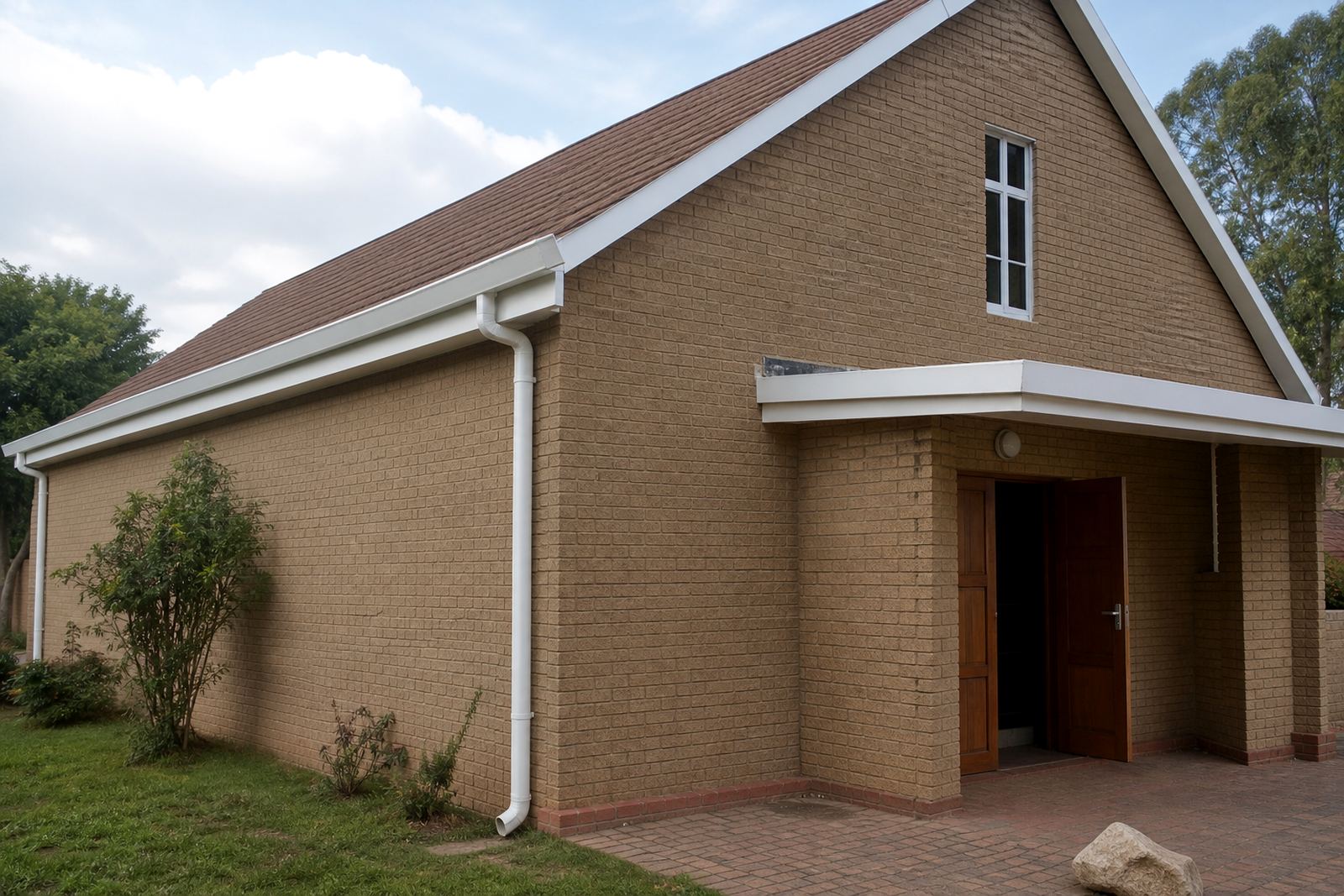
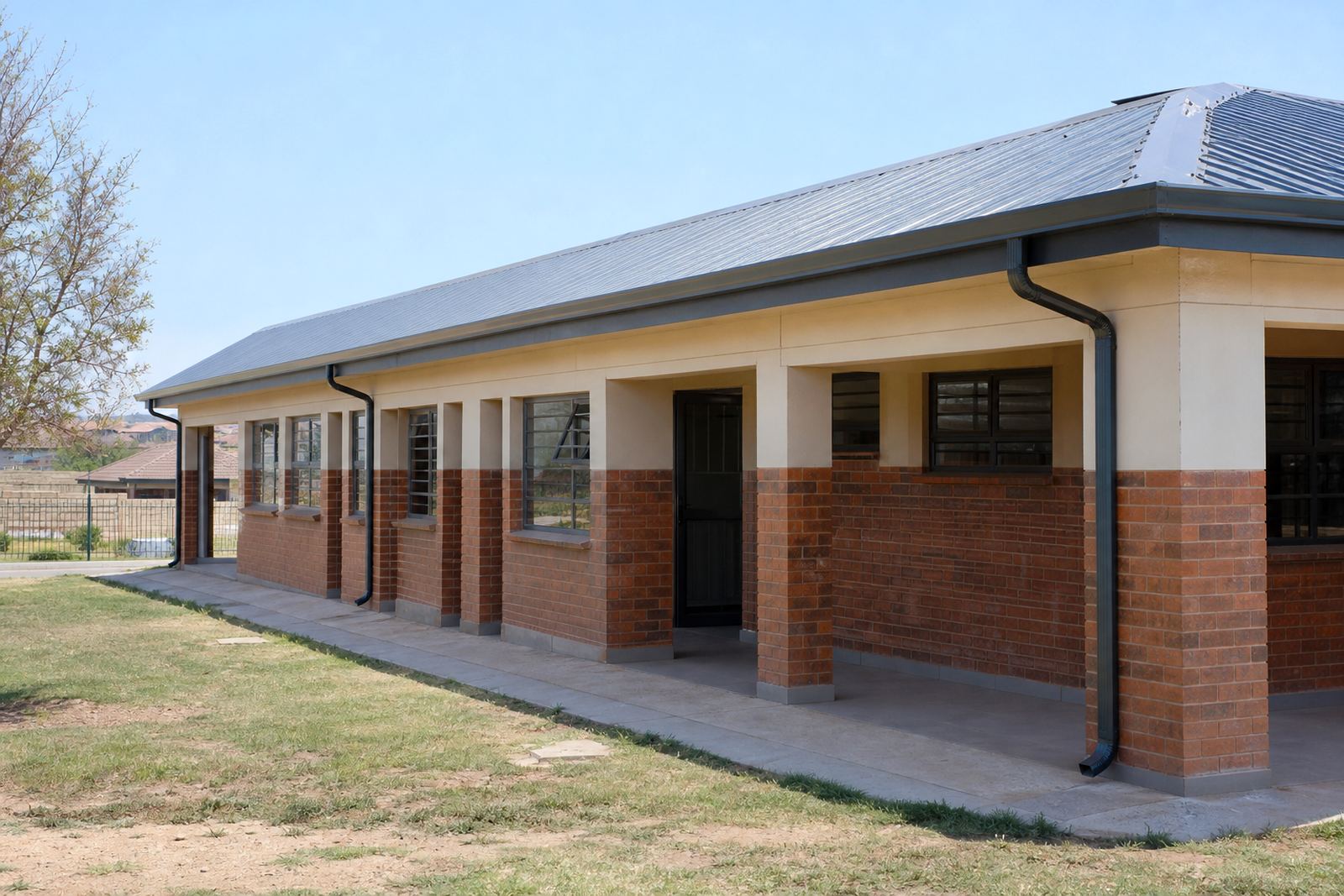
In an estate, the roofline has to look consistent from the street while also handling real weather, from summer storms in Gauteng to salt air along the coast. That means the gutter line, fascia height, bracket spacing and downpipe positions need to be repeated accurately across every unit, boundary wall and common building. If one section is out by even a small amount, the water path changes and the result is usually overflow at corners, staining on walls or water running behind the fascia.
For residential estates, the usual brief is straightforward: keep the profile neat, make maintenance easy and avoid a mix of fittings that age differently. Plastic-steel composite material suits that work because it gives a tidy finish with good stiffness, and it is practical where managers want fewer callouts for cracked or rusted roofline parts.
Typical material set for houses, walkways and common blocks
The standard set for an estate roofline job usually includes gutters, downpipes, fascia boards, brackets, stop ends, union joints, outlets and corner pieces. Where the roof pitch is steep or the eaves are long, the layout may also call for extra outlets or a larger gutter profile to move storm water away more efficiently. Fascia boards need to sit straight, be fixed securely to sound timber or a suitable support line, and align cleanly across adjoining homes if the estate uses a uniform street elevation.
- Gutters in matching lengths and profiles for villas, clusters and common passages
- Downpipes sized to suit roof area and rainfall load, often placed at corners or low points
- Fascia boards that cover the eaves neatly and create a consistent face line
- Brackets and fasteners set at regular spacing for strength and alignment
- Joints, outlets and end caps positioned for safe water discharge
On many estates, the same basic profile is repeated across several blocks so future maintenance is easier. That helps when a committee wants spare lengths on site and a predictable replacement pattern.
Planning the fall, the outlet points and the service access
Good gutter work starts with the fall. A gutter should be set so water moves toward the outlet without sitting in low spots, but not so steep that it looks uneven from the ground. The exact fall depends on length, roof shape and outlet positions. On long runs, especially where units are linked in rows, it is better to plan the fall early instead of forcing it in later with bracket adjustments that throw off the line.
Estate layouts also need practical access. If a block of units has narrow service lanes, the team must think about ladder access, working height, safety lines and where removed sections can be carried without disrupting residents. Roofing work at height must be done safely by competent people, with the right access equipment and fall protection. For shared properties, it also helps to map access dates around residents, security gates and municipal collection days so work does not interfere with the daily routine.
- Measure each run from corner to corner, not just by unit count
- Mark outlet positions before fabrication or supply
- Check that fascia lines are level enough for a neat street view
- Allow for overflow points near sheltered courtyards or inner roofs
Common mistakes on residential estates
The most frequent problem is treating every roof as if it is identical. In practice, a corner unit, a double-storey house and a clubhouse can all need different gutter sizes or outlet positions. Another mistake is under-sizing the downpipes, which is a problem in heavy rain when a roof sheds water quickly and leaves nowhere for it to go. We also see brackets fixed too far apart, which allows the gutter to sag over time and trap leaves or silt.
Mixing old metal sections with new composite parts can create uneven lines, especially where the existing supports are already tired. It is also common to overlook maintenance access. If a gutter is installed tight against a wall or behind a security structure, cleaning becomes awkward and build-up starts sooner. In coastal estates, salt and wind can make neglected joints show wear faster, so the joint layout matters just as much as the material choice.
Maintenance planning for committees and managing agents
Estate maintenance works best when it is planned by area rather than by emergency callout. A seasonal check before the first heavy rains is useful, especially where trees shed leaves or where paving runoff splashes dirt into the system. Maintenance visits usually focus on visible leaks, loose brackets, cracked joints, blocked outlets and fascia boards that have shifted out of line.
For a residential estate, a simple record of roofline sections helps a lot. Keep note of which blocks use which gutter profile, where the outlets are, and which sections tend to collect debris. That makes future material ordering more accurate and reduces guesswork for builder support or repair teams.
- Clear gutters and outlets before the rainy season
- Check for standing water after a storm
- Inspect fascia joints near corners and parapets
- Review downpipe discharge so water moves away from walls and paving
Budget ranges in Rand for estate roofline work
Budgeting for an estate depends on the number of units, roof height, access limits and whether the job is a partial replacement or a full roofline changeover. Smaller repairs on a single house or a short run can sit in the low thousands, while a full block or estate section with multiple gutters, downpipes and fascia lengths will move into a higher range. As a working guide, committee members often set aside a few thousand Rand for a targeted repair and tens of thousands for a broader replacement programme, especially where scaffolding, access control or phased scheduling is involved.
It is worth pricing the job as a system, not only as separate parts. A cheaper section that leaves poor falls or weak outlet placement can cost more later in repeat repairs and water damage. For estate managers, the practical order is usually site measuring, material takeoff, supply coordination and then the installation or replacement sequence.
How Plasteel supports estate projects
Plasteel works from Kya Sand, Randburg and supplies residential estates across Johannesburg, Pretoria, Durban, Cape Town and Polokwane, with delivery coordination and support for builders, managing agents and homeowners. The team handles site measuring, material takeoff, product supply, gutter installation, fascia installation, downpipe installation, roofline replacement, leak checks and maintenance visits. Where a project needs phased work, we can help break it into clear sections so the street view stays consistent while the work moves along in stages.
For estates, the detail matters: the same profile across every unit, enough capacity for summer rain, brackets spaced properly and a finish that stays neat under strong sun. That is the part residents notice first when they drive in, and the part maintenance teams notice later when the next storm arrives.