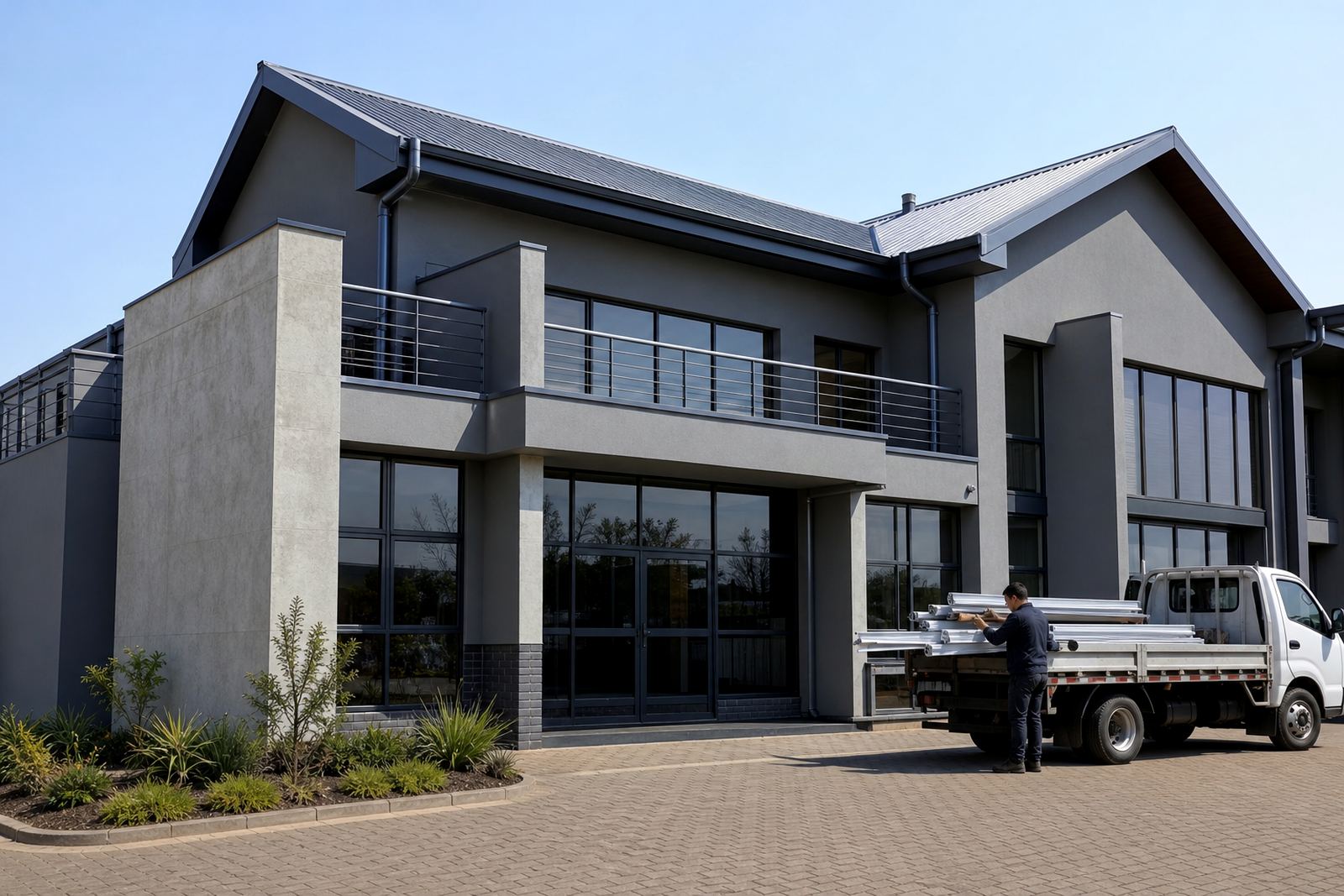
Straight rooflines that suit office elevations
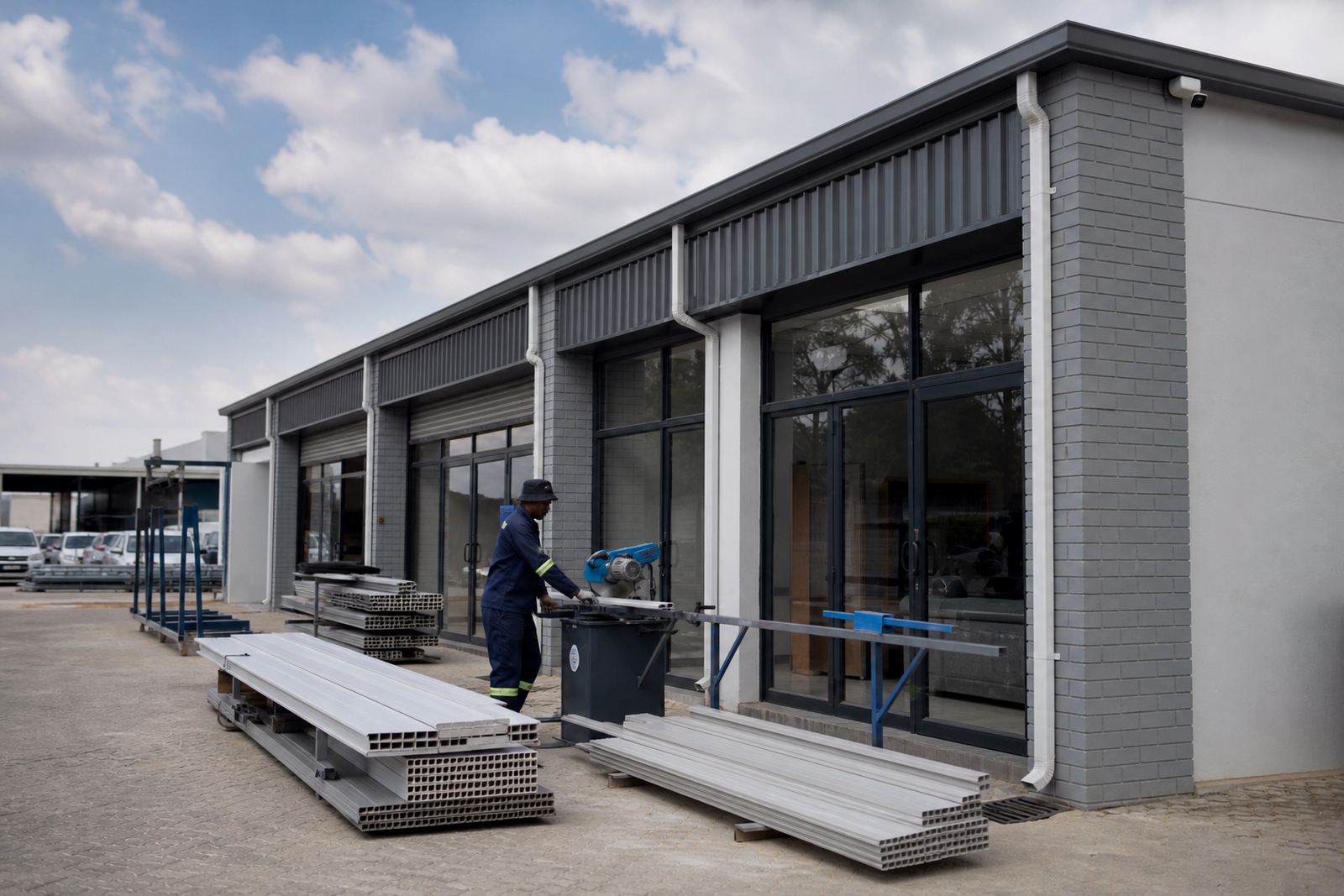
Office buildings usually ask for a tidy line under the roof edge, with gutter runs that look even from the street and move water away from entrances, paving and parking decks. That starts with the right fascia board, a proper gutter size and downpipes placed where they do not spoil the face of the building. On larger commercial blocks, the roof edge can run long and level for many metres, so the line must be planned before any fixing starts.
Plastic-steel composite fascia boards are often used where a clean finish is needed and the board must stand up to sun, wind and the damp conditions that appear on coastal routes to Durban and Cape Town. In inland areas like Johannesburg, Pretoria and Polokwane, the heat and dust can be hard on roofline materials, so straight fixing and correct spacing matter just as much as the material choice.
Typical parts in an office block roofline set
For office work, the usual set includes gutters, fascia boards, downpipes, internal and external corners, stop ends, outlets and brackets. The sizes used depend on roof area, the pitch of the roof and the way rainwater is expected to move during a heavy storm. A small section of roof feeding one run may work with a lighter profile, but a wide office block roof often needs a larger gutter and more downpipes to prevent overflow at the corners.
- Gutter lengths matched to roof bays and expansion points
- Downpipes sized to suit the catchment area and discharge route
- Fascia boards that give a neat fixing line under the roof edge
- Brackets spaced to keep the run firm and prevent sagging
- Outlets and offsets to guide water around parapets and wall returns
Where the building has canopies, internal courtyards or stepped elevations, each section needs its own layout. A single office block can need more than one pattern of gutter and downpipe routing, especially where there are different roof heights or drainage points.
Planning falls and downpipe positions before fixing starts
Good gutter work is not just about hanging a channel under the roof. The run needs a slight fall so water moves towards the outlet instead of sitting in the trough. On office blocks, even a small error in fall can show up as ponding, staining or overflow at the wrong end of the elevation. The line must be checked against the full length of the run, not only at the first few brackets.
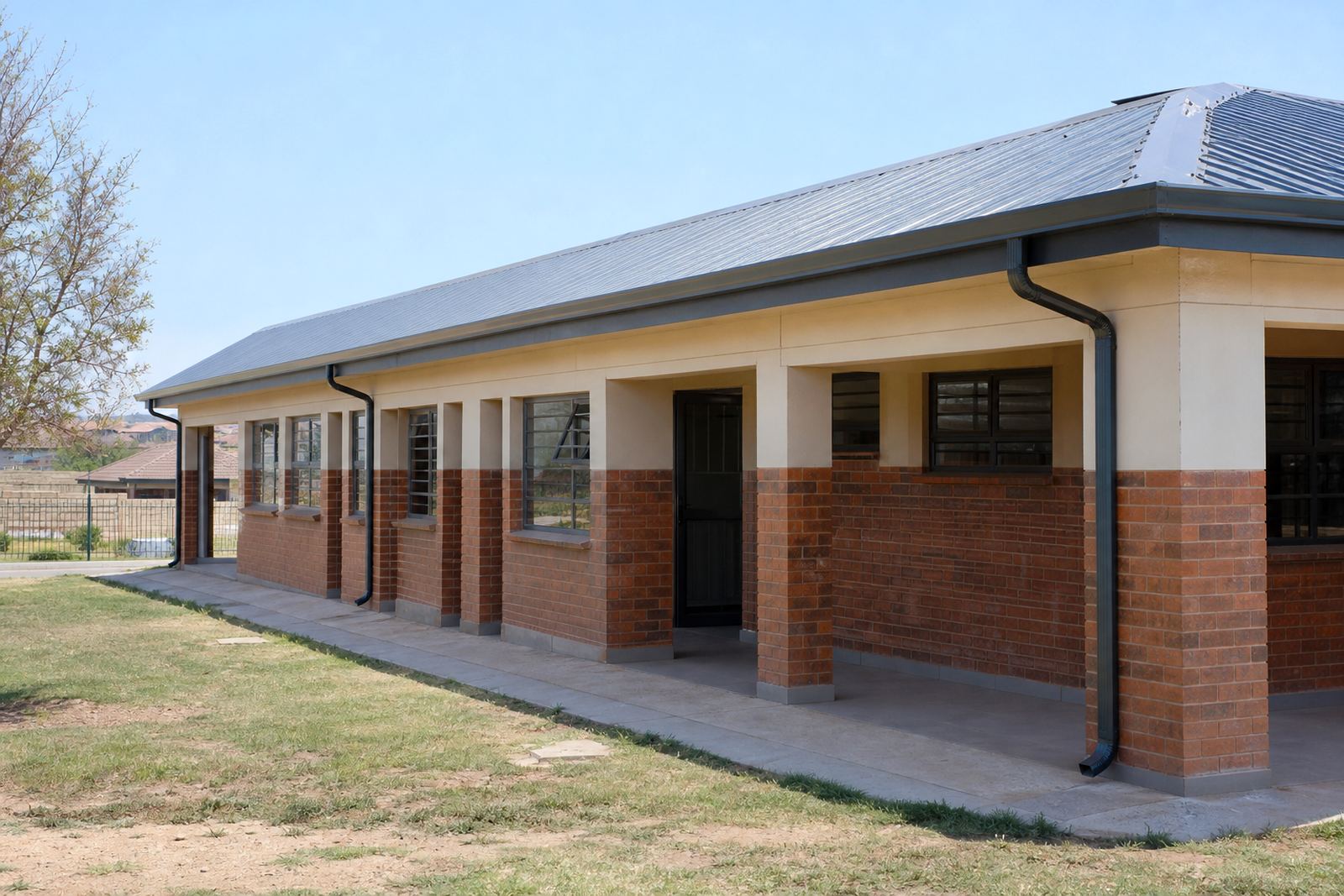
Downpipes should be planned where they can be reached for maintenance and where they do not interfere with windows, service doors or pedestrian movement. In commercial parks, it also helps to keep outlets clear of traffic zones and loading areas. A neat route is good, but a practical route is better when staff, tenants and visitors use the same building every day.
- Check the roof edge for straightness before final fixing
- Allow for a measured fall across long runs
- Place outlets where they drain efficiently, not just where they are easiest to reach
- Keep downpipes clear of corners that trap leaves and dirt
- Plan access for cleaning ladders and maintenance visits
Mistakes that show up fast on commercial buildings
Office blocks are less forgiving than small homes because the roofline is longer, the water load can be higher and the finish is on public display. One common mistake is using too few brackets, which allows the gutter to dip once it carries water. Another is placing downpipes too far apart, so the run fills before it can empty. On large facades, that can lead to streaking on walls and water near entrances.
Another problem is poor coordination with the fascia line. If the board is uneven, the gutter follows the mistake and the whole edge looks out of line. Weak seal points, loose joins and badly aligned corners can cause leaks that are hard to trace later. For taller office buildings, work at height must be handled by competent people with proper fall protection and safe access gear. No one should be leaning over a roof edge without the right controls in place.
- Too little fall across the gutter run
- Brackets spaced too far apart
- Downpipes fitted where they cannot drain freely
- Joints not sealed or aligned properly
- Boards fixed without checking the straight line first
Maintenance on offices that stay occupied
Office blocks need maintenance that fits around tenants, cleaners and security staff. That usually means checking gutters before the wet season, after major wind events and when leaf build-up starts to show at outlets. In Johannesburg and Pretoria, dry dust and debris can block the first section near the outlet. In Durban and Cape Town, salt air and wet conditions can make build-up and staining appear sooner, so regular checks are useful.
Maintenance visits often include clearing gutters, checking brackets, tightening loose sections, inspecting downpipe joints and looking for overflow marks on walls. If the fascia board is warped or damaged, it is better to replace that section before it affects the gutter line. Small repairs are easier to handle than waiting for water to reach the inside edges of ceilings or wall finishes.
Budget ranges for office block roofline work
Budget depends on building size, the number of elevations, access height, the length of gutter runs and whether the job is a new installation or a replacement. For office blocks, the cost picture often changes once scaffolding, safe access equipment or a lift is needed. A small fascia and gutter section on a low office building may sit in the lower thousands of Rand, while a full roofline replacement on a larger block can move into a much higher range.
As a practical guide, material supply for a modest office elevation may fall in the range of R8 000 to R25 000, depending on lengths and fittings. Larger commercial rooflines, with multiple downpipes and more difficult access, can run from about R25 000 to R80 000 or more. Installation, maintenance visits and leak checks are priced according to the actual site conditions, because office blocks differ a lot from one suburb to the next.
What builders and owners usually ask for first
When office owners or builders reach out, they usually want help deciding what size gutter is needed, where the downpipes should go and whether the existing fascia can be reused. That is often followed by site measuring, material takeoff and a check on the roof edge before any supply is ordered. For larger commercial work, it helps to plan the full roofline in one go rather than treat each side as a separate small job.
Plasteel works with builders and homeowners across Randburg, Johannesburg, Pretoria, Durban, Cape Town, Polokwane, Midrand and Roodepoort, with supply and delivery support where needed. For office blocks in particular, the best result usually comes from clear planning, measured fixing points and a finish that keeps the building looking orderly from ground level.