Roof edges that cope with busy school days
Schools put roofline materials under steady pressure. Long blocks, walkways, halls, classrooms and admin areas all create wide roof edges that must shed water cleanly, with gutters that stay aligned and downpipes that can handle sudden downpours. In places like Johannesburg and Pretoria the rain can arrive hard after dry spells, while coastal schools in Durban and Cape Town deal with moisture, salt air and faster wear on exposed fittings.
Plasteel supplies plastic-steel composite gutter, downpipe and fascia materials for these conditions. The goal is practical performance on buildings that need neat lines, controlled drainage and parts that are straightforward to maintain year after year.
Typical school roofline set-up
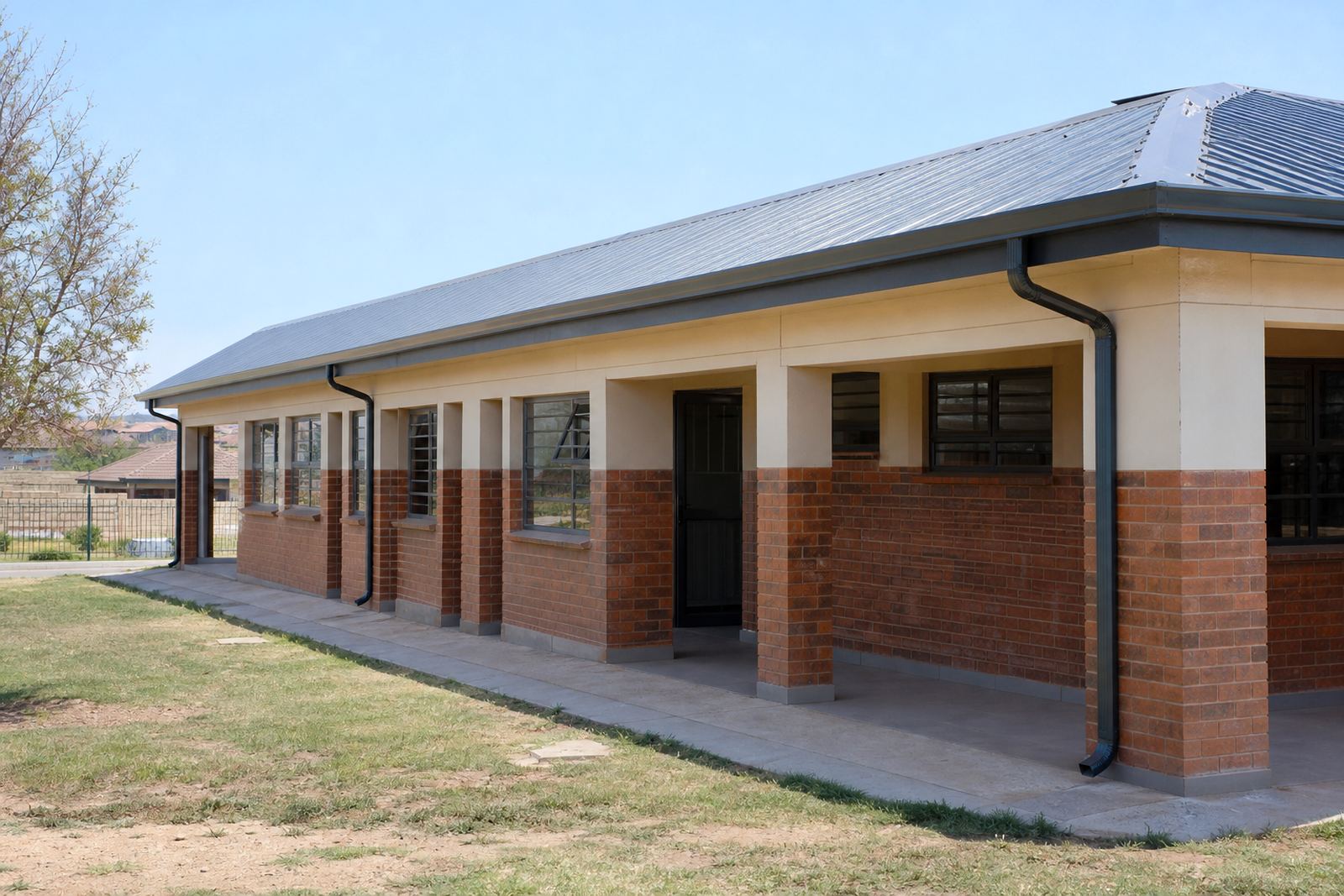
A school roofline usually works best when the full system is planned together. That means gutter sections, corners, outlets, downpipes, brackets, end caps and fascia boards all matching the roof geometry and the expected water flow. On a large campus, the layout often changes from one block to the next, so measurements matter.
- Gutters are commonly sized to suit the roof area and rainfall intensity, with deeper profiles used on wider spans
- Downpipes are placed to keep discharge points away from entrances, pathways and areas where learners gather
- Brackets are spaced to support the gutter through heat, wind and heavy water load
- Fascia boards provide a neat edge finish and support the line of the system
- Falls must be set correctly so water moves toward outlets and does not sit in the run
On schools, a straight line is not enough if the fall is wrong. Even a small dip can leave standing water, leaf build-up and staining on walls.
Planning around blocks, courtyards and access routes
Schools often have mixed roof shapes, older blocks beside newer classrooms, and busy access routes below the eaves. Before any supply or installation work, the roof edge should be measured carefully and the downpipe positions checked against doors, stormwater points and paved areas. Good planning also helps with future maintenance because staff need to reach gutters without disturbing lessons or blocking movement on site.
Where the roofline runs above courtyards or loading areas, it is worth checking for splash back and pooling at ground level. In some cases a longer downpipe or a small change in outlet position can make maintenance easier and reduce mess on painted walls. Roofing work at height must be done safely by competent people, with proper access equipment and fall protection in place.
- Measure each roof face separately, not only the building length
- Check where water should discharge before fixing the outlet positions
- Allow for expansion and movement on long runs
- Keep access paths clear for cleaning and inspections
- Match material colours and lines to the existing building for a tidy finish
What usually goes wrong on school gutters
Most drainage problems on school buildings come from small mistakes that grow over time. A gutter fitted without enough fall may hold water after a storm. Brackets placed too far apart can allow sagging, especially on longer runs. Downpipes that are too few in number can overload one section and push water over the front edge.
Another common issue is blocked gutters. Leaves, twigs and dust collect near trees, sports fields and older roofs, then water starts to overflow at the joints. On painted plaster walls this can leave stains and patching work. In coastal towns, exposed metal parts can also show wear sooner if the material choice is poor or if maintenance is neglected.
For schools, the safest route is a system that is set up for inspection. That usually means visible fixings, sensible spacing between outlets and a design that lets maintenance staff see problem areas without removing half the line.
Maintenance that suits school operations
School maintenance teams need roofline systems that are quick to inspect and simple to clean. Regular checks after heavy rain help to spot loose brackets, blocked outlets and small leaks before they spread. Fascia boards should be looked at where water has been running behind the gutter, since hidden damp can damage timber, plaster and paint finishes.
A practical maintenance routine for school buildings often includes clearing debris, checking alignment and making sure downpipes are still fixed securely. If the school has large trees near the roof, more frequent cleaning may be needed during the windy season. It is also sensible to inspect high traffic areas near entrances where overflow could create slippery patches on paving.
- Check gutters after major rain and after leaf fall
- Clear outlets first, then work along the full run
- Look for stains below joints and brackets
- Replace damaged sections before the next storm season
- Keep records of problem areas on each block
Budget ranges for school roofline work
Budgets for school roofline projects vary with roof size, access height, number of corners and the amount of replacement needed. A small repair on one block may stay relatively modest, while a full roofline replacement across several buildings can require a much larger allowance. As a broad planning guide, minor gutter repairs and localised replacement often start from a few thousand Rand, while medium school blocks can move into the tens of thousands depending on length and access. Larger campuses with multiple roofs, new fascia boards and several downpipes can run higher still.
It helps to separate supply from labour when comparing options. Material choice, gutter profile, bracket count and installation access all affect cost. Plasteel supports site measuring, material takeoff, product supply, gutter installation, fascia installation, downpipe installation, roofline replacement, leak checks, maintenance visits, builder support, homeowner advice and delivery coordination across Randburg, Johannesburg, Pretoria, Durban, Cape Town, Polokwane, Midrand and Roodepoort.
For school work, the best value usually comes from getting the measurements right first. A properly planned system reduces call-backs, keeps maintenance simpler and protects the building fabric better over time.