Why hot roof edges move more than people think
On a clear summer day a roofline can heat up quickly, especially on metal roofing, light-colour walls and exposed eaves. In places like Randburg, Pretoria and Polokwane the sun can be harsh for most of the day, and the surface temperature on gutters, fascia boards and downpipes can climb well above the air temperature. That heat causes materials to expand, then contract again when the shade moves across the building or when evening cools in.
Over a short length that movement is easy to manage. Over a long run, such as a boundary wall line, warehouse edge or a large home with wide eaves, the same movement starts to matter at corners, joints and fixings. If the run has no allowance for expansion the first signs are usually small: a loose clip, a joint that weeps in heavy rain, or a fascia board that starts to bow. Those are not dramatic failures, but they are signs the detailing needs attention.
Plastic-steel composite materials are used because they need to perform in ordinary South African conditions, including strong sun, coastal humidity and dusty inland weather. They still move with temperature changes though, so the install must allow for that movement rather than fighting it.
The small details that keep a gutter line steady
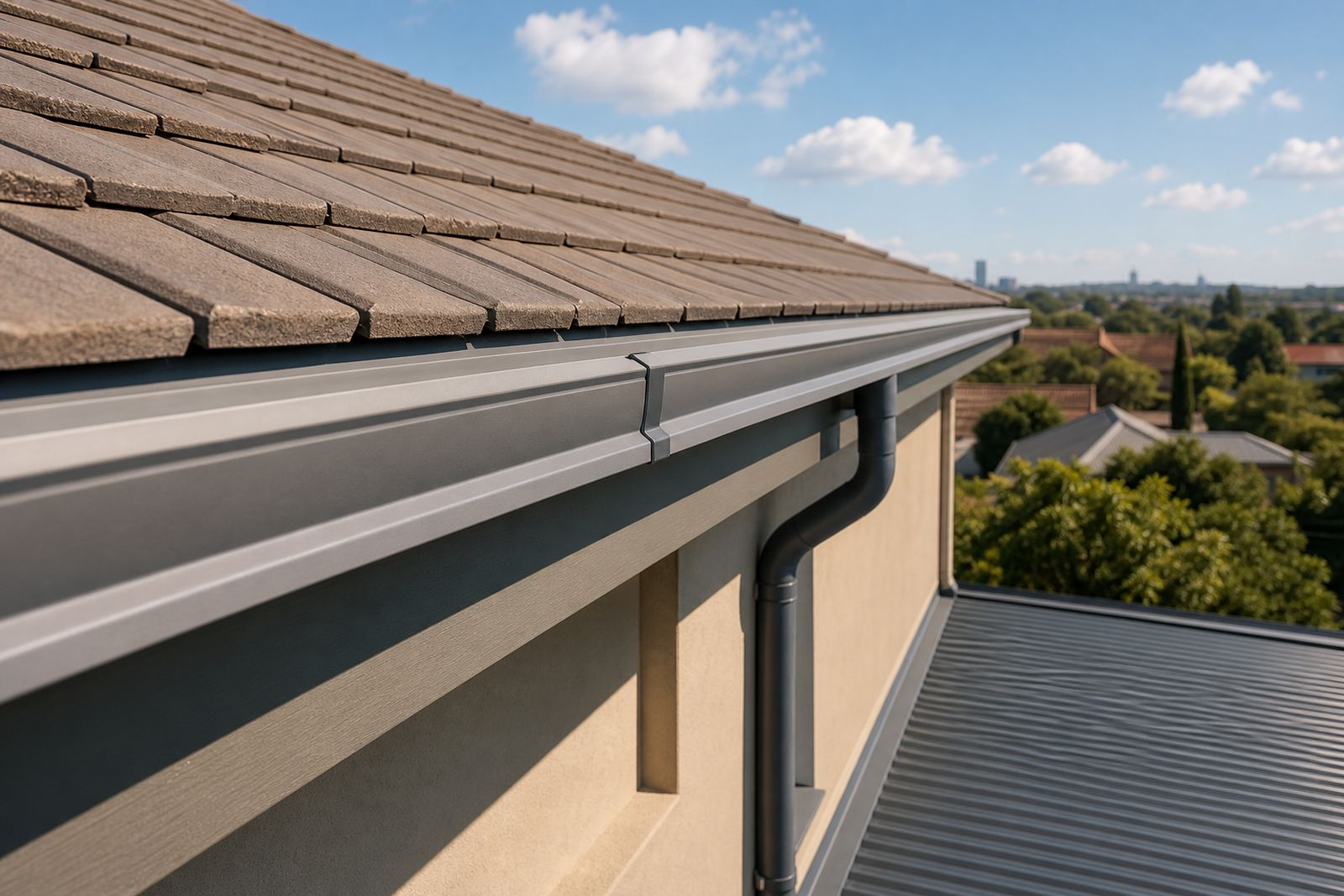
For gutters, the detail that matters most is not only the profile, but the way the line is broken into manageable lengths. On longer runs the installer needs to plan where joins sit, how far apart the supports are, and where water will travel under heavy rain. The spacing and alignment of brackets, hangers or clips should suit the profile and the building line, not just look neat from the ground.
Joints must be straight, properly seated and left with enough tolerance for movement. If sealant is used, it should be applied cleanly and not used as a crutch for poor fit. Sealant is there to support the joint, not hold a badly matched section together. On a hot afternoon a tight joint can pull under expansion, and on a cold morning the same joint can open slightly. A clean, even gap where needed is better than a forced fit that will strain later.
Fall is another important part of the story. A gutter must still carry water toward the outlet without ponding, but the fall should be set in a way that does not load the fixings unevenly. If the line is forced too steeply, the brackets can work harder than they should. If it is too flat, water lingers and dirt builds up. The right balance is practical, not theoretical.
- Use the correct bracket spacing for the profile and expected water load.
- Keep joins clear of obvious stress points where possible.
- Set a steady fall so water moves without pooling.
- Check that outlets and stop ends are seated before final tightening.
Downpipes also feel heat and movement
Downpipes are often treated as simple vertical pieces, but they also expand, especially where they run down sunlit walls. A pipe fixed too rigidly can creep against its brackets or push against bends, while a pipe fixed too loosely can rattle and mark the wall. The aim is secure support with enough allowance for movement in hot weather.
In a townhouse complex in Johannesburg, for example, a long east and west wall line may be in full sun during different parts of the day. That means the downpipe brackets on one side can heat and cool at a different rate from the roof edge above them. If the pipe is hard against a wall cap or patio beam, that small difference starts to matter over time. Good installation leaves space where needed and keeps the line straight without squeezing the material.
For larger roofs, the pipe size should suit the roof area and the expected rainfall. A larger catchment needs more than a neat-looking pipe. It needs the right number of outlets, the right bends, and a path that can move water away from the structure without overflow at the top. Where maintenance is planned, access should also be considered so a blocked elbow or leaf build-up can be cleared without damaging the pipe.
Fascia boards do more than finish the roof edge
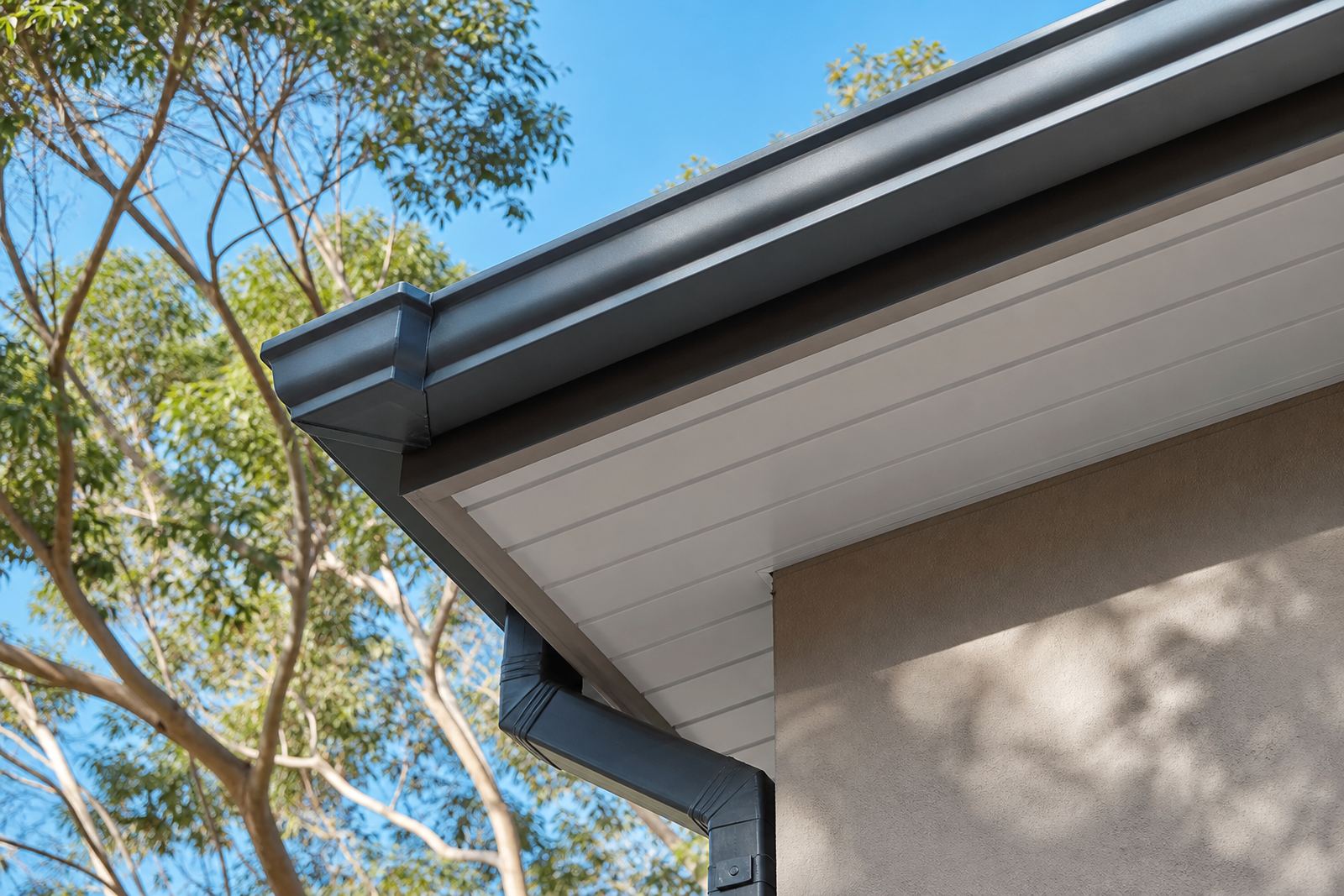
Fascia boards carry a lot of responsibility. They close the roof edge, support the gutter line and help the whole roof perimeter look tidy. If a fascia board is installed with poor alignment or with no allowance for heat movement, the result is often visible before the gutter itself fails. You may see waviness along the edge, small gaps at joins, or fixings that start to work loose.
In hot inland towns, fascia boards on sun-facing sides can dry and warm repeatedly through the day. In coastal air, especially around Durban and Cape Town, there is also moisture in the mix. A composite material has to cope with both conditions, which is why finish and fixing matter as much as the board itself. Clean cuts, level supports and sensible spacing help keep the line straight.
When fascia boards are part of a roofline replacement, it is worth checking the substrate behind them. A new board fixed over damaged timber or uneven framing will never sit properly. That is why competent people inspect the edge before closing it in. Roofing work at height must be done safely by people who know the risks and the correct methods, not hurried from a ladder with no planning.
A local example from a long Randburg roofline
On a long property in Kya Sand, one roof edge can stay in direct sun through most of the day while the opposite side spends time in shade. That difference is enough to show up in a gutter line if the supports are too far apart or the joins are placed without thought. On a commercial unit with a broad roof, the first season often reveals whether the detailing was done properly.
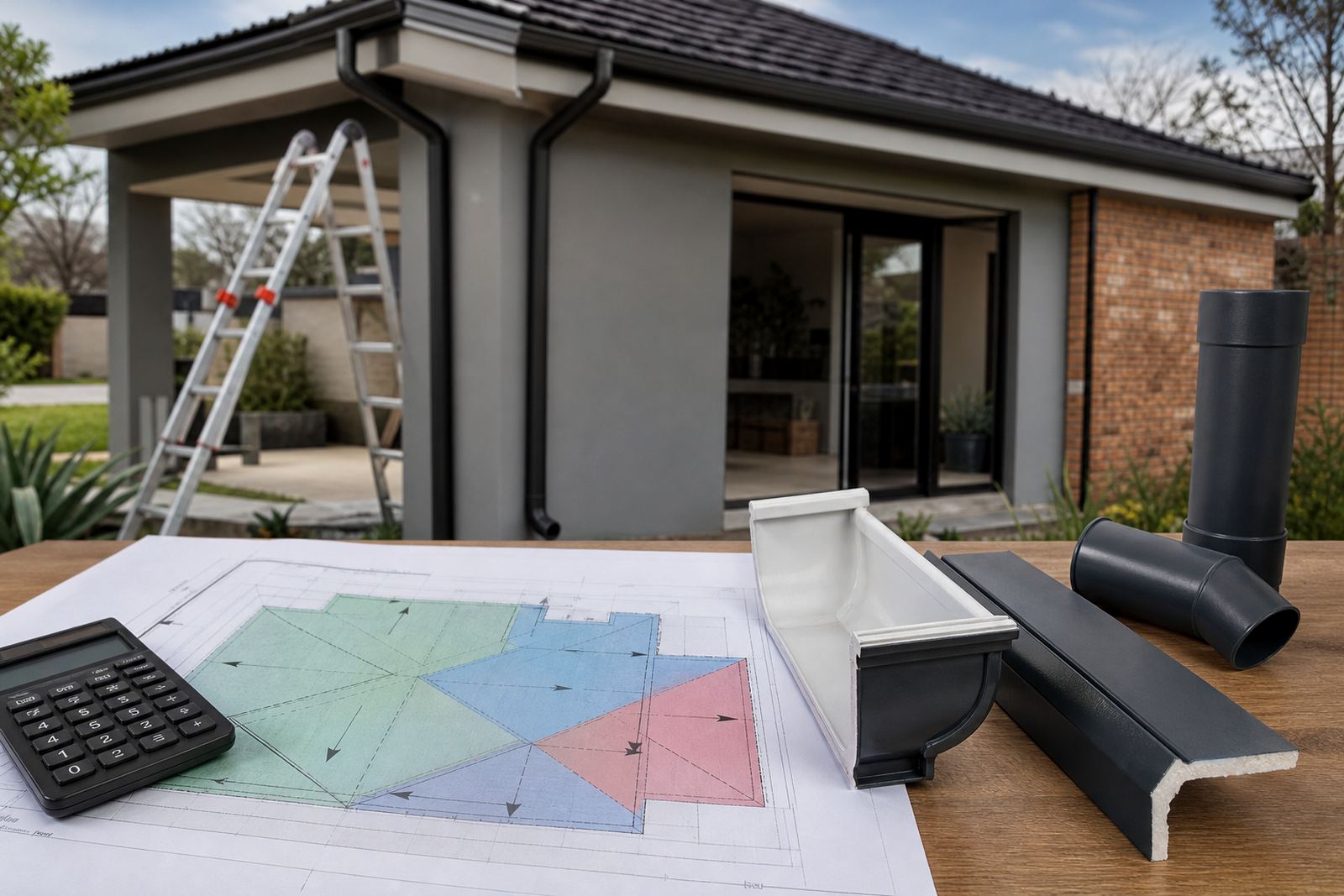
In a case like that, the practical sequence is straightforward. Measure the full run, check the roof fall, mark the outlet positions and plan the join locations before any fixing starts. If a section is especially long, breaking it into sensible lengths helps control movement. The aim is not to overcomplicate the job, but to give the material room to do what it naturally does when the sun is hard and the day runs warm.
This is where builder support helps. A contractor may know how to fit a gutter, but on a tricky run the difference is in the planning. Material takeoff, site measuring and delivery coordination reduce waste and avoid awkward last-minute changes. For a homeowner in Midrand or Roodepoort, that can mean less disruption. For a builder on a larger project, it means the roof edge can be closed out properly before the next trade moves in.
Maintenance that helps a system live through summer
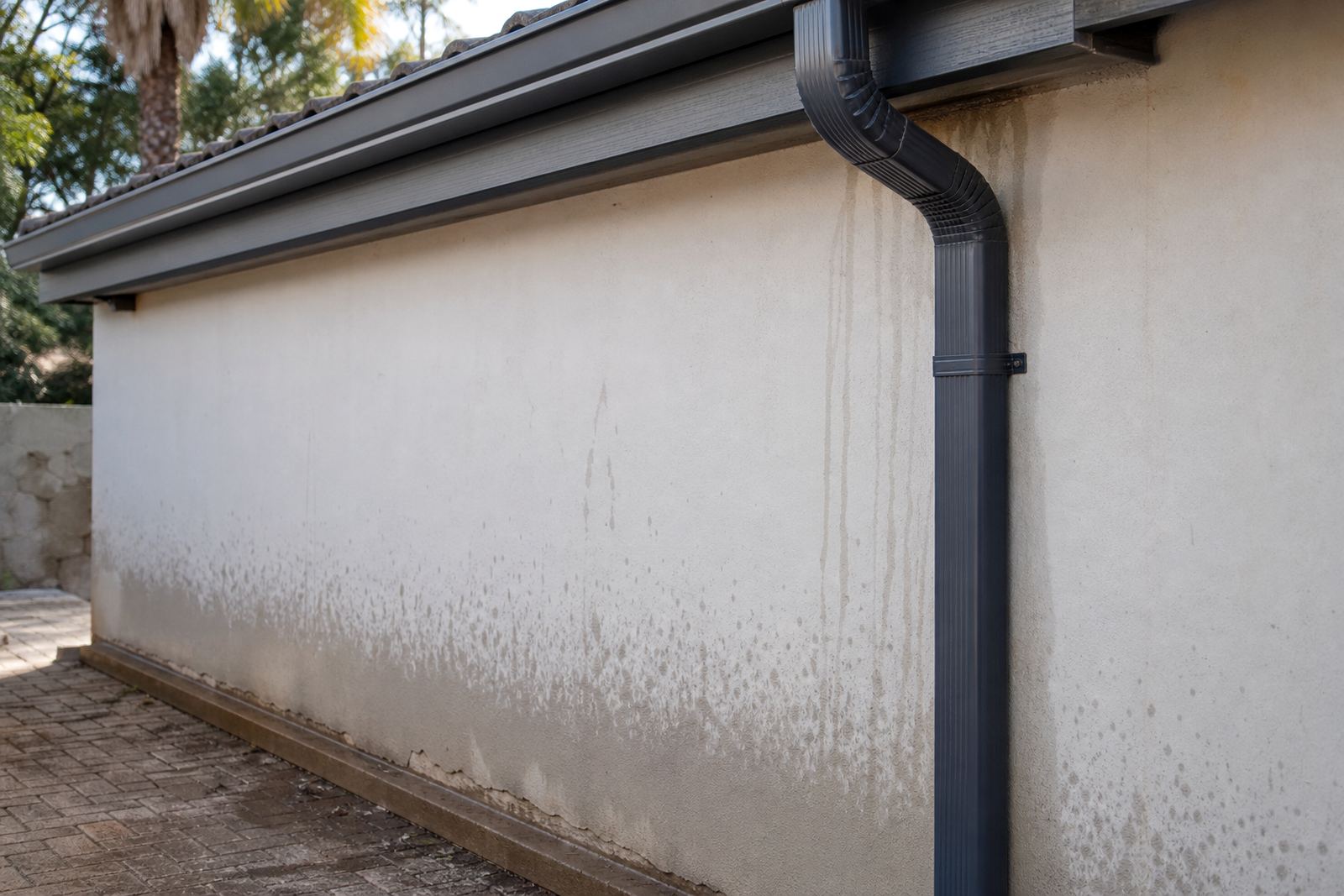
Even a well-fitted gutter system needs regular attention. Dust, leaves, bird nesting material and roof grit collect in outlets and at low points. In summer, after long spells of sun, a small blockage can become a bigger problem when a storm drops heavy rain in a short time. Water then sits where it should not and the extra weight can stress the brackets.
Basic maintenance does not need to be complicated. A visual check from ground level can show sagging, staining or overflowing marks. A closer look by a competent person can confirm whether the fixings are still sound and whether joints need resealing. In coastal areas the inspection should also include corrosion on nearby metal fittings and any signs that fasteners have loosened in the humid air.
For homes and businesses alike, the best routine is simple: keep the roof edge clear, check that the falls still run correctly and make sure nothing is rubbing where heat movement is expected. Small issues are cheaper to sort early than after the first summer storm has already pushed water back into the roof edge.