
What overflow leaves behind on the wall
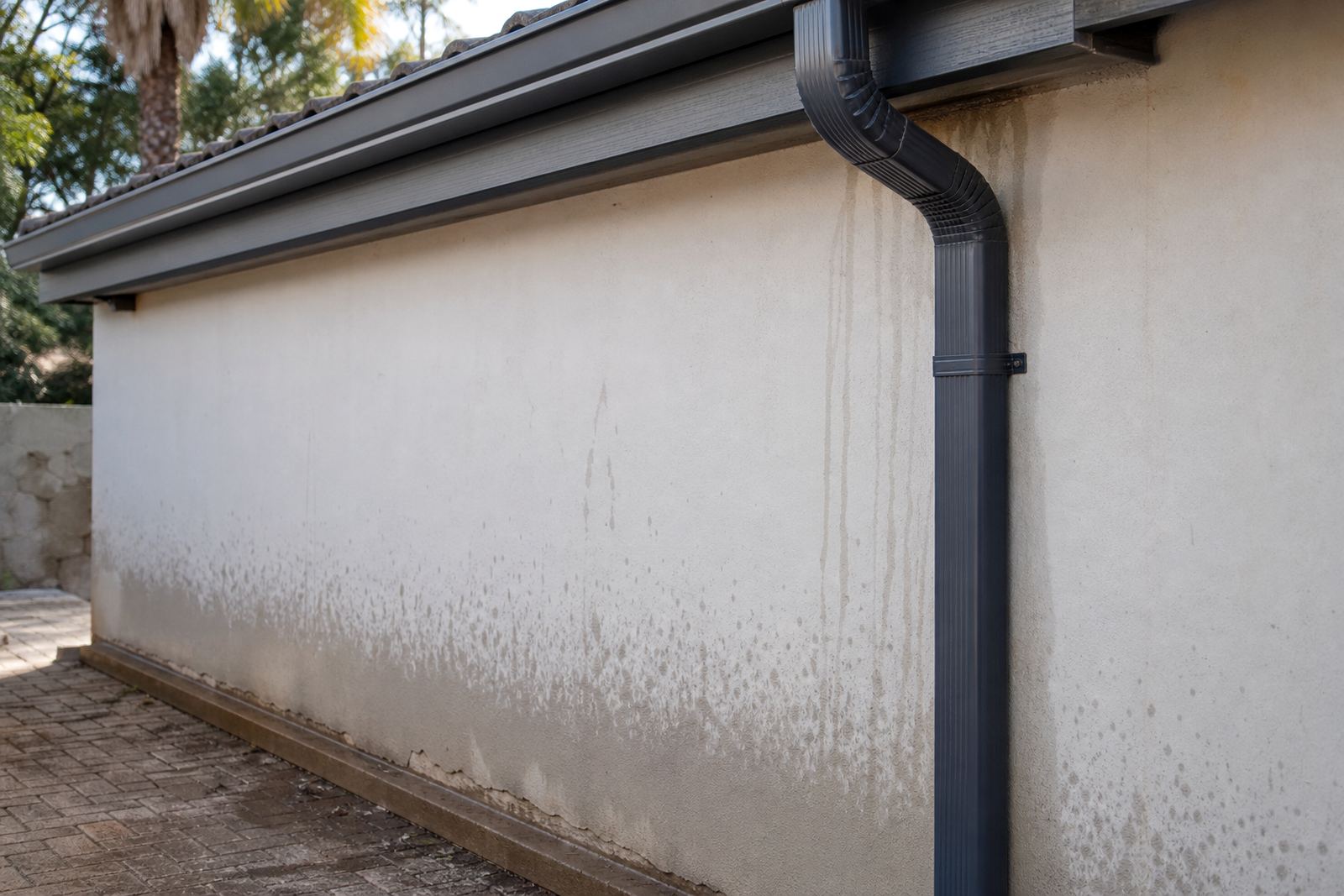
The first clues are often on the outside walls, not inside the house. A gutter that is carrying water poorly can leave vertical stain marks below the eaves, dark patches on plaster, or a dirty line where rainwater has been running over the lip instead of through the system. In coastal towns the marks can appear quicker because salt and wind-driven rain keep the walls damp for longer, while inland dust can make the staining more obvious after a single storm.
Check the areas directly beneath roof edges, corners and joins. If the paint is blistering near the top of the wall or the fascia looks marked and patchy, water may be escaping above the gutter line. That often points to a blocked outlet, poor fall, or a section that is holding water after the rain stops.
- Brown or grey streaks under the roof edge
- Paint that peels near the eaves
- Black mould or damp patches on shaded walls
- Grit lines where overflow has carried dirt down the face of the building
Damp eaves and tired fascia boards are warning signs
When gutters overflow repeatedly, the timber or composite fascia behind them starts to show it. You may see swelling, soft edges, flaking coating or joints that no longer sit tight. On older homes the underside of the eaves can also feel damp after rain, even when the weather has cleared. That means the water is not moving away cleanly and is seeping back into the roof edge.
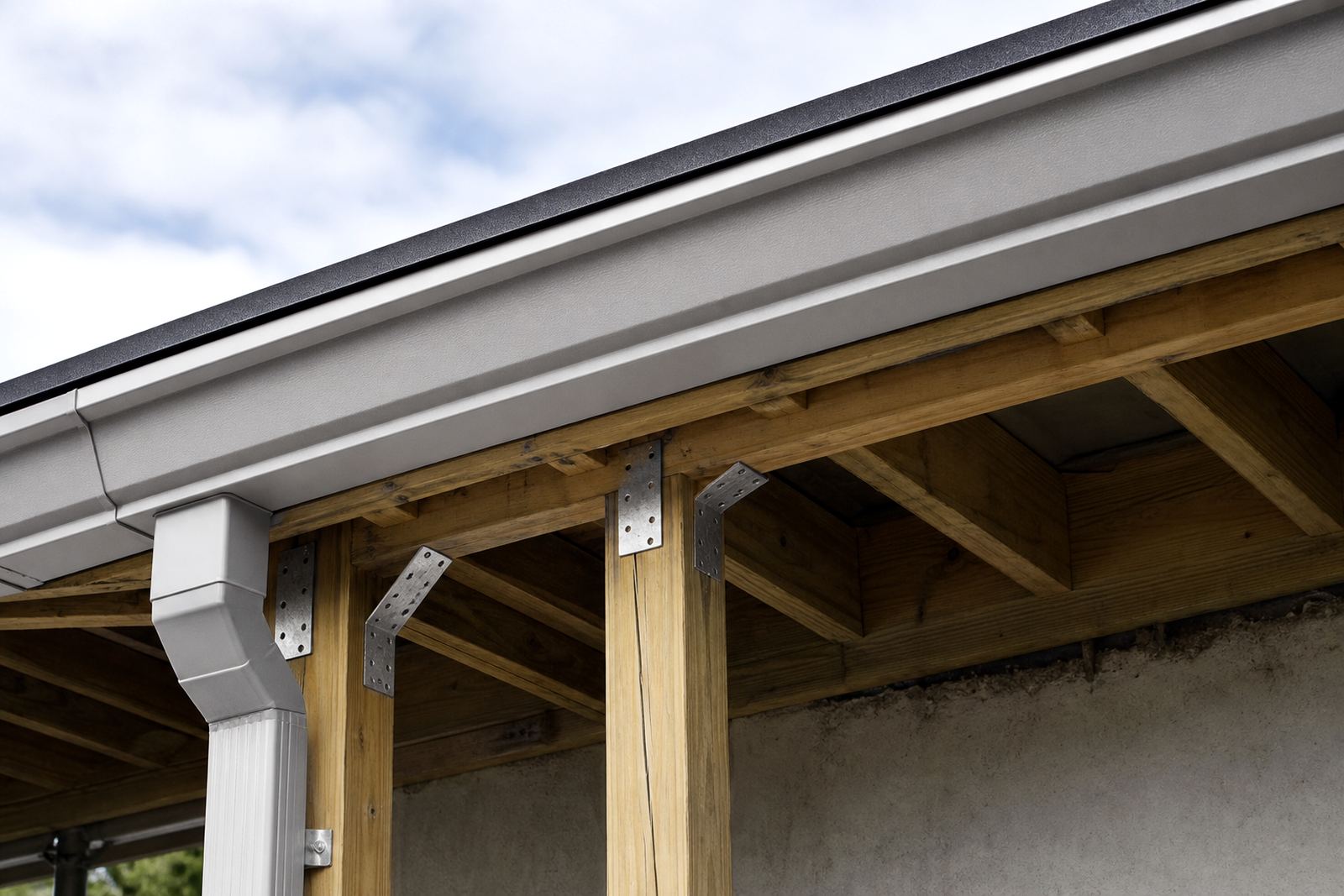
Fascia boards must support the gutter line properly, so any bowing, cracking or loose fixing matters. If the gutter is installed without the correct bracket spacing, or if sections have been forced out of line, water can pool in one part and spill at the next joint. In a place like Kya Sand where summer storms can arrive fast, a small defect quickly becomes a regular overflow point.
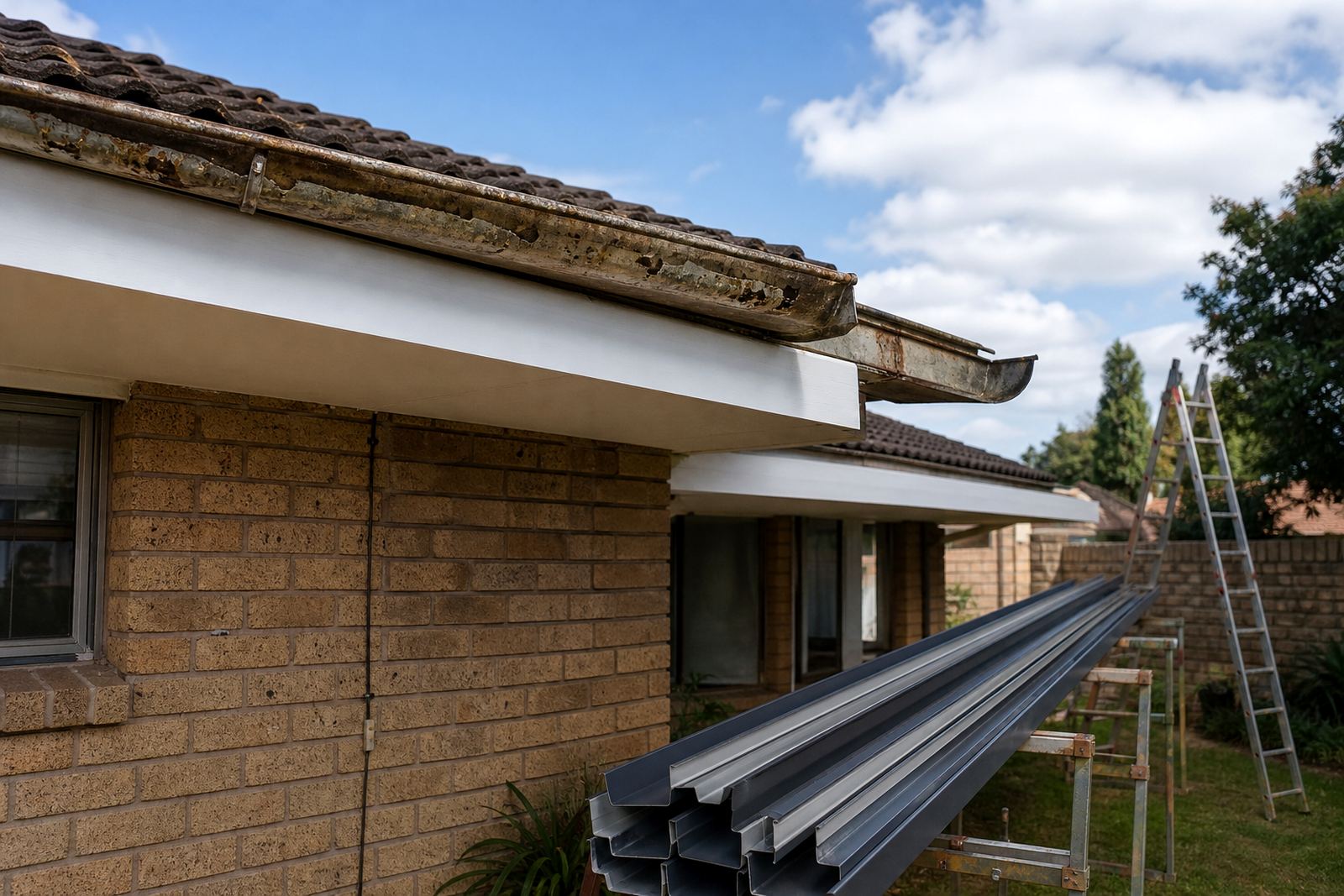
- Loose or rusted gutter brackets
- Fascia boards that move when touched
- Open joints at corners or stop ends
- Signs of rot, swelling or peeling finish under the eaves
Dripping joints tell a different story
Not every overflow comes from a full gutter. Sometimes the issue is a failed joint, a cracked outlet, or a section that has dropped because the fasteners have worked loose. You will often hear it first, a steady drip after the rain has moved on. That drip may seem minor, but if it lands on paving, brickwork or a paved passage it can stain the surface and shift the soil below.
Gutter runs should have a gentle fall toward the downpipe so water keeps moving. If the run is level, or worse, back-falling toward the house, water sits in the line and spills at the weakest point. A competent roofing contractor should check the line, the outlet position and the spacing of supports before assuming the whole system needs replacing.
- Water dripping from the same spot after every shower
- Joints that separate slightly when the gutter fills
- Rust lines, cracks or seal failure at connectors
- Sections that hold standing water
Ground erosion below downpipes should not be ignored
Overflow is not only about what happens above the roofline. If the ground below a downpipe is eroding, water may be discharging too close to the building or escaping in the wrong place. You may notice a trench in the soil, splashed mud on walls, cracked paving edge pieces or a patch of grass that is always soggy after rain. On sloped stands, that water can run straight toward a foundation wall.
In Pretoria and Polokwane, where heavy summer rain can arrive in a short burst, one blocked outlet can send a lot of water to one point very quickly. A well-set downpipe should carry flow away from the building and release it where the stormwater path can handle it. If the splash block, shoe or extension is missing, the discharge point can cause damage even when the gutter itself looks sound.
- Washed-out soil or exposed aggregate below the outlet
- Water marks on paving or boundary walls
- Standing water near the base of the wall
- Soil movement under flower beds or path edges
How to read a roofline after heavy rain
After a hard storm, walk the perimeter slowly and look up first, then down. Start at corners, valley ends and the points where roof sheets or tiles feed into the gutter. Check whether the waterline is even, whether any section looks bent, and whether the downpipes are taking water cleanly. If you can hear sloshing in the gutter long after the rain has eased, there is likely trapped water from a poor fall or blockage.
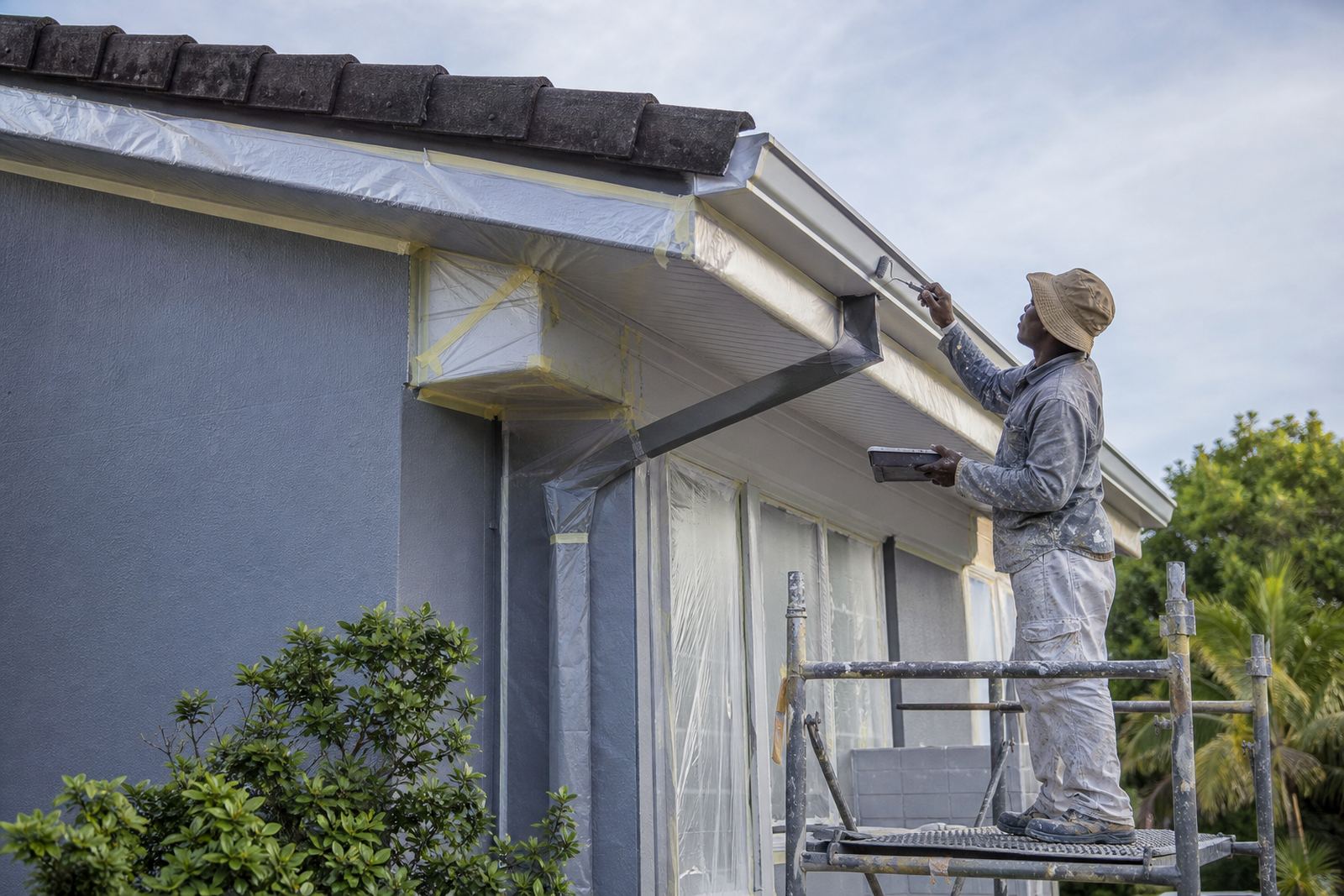
Do not climb onto the roof unless the work is being done safely by competent people with proper access equipment. Roofline checks often need a ladder, harness or other control measures, especially where the ground is uneven or the building is multi-storey. A quick look from the ground is useful, but it will not show every defect hidden behind the fascia or inside the outlet. Small typo in practice: the first sign is often the one people overlook.
- Look for consistent water flow at each downpipe
- Check for leaves, roof grit and debris in corners
- Watch for overflow marks at outlets and mitred joints
- Notice any section that stays wet well after rain
A Durban example that shows how small faults grow
In Durban, coastal humidity and driving rain can expose weak points quickly. A homeowner may first see damp marks beneath one section of fascia, then notice that the same corner overflows every time there is a heavy afternoon shower. The cause is often a combination of build-up in the gutter, a slight dip in the line and a bracket that has loosened at one fixing point. Nothing dramatic is visible from the driveway, yet the overflow keeps feeding the same patch of wall.
Once the line is cleared and reset to the correct fall, the roof edge dries out more evenly. That is the real lesson with overflow signs: the damage pattern usually tells you where to look. Stains, drips and erosion are not separate problems. They are the same fault showing itself in different places along the roofline.
The safest next step is a proper inspection, followed by the right material choice, correct bracket spacing and regular cleaning. That is where Plasteel supports roofline work with gutter, downpipe and fascia materials suited to local conditions across South Africa, from Randburg and Midrand to Roodepoort, Johannesburg, Pretoria, Cape Town, Durban and Polokwane.