Why the paint line should stop short of the roofline
When painters work up against gutters and fascia boards, the safest approach is to treat the roof edge as a separate detail, not part of the wall finish. Paint on the wrong side of a joint can seal drainage points, bridge movement gaps and make future maintenance harder. On homes in Randburg, Bryanston and Midrand, that matters because summer heat, dust and sudden storms all test the joints around the eaves.
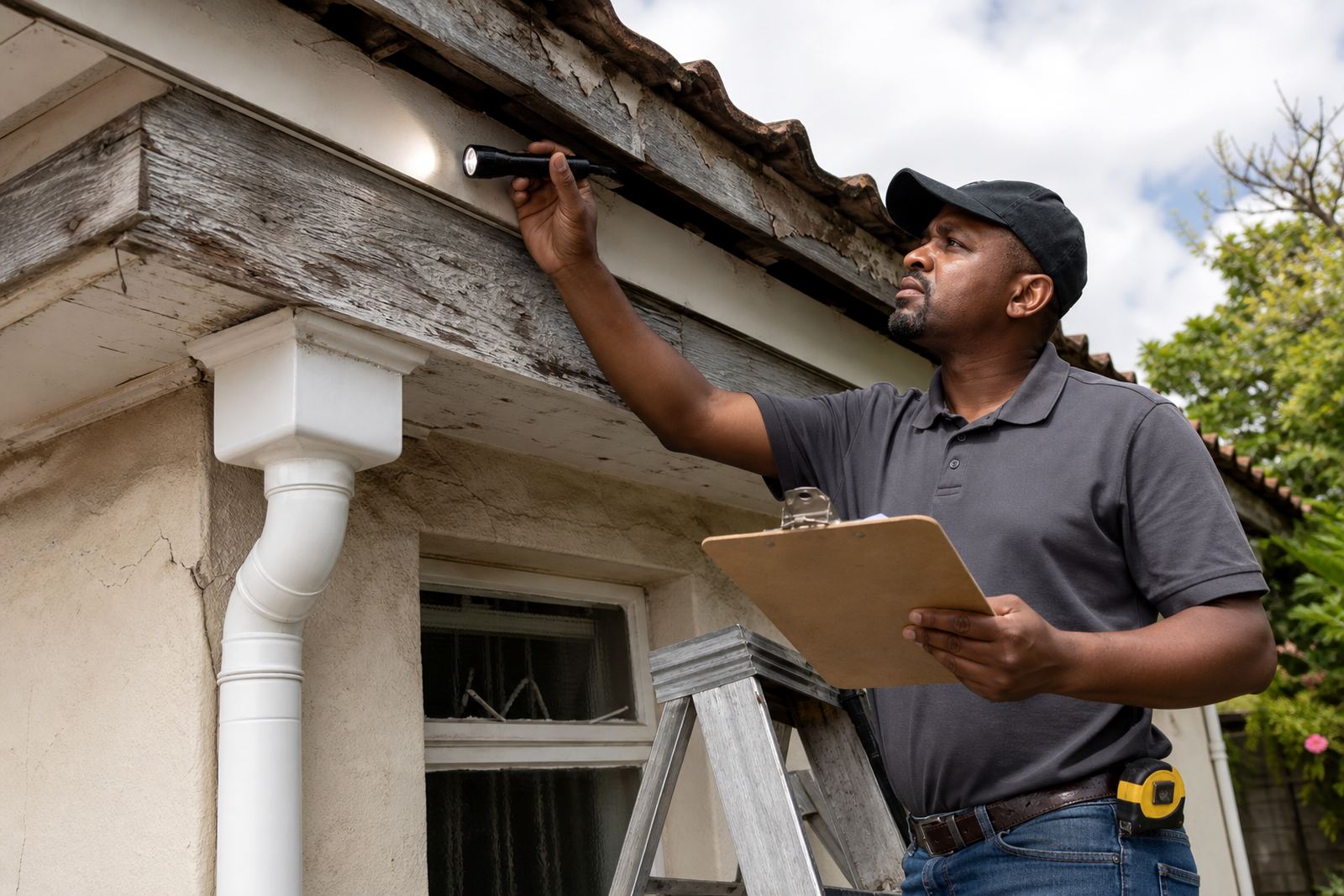
Good masking and careful brushwork keep the finish clean without forcing paint into places that need to breathe or drain. If the roofline has older timber, steel, or plastic-steel composite parts, the edges should be checked first for cracking, loose fixings and water staining before any paint goes on.
What should be covered before the first coat
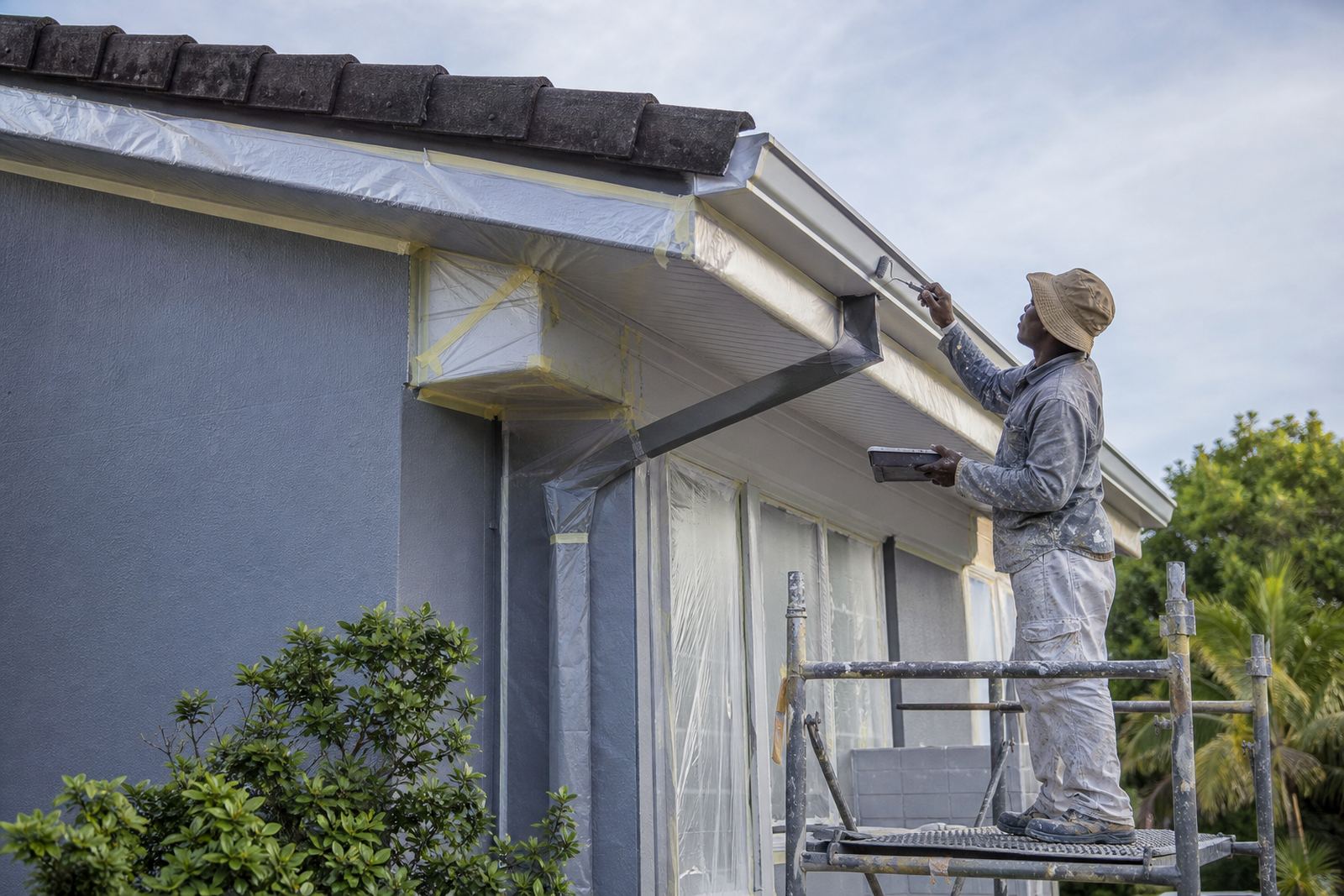
Before repainting the walls under a roof edge, protect the parts that collect runoff and carry it away from the building. That includes gutters, downpipes, fascia boards, barge boards, corner joints and any sealed laps along the roof perimeter. On many sites the damage starts with a small drip line or a clogged gutter, then paint starts lifting along the wall below.
- Use clean masking tape on sound surfaces only.
- Cover gutter mouths and downpipe openings so debris does not fall inside.
- Remove cobwebs, dirt and loose flakes before masking.
- Check that brackets and fixings are firm, not pulling from the wall.
- Do not paint over weep points or drainage paths.
Where the roof edge has been recently replaced, allow sealants and touched-up areas to settle properly before repainting nearby walls. Heavy brush pressure can disturb fresh joints and leave a patchy edge.
Keep gutters and downpipes free while painting
Gutters and downpipes are often forgotten once the wall colour is chosen, but they carry the water that protects the building envelope. Paint overspray inside a gutter can trap dirt and slow flow, especially where leaves, dust and bird nesting material collect. In coastal areas like Durban the extra humidity can also keep damp patches alive for longer, which means any blocked or painted-up section may show rusting, staining or algae quicker.
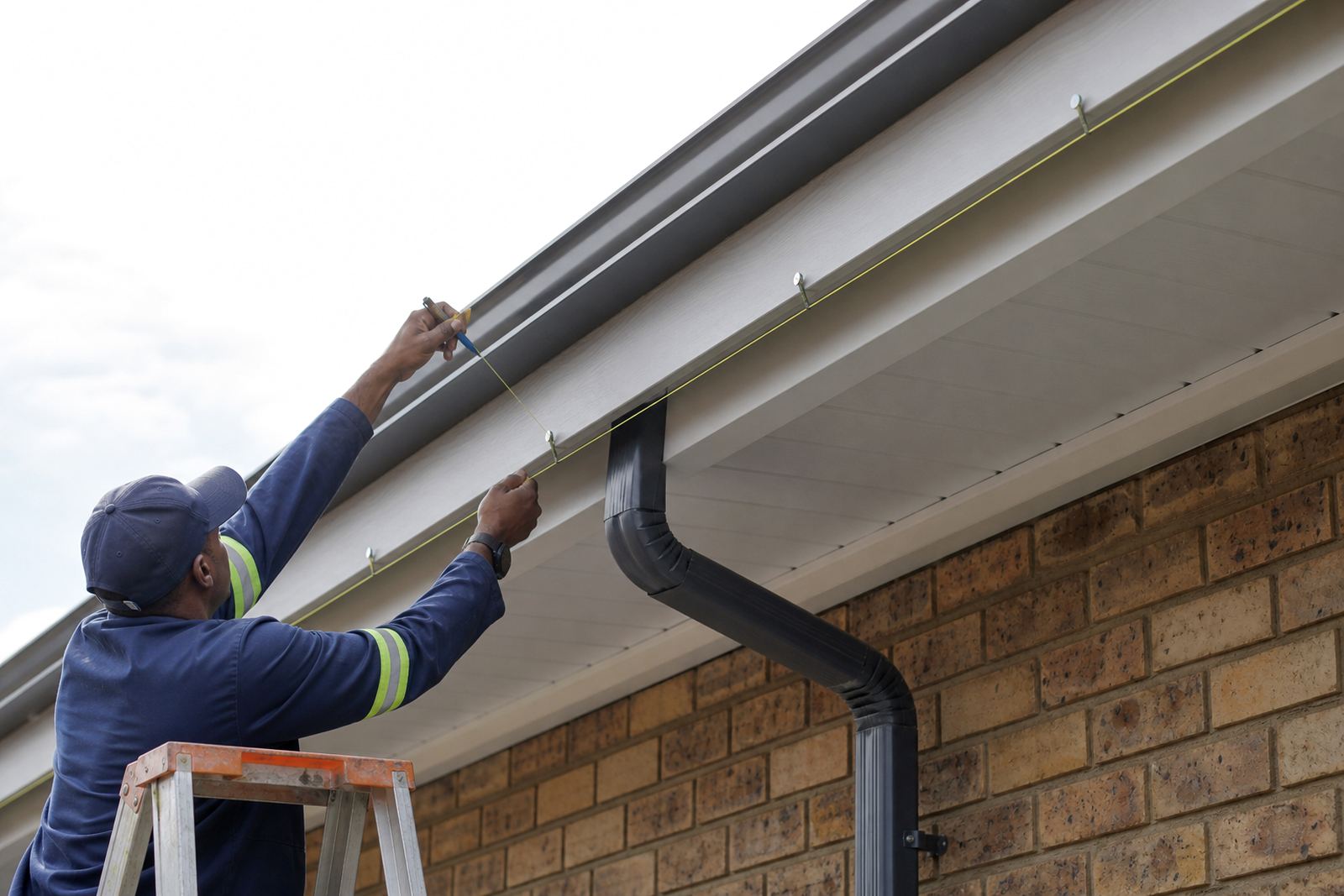
Use drop sheets and short controlled strokes near the roof edge. If the property has 125 mm gutters with 76 mm or 102 mm downpipes, make sure the outlets remain open and the brackets are not painted stiff. A neat finish still needs movement at expansion joints and enough clearance for water to pass through when the rain comes hard.
Fascia boards need a steady hand, not heavy coating
Fascia boards frame the eaves, so the paint line there is always visible from the street. Whether the board is timber, fibre cement or a plastic-steel composite profile, the surface should be clean, dry and sound before repainting nearby walls. If there is flaking around nail heads or screw points, that is often a sign of movement or moisture and it should be checked before any decorative coating goes on.
Avoid flooding the board with paint at the lower edge. That is where water should shed cleanly into the gutter. A thick build-up can close the gap between the fascia and the gutter lip, which leads to drips down the wall after the first proper rain. In Pretoria, where afternoon storms can be sharp and short, that small fault shows up quickly.
- Sand lightly where the finish has dulled or chipped.
- Prime bare spots before top coating.
- Keep screw heads and join lines visible for inspection.
- Match the sheen so patch repairs do not stand out.
Joints are better left alone unless they truly need attention
The summary is simple: when repainting eaves and walls, adjacent roofline components should be protected and joints left undisturbed where possible. Sealants, overlaps and lap joints are there to manage movement and runoff. If a painter cuts through them with scraping tools or heavy sanding, the area can start leaking later even if it looks neat on the day.
In places like Roodepoort and Johannesburg where older homes often mix timber, metal and newer composite parts, it is common to find layers of old repair work. A competent roofline repair person should inspect before painting if there are signs of lifted joints, sagging gutters or stained fascia boards. Painting should follow the condition of the roof edge, not force it into shape.
A practical example from a Randburg boundary wall
On a Randburg property near Kya Sand, a homeowner wanted the wall beneath the eaves repainted after a summer of dust and wind. The gutters were still carrying water properly but the fascia board had old drip marks where previous paint had been brushed too high. Before the walls were coated, the roof edge was cleaned, the gutter mouths were cleared and the painters masked the lower lip of the gutter rather than painting over it.
The result was a cleaner line and less chance of future maintenance trouble. That job also highlighted a common point for builders: if the wall finish is changed while the roofline is ignored, the old faults stand out more. Good preparation around the eaves makes the whole elevation look better, not just the wall colour.
- Inspect for blocked outlets before painting starts.
- Check whether the fascia has softened, cracked or swollen.
- Keep paint away from brackets and fixings where possible.
- Wash down chalky dust so the new coat bonds properly.
Where material choice helps later maintenance
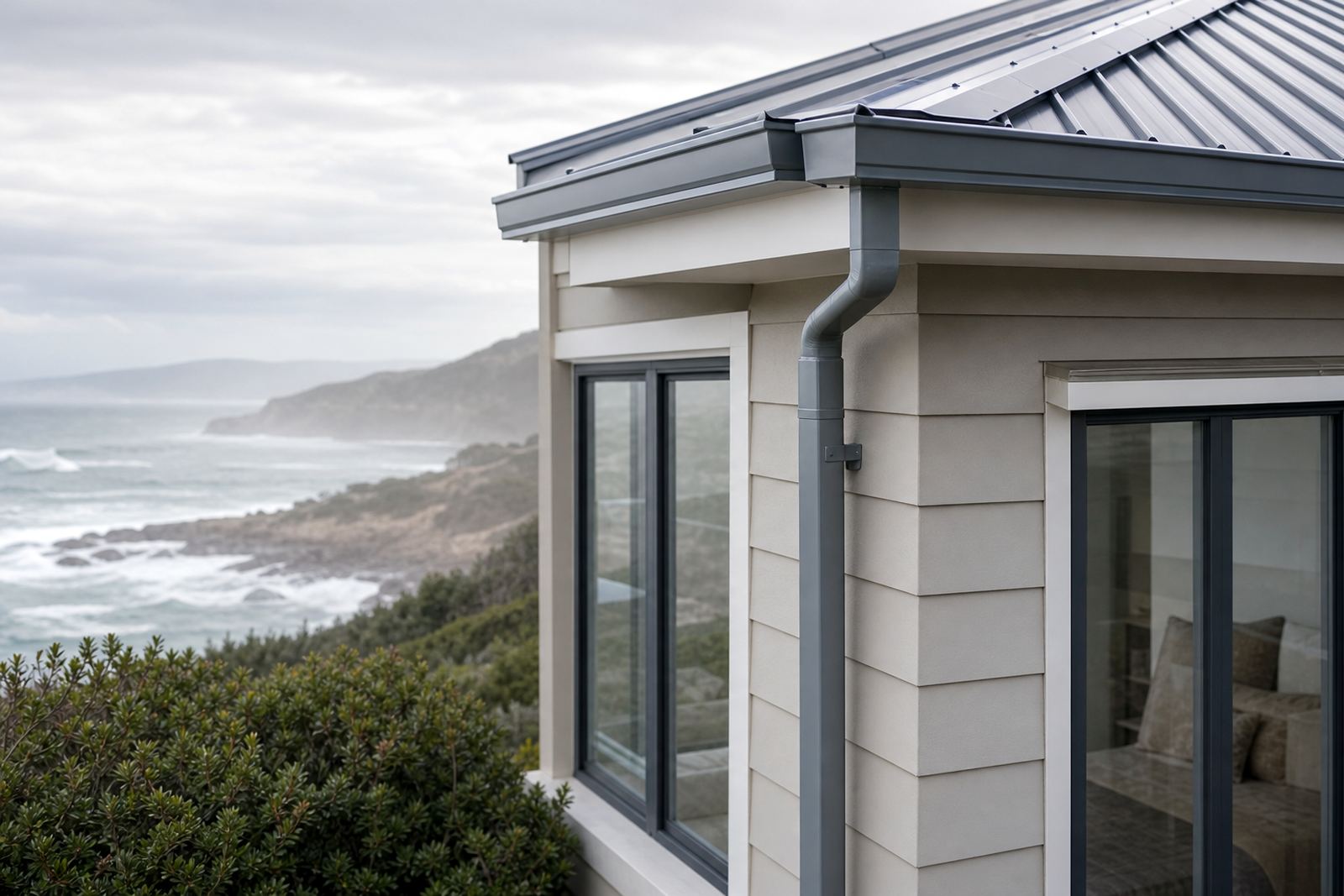
The material used at the roof edge affects how easily painting and upkeep can be handled later. Plastic-steel composite gutters and fascia boards are often chosen because they hold their shape well and need less frequent repainting than weathered timber, especially in areas with strong sun or coastal moisture. That does not remove the need for inspection, but it can reduce peeling, splitting and repeated patch repairs.
Plasteel works with builders and homeowners who need practical roofline materials for new work or replacement sections across South Africa, from Cape Town and Polokwane through to Durban, Pretoria and Johannesburg. Site measuring, material takeoff, product supply, installation support and maintenance visits all help keep the roof edge manageable before a paint crew arrives. For advice or delivery coordination, clients reach us through the enquiry form on our contact page.