Why a gutter needs a measured fall
A gutter that looks level can still hold water in shallow pockets if the supports are not set correctly. That standing water brings dirt, leaves and silt to the same spot, which adds weight and makes cleaning harder. Over time it can leave staining, rust on nearby fixings and overflow at the wrong point.
For most roof edges, the fall is set so water moves steadily toward one or more outlets without rushing so fast that it splashes over the lip. The exact slope depends on the gutter profile, the length of the run, the size of the outlet and how much rainfall the roof catches. A short run on a townhouse roof will not behave the same as a long industrial strip in Midrand, so the line must be worked out on site.
In practice, the aim is not a dramatic drop. It is a controlled line that lets the gutter drain fully after the rain stops. When that line is right, the gutter empties more cleanly and maintenance stays simpler.
How the outlet position changes the whole run
Every gutter run should be planned from the outlet back to the high point. That approach helps the installer place the fall evenly and avoid dips around joins or brackets. If the outlet is too high, water may not clear the last section. If it is too low, the run may look awkward and leave too much depth at one end.
For longer runs, more than one outlet may be needed. This is common on wider commercial roofs and on homes where a single run would otherwise be too long for reliable drainage. A proper layout also takes the downpipe path into account, because a neat gutter fall means very little if the downpipe discharges into a poor position at ground level.
- Place outlets where the roof load is manageable and access is practical
- Keep the fall consistent from the high end to the outlet
- Avoid low spots near joins, corners and brackets
- Check that the downpipe can carry the expected flow without backing up
Setting the brackets so the line holds
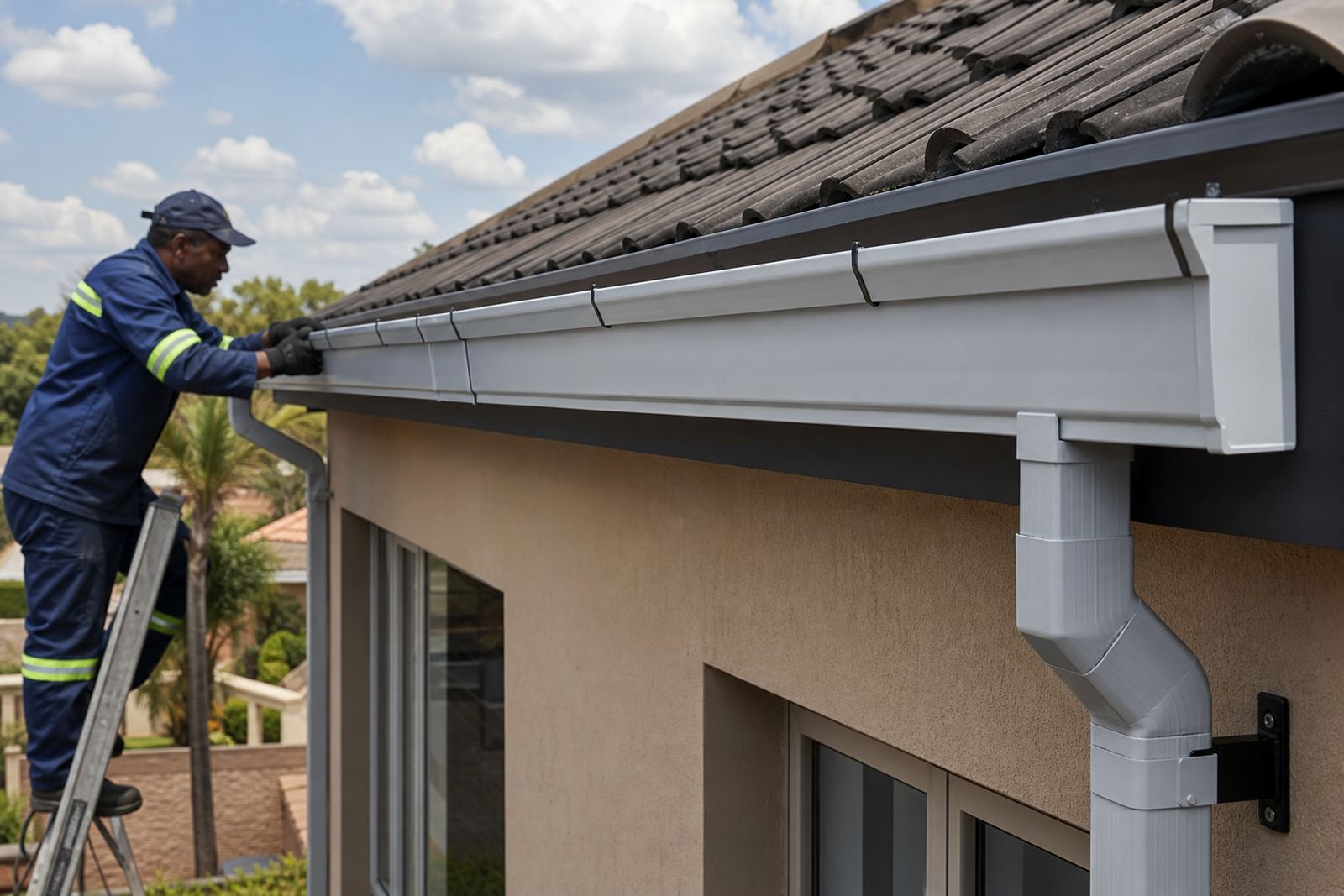
The brackets do the quiet work. If they are spaced badly or fixed out of line, the gutter sags between points and the water settles in the middle. That is why competent roofline work at height must be done safely, with proper access and safe fixing methods. A neat-looking run from the ground is no guarantee that the line is holding true.
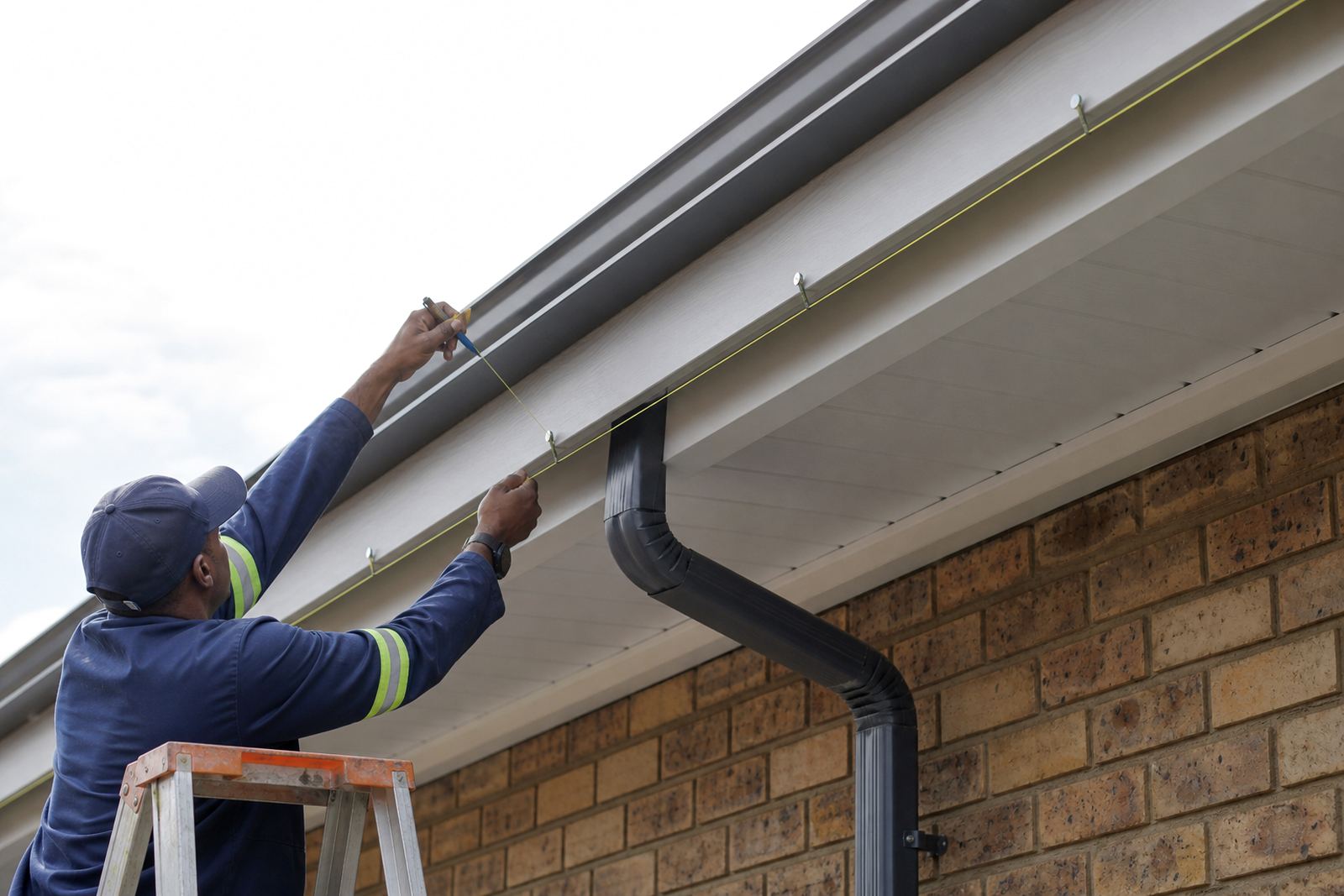
Brackets should be marked out before fixing begins, then checked again once the gutter is clipped in. On a plastic-steel composite gutter, the support points need to stay firm so the profile does not twist under heat, water load or cleaning. In humid coastal areas like Durban, a stable fixing line matters because corrosion and movement can show up faster where materials are exposed to salt air.
- Mark the high point first, then measure the drop to the outlet
- Keep bracket spacing even so the gutter does not belly between points
- Recheck the line after fixing the first few brackets
- Allow for thermal movement where the roofline gets strong afternoon sun
Falls for plastic-steel composite guttering
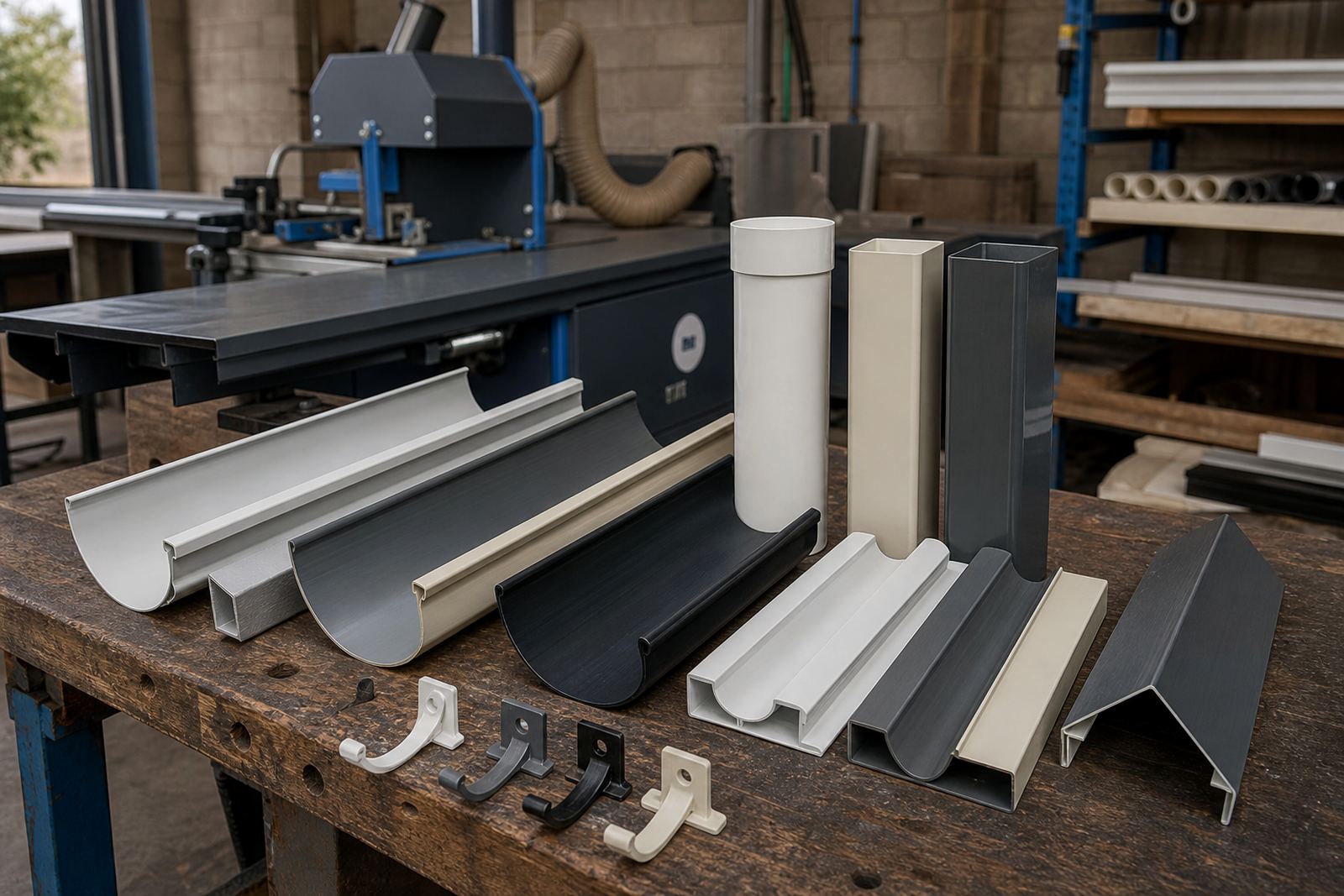
Composite gutter systems can be a practical choice on homes, shops and light industrial buildings because they are made to cope with daily weather without the same maintenance demands as some older materials. Even so, the system still needs the right fall. Material strength does not replace correct geometry.
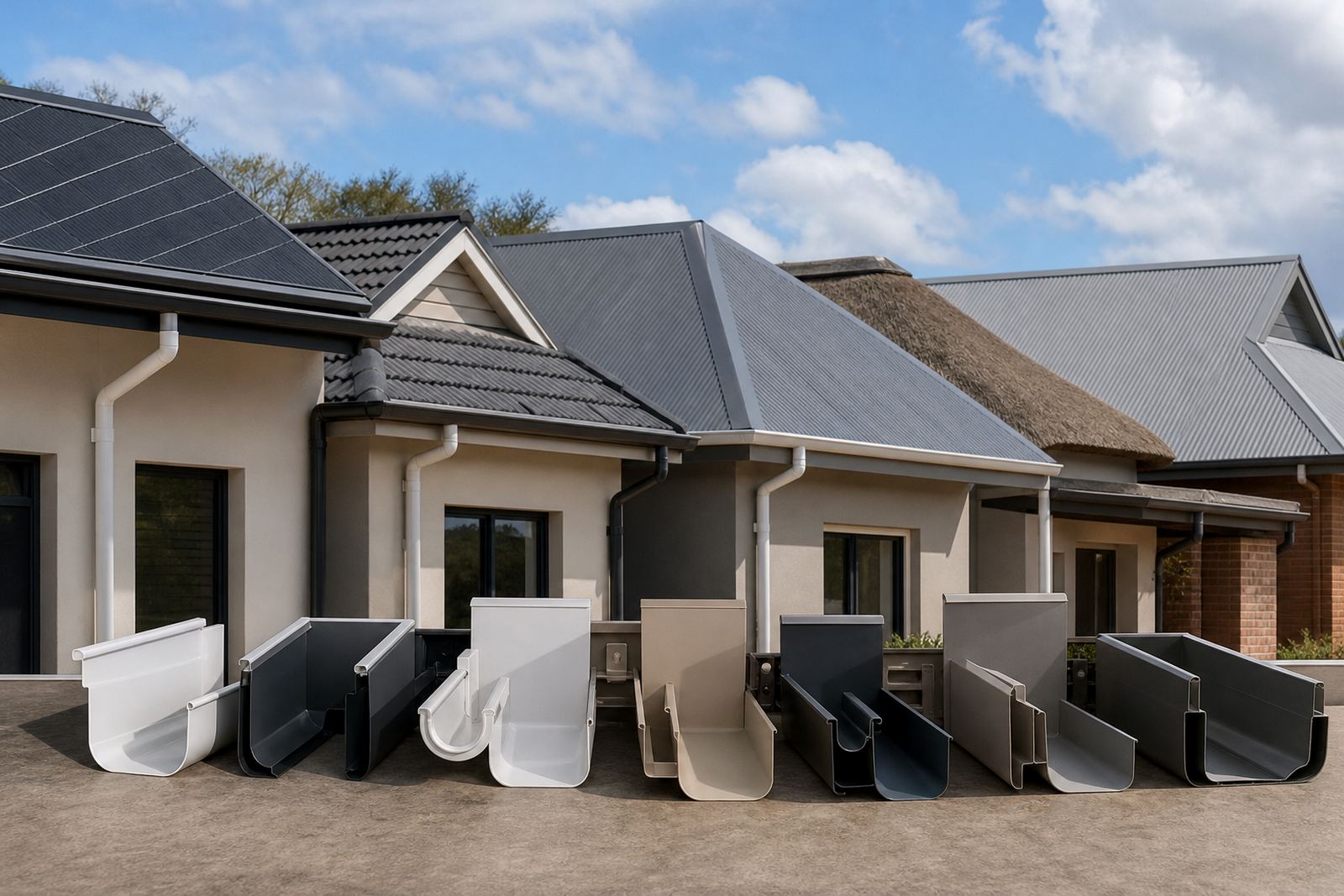
The profile and size of the gutter matter too. A wider gutter can carry more water, but only if it is pitched correctly and matched with a suitable downpipe. Fascia boards also need to stay straight and firm, because they carry the line that supports the gutter brackets. If the fascia bows or pulls away, the fall can change after installation and the gutter starts to hold water in places.
On residential roofs in Randburg or Roodepoort, the installer may need to work around parapets, valleys and short return sections. On larger buildings in Pretoria or Polokwane, long roof runs call for careful measurement so the fall stays even from one end to the outlet. Small errors add up quickly over metres of gutter.
Common mistakes that leave water sitting in the run
Standing water usually comes from simple errors rather than one big fault. A run can be level in one section and low in another, or a joint can be lifted slightly and hold a shallow pocket. Leaves, roof grit and paint flakes make the problem worse because they settle in the same low point and slow drainage further.
Another common issue is using too few outlets for the roof area. If one outlet is doing too much work, the gutter can overflow in heavy rain even when the fall is correct. That is why material takeoff and site measuring matter before installation begins. A good line on paper should still make sense on the roof.
- Do not rely on eye alone for the fall line
- Do not place a join at a low point if it can be avoided
- Do not ignore roof debris that can block the outlet
- Do not assume a shorter gutter needs no pitch at all
Maintenance that keeps the fall working
Once the gutter is in service, the fall can only do its job if the system stays clear. Regular checks should focus on the outlet, the first bend in the downpipe and any places where leaves collect. After heavy wind, a quick inspection often catches a blockage before it causes overflow or staining on the wall below.
Maintenance visits are also useful for checking whether brackets have shifted or whether the fascia line has moved. In South African conditions, especially where summer storms hit hard and winter dust builds up, a once-off clean is not enough for many buildings. A gutter with the right fall but a clogged outlet will still leave standing water.
A simple practical check applies here: if water is still sitting after the rain has passed, the system needs attention. It may be a blockage, a sag, or a fall that was never set properly in the first place.
A Kya Sand example on a long roof edge
On a recent roofline in the Kya Sand area, the gutter run had a slight dip near the middle section and water was left behind after each storm. The roof itself was sound, but the brackets had been set unevenly and the outlet was carrying more flow than the line could handle. After the run was remeasured and reset with a cleaner fall, the standing water cleared and the overflow marks stopped building up below the eaves.
That kind of job is common on both new and older buildings around Johannesburg and Pretoria. A roofline can look tidy from the ground yet still fail at the drainage point. Measuring the fall properly, matching the outlet to the run and checking the brackets during installation saves trouble later.
If the gutter is meant to move water off the roof, the fall is the part that makes that happen. Get that line right and the rest of the roofline works with less fuss, less cleaning and fewer wet patches on the wall.