What a gutter material must handle in local conditions
A gutter is not only a channel for rainwater. It has to carry water from a roof edge, stay fixed under changing temperatures, and keep its shape when leaves, dust or wind-driven rain build up. In places like Durban the challenge is heavy moisture and coastal humidity, while in Johannesburg and Pretoria the system has to cope with summer storms and strong sun. Along the coast, salt in the air also punishes weak materials and poor fixings.
Good roofline planning starts with the full system, not one part on its own. Gutters, downpipes, fascia boards, brackets and joins must work together. If the fascia is soft or the brackets are spaced too far apart, even a decent gutter can sag and spill water over the edge.
- Match the material to the roof size and rainfall load
- Check compatibility with the fascia and support points
- Allow for thermal movement in long runs
- Use the right outlet size where downpipes feed stormwater
Common gutter materials and where they fit
Most gutter systems in the market fall into a few broad material groups. Metal gutters are common on many homes and commercial buildings because they handle long spans well and have a familiar profile. PVC gutters are light and easy to handle, but they can move more in heat and need careful fixing. Fibre-cement and timber fascia boards are sometimes found on older buildings, but they need more maintenance when moisture gets in.
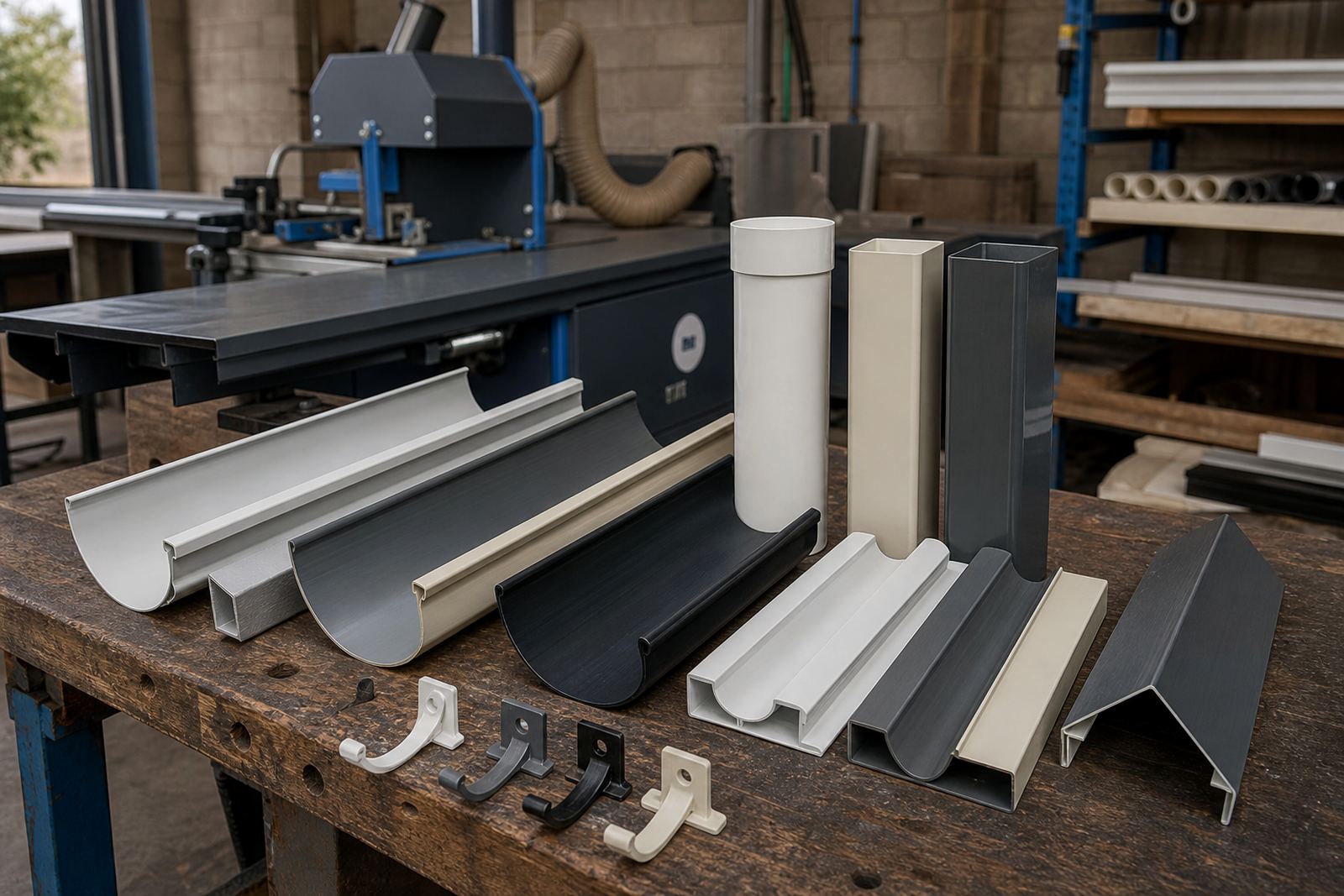
Plastic-steel composite products sit in a useful middle ground. The plastic component helps with corrosion resistance and moisture exposure, while the steel reinforcement gives the profile more body and support. That makes composite parts practical where a builder wants a neat finish without the ongoing rust concerns that come with some metal systems near the coast. They are especially useful on homes, small blocks of flats and light commercial buildings where a clean roof edge matters.
- Metal: good strength, but watch for corrosion and fixings
- PVC: light and cost-conscious, but more movement in heat
- Composite: suited to wet, coastal and mixed-use applications
- Timber fascia: traditional look, but needs regular care
Sizing the gutter to the roof, not the other way round
Correct sizing matters more than many people think. A narrow gutter on a wide roof can overflow during a summer downpour, even if the material itself is sound. Roof pitch, eave length and the amount of water running off one section all influence the choice. On larger roofs, especially in Pretoria, Midrand or industrial parts of Randburg, a bigger gutter profile and well-placed downpipes usually makes more sense than trying to stretch a small system too far.
Downpipes also need proper sizing. If the outlet is too small, water can back up in the gutter and increase the risk of overflow at the joins. The fall along the gutter must be set so water moves steadily towards the outlet without sitting in low spots. A level run may look tidy to the eye, but it often leaves standing water, dirt build-up and extra strain on the fixings.
- Use larger profiles on long roof edges or steep pitches
- Keep outlets positioned where water naturally gathers
- Set a consistent fall across the run
- Allow enough downpipes for heavy rainfall areas
Brackets, joints and support where failures usually begin
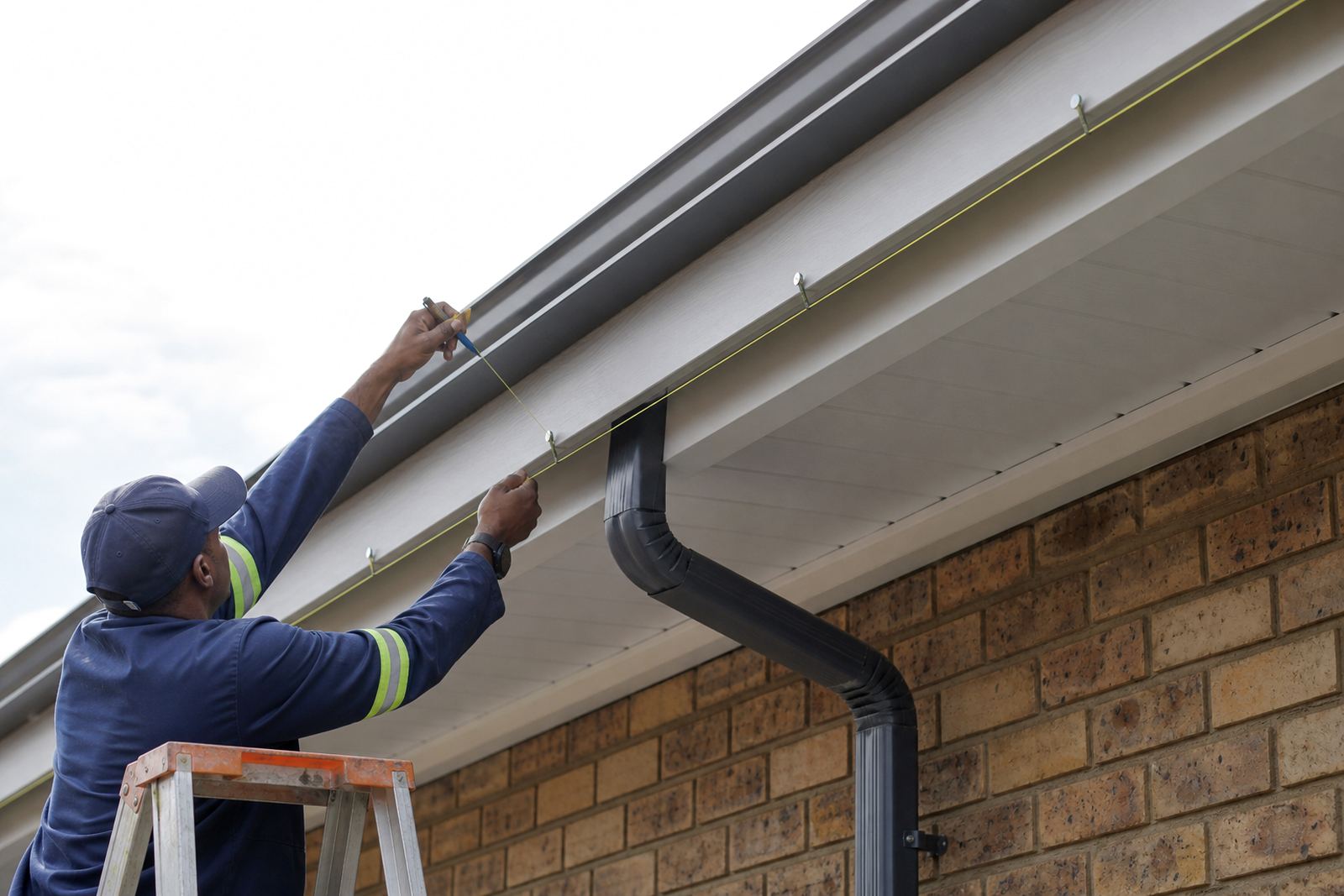
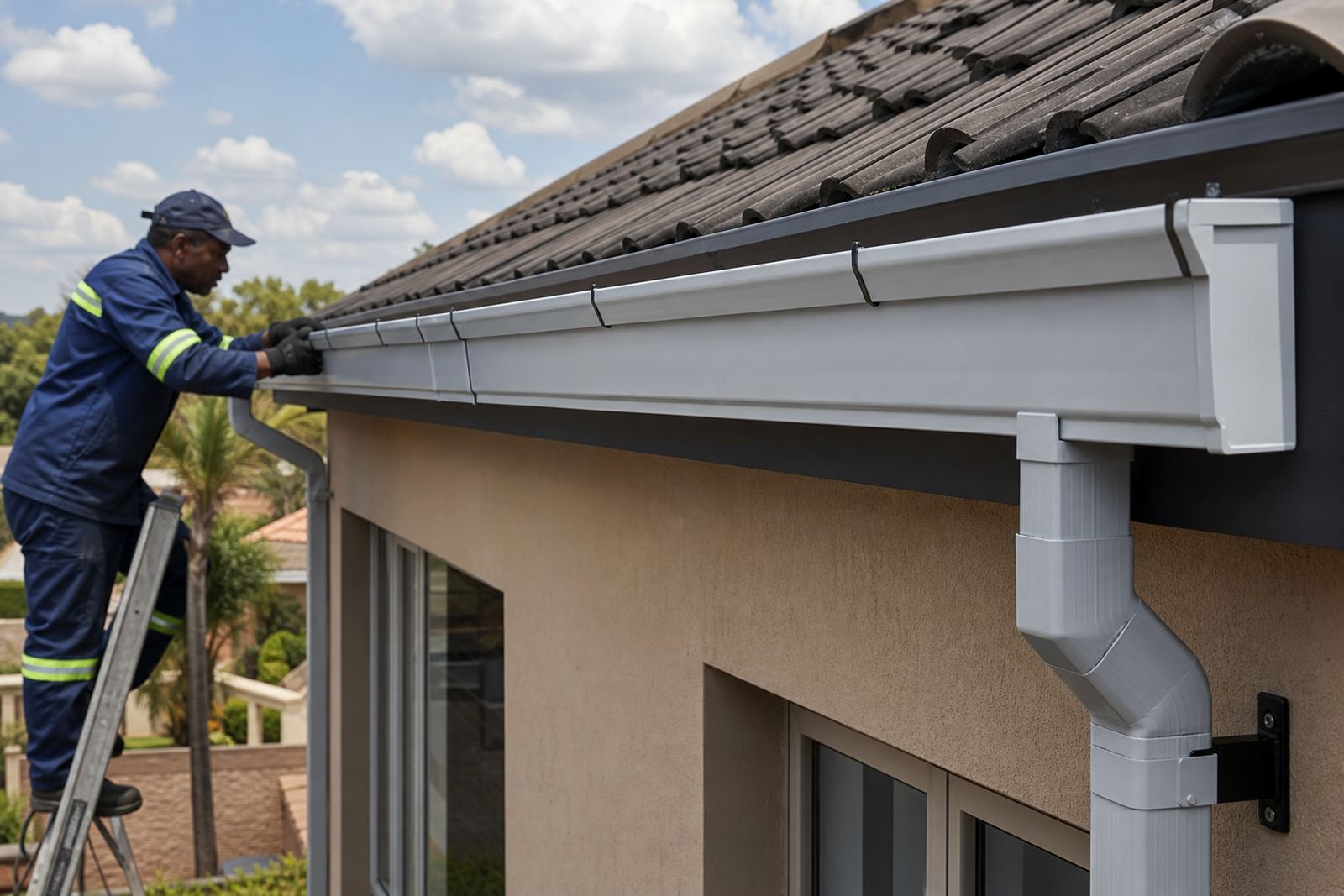
Many gutter problems start at the support points. Brackets that are too far apart, poorly fixed or bent during installation can let the gutter twist under load. Once that happens, joints open slightly and water begins to drip at the seams. In roofline work, small fixing errors often show up first during the first big storm, not on a dry day.
For composite systems, the support pattern still needs care. The material may resist corrosion better than plain metal in wet conditions, but it still relies on a firm structure beneath it. Fascia boards should be straight, well aligned and fixed to sound framing. If the fascia is uneven, the gutter line follows that movement and the finished job looks patchy.
- Fix brackets to sound timber or approved structural support
- Keep joins neat and sealed where required
- Check alignment before final fixing
- Replace damaged fascia before fitting new gutters
Where composite materials make practical sense
Composite gutter, downpipe and fascia products fit well where builders want a hard-wearing roof edge without constant attention to rust or moisture damage. They are useful on homes in coastal areas such as Cape Town and Durban, where airborne moisture can shorten the life of weaker materials. They also suit homeowner projects in suburbs where a clean, consistent appearance matters and the roofline needs to hold up through seasonal weather changes.
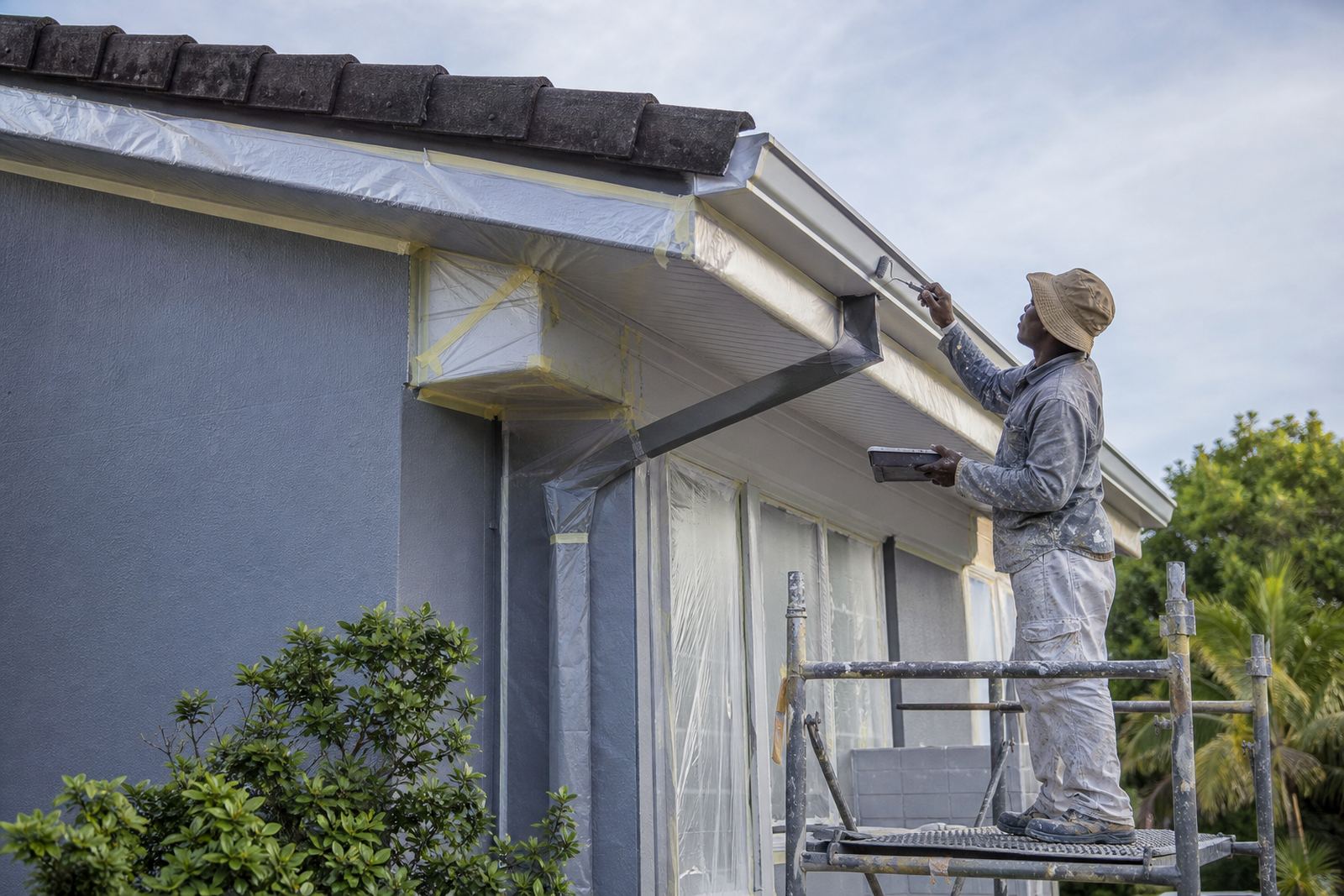
At a residential property in Randburg, for example, an old roof edge may show staining near the fascia and cracking around the fixings. A composite replacement can simplify the repair because the fascia and gutter line can be renewed together, which helps the downpipes sit square and the roof edge look tidy. For builders, that means less time chasing minor repairs later, and for homeowners it means a roofline that is easier to keep in order.
Composite materials are not a cure for poor workmanship. They still need correct measuring, good slope, neat mitres and proper outlets. But when the installation is done well, they give a practical balance of strength and appearance for South African conditions.
Maintenance that keeps the roof edge working
Even a well-installed gutter system needs basic care. Leaves, twigs and windblown grit collect in the trough and around the outlets. If that material is left in place, water starts to sit, the brackets carry extra weight, and the inside surface can stay damp for longer than it should. In high-rainfall areas and tree-lined streets, gutter cleaning becomes part of routine roof care.
Maintenance visits should also check for loose brackets, cracked joins, pulled seal points and stains on the wall below the gutter line. On commercial buildings and taller homes, work at height must be done safely by competent people with the right access equipment. A quick check after heavy rain can prevent a small leak from becoming a bigger repair.
- Clear leaves and silt from gutters and outlets
- Inspect downpipes for blockages and loose clips
- Watch for sagging between brackets
- Repair small leaks before they spread into fascia damage
Choosing the right roofline package for your project
The best gutter material is the one that suits the roof, the weather and the level of upkeep the owner can handle. For a new build, that may mean planning the roofline together with the fascia and downpipes from the start. For a replacement job, it may mean keeping the existing layout where possible but improving the support, outlet size and material choice. In Polokwane, where dry spells can be followed by heavy rain, the roofline must still move water quickly when the weather turns.
Builders often want product supply, site measuring and material takeoff that reflect the actual roof shape, not a rough estimate. Homeowners usually want plain advice on what will last, what needs maintenance and what will look right on the house. A sensible roofline specification puts those needs together and avoids overcomplicating the job.
For composite gutter, downpipe and fascia materials, the key is not hype. It is fit, support and proper installation. That is what keeps the roof edge doing its work through rain, sun and the normal wear that comes with South African weather.