
Why a hot roofline keeps moving
Metal and plastic-steel composite guttering do not sit still on a roof edge. On a clear summer day, a west-facing fascia in Kya Sand can heat up quickly, then drop again after an afternoon storm or a cooler evening. That repeated change makes the run lengthen and shorten a little. Over time, the movement is enough to stress joints, corners and fixings if the layout is too rigid.
The same thing happens on lighter colours and on darker roof edges, only at different rates. In coastal towns the temperature swing is often joined by salt air and humidity, while inland areas can have sharper day and night shifts. Good gutter detailing takes those changes into account from the start, rather than forcing every section to sit tight against the next one.
Where long eaves run uninterrupted, the safest approach is to plan movement allowance into the job. That means choosing the right bracket spacing, allowing the gutter to slide where it should, and using joints that can handle small changes without opening up. When the roofline is treated as a fixed length of pipework, the first sign of trouble is often a hairline leak at a joint or a sag between supports.
The parts that take the strain
Thermal movement is not only about the gutter channel itself. Fascia boards, downpipes, outlet pieces and corners all play a part in how the line behaves. If the fascia is not straight, or if the brackets are fixed too hard against the board, the gutter has nowhere to move. The result can be a wave in the run, a twist at a stop end, or a joint that starts to creep open after a few hot months.
- Bracket spacing needs to suit the profile and the local wind load
- Joints need enough room to take expansion and contraction without binding
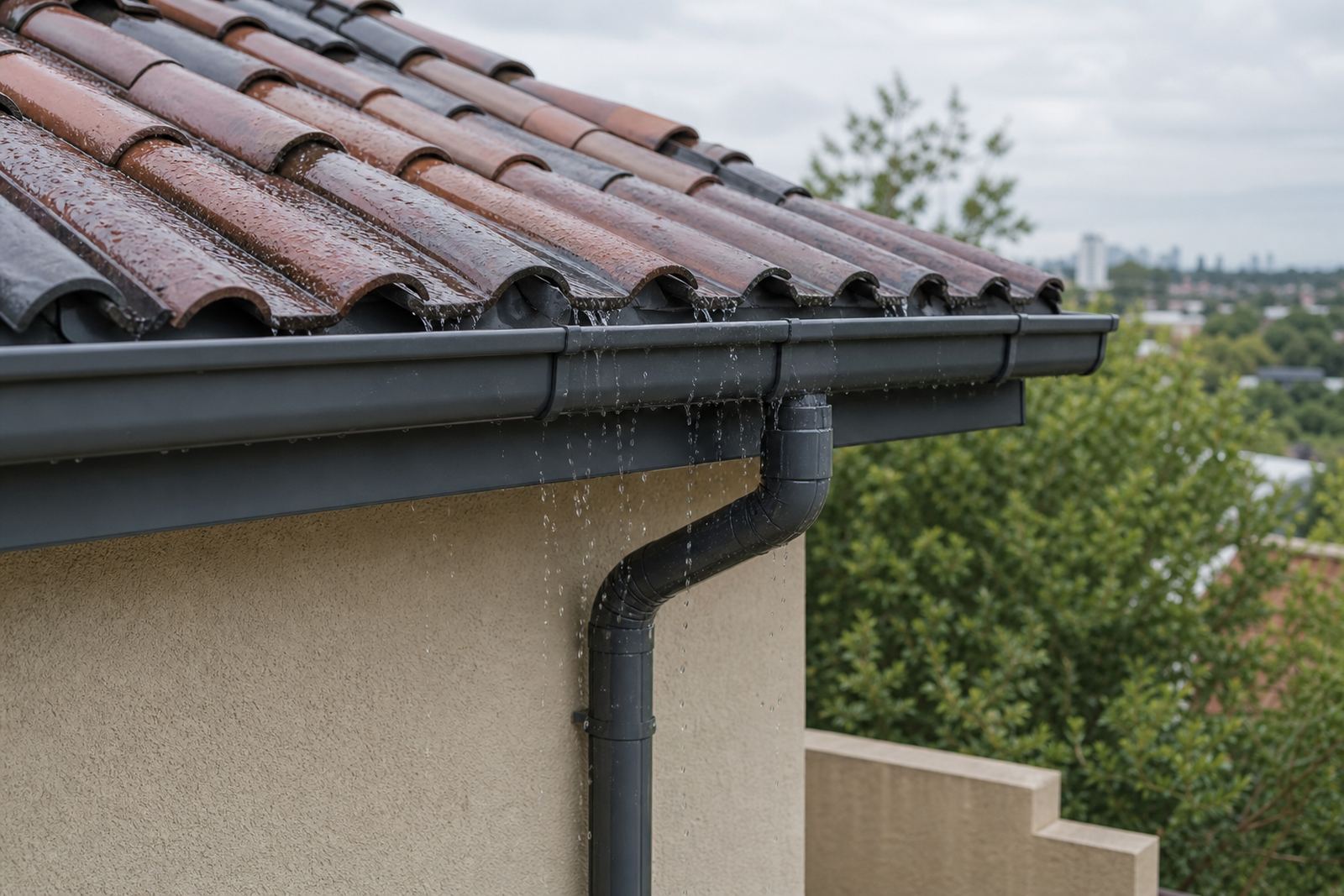
- Downpipe outlets should sit where water can drain freely, not pull on the gutter lip
- Long straight runs often need more careful support than short runs around a porch or stoep
At a practical level, a builder should always check that the fascia line is true before the first bracket goes on. If the board has a bow or a dip, the gutter will copy it. That small fault becomes a bigger one when the sun gets on the roof and the length starts shifting. A neat line on day one is worth far more than a forced fit that fights the structure from the start.
Where movement allowance matters most
The longer the run, the more movement has to be considered. A short run over a front door canopy may only need standard spacing and a neat joint. A long boundary wall roof, a warehouse apron, or a full suburban house with continuous eaves is a different matter. In those cases, the system should be broken into manageable lengths so the strain is not carried through the whole line.
South African conditions make this even more important. In Durban and other humid coastal areas, materials can stay warm for longer after sunset and the constant moisture can expose weak joints. In Pretoria and Polokwane, hot afternoons followed by cooler nights can cycle the gutter through repeated expansion and contraction. In Cape Town, strong winds can add side loading to the same sections that are already moving with temperature change.
For that reason, a careful installation will place joints and support points with the building, not just with the supplier's stock length. The aim is not to overcomplicate the job but to let the roofline work naturally. That usually means proper falls to the outlet, neat alignment, and enough freedom in the fixings for the system to move without pulling itself apart.
A Kya Sand example on a long boundary run
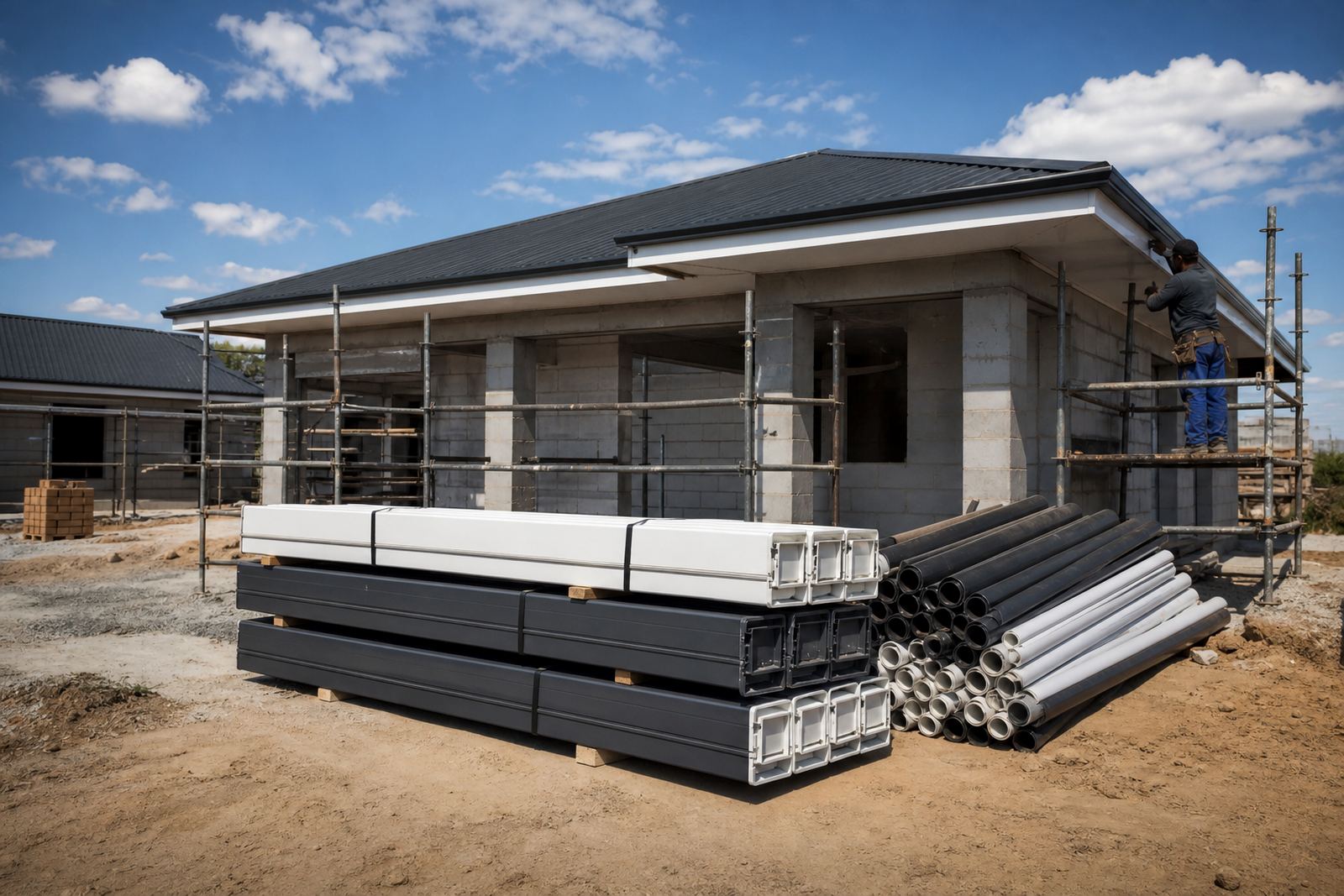
A common local job in Kya Sand is a workshop or storage building with one long eaves line facing the afternoon sun. The roof sheeting gets hot, the fascia warms up, and the gutter along that side starts to shift with the heat. If the run is built too tight, the first signs are often visible after a few seasons: slight bowing near a join, a drip line at one corner, or a bracket that no longer sits square.
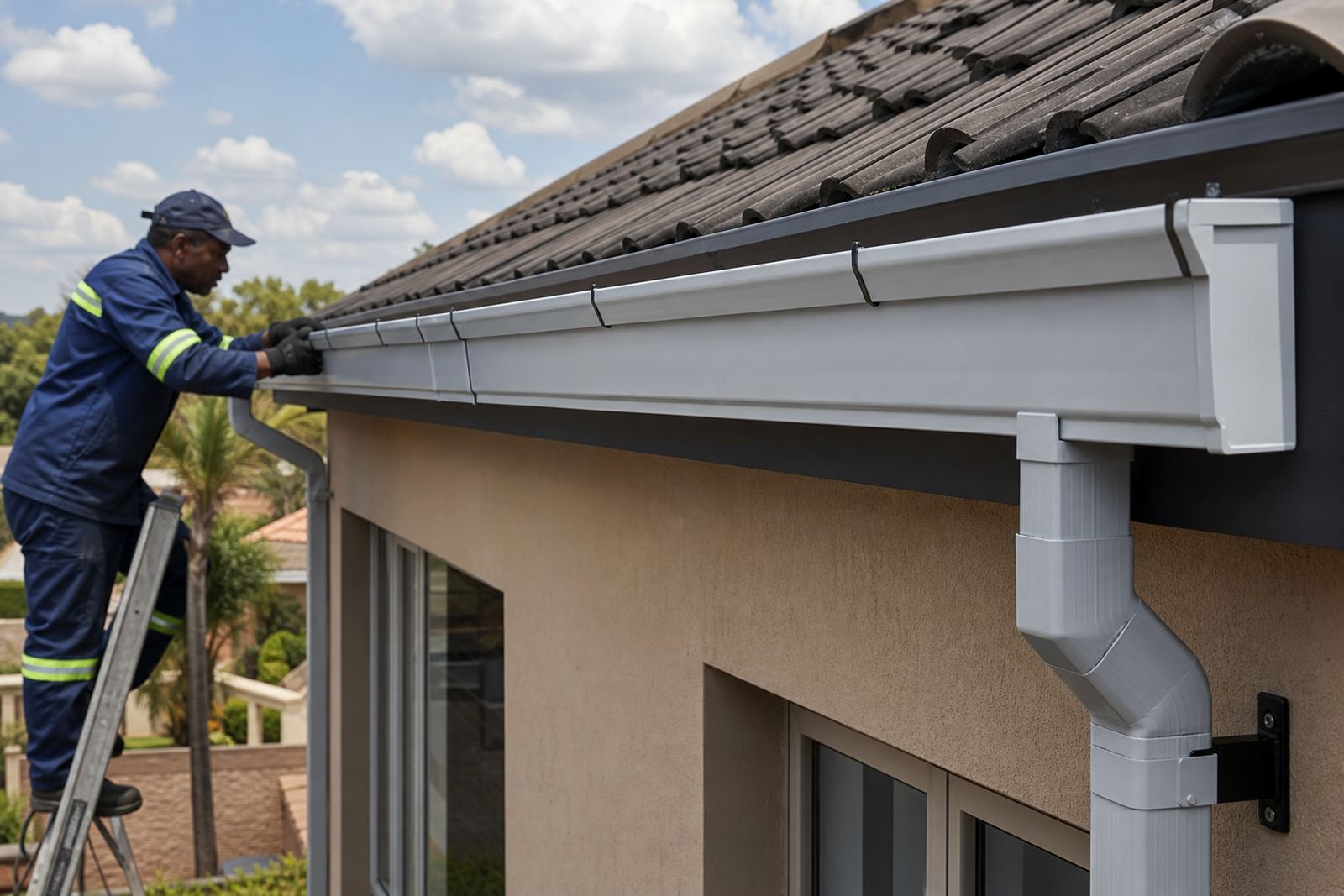
On a practical installation, the run is measured carefully, the outlets are placed where the fall can work properly, and the brackets are fixed so the gutter is supported but not clamped rigidly at every point. The downpipes must also be positioned to take water away without loading the gutter lip. That detail matters on both homes and commercial sites, especially where one section of roof drains a large surface area.
- Measure the full eaves length before cutting any material
- Check that the fascia is straight enough to carry the line cleanly
- Allow for movement at joins on long stretches
- Keep the fall consistent so water does not sit in low spots
When a roofline is handled this way, the system can cope better with the day-to-day changes that come with a South African summer. It also gives maintenance teams a cleaner structure to inspect later, which helps when leak checks or replacement work is needed.
Brackets, falls and the space to move
Movement allowance does not mean the gutter is left loose. It still needs proper support, proper fall and neat fixing. The balance is in how the support points are set out. If brackets are too far apart, the gutter can sag when it fills with rain. If they are too close and fixed too hard, the run may be unable to expand. Both mistakes shorten the life of the installation.
Falls should always guide water towards the outlets, but they must do it without twisting the profile. A gutter that is forced too steeply can look tidy on the day of installation yet create stress at the ends. A flatter run with correct support often performs better than a rushed slope that fights the line of the building. That is why site measuring and material takeoff matter before the work starts.
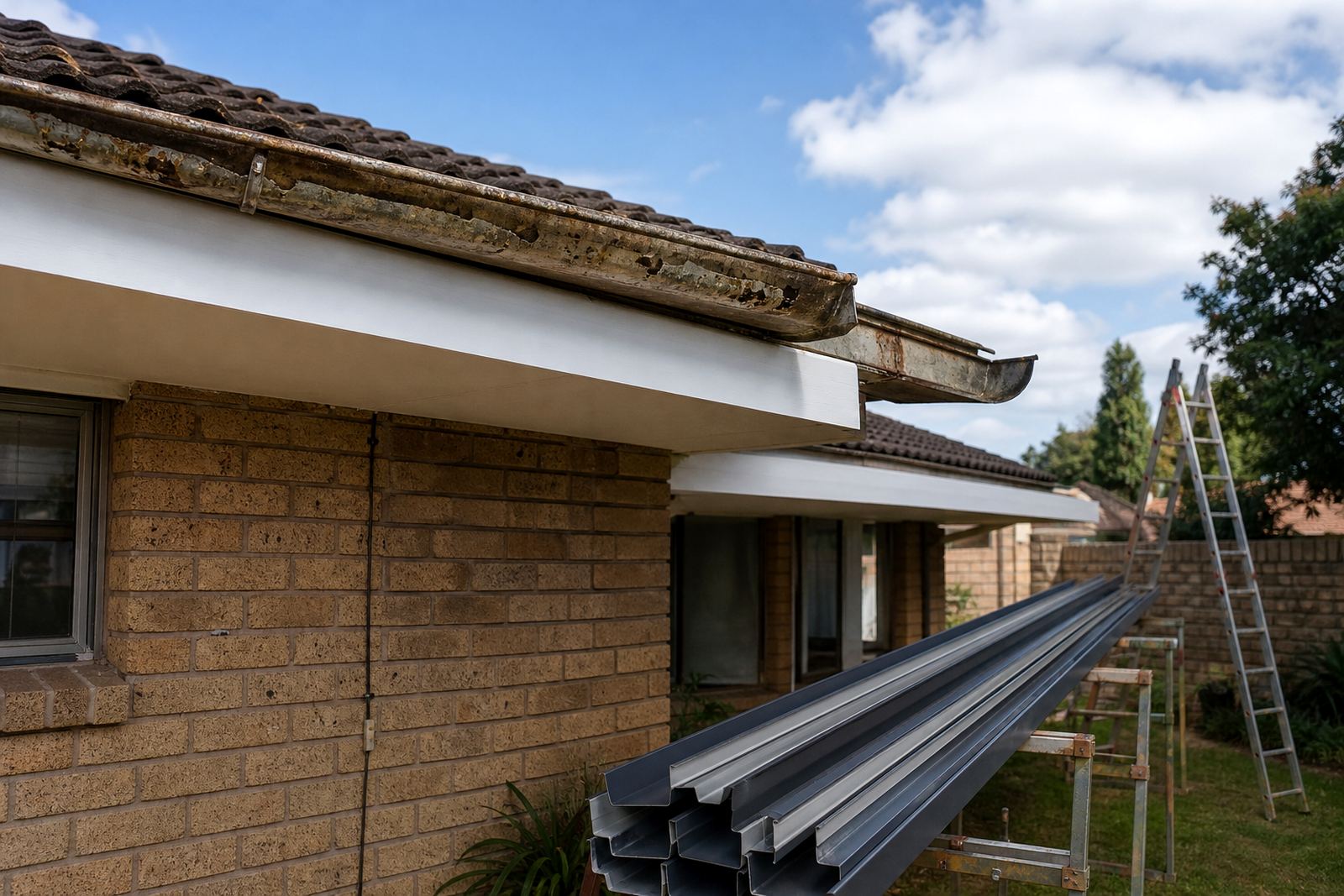
Fascia boards must also be fixed in a way that keeps the gutter line straight. If the fascia is rotten, uneven or badly set, the new gutter will inherit those faults. Replacing the fascia at the same time as the gutter can prevent movement issues later, especially on older houses where the roof edge has already shifted over the years.
Keeping the system healthy after installation
Even a well-set gutter needs attention. Dust, leaves, roof grit and bird nesting material can build up in corners and around outlets. When debris blocks the flow, water sits in the channel longer than it should and that extra weight can make movement problems worse. Regular maintenance visits help spot joints that are starting to open and brackets that are no longer holding the correct line.
A simple inspection routine can focus on the most vulnerable points: corners, joins, downpipe outlets and any long section that gets full afternoon sun. Look for staining, drips, lifted ends and sagging between supports. If the gutter is carrying water correctly but the joints are moving, the fix may be a support adjustment or a section replacement, rather than a full re-run.
- Clear leaf build-up before the rainy season
- Check outlet points after heavy storms
- Inspect long sun-facing runs for creep at joints
- Replace damaged brackets or cracked fittings promptly
The same rule applies to both builders and homeowners: respect movement, then design for it. That keeps the roofline tidier for longer and lowers the risk of leaks that start small but spread across the fascia and wall below.