
Where the water goes first on a pitched roof
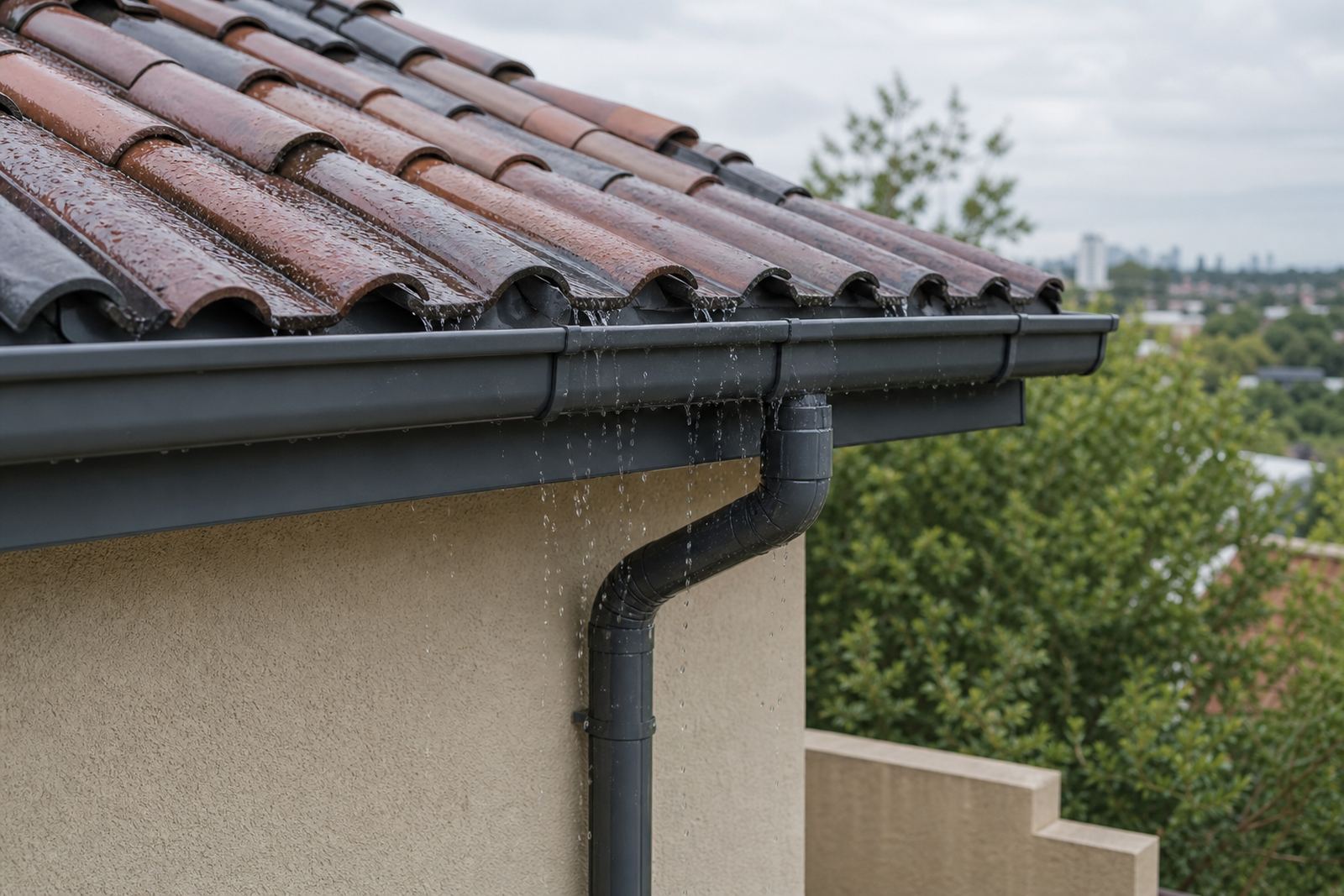
On a pitched roof, rain usually runs off the tiles or sheeting and gathers at the eaves, then moves along the gutter until it finds a downpipe outlet. That sounds straightforward, but the roof slope, length of run and the number of corners all affect how water behaves. A long roof face in Durban or Richards Bay will handle heavy rain very differently from a small gable roof in dry inland areas, because short intense storms can fill a gutter fast and expose weak points at joints and outlets.
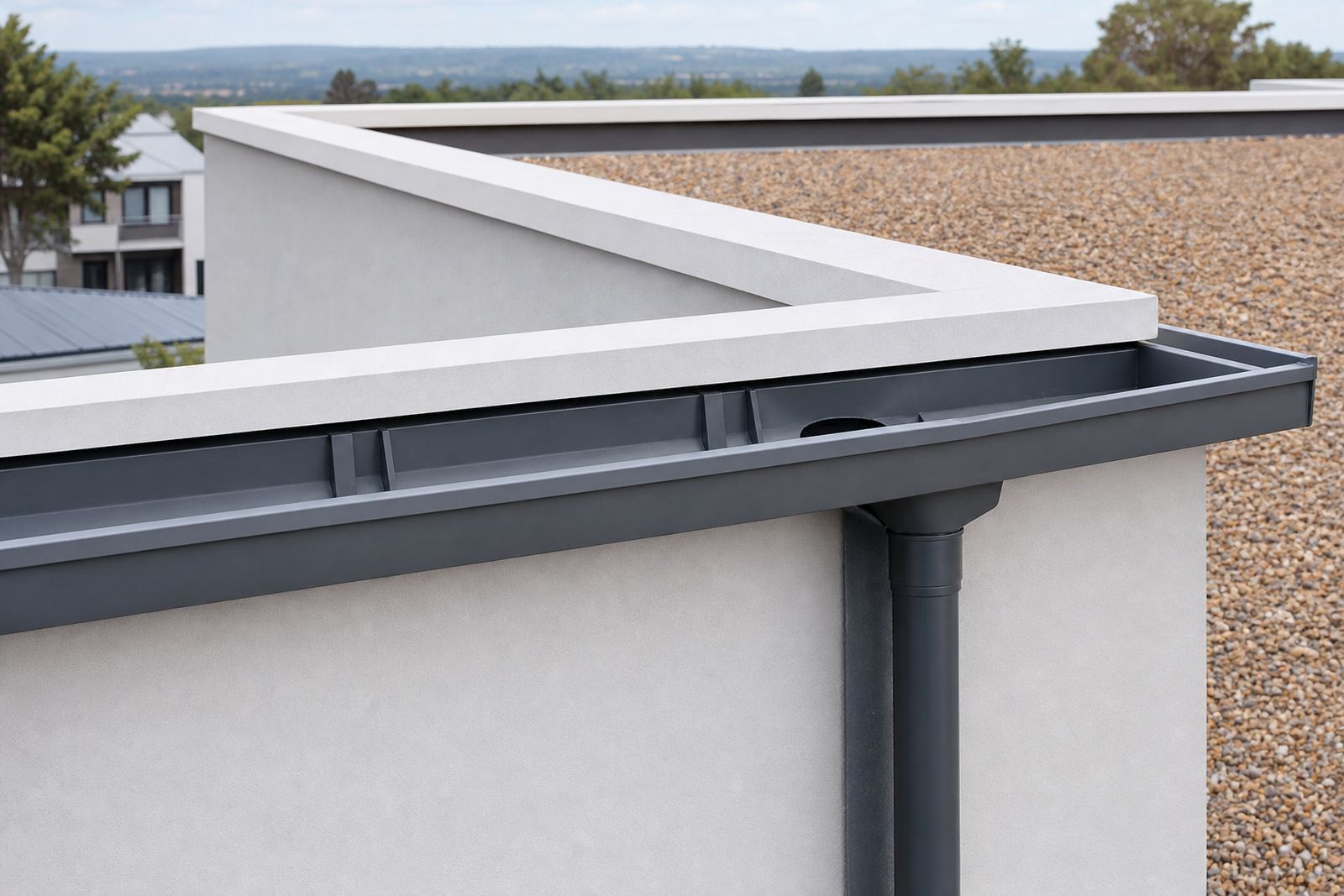
The main job is to guide water to the right discharge points before it backs up under the roof edge. When the fall is set correctly, the gutter carries water steadily and does not hold standing pools. If the line is level or pitched the wrong way, water can sit in low spots, leave stains, and increase strain on brackets and seal points. Even a small error in line, maybe just a few millimetres over a long run, can change how the whole eave drains.
Sizing the gutter and downpipe to match the roof
There is no single size that suits every roof. A compact patio roof may do well with a smaller gutter and one downpipe, while a wide house roof or warehouse edge needs more capacity and closer outlet spacing. Roof catchment area, pitch and the local rainfall pattern all play a part. In coastal areas, wider gutters and larger downpipes are often used to handle sudden downpours and the extra water that comes off large roof planes.
- Measure the roof edge length and the likely water path before choosing gutter size.
- Keep outlet positions practical, especially where corners or valleys feed extra water into one line.
- Use downpipe sizes that suit the outlet and the expected flow, not just the available wall space.
- Allow for maintenance access so leaves and grit can be cleared without working awkwardly at height.
For builders, the useful question is not only what fits the fascia, but what will stay open in hard rain and during windy weather. A gutter that looks neat on day one can still underperform if the outlet is too small or placed where the water arrives in a rush.
Falls, brackets and the small details that stop overflow
Good pitched roof drainage depends on a controlled fall along the gutter line. The fall does not need to look dramatic, but it must be enough to move water toward the outlet without creating a sag between brackets. Brackets should be spaced to support the gutter profile, keep the front edge firm, and hold the line true along the fascia board. If the fascia is uneven or the fixing points are weak, the gutter can twist slightly and hold water in the middle.
Where there are long runs, multiple outlets often work better than trying to force all the water to one end. On homes in Pretoria or Polokwane, where summer storms can arrive hard and fast, this makes a noticeable difference. It also helps with overflow at corners, which is a common complaint after the first heavy rain on a new roofline. A careful installer checks the roof edge, the fascia line and the discharge path before fixing the first bracket. That is the sort of detail that saves faffing around later.
- Set the fall before final fixing, not after the gutter is already loaded with sealant or debris.
- Keep bracket spacing even and tighten all fixings into sound material.
- Use corner pieces and outlet fittings that match the profile cleanly, with no forced bends.
- Check that downpipes discharge into a proper path away from walls and paving.
Plastic-steel composite materials for harsh South African conditions
Gutters, downpipes and fascia boards made from plastic-steel composite material are chosen for a reason. The material has to handle sun, heat, coastal humidity and regular rainfall without warping or corroding too quickly. In places like Cape Town, with salt in the air, or along the eastern coastline where moisture hangs around after rain, material choice can affect how long the roof edge stays tidy. For homeowners and builders, the value is in a profile that holds shape, installs neatly and needs less attention than damaged timber or thin metal that has started to rust.
Fascia boards also carry a real burden. They support the gutter line and help keep the roof edge straight, so their strength matters. If the board is not straight, the gutter line will mirror that fault. A composite fascia is useful where a clean finish is wanted and the board must cope with repeated wetting, drying and heat. The same goes for downpipes, which need to stay aligned and fixed securely to the wall, especially on taller homes and light commercial buildings.
Maintenance that keeps the roof edge working
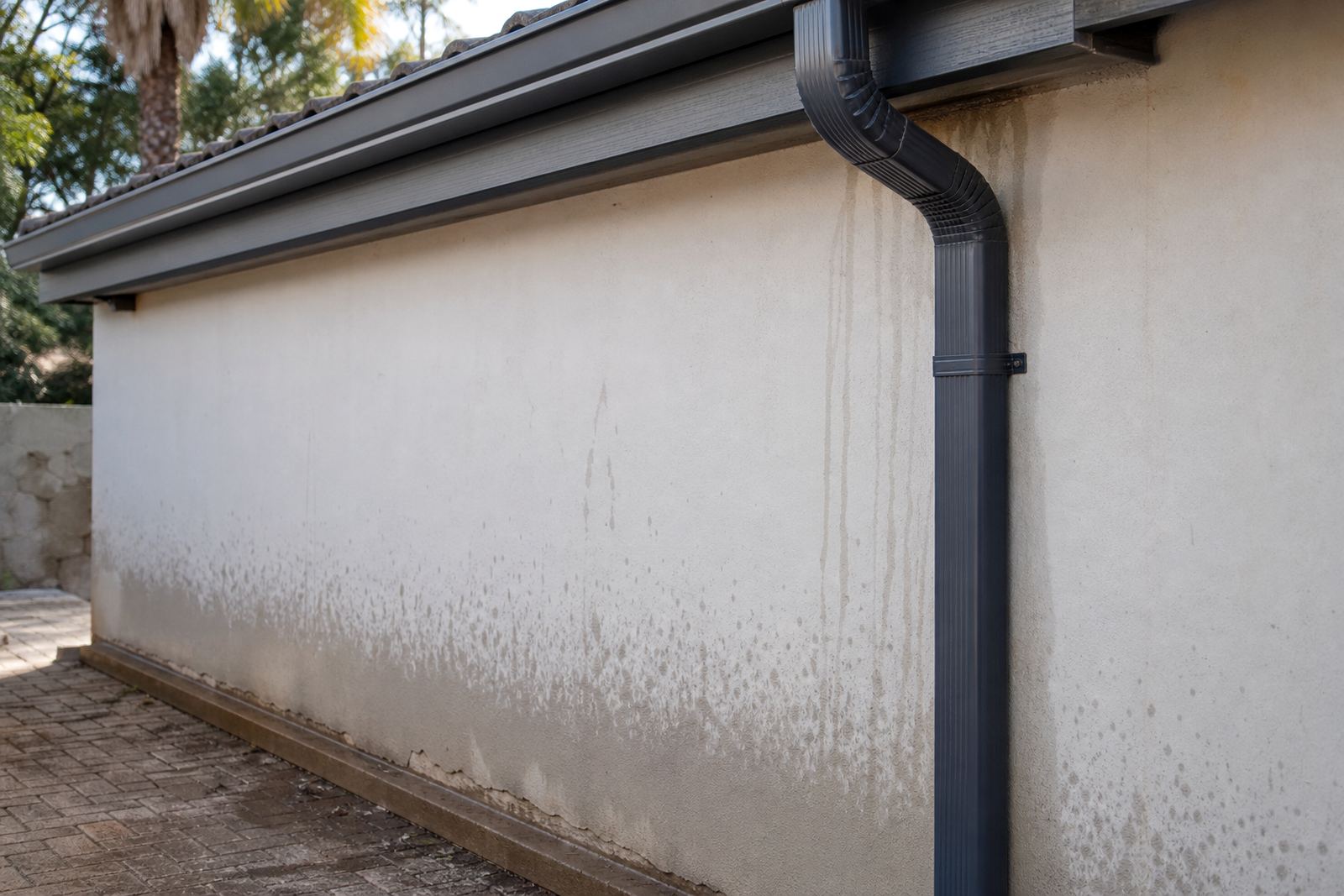
Most drainage trouble starts small. A few leaves, a nest, some roof grit, then water begins to sit instead of moving. Once that happens, the overflow can stain walls, soak timber edges and drip where it should not. Routine maintenance is plain work, but it is worth doing because pitched roofs rely on clear water paths all along the eaves.
A practical maintenance visit usually includes checking the gutter line, outlet openings, brackets, joints and the downpipe discharge area. If the roof has trees nearby, the gutters may need more frequent clearing. In industrial or builder-use settings, dust and cuttings can also collect in the system and block flow after a storm. Roof work at height must be done safely by competent people, with proper access, fall protection and the right equipment for the roof pitch.
- Clear leaves and silt before the wet season starts.
- Look for sagging sections, cracked joints or loose fixings after strong wind.
- Confirm that downpipes are not blocked at the elbow or at ground level.
- Wash down stained fascia areas and inspect for hidden moisture marks.
A Randburg roofline that had water pouring over one corner
A common local problem is a long house roof with one outlet at the wrong end. In Kya Sand and nearby Randburg industrial streets, many roofs are fitted onto extensions or upgraded later, and the original outlet plan is not always ideal. On one pitched roof, water from two long roof faces was feeding a single downpipe near a corner. During heavy rain, the gutter at the far end would fill first and spill over the front edge. The issue was not the roof pitch itself, but the outlet plan and the spacing of the supports.
After measuring the roof edge and checking the fall direction, the line was adjusted and an extra outlet added so the water could split more evenly. The fascia was checked for straightness, brackets were reset, and the downpipes were positioned so discharge would not splash against the wall or pool at the paving. That kind of correction is common on pitched roofs and it shows why drainage should be planned as part of the roofline, not treated as an afterthought. For builders and homeowners alike, the final result is a roof edge that handles rain properly and needs less fuss later on.