Where flat roof edges need more attention
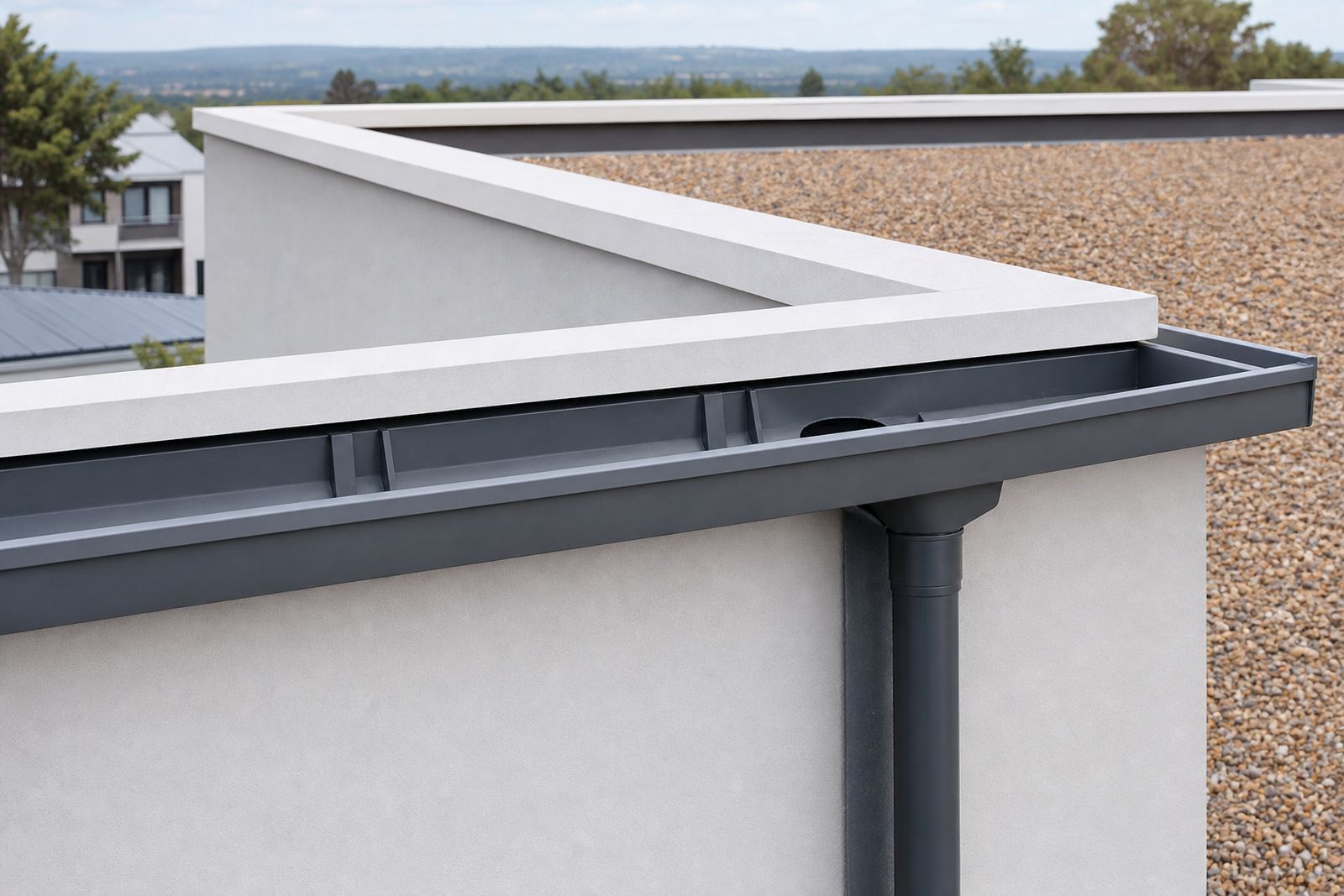
A flat roof holds water near the edge for longer than a pitched roof, so the edge detail does more than finish the line of the building. It has to guide runoff to the right point, carry the gutter load and keep the fascia line neat where wind driven rain can push water back under the roof covering.
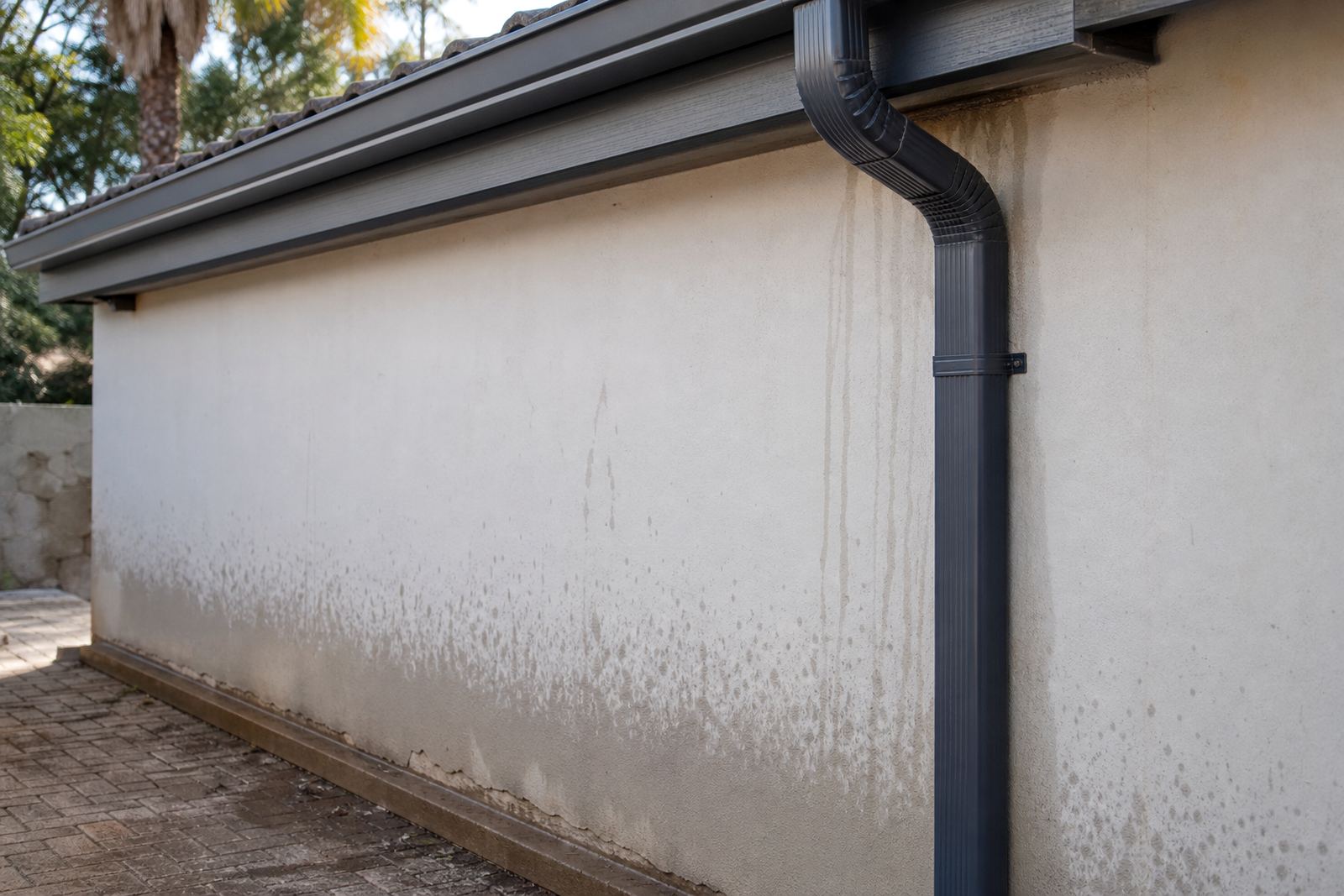
In South African conditions that matters in places like Randburg, Durban and Cape Town where summer storms or coastal humidity can test the outside edge of a building. On a flat roof the gutter line is often the first place to show poor falls, loose joints or blocked outlets, and those faults usually show up as staining on the wall below.
Choosing gutter sizes for a flat roof edge
Gutter size depends on roof area, rainfall pattern and the number of outlets along the edge. Wider roof pans, long eaves and parapet details all change how quickly water gathers at the perimeter. A small domestic roof may be fine with a lighter system, while a larger commercial edge can need deeper sections and more support points.
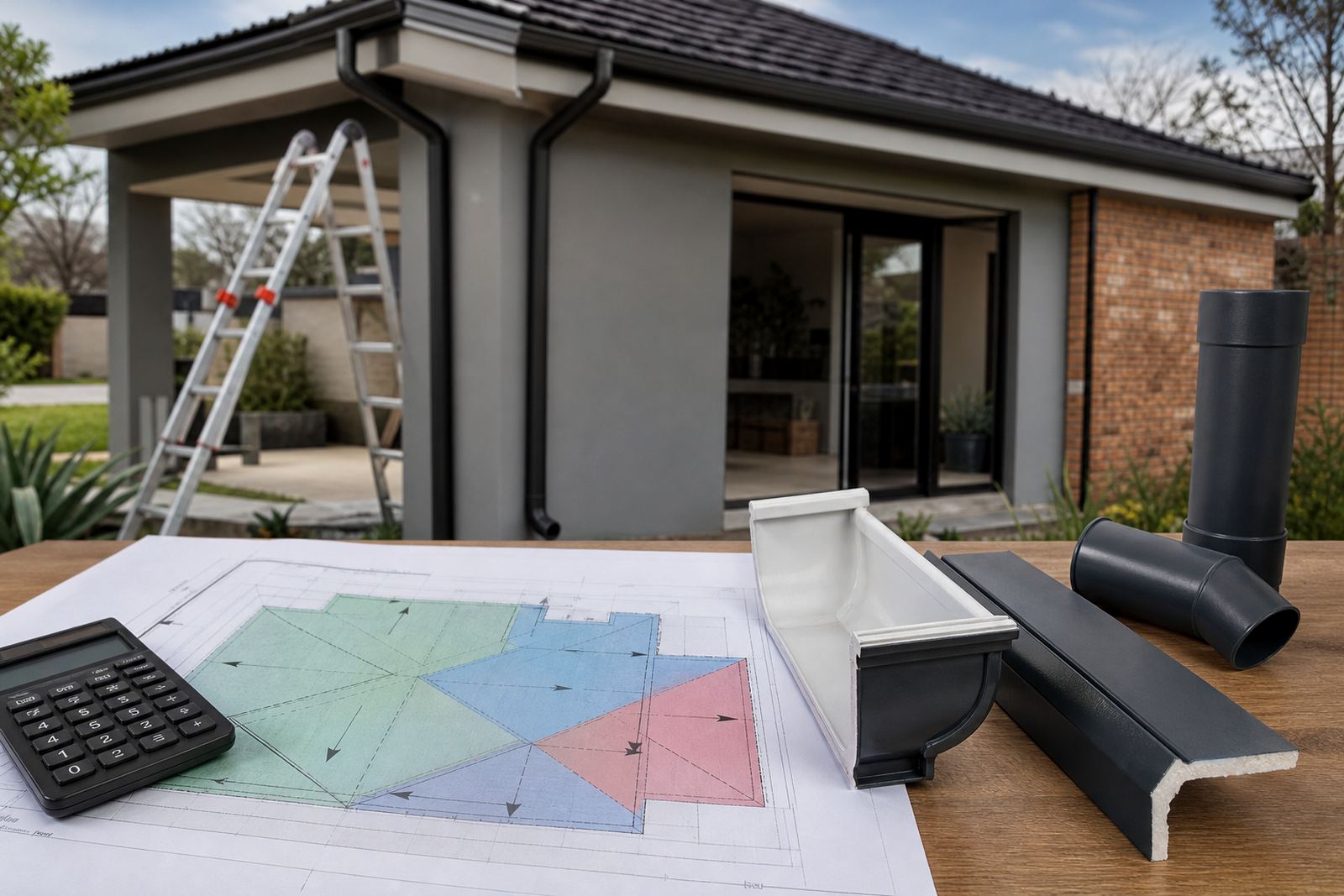
- Measure the roof edge length and the catchment area before choosing the profile.
- Match downpipe spacing to the amount of water that reaches each section.
- Allow for debris such as leaves, especially near trees and boundary walls.
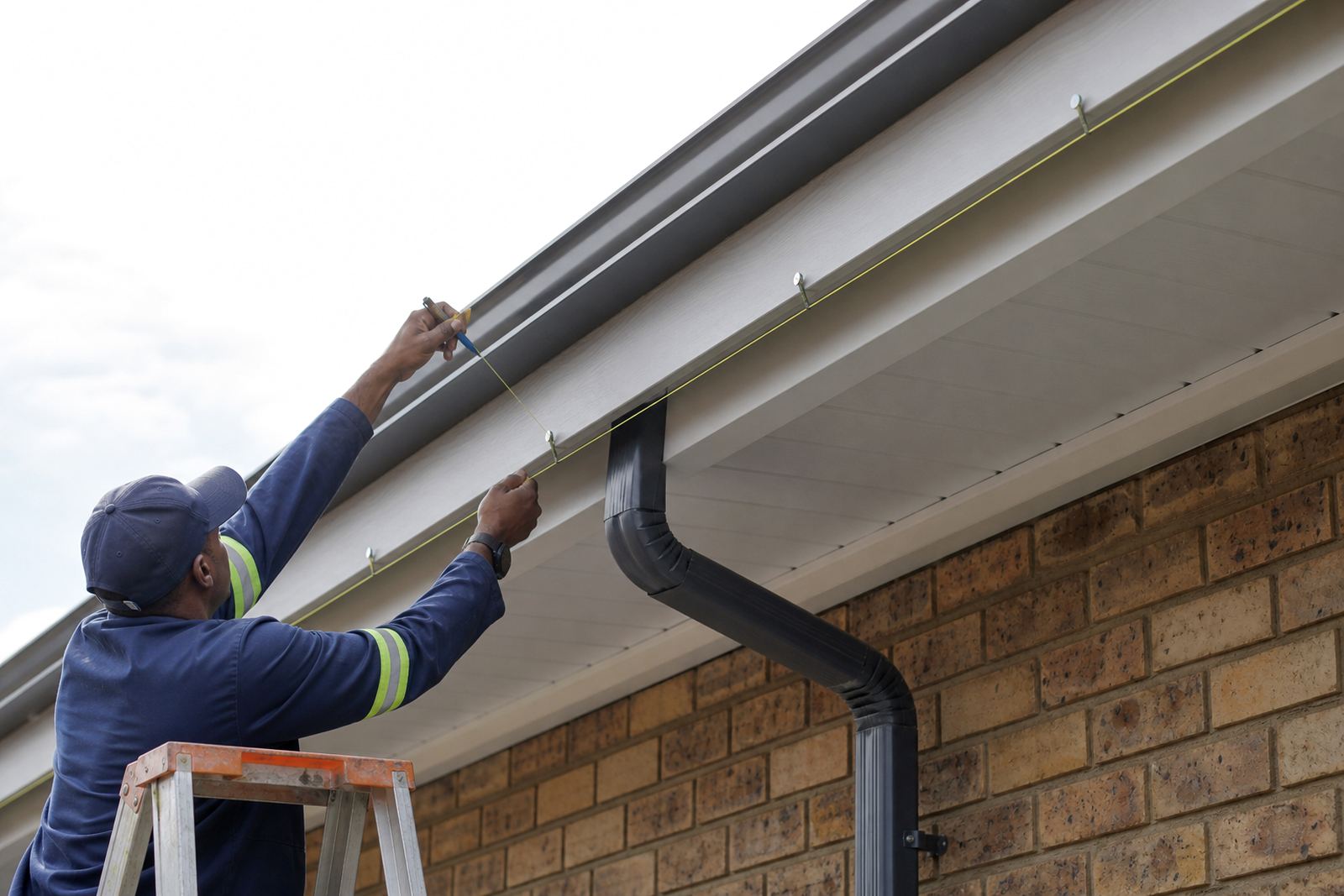
- Use brackets at the recommended centres so the line does not sag once filled with water.
With composite gutter and fascia materials, the aim is a clean edge that keeps its shape. If the line droops, water sits too long and the gutter can overflow at the weak point instead of moving toward the outlet.
Falls and outlets that actually move water
Flat roofs do not mean level drainage. The roof surface itself still needs a gentle fall toward the collection point, and the edge gutter needs its own fall or outlet arrangement so water does not lie in pockets. Even a small back slope can leave standing water after a storm, then that water works its way into joints, fixings and wall finishes.
On site, a competent installer checks where the high point and low point sit before fitting the edge system. That includes parapets, changes in roof height and any joins between old and new sections. A careful material takeoff also helps because once the gutter line is fixed, moving an outlet later can be messy and time consuming.
- Check for even discharge rather than one overloaded section.
- Keep outlet points clear of sealant build-up and offcuts.
- Use proper slope over long runs so water does not settle in the middle.
Brackets, fascia boards and the fixing line
The fascia board carries more than a neat appearance. It gives the gutter a sound fixing line and helps keep the roof edge true. If the fascia is soft, warped or badly set, the gutter follows that line and the whole edge starts looking untidy. In warm inland areas the material must handle heat well, while coastal towns need better resistance to moisture and salt in the air.
Brackets should be set to suit the profile and the expected water load. Too few brackets and the gutter flexes when full; too many poor fixings can still fail if they are not set into a sound substrate. On roof work at height, safety matters too. Fall protection, stable access and competent labour are part of the job, not an extra.
Maintenance that keeps the edge working
Flat roof edges benefit from regular inspection because small issues grow fast. Leaves, rooibos dust, bird nests and rooftop grit can all slow drainage. In places like Pretoria or Polokwane, a dry spell can be followed by a heavy storm that tests every outlet in a few minutes, so a blocked corner can become a leak point very quickly.
Routine maintenance is usually straightforward when the system is sound:
- Clear gutters and outlets before the rainy season.
- Check for cracking, movement or loose fasteners.
- Look at the fascia line for staining or damp patches.
- Wash off dirt where dust has built up at the edge.
- Replace damaged sections before water starts reaching the wall.
A clean, well aligned edge also makes future repairs easier because the problem can be seen early instead of being hidden behind debris and old sealant.
A local example from a Randburg roof edge
A builder in Kya Sand recently needed help on a low-slope warehouse roof where water kept spilling over one corner after afternoon storms. The issue was not the whole roof, only the edge detail near a change in level. The gutter line had the wrong fall and one outlet was taking too much load while the opposite side stayed nearly dry.
After the edge was remeasured, the fascia line was reset and the outlet positions were balanced so the runoff spread more evenly. The change was practical rather than flashy, but it stopped the repeated overflow and kept the wall below from staining. That kind of correction is common on flat roof work because the roof may look simple from the ground yet the drainage detail can be fussy.
What builders and homeowners should check first
Before ordering materials, it helps to look at the edge as a drainage system, not only as a trim detail. The gutter, fascia and downpipe must all fit the roof shape, the wall line and the local weather. That is true for a townhouse in Randburg, a family home in Roodepoort or a commercial building in Pretoria.
- Roof edge length and any changes in level.
- Number and position of outlets.
- Condition of the existing fascia and support timber.
- Access for safe installation and maintenance.
- Whether the site needs delivery coordination or builder support.
Plasteel supplies plastic-steel composite gutter, downpipe and fascia materials for these edge conditions, with support for site measuring, material takeoff, supply and installation work. The aim is a roof edge that handles water properly, keeps its line and stays manageable for the people who need to maintain it later.