

Set the interval by the roof, not the calendar
There is no single maintenance cycle that suits every property. A home under large jacarandas in Pretoria will need attention more often than a new townhouse with clear rooflines in Kya Sand. The same goes for business parks, schools and warehouses where roof edges are long and water has further to travel before it reaches the downpipes.
As a working guide, gutters and downpipes should be inspected at least twice a year, then more often where leaves, seed pods, dust or bird nesting build up quickly. After heavy rain or strong wind, a quick visual check helps spot sagging lengths, loose brackets, blocked outlets and overflow marks along the fascia. If a property has steep roof slopes or shallow falls, water can move too quickly or too slowly, which means dirt gathers in the wrong places and maintenance needs to happen sooner.
Homes near trees, windy coastal areas and sites with lots of roofing dust often need quarterly checks. On inland properties with open ground and little overhang, two planned inspections a year may be enough if the system is sized correctly and the fall is set properly.
Where debris builds fastest
Most gutter problems begin where water slows down or changes direction. Corners, joins, outlets and low points in the run collect the most grime. Downpipes can also choke where roof grit settles, especially on newer roofs that still shed a lot of fine particles after storms.
Leaves are only part of the story. In many South African areas, maintenance also has to deal with windblown dust, flower petals, seed husks and bird droppings. On coastal homes in places like Durban and Cape Town, salt spray can leave a sticky film that holds dirt in place. In industrial or high-traffic areas, soot and fine dust can collect quickly too.
- Check gutter outlets first, as they block before the rest of the run.
- Look at inside corners where debris settles after rain.
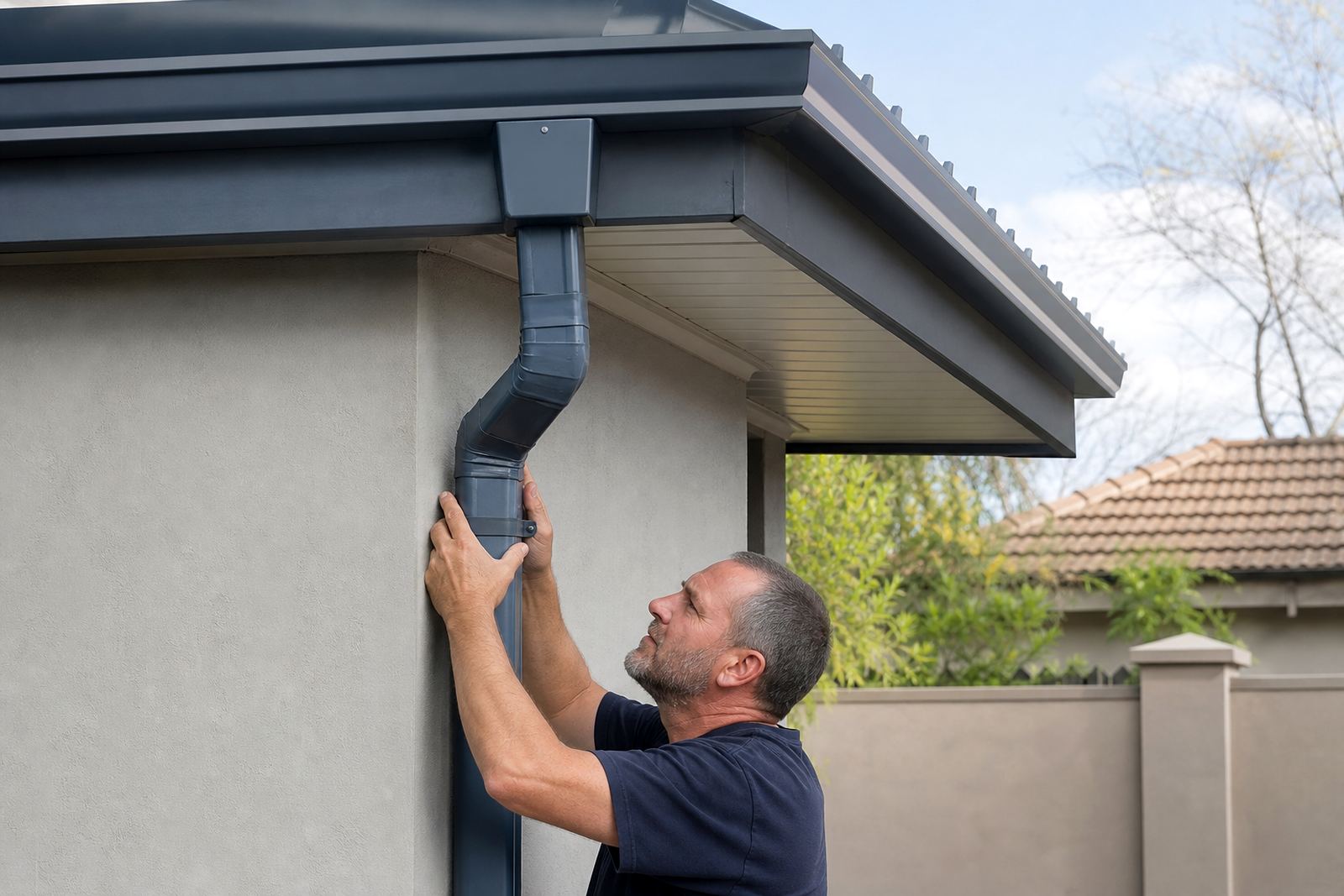
- Inspect the first bend in each downpipe, since that is a common choke point.
- Watch for staining on fascia boards, which often shows overflow before a person notices a blockage.
Good maintenance is less about scrubbing everything clean every time and more about knowing where the system is under pressure.
How local weather changes the schedule
Weather patterns matter as much as the building itself. In Johannesburg and Pretoria, summer storms can dump a lot of water in a short time, so gutters need clear outlets and secure brackets before the rains arrive. In Polokwane, dust and dry wind can fill open gutters with fine material that hardens when the first storms come through. Along the coast, humidity and salt air mean the system should be checked for early signs of surface wear, staining and fasteners working loose.
A well-fitted gutter line with the correct fall will move water away from the roof edge without pooling. If the fall is poor, even a small amount of dirt can slow drainage and create standing water. That standing water puts extra strain on brackets and joints, and it can leave marks on fascia boards and walls.
Builders often plan maintenance around the seasons. Before the rainy months, a thorough inspection makes sense. After the first heavy weather, a follow-up check can catch roof debris that has shifted into the channels. On exposed properties, especially where gum trees or pines hang over the roof, checks may need to happen more often than the owner expects.
The signs that maintenance is overdue
You do not always need to open the gutter to know it needs attention. Overflow during rain, damp marks on fascia, and water running behind the gutter line are all warning signs. If the downpipe sounds hollow at the top but stays quiet lower down, there may be a blockage. If brackets look strained or the gutter has started to bow, water load or trapped debris may be the cause.
Homeowners also notice changes indoors. Ceiling stains near outside walls, peeling paint under roof edges and musty smells after rain can point to a gutter system that is not moving water away properly. On commercial buildings, the signs may show up as water near entrances, splashback on paving or staining down external wall sections.
- Water spilling over the edge in light rain
- Loose or rusted-looking brackets
- Visible sagging between support points
- Leaves or silt sitting in the same section after rain
- Drips behind the fascia or at corners
Once these signs appear, the maintenance gap has already become too long for a casual cleanout.
What a proper check should cover
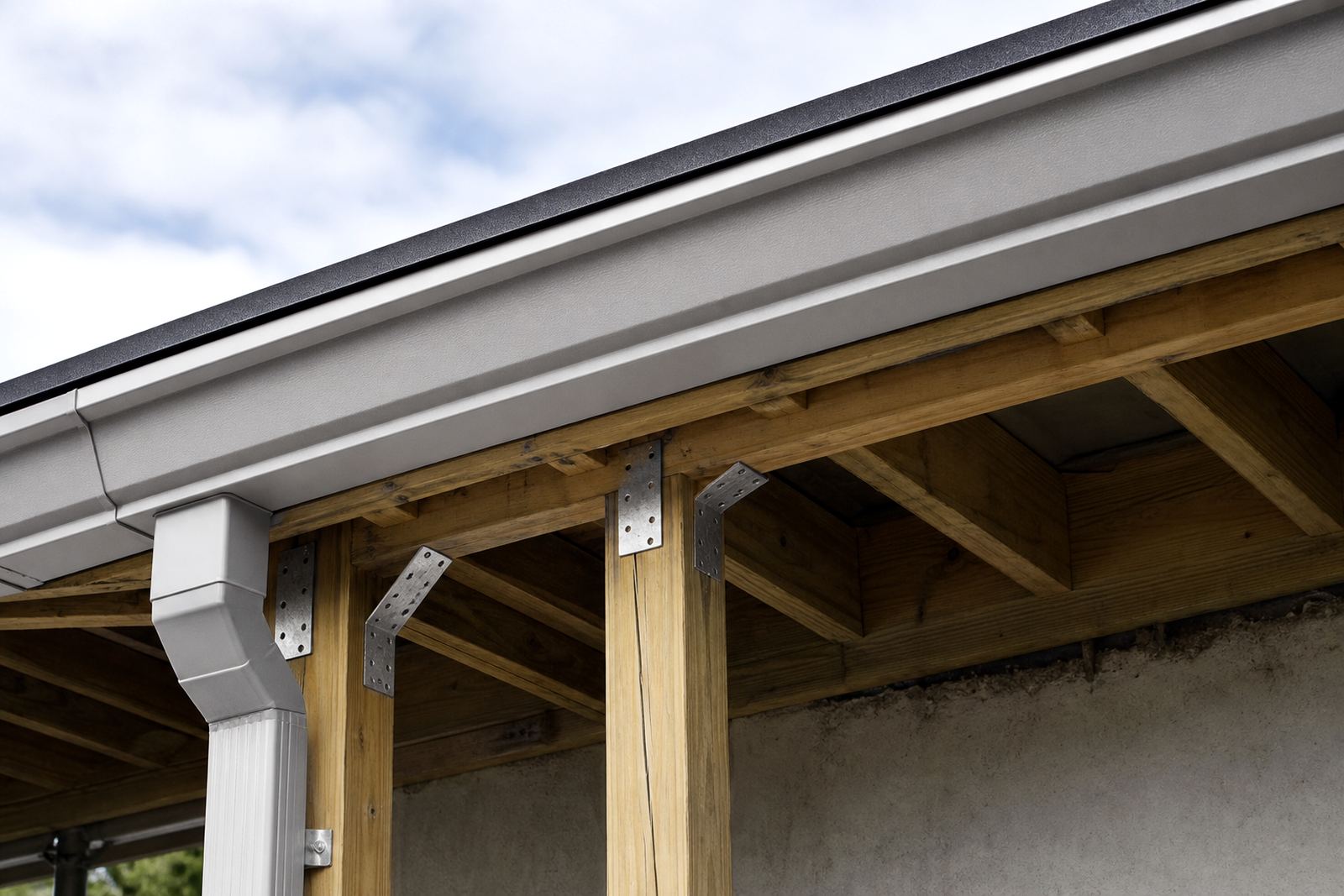
A useful maintenance visit should include more than a quick scoop of leaves. The gutter run needs to be checked for correct slope, open joints, solid fixings and clear outlet points. Downpipes should be checked from top to bottom so hidden blockages do not get missed. Fascia boards need a close look for swelling, cracking, staining or soft spots where water may have sat for too long.
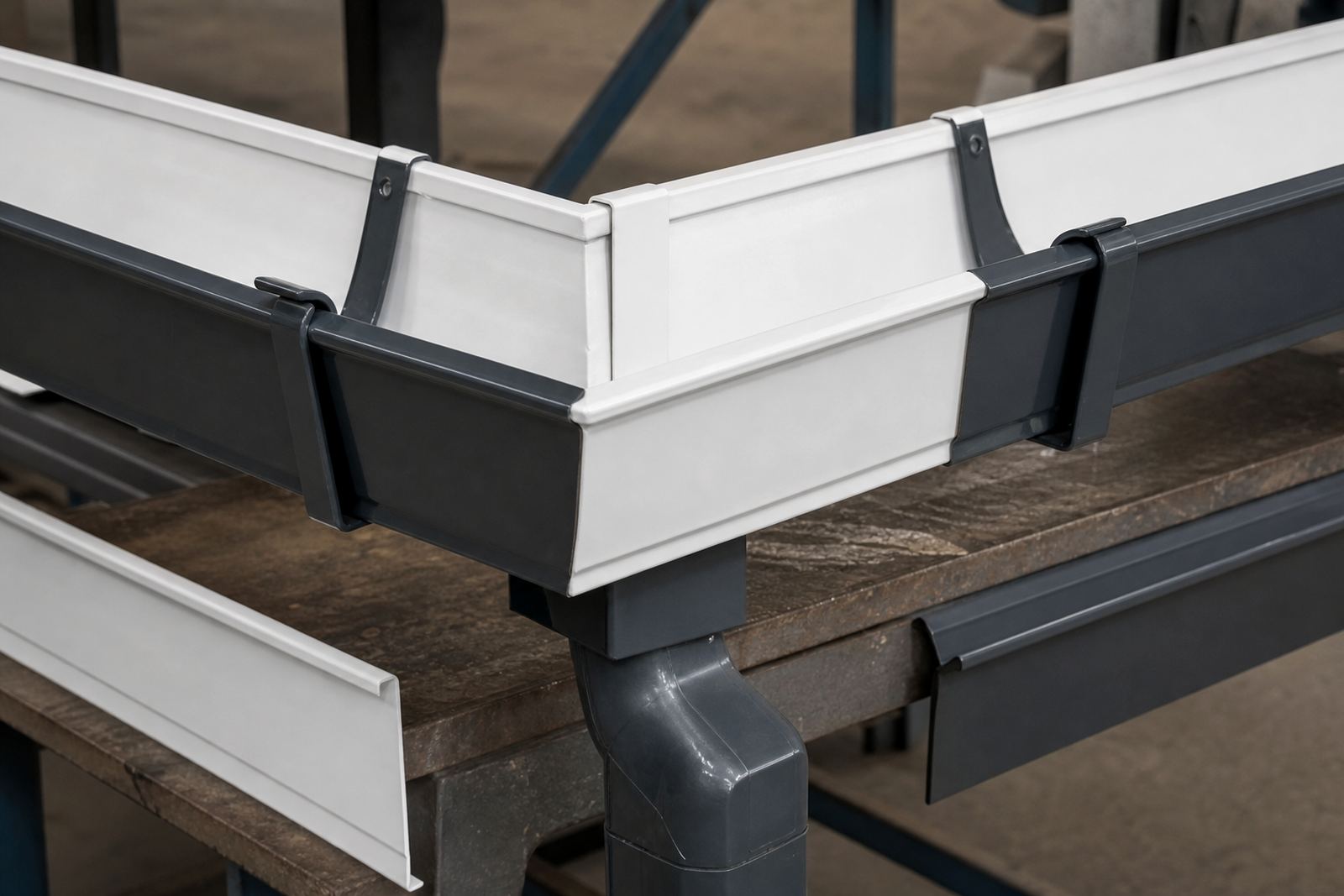
For plastic-steel composite systems, regular cleaning still matters even though the material is made to handle demanding conditions. Dirt left sitting in any gutter system can shorten the life of seals, make joints work harder and hide small issues until they become bigger repair jobs. A hose test after cleaning is useful, but only when it can be done safely and by competent people working at height with the right access equipment.
Maintenance is also the time to check whether the system still matches the roof. If the property has had an extension, new roof valleys or changed drainage points, the original gutter arrangement may no longer be enough.
A Kya Sand example from a busy mixed-use property
A practical example is a mixed-use property in Kya Sand with warehouse roofs, office space and a yard that gathers dust from nearby activity. In that setting, gutters may need quarterly inspections because debris builds up faster than it would at a quiet suburban home. The roof edges are long, the water volume is higher during a storm and downpipe blockage can affect both the work area and the front entrance.
At a home in Randburg with two large trees overhanging the roof, the schedule might look different again. The owner may only need the system checked at the start of summer, after the first big storm and again before winter, but only if the gutters are correctly sized and kept free of build-up. If the roofline has shallow falls or several corners, the checks need to be more frequent.
The lesson is simple: one property can stay clean for months, while another needs attention every few months. The right frequency depends on what the roof is dealing with day to day, not on a general rule copied from somewhere else.
A maintenance rhythm that suits South African conditions
The most practical plan is a rhythm that matches the site. Start with a full inspection at least twice a year. Add extra visits where trees, coastal air, dust or heavy rain make the system work harder. After major weather, inspect again. That pattern helps protect gutters, downpipes and fascia boards before small faults spread into roofline damage.
For builders, this also helps with handover. A new installation should be explained with a basic care plan so the owner knows how often to inspect, what to look for and when to call for help. For homeowners, a regular check is easier to manage than waiting for a leak to show itself during the next storm.
In South Africa, maintenance frequency is really about respect for the local conditions. A gutter system can only perform as well as the attention it gets, and the roof does not give many warnings before water starts finding its own path.