
When a gutter line stops coping
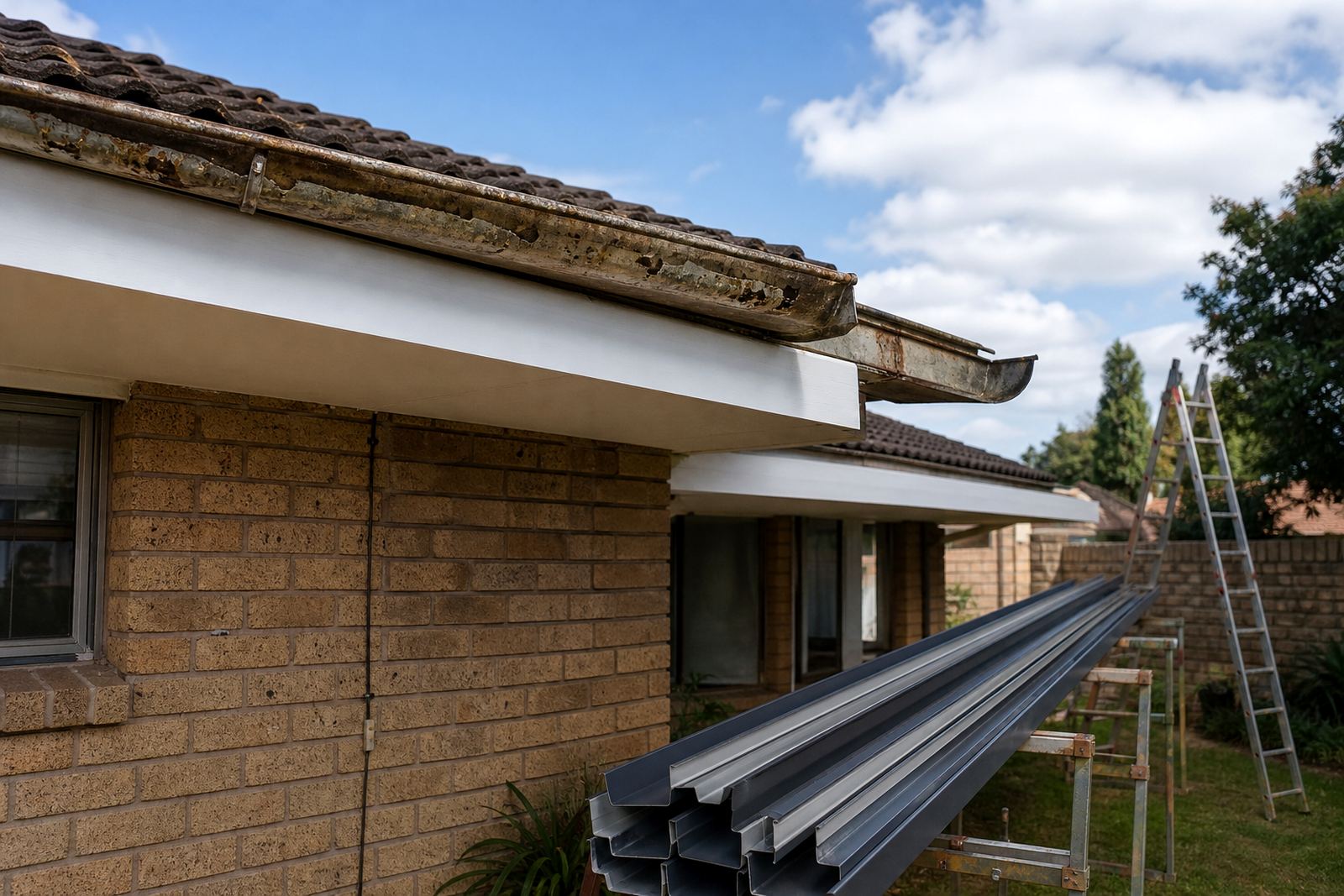
A gutter system usually shows its age in plain sight. The run may sag between brackets, joints start weeping after rain, or the same corner keeps filling with leaf matter and roof grit. Once the metal or plastic-steel profile has warped, cracked, or pulled away from the fascia, regular sealing only masks the problem for a short while.
In South African weather, that wear can show up quickly. Coastal humidity can corrode metal components, while strong summer storms and dust from dry spells put extra strain on the whole roof edge. If a line is already moving out of level, water no longer reaches the downpipe properly and overflow can stain walls, soak the fascia, and dampen paving below.
- Water running over the front edge in moderate rain
- Visible sagging between fixing points
- Rust, splitting, or brittle sections at joins
- Downpipes that block even after cleaning
- Soft or stained fascia boards near the roof edge
What to inspect before you replace anything
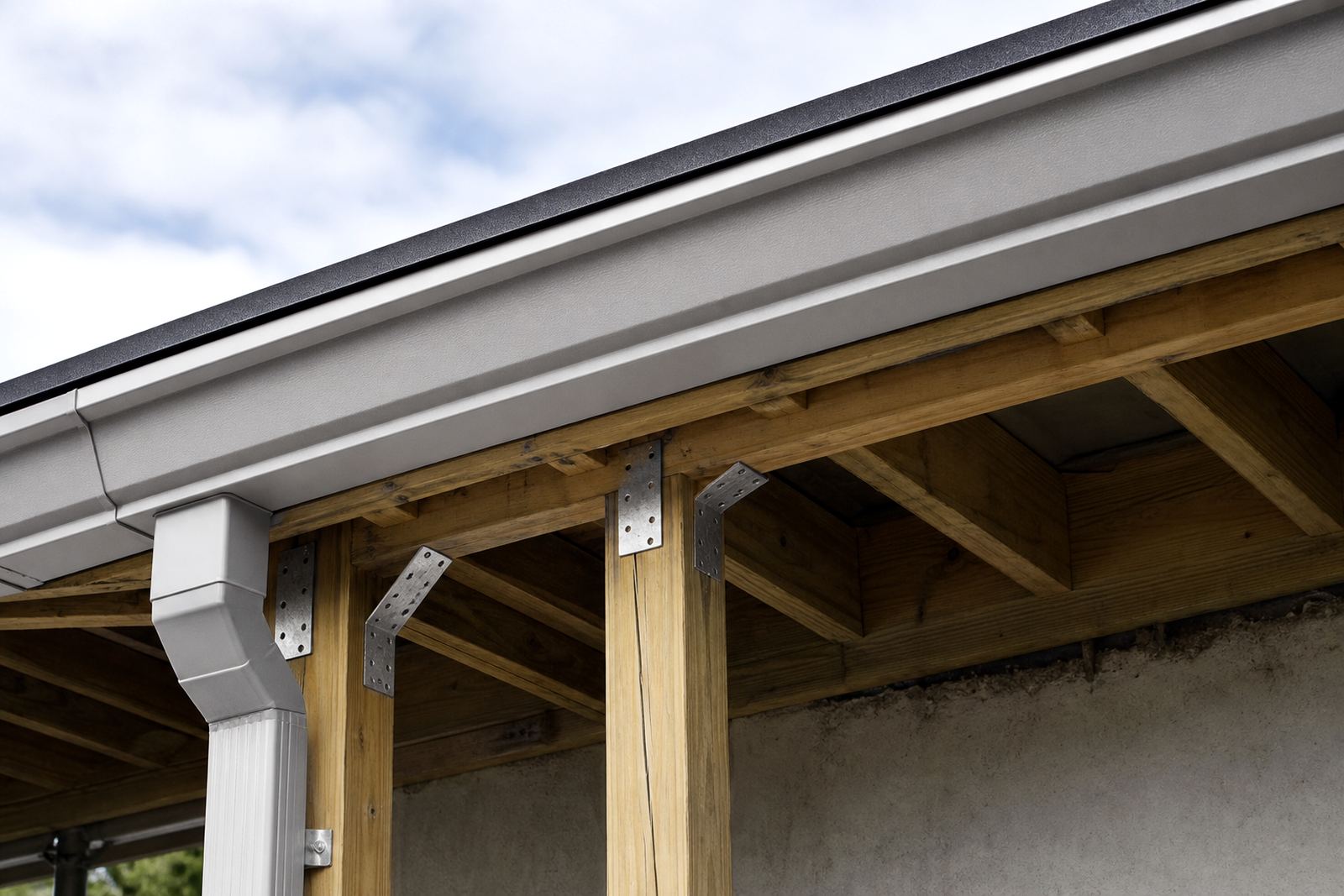
A proper replacement starts with a full look at the roof line, not just the gutter channel itself. The fascia board, barge boards, end caps, brackets, and downpipe routes all need checking because one weak point can undo the rest of the job. On older homes in Johannesburg or Pretoria, it is common to find that the gutter is still serviceable but the supporting timber is not. In that case the support must be sorted first, otherwise the new line will move again.
Replacement work should be planned by competent people who understand safe access at height. Roof edges are not a place for shortcuts, and ladders alone are not enough for many buildings. A measured approach helps avoid damage to roof sheets, tiles, paintwork and paving.
- Check the fall along the run so water moves toward the outlet
- Measure the roof edge length before ordering material
- Confirm downpipe positions and the path to ground level drainage
- Inspect brackets for looseness, corrosion, or poor spacing
- Look for cracked fascia board ends and swollen timber behind them
Getting the sizes and fall right
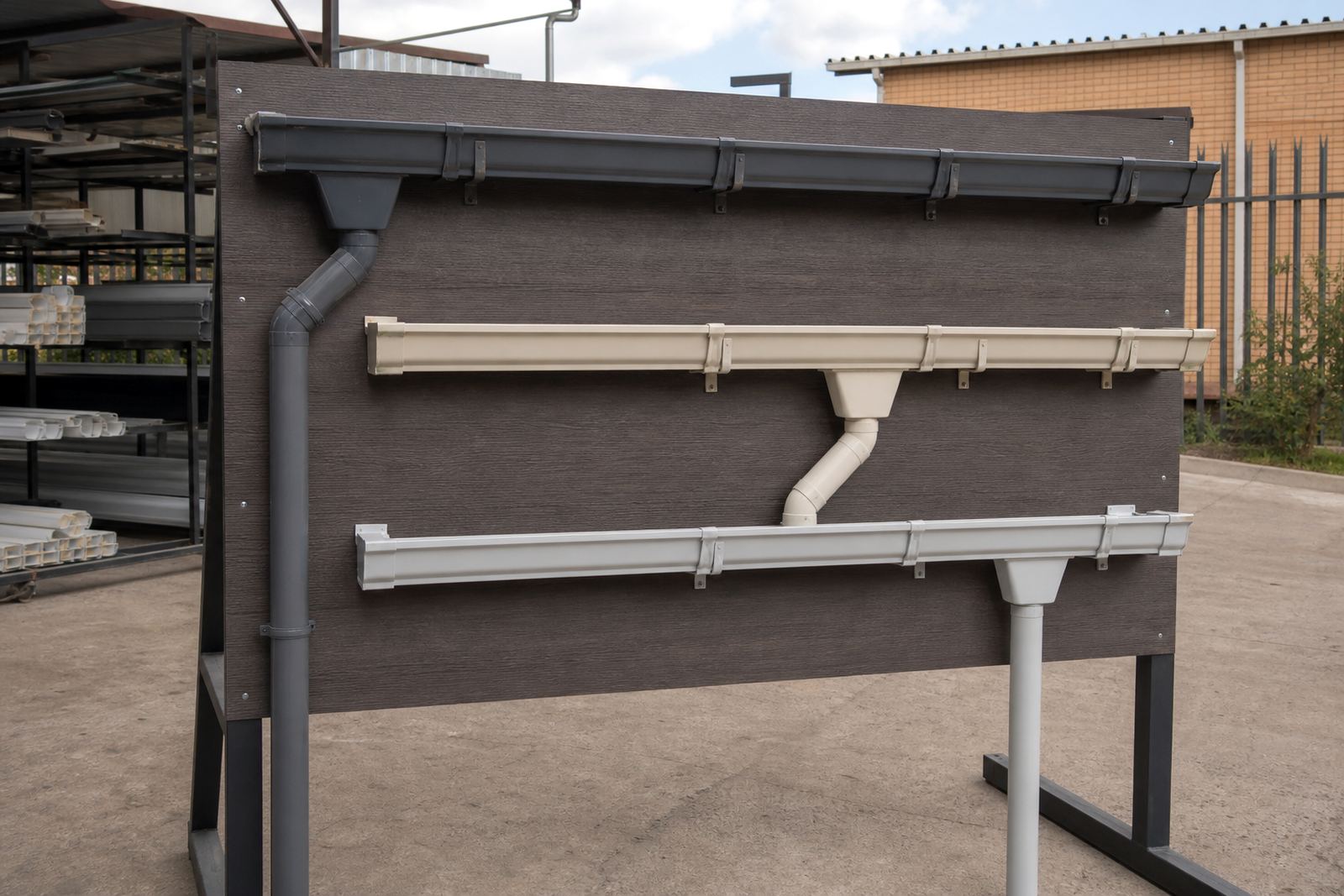
Gutters are often selected by roof size, rainfall exposure, and how many outlets are needed. A narrow run on a small patio roof may perform well with a modest profile, while a long commercial eave or a broad face brick home may need a deeper gutter and more than one downpipe. The aim is not only to hold water but to move it quickly enough during heavy showers without backing up at the corners.
Falls matter just as much as size. A gutter that sits dead level will hold water and sediment, which means more blockage and faster wear. A gentle, consistent fall toward the downpipe helps the line self-drain after rain. Bracket spacing must suit the profile and the expected water load, especially on long runs where extra support is needed at joins and corners.
- Match gutter depth to roof area and rainfall intensity
- Use enough downpipes for long roof lines and larger catchments
- Set a steady fall so water does not sit in pockets
- Place brackets close enough to prevent bounce and sag
- Allow for expansion and contraction in hot and cool weather
Why plastic-steel composite suits hard-working roof edges
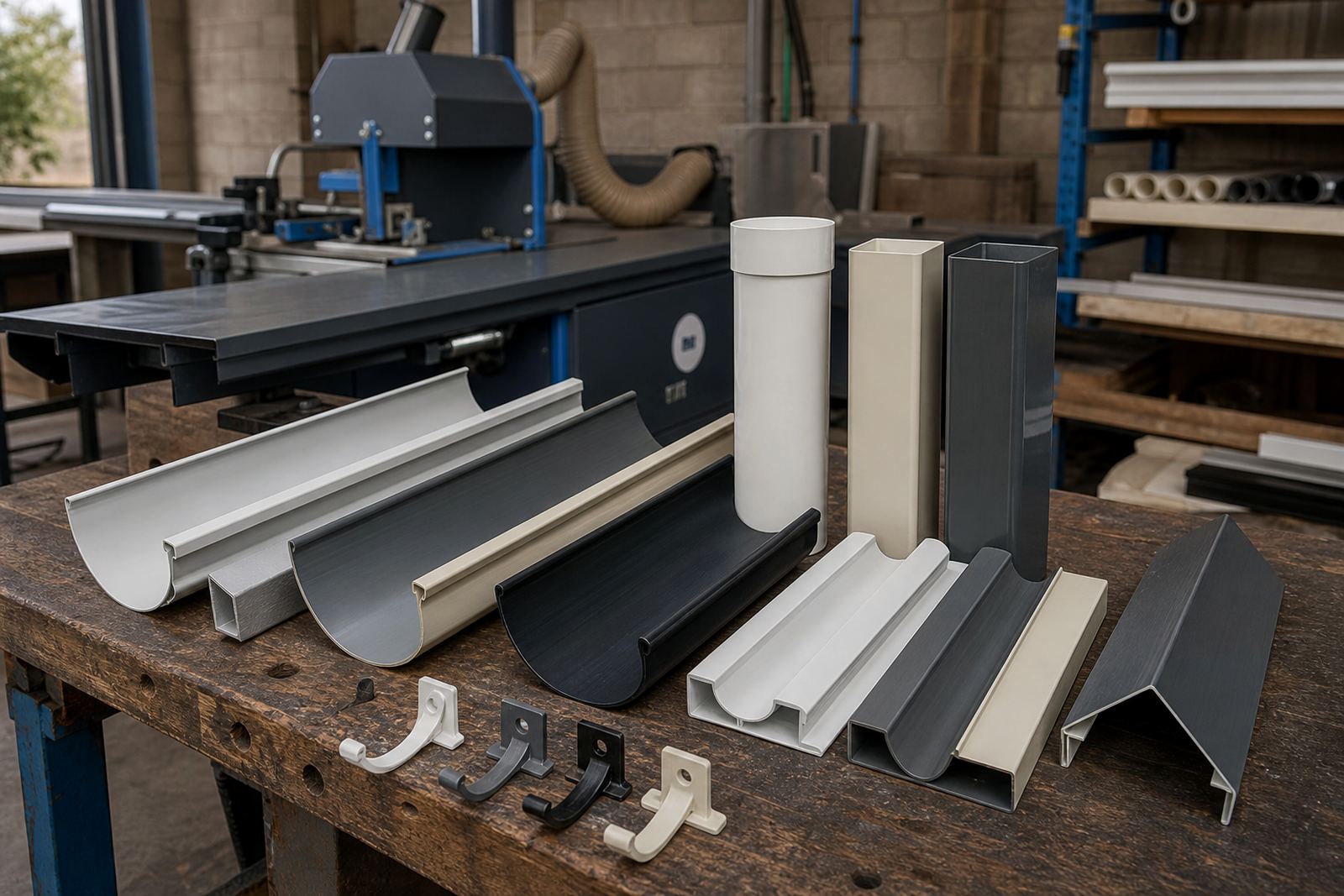
For many South African homes and buildings, a plastic-steel composite gutter or fascia board gives a practical balance of strength and weather resistance. The steel element adds shape and support, while the plastic outer layer helps limit the effects of moisture and surface corrosion. That matters in places with salty air, summer heat, or repeated wet and dry cycles.
Fascia boards in particular do more than finish the line neatly. They carry the fixing points for the gutter, support the edge of the roof, and help protect the timber behind the cladding. If fascia boards are soft, split, or bent, the gutter will usually follow the same movement. Replacing both together can save repeat visits and reduce patchwork repairs later.
At Plasteel, the material range is suited to builders and homeowners needing practical roofline components for projects in Kya Sand, Randburg and across Johannesburg, Pretoria, Durban, Cape Town and Polokwane. Delivery and supply arrangements can be handled for local works, with support for material takeoff and site measuring where required.
How replacement changes the way rainwater behaves
Once old guttering is removed and the new line is set with the right fall, water behaves very differently. Instead of sitting in low spots and spilling at the first blockage, it moves toward the outlets and downpipes more steadily. That reduces the chance of overflow staining on walls and helps keep paving, garden beds, and entry areas drier during storms.
Downpipes should be sized and positioned so they do not bottleneck the system. On some homes, the old layout was only ever enough for light rain and short roof lengths. A replacement is the time to correct poor routing, add a needed outlet, or move a downpipe where water discharge can be managed better at ground level.
- Less overflow onto walls and windowsills
- Lower risk of splashback staining on plaster and paint
- Cleaner drainage away from paths and entrances
- Better control at corners, joins, and roof valleys
- More reliable performance during summer downpours
A local case from the northern suburbs
In an older Randburg home, the owners had spent years resealing a gutter line that kept leaking at the same corner. The run was sagging, the brackets had loosened, and the fascia near the valley had begun to soften from repeated water seepage. Cleaning helped for a short while but every heavy rain brought the same overflow at the front stoep.
After measuring the roof edge and checking the outlet positions, the gutter line was replaced and the fascia boards at the affected sections were changed as well. The new run was set with a proper fall, the brackets were spaced correctly, and the downpipe route was adjusted to take water away from the entrance path. The result was not flashy, just more reliable, which is what matters when the next storm rolls in.
That kind of work is common on both homes and light commercial buildings. The right repair is often not another sealant tube, but a full roofline reset where the worn parts are no longer doing their job.
Keeping the new line in shape after the job
Replacement is only the first part. A gutter system lasts longer when it is cleaned and checked regularly, especially under trees, near dusty roads, or in coastal towns where salt and wind can build up faster than expected. Leaves, roof grit, and nesting debris should be removed before they form a dam at the outlet. Brackets, joints and end caps also need a quick visual check after strong weather.
For builders, landlords, and homeowners, a simple maintenance routine avoids bigger repairs later. It also helps spot movement early, before a loose section turns into a full drop. If the line starts to hold water again, or if a new stain appears on the wall below, that is a sign to inspect the fall, the outlet and the fixings rather than waiting for a worse failure.
- Clear gutters before and after the rainy season
- Check bracket spacing and tightness after storms
- Watch for stains below joints and corners
- Keep downpipe exits free of silt and debris
- Book maintenance visits where access is difficult