Start with the roof geometry, not the catalogue
A roof is never just a roof when rain hits it. Pitch, overhang, roof area and where the valley lines discharge all change the amount of water that gutters need to move. A small cottage roof in Randburg will place very different demands on the edge details than a wide commercial roof in Midrand with long eaves and several drainage points.
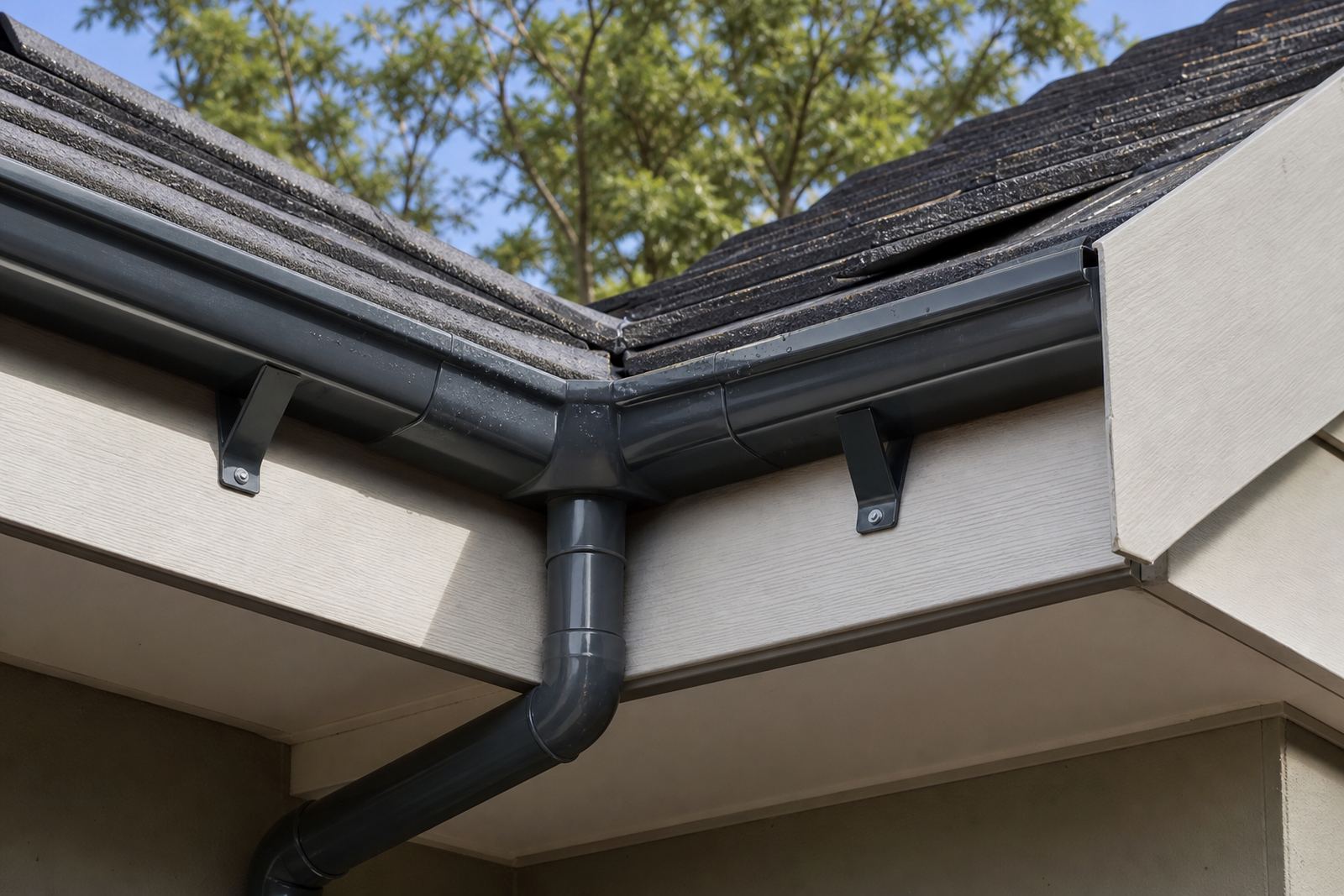
When the profile suits the roof line, the gutter sits properly under the drip edge and carries water without splashing back onto the fascia or wall face. On steeper roofs the water can hit with real force, so the front lip and bracket positions matter more than many people expect. At the same time, the fascia board has to form a clean edge and carry the load from the gutter, brackets and any added strain when water and leaves build up.
- Measure the roof edge length, not only the wall length.
- Check where valleys, parapets and dormers send water.
- Allow for the extra flow that comes from large roof planes and summer storms.
- Make sure the gutter line follows the roof edge cleanly, with no twisting.
Profile shapes that suit different buildings
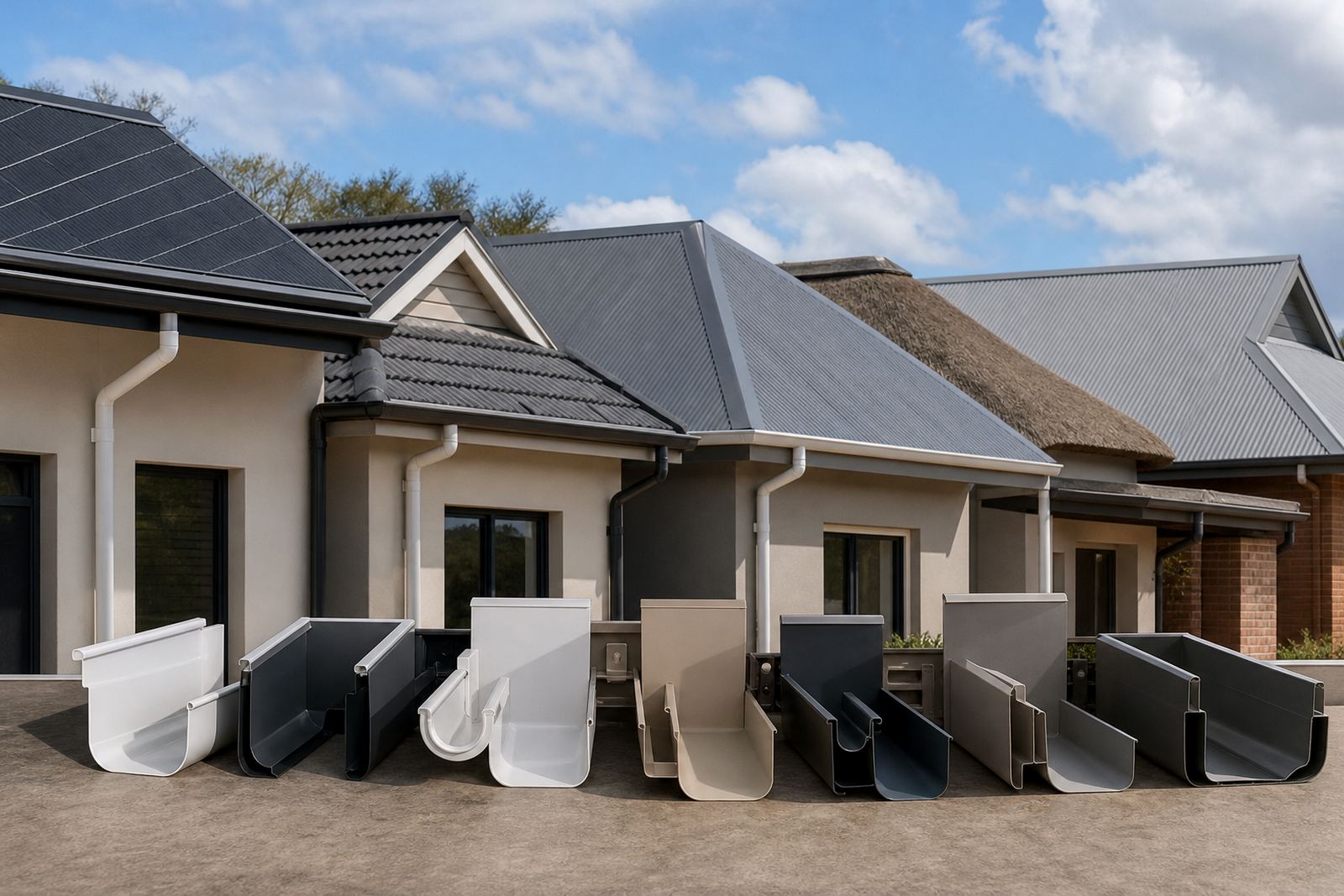
For residential work, a neat half-round or box-style profile can both perform well, but the building style often guides the final choice. A plain suburban home in Pretoria may suit a simpler line that sits quietly under the roof, while a modern commercial frontage in Johannesburg may call for a sharper profile that matches the straight edge of the façade.
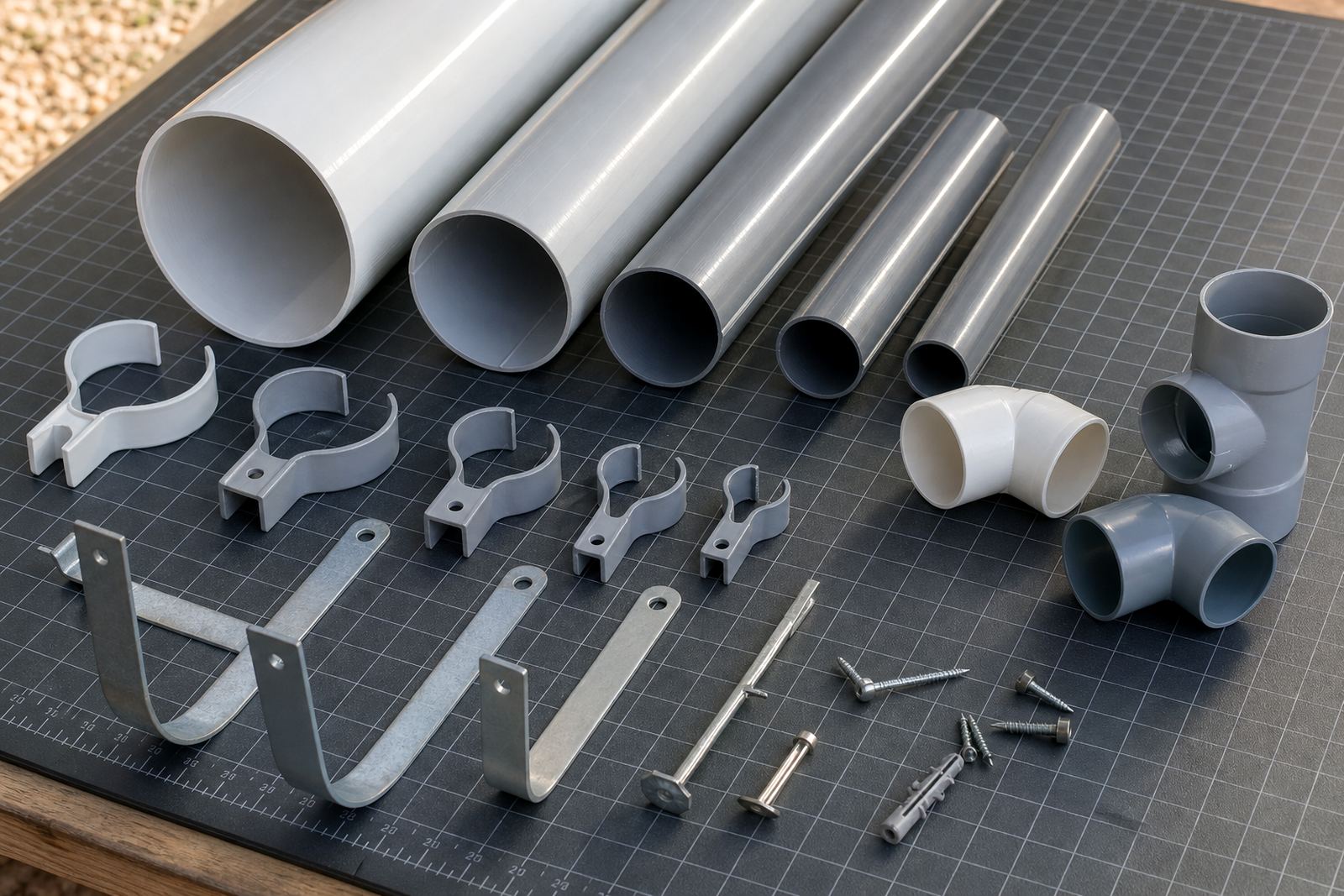
Fascia boards matter just as much. They close off the roof line, support the gutter and give the eaves a straight finish. In coastal areas like Durban and Cape Town, air carries more moisture and salt, so the material choice must cope with corrosion, surface marking and the general wear that comes from weather exposure. A plastic-steel composite can be a practical option where strength and low maintenance are both important.
For builders, matching the profile to the building type helps avoid awkward joins and expensive rework. For homeowners, it keeps the roofline tidy and makes later maintenance less of a headache.
Downpipe sizing and where the water should go
A gutter can only work properly if the downpipes can take the flow away fast enough. Too few downpipes, or pipes that are undersized for the roof area, lead to spillover during heavy rain. On some roofs the issue is not the gutter at all, but the route the water must take once it leaves the roof edge.
Downpipes should be placed where they can collect water evenly from the gutter run. Long gutters need more than one outlet, especially on larger buildings or where the roof collects water from different slopes. The route should also keep clear of windows, doors and pedestrian paths, and in municipal areas the discharge point should not create nuisance run-off across neighbouring property.
- Use enough outlets to shorten the travel distance inside the gutter.
- Keep bends to a minimum so debris does not build up.
- Fix downpipes securely to avoid movement in strong wind.
- Direct discharge to a safe drainage point or suitable stormwater system.
Where roof water is feeding a garden edge or paved yard, the pipe size and outlet position should still allow for sudden downpours. A neat installation means little if the water ends up pooling at the footing or washing over a driveway.
Bracket spacing and fall are not afterthoughts
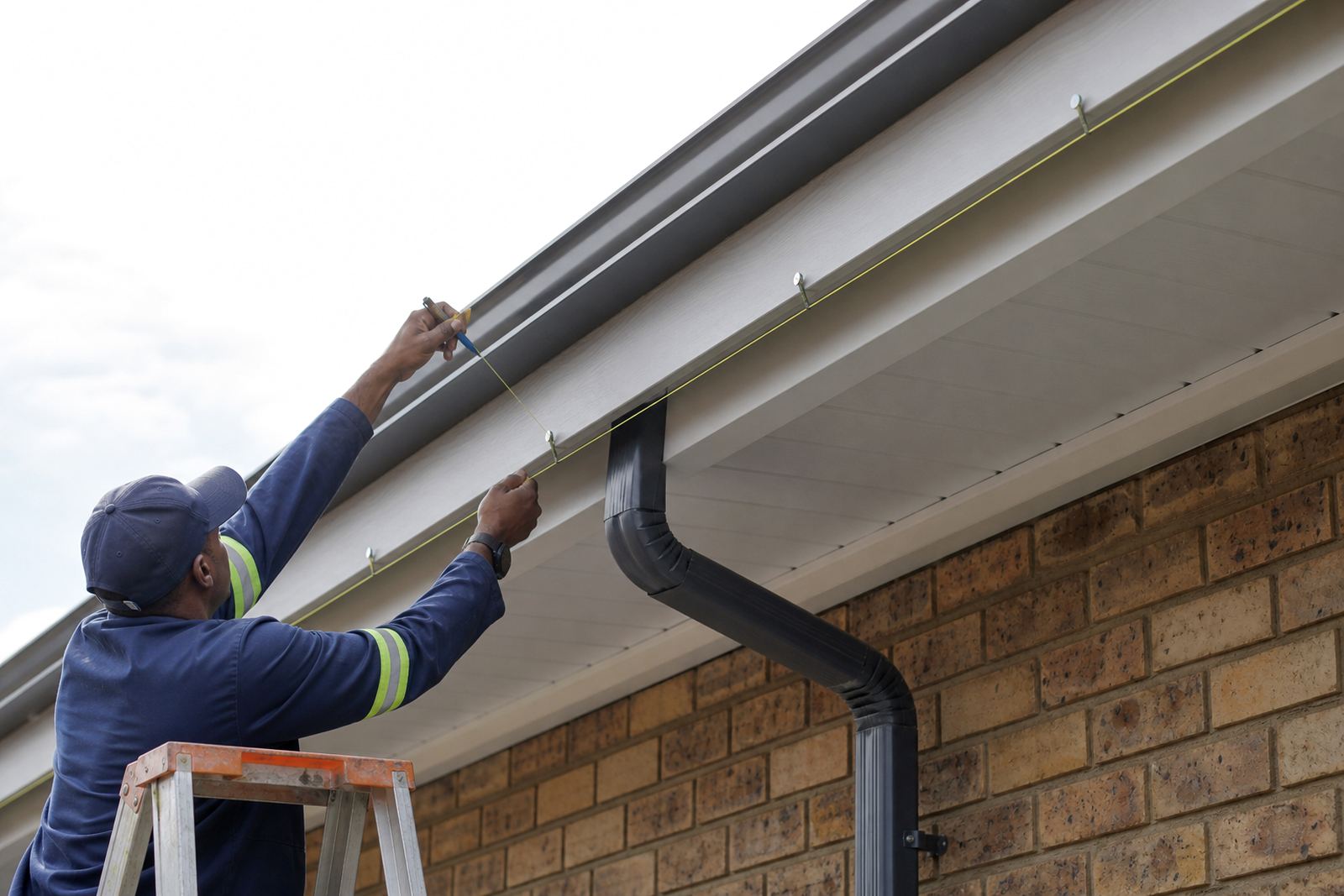
Bracket spacing decides whether a gutter stays aligned or starts to sag under water and debris. If the brackets are too far apart the profile can deflect, especially on long runs or where gutters hold back wet leaves after a windy spell. In places with summer storms, a gutter that looks fine in dry weather may show its weakness very quickly.
The fall, or gradient, is what guides water towards the outlet. It does not need to be obvious to the eye, but it must be present. Too little fall and water sits in the line. Too much and the gutter can look uneven and lose its neat architectural line. The installer has to balance both appearance and function, and roofing work at height should always be done safely by competent people with proper access equipment and fall protection.
On a home in Polokwane or a commercial block in Roodepoort, the same rule applies: a gutter that carries water cleanly is usually the one with proper support, measured falls and correctly fixed brackets. That is the part many people do not see from the ground, but it decides how well the system lasts.
Matching fascia and gutter for a cleaner edge
The fascia board is not just a finishing strip. It carries the gutter line, closes off the rafters and helps the roof edge look complete. When fascia and gutter are chosen together, the result is straighter, easier to maintain and less likely to show joints or patch repairs.
Composite fascia boards can suit both new work and roofline replacement where old timber has started to move, split or stain. They are especially useful where moisture and UV exposure have been hard on traditional materials. A good fit also reduces the chance of insects nesting behind the edge or wind-driven rain getting into exposed sections.
- Check that the fascia is straight before fixing the gutter.
- Use matching lengths and corners where possible to reduce visible joins.
- Seal or finish cut ends properly so the edge stays neat.
- Inspect the line from a distance before final fixing, not only from the ladder.
What maintenance looks like over the seasons
Even a well-sized roofline system needs care. In leafy streets, gutters fill with seed pods and fine debris. Along dusty roads, silt can sit in corners and slow the flow. At the coast, salt and moisture can leave marks on exposed surfaces if the system is ignored for too long.
Regular maintenance is not complicated. Clear out debris, check that downpipes are open, make sure brackets are still firm and look for signs of leaking at joints. After a big storm, a quick inspection can save a lot of water damage later. A small shift in the gutter line or a loose bracket can lead to staining on walls, damp patches under eaves and overflow that damages paving below.
For builder support or homeowner advice, the most useful approach is plain and practical: keep the line clean, keep the fall correct and fix small issues before they spread.
A local job can show the difference clearly
Take a mixed-use property in Randburg with a steep street-facing roof and a flatter rear section. The front needed a profile that suited the façade and handled water fast when thunderstorms rolled in from the west. The rear line needed a layout that could cope with debris from nearby trees. The answer was not the same everywhere on the building.
The front section needed a neat fascia finish and a gutter run that respected the architectural line, while the rear required more attention to fall, outlet placement and maintenance access. That kind of project shows why matching roof style is really about matching the profile to the water load as well as the visual line. A good result does not shout for attention. It just works when the rain starts.
For builders, developers and homeowners across Johannesburg, Pretoria, Durban, Cape Town and Polokwane, the practical lesson is consistent: the roof shape tells you what the gutter system must do. Once that is clear, the right materials and details are much easier to choose.