
Why the outlet above sets the size below
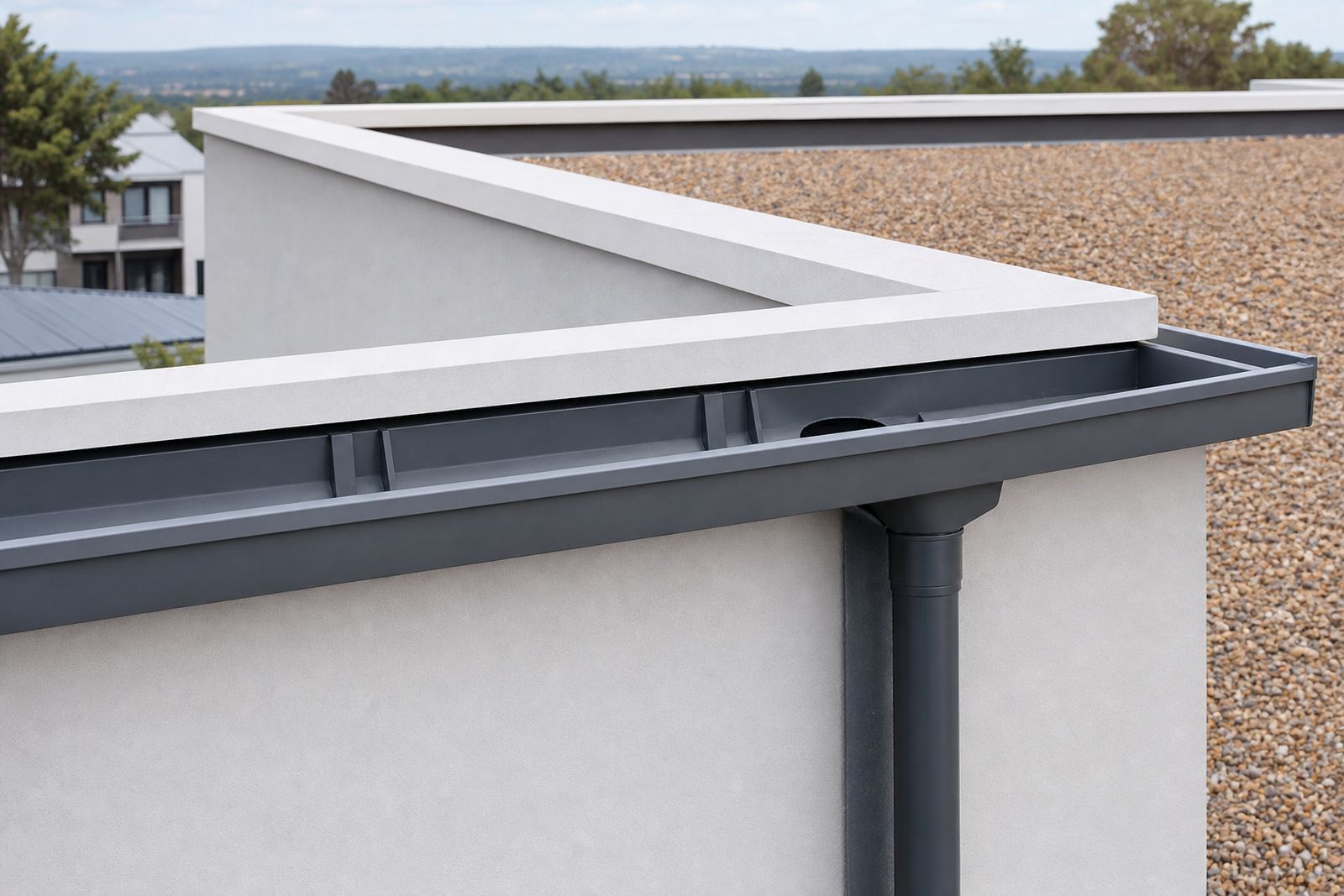
A downpipe does not work on its own. The size should be chosen around the gutter outlet, the roof area feeding that outlet and the way the water runs through the gutter. A wide gutter with a small outlet can still choke if the pipe below is undersized, because the bottleneck starts at the outlet and not at ground level.
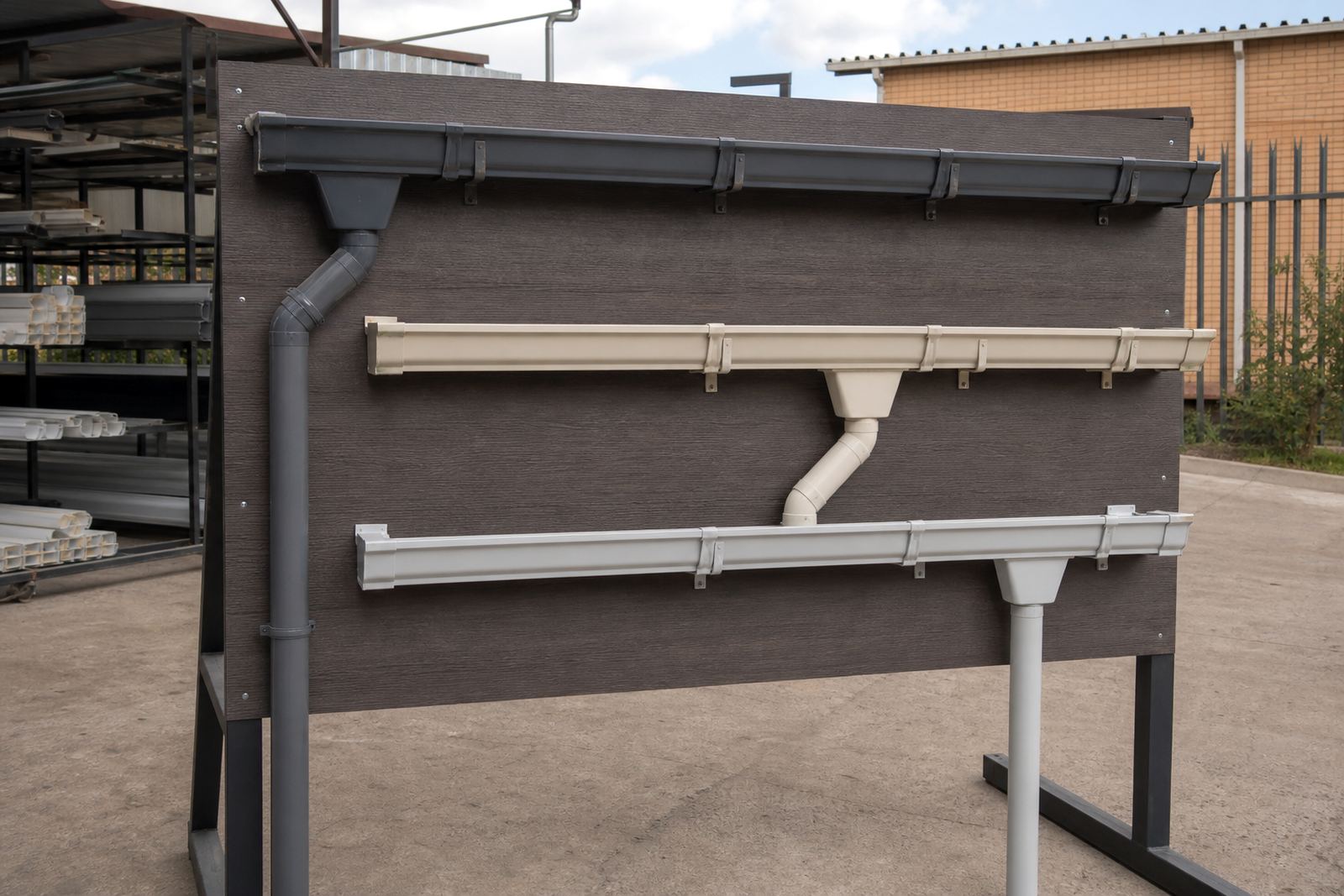
On homes with long roof runs, a single pipe on one end is often not enough. The gutter should have enough fall to move water towards each outlet, and the outlet opening must suit the volume expected from that section of roof. On commercial buildings with wider spans, it is common to break the roofline into several drainage points so the water is not forced through one small pipe.
Common downpipe sizes used on South African buildings
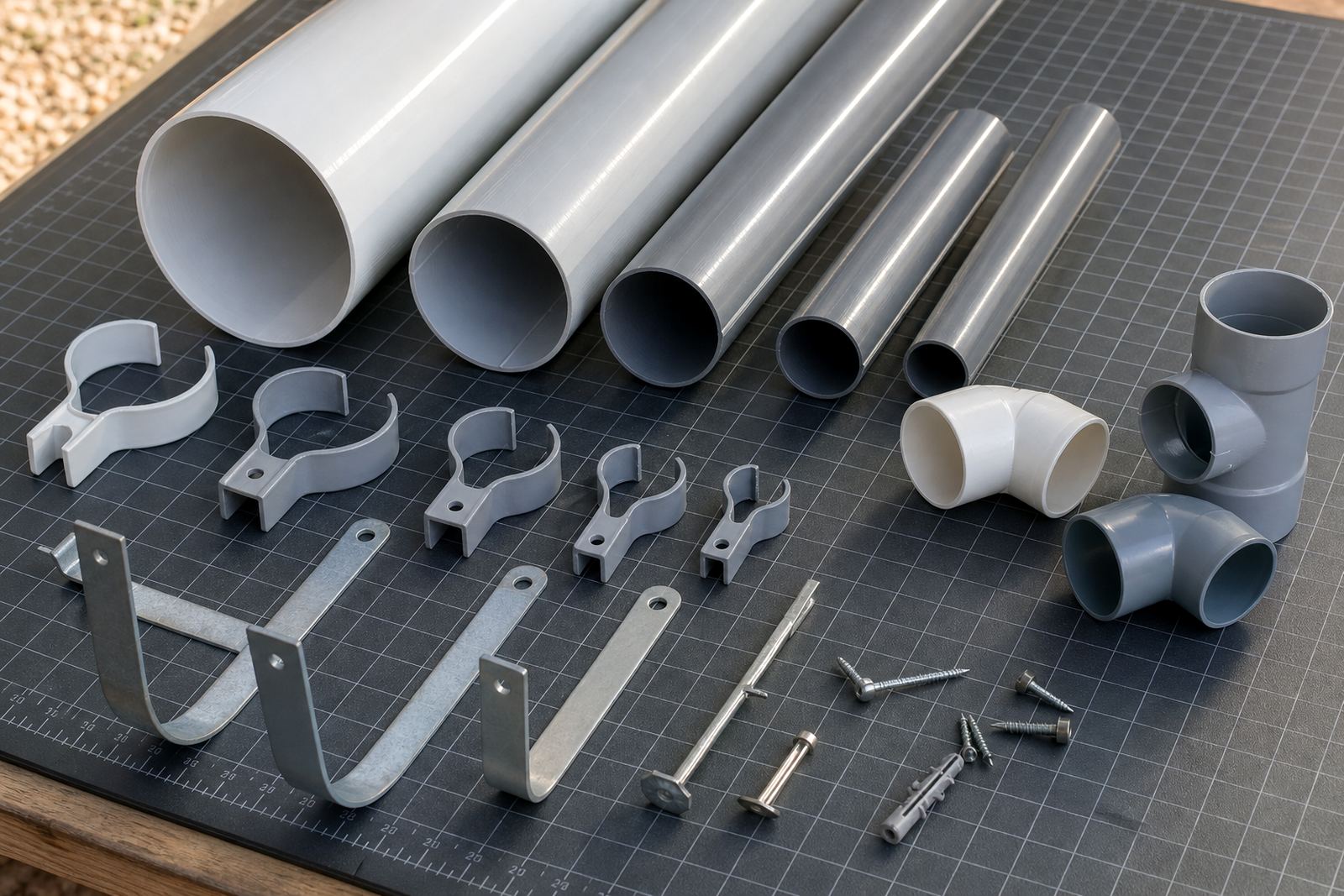
In local work, downpipes are usually selected in sizes that suit typical residential and light commercial roof areas. Smaller pipes may work on short runs, but they fill quickly when a storm hits hard. Larger pipes move more water and are often a safer choice where the roof area is broad, the pitch is steep or the site gets very intense rain.
- Smaller sections suit compact roof areas and short gutter runs with low discharge volume.
- Mid-size pipes are often used on standard houses, patios and smaller walkways.
- Larger pipes are better for bigger roof planes, longer gutter runs and places that get heavy downpours.
- Where water is collected from more than one roof section, the take-off layout must be checked before the pipe size is finalised.
In practice, the right size depends less on habit and more on how much roof area feeds the pipe. A neat installation can still fail if the pipe is chosen only by eye.
What happens when the pipe is too small
An undersized downpipe usually shows up in the first proper storm. Water slows at the outlet, rises in the gutter and may overflow at the lowest point or over the fascia line. In some cases the outlet area gets dirty faster because leaves and grit collect where the water is forced through a tight opening. If the building sits under trees in Randburg or the suburbs around Roodepoort, that buildup can happen even quicker.
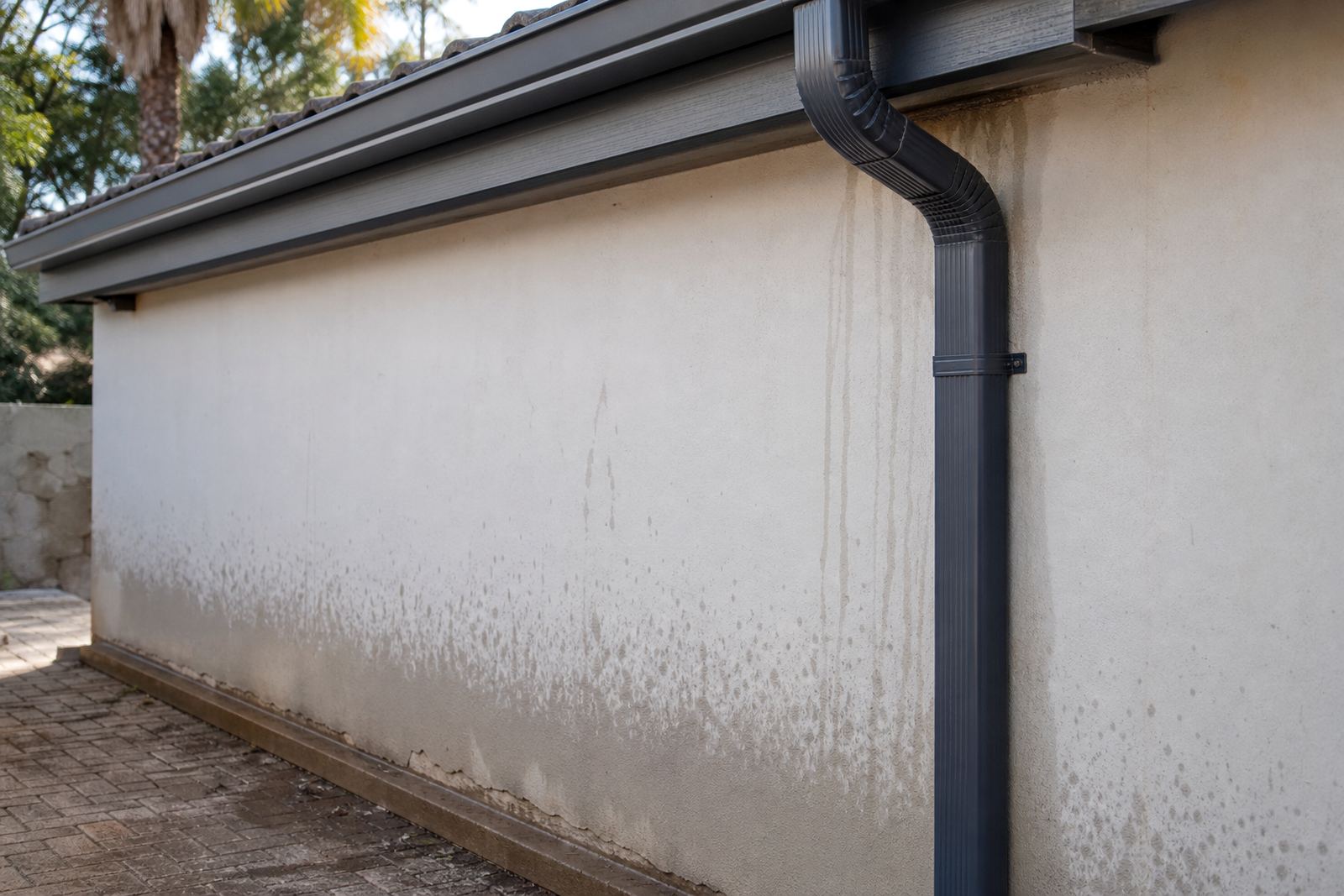
When overflow keeps happening, the issue is not only messy. Water can stain walls, soak paving at the base of the building and weaken the support timber or fascia board edge over time. On commercial sites, repeated overflow can also create slippery walkways and damage cladding near the roofline. A pipe that looks neat on day one can become a maintenance problem if it is too small for the actual runoff.
Spacing, brackets and the pull of a full pipe
Downpipes need proper fixing points so they stay straight and hold their shape under load. Brackets should be set at sensible intervals, with enough support to stop the pipe from twisting or pulling away from the wall when it is full of water. Poor spacing often shows up as bowing, rattling in wind and stress at the joints.
For a clean finish, the pipe line should be checked for plumb, the bends should be kept tight and the brackets should be fixed into solid material. The team fitting the system must also allow for movement in heat and sun, because plastic-steel composite parts can expand slightly. On exposed facades in Pretoria or Cape Town, that small detail helps the installation stay neat over time.
- Use enough brackets to keep the pipe steady in wind.
- Fix into sound masonry or framing, not weak plaster alone.
- Keep bends and offsets as short as possible.
- Make sure joints are sealed and aligned before final fixing.
Maintenance that keeps flow steady
Even a correctly sized pipe needs simple maintenance. Leaves, sand and roof grit can collect at the gutter outlet, especially after dry spells followed by heavy rain. A quick clean of the gutter, outlet and first section of the downpipe helps water move freely. On coastal properties, salty air and windblown debris can also leave a film on surfaces, so inspection matters more than people expect.
During a maintenance visit, check for loose brackets, cracked elbows, sagging sections and signs that water is escaping at a joint. If the pipe discharges onto a lower roof, paving or soakaway area, make sure the water is not being sent back toward the building. Small repairs done early are far cheaper than replacing a soaked fascia section or repainting a stained wall.
A practical local example from Kya Sand to a roof in Durban
A builder in Kya Sand may fit one pipe size on a townhouse block in Randburg, then choose a different layout for a coastal home in Durban. The Durban roof may need extra allowance because storms can arrive hard and fast, and the wind can push rain into the gutter from odd angles. In contrast, a Pretoria home with a shorter roof run might still need more than one outlet if the section feeding each pipe is wide.
That is why site measuring and material takeoff matter before ordering. The roof shape, the outlet position, the fascia line and the discharge point all affect the final size. For builders and homeowners alike, the safest approach is to size the pipe to the roof, not the other way round.
- Measure the roof area feeding each outlet.
- Check gutter fall toward the outlet before choosing the pipe.
- Allow for debris, wind and local rainfall patterns.
- Keep the full run of pipe and fittings matched in size.
When to ask for a fresh size check
If a gutter system keeps overflowing, drips at the fascia or leaves wet patches below the wall, the downpipe size should be checked before anything else. The same applies where a roof has been extended, a patio added or a new section tied into an older line. A change in roof area can overload a pipe that used to be fine.
For homes, sectional housing and light industrial buildings, a size review also helps when replacing old metal parts with plastic-steel composite gutters and fascia boards. The newer parts still need proper sizing, fall and support. If the layout is sound, the system moves water cleanly and stays easier to look after.