
What that banging or rattling is usually telling you
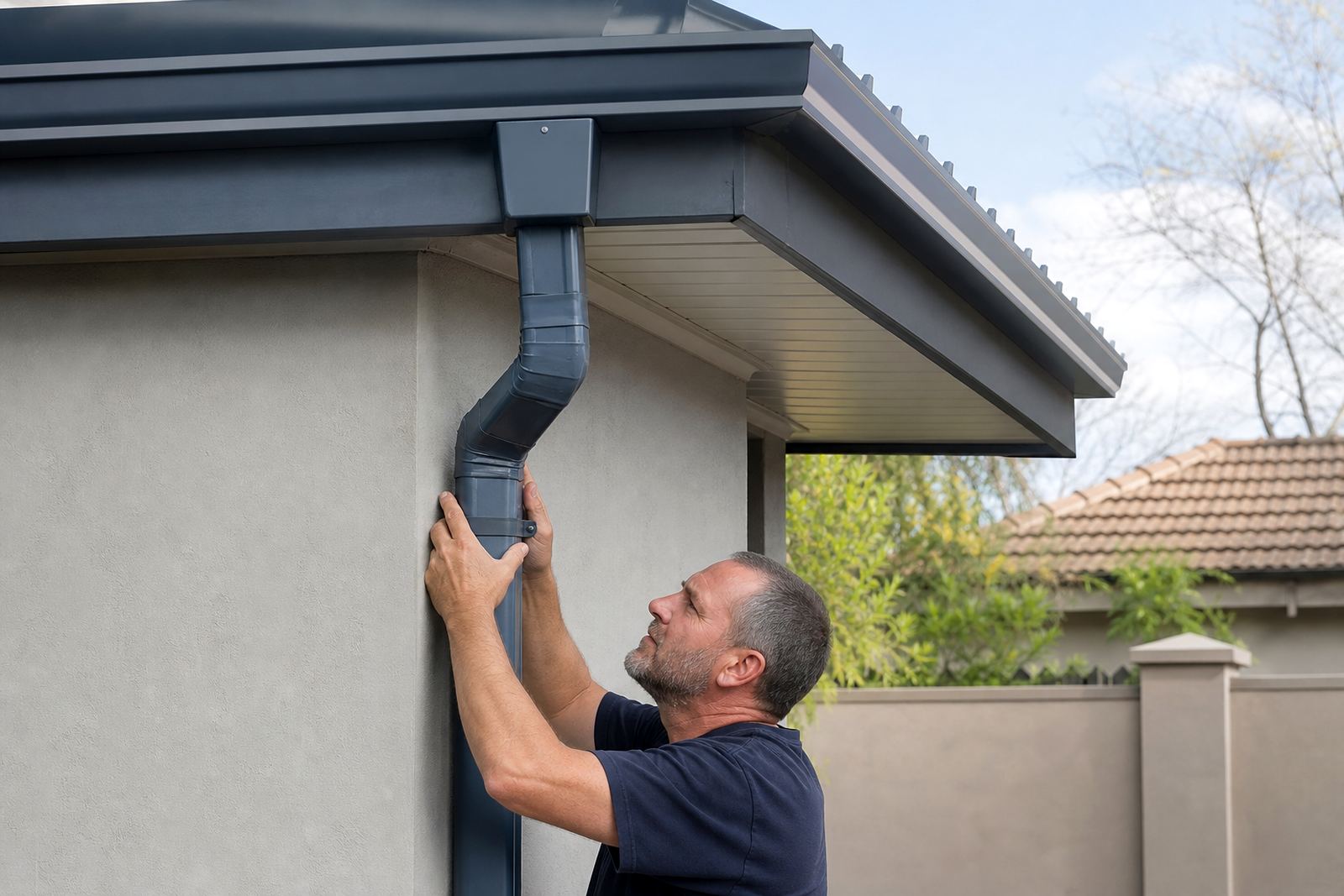
Noise is often the first sign that a gutter is moving when it should stay still. In heavy rain, a loose bracket can let the front edge lift and slap back against the fascia board or roof edge. A short section of downpipe with too few clips can also tremble as water rushes through it, especially on double-storey walls where the pipe is exposed to wind.
Sometimes the sound is not a knock at all but a harsh splashing or drumming. That usually means the gutter is filling too quickly in one section, then releasing water in a surge. On homes in Kya Sand and other parts of Randburg, this is common where a steep roof plane feeds a small run of gutter, or where debris has narrowed the channel and water has nowhere gentle to travel.
Loose supports and brackets that have lost their grip
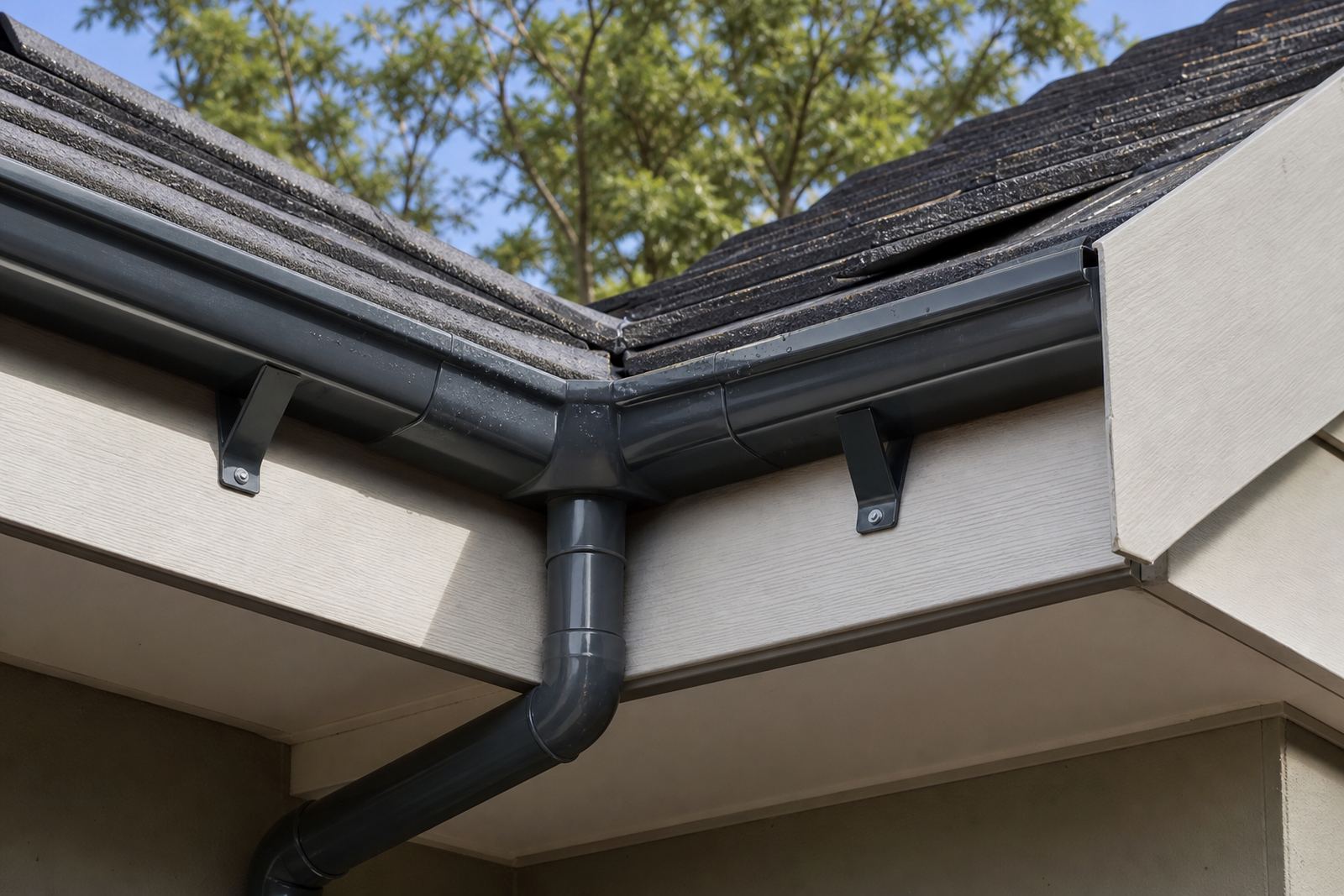
Gutters depend on firm fixing points. If the brackets are spaced too far apart, or the fasteners have pulled from timber that has softened with age, the profile begins to flex. Once that movement starts, the noise gets worse with each storm. In coastal areas, salt in the air can speed up corrosion on screws and clips, while inland dust and heat can dry out seal points and leave fittings slack.
- Check for visible sagging between brackets.
- Look for screws that have backed out of the fascia board.
- Watch for sections that lift when water hits them.
- Inspect joints where the gutter changes direction, these often rattle first.
Working at roof level should be left to competent people with the right access equipment. A quick look from the ground can show obvious movement, but proper tightening, resealing or refixing needs safe access and care.
Poor falls can turn water into a noise problem
Falls matter because water must move steadily to the outlet, not pool in the line. If the run is too flat, water sits in the gutter and sloshes when the next burst of rain arrives. If the slope is uneven, the water can gather in one low point and then dump suddenly towards the outlet, making a loud rush or gurgle.
A correct fall should be even across the run, with enough drop to keep water moving without making it race too hard. For longer spans, the line may need more than one outlet or a break in the run so water is not forced to travel too far in one direction. On commercial roofs, where wide sections meet parapets or box gutters, the sound of trapped water can be heard inside offices or workshop spaces during a storm.
When one roof area feeds too much water into one point
Concentrated discharge is a common cause of sudden gutter noise. If two roof planes empty into one short section, the impact can sound like repeated hammering during a downpour. The problem is not just the noise, it also increases overflow risk and can push water over the front lip or back under the roof edge.
This is where local site conditions matter. In areas such as Pretoria and Polokwane, sudden summer storms can put a lot of water through a system in a short time. In Durban, high rainfall and humidity can expose weak joints, while Cape Town homes may see noise from wind driven rain entering at awkward angles. A system that works quietly in light rain may behave very differently in a hard storm.
- Check whether two slopes discharge into one small gutter run.
- Confirm that downpipes are large enough for the roof area they serve.
- Look for splash marks where water overshoots the outlet.
- Consider whether a longer roof edge needs an extra drop point.
Blocked outlets, debris and the sound of water fighting for space
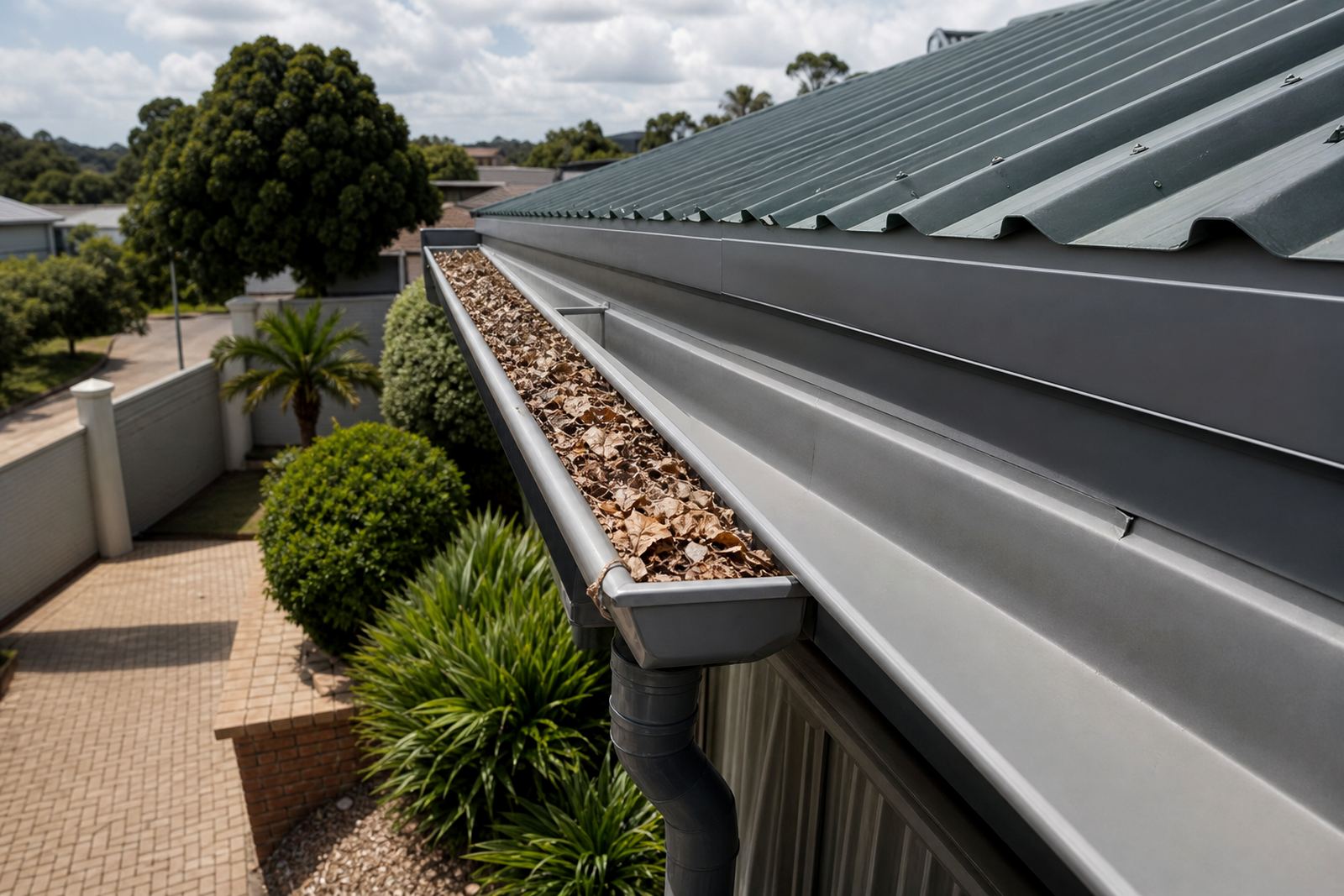
Leaves, seed pods, sand and broken roofing material can narrow the outlet and slow drainage. When that happens, the gutter begins to hold water and the sound changes from a clean flow to a harsh gurgle. In older systems, small debris can also collect around joints and create a ticking or tapping sound as wind pushes the loose pieces around.
Maintenance visits should include clearing the line, checking end caps, and making sure outlets are open and fixed properly. Fascia boards need to stay straight and secure, because a bowed board can alter the gutter line and create shallow pockets that trap water. Where gutters are already aged, a replacement section may be better than repeated patching, especially if the material has become brittle or distorted.
A Randburg example that sounds familiar
A homeowner in Kya Sand reported a loud clatter every time afternoon rain arrived, strongest along the front of the house nearest the driveway. The gutter looked intact from the ground, but the noise was caused by a loose section of support combined with a short run that received water from two roof areas. The outlet was also partly restricted by old debris, so water built up and discharged in bursts.
After the supports were reset, the line was given a better fall and the outlet was cleared, the system settled down. The change was not dramatic to look at, but the sound dropped from a sharp rattle to the quiet rush that most gutters should make. That sort of fix is typical on residential and light commercial roofs where the problem has grown slowly over time.
What to do before the next storm hits
Gutter noise is not something to ignore if it appears suddenly or gets louder with each rain. It can point to movement, poor drainage or an overload at one point on the roofline. A proper check should cover the gutter run, brackets, joints, outlet positions and the downpipe route, then match what is found to the size of the roof and the way rainwater reaches it.
- Look for fresh marks on the fascia board or wall below the gutter.
- Listen for noise at the same point each time it rains.
- Check whether water is overflowing at a corner or outlet.
- Arrange a safe inspection if the gutter is high or difficult to reach.
A quieter gutter line usually starts with the fundamentals being right: firm anchor points, correct capacity, steady falls and routine clearing. When those parts are right, gutters move water without the banging, rattling or surging that draws attention to them.