
Where the water should end up
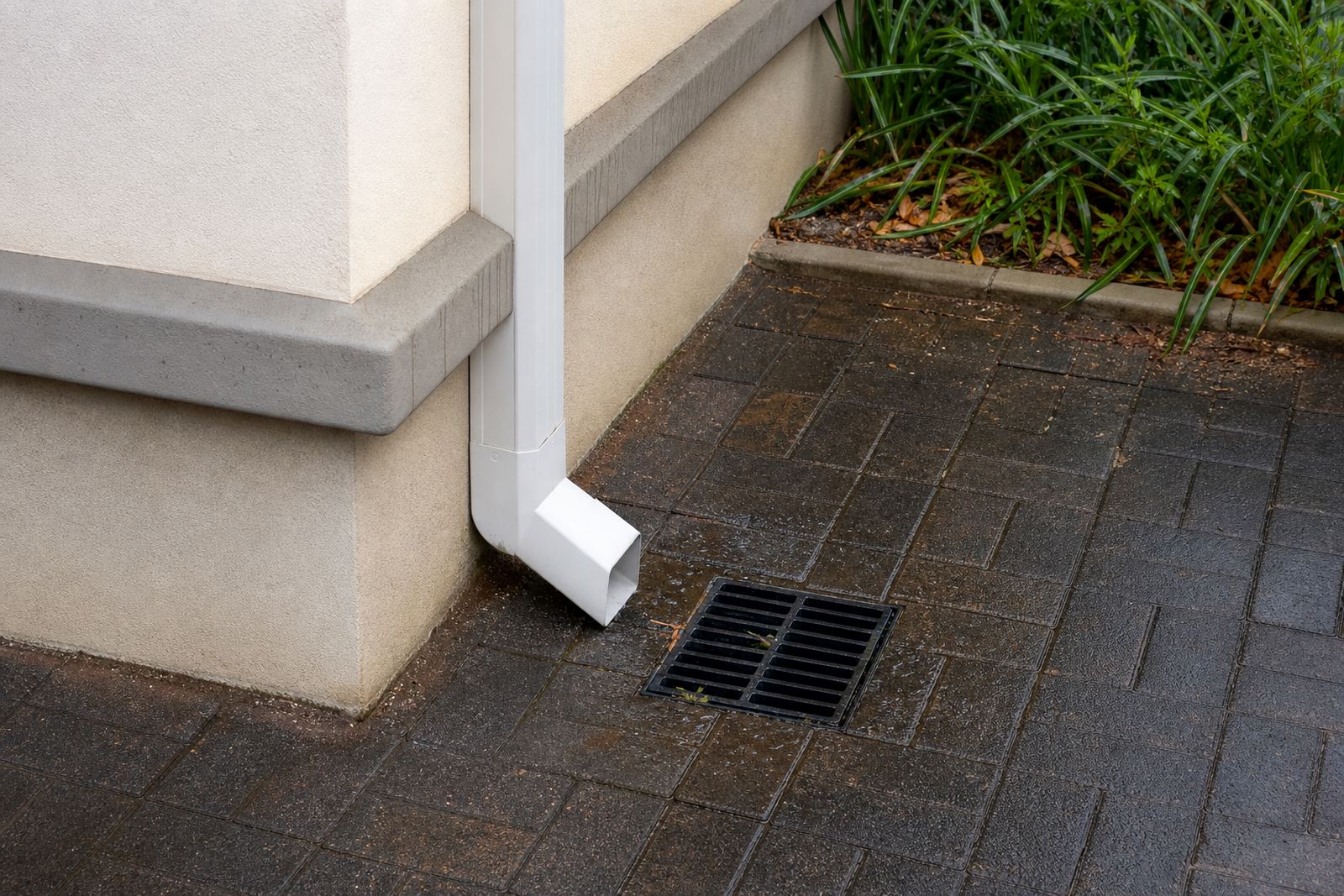
A gutter system is only doing half the job if the downpipe lets water out too close to the building. Stormwater should be directed to a suitable ground drainage arrangement so it moves away from the structure and does not sit beside the foundation. On many homes, the best outcome is a short run into a drain, soakaway, swale or other approved stormwater point, depending on the site and local municipal rules.
In practice, the discharge point must suit the slope of the ground, the size of the roof, and how quickly rainwater collects during a storm. A flat yard in Randburg will not behave the same as a sloping stand in Durban, where heavy rain can arrive fast and leave little room for pooling. That is why a proper layout matters more than just fitting a pipe and hoping for the best.
- Keep discharge clear of walls, doorways and garages
- Guide water away from paths where people walk daily
- Allow for overflow during intense rain
- Match the outlet to the site slope and drainage layout
The first metre after the downpipe
The lower end of a downpipe deserves more attention than many people give it. If the discharge lands on bare soil, water can dig a shallow trench, splash mud onto walls and wash away bedding around paving. Where the pipe ends beside a home, the ground often becomes soft first, then the problem spreads outward.
Builders usually allow for a short controlled run at the base of the downpipe. This may be a rigid outlet, a fitted bend or a connection into a stormwater line, provided the routing is sound and the fall is suitable. The aim is not to let water hit the ground in one spot and disappear on its own. It should move on promptly.
- Check that the outlet does not point toward the house
- Keep the end of the pipe stable so it does not shift after rain
- Avoid loose stones that block the outlet or trap debris
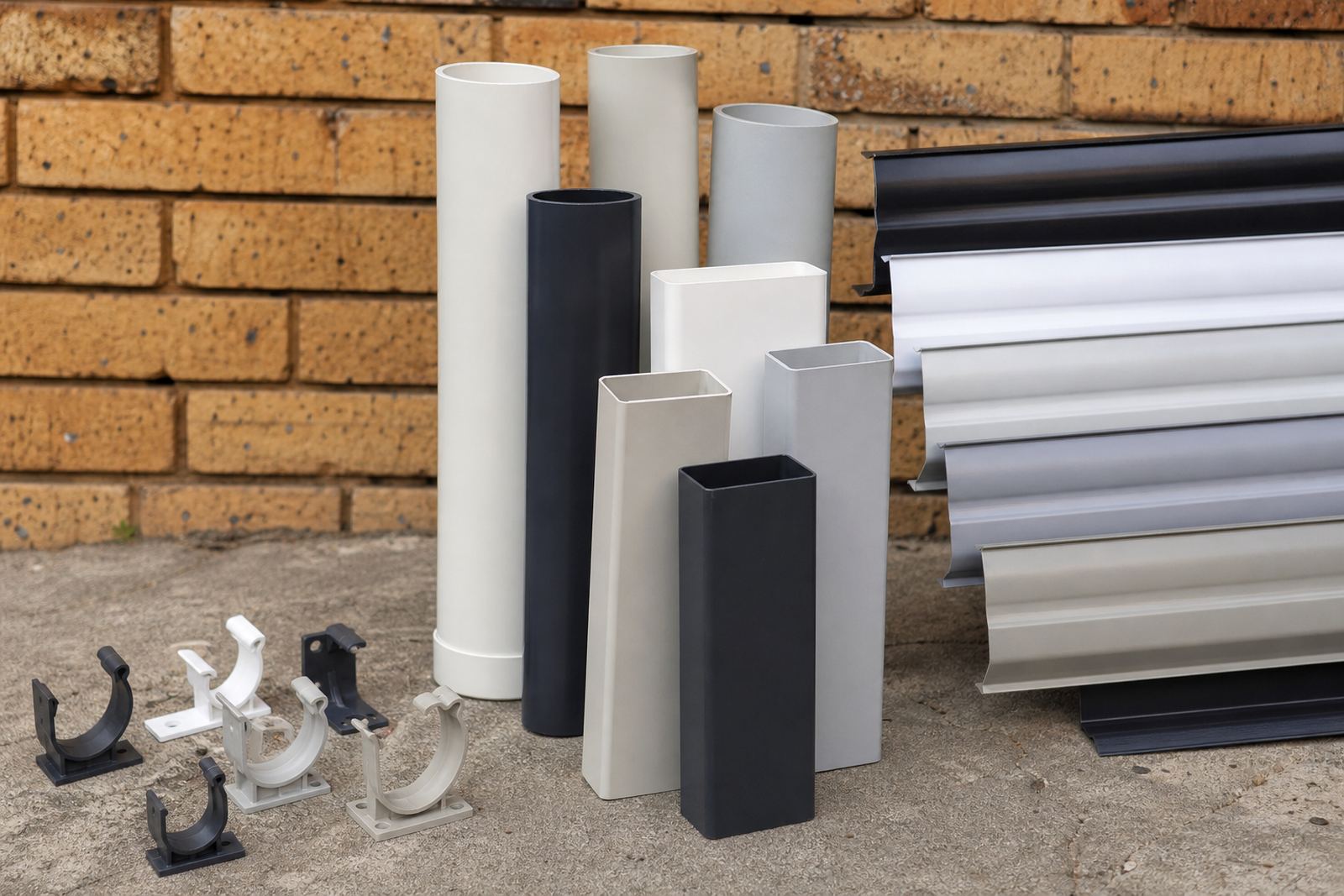
- Use fittings that suit the pipe size, whether square or round
Falls, levels and the pressure of a hard rain
Stormwater works best when the system has the correct fall from the roof into the gutter, then from the gutter into the downpipe and out again at ground level. If the roofline pitch or gutter slope is poor, water can sit in the channel, overflow at the front edge or rush to one end and overwhelm the outlet. That is when staining, drips and overflow marks start showing up on fascias and wall surfaces.
On a practical level, the installer needs to think about the whole route. A long gutter run may need more than one downpipe. A deep valley area may need extra attention because water collects there quickly. In places like Pretoria and Polokwane, a short but intense storm can send a large volume down the roof in minutes. The discharge point must handle that surge without backing up.
- Long roof runs often need more than one outlet
- Valleys and roof junctions can load the system quickly
- Water must travel away, not sit at the low point
- Correct levels help prevent overflow at corners and joins
Ground conditions change the answer
No two stands behave the same. Clay soil, compacted fill, landscaped beds and paved courtyards all respond differently to stormwater. In some Kya Sand and Randburg properties, water runs off hard surfaces very fast and collects against boundary walls or driveways. In coastal areas like Durban and Cape Town, damp air and frequent rainfall mean poor discharge points can stay wet for long periods, which is not ideal for paving edges, walls or timber trim near the roofline.
That is why drainage must be read on site, not guessed from a drawing. A builder or homeowner may want a neat outlet in one place, but the soil and slope may call for a different solution. Where water is released onto the ground, the area should be stable, free draining and set away from the foundation line. If the site is already waterlogged after rain, the discharge route needs extra care.
- Clay ground holds water longer than free draining soil
- Paving can send runoff to the same low point every time
- Coastal humidity makes slow drying a bigger issue
- Boundary walls and driveways need special attention
Brackets, clips and the parts that keep things steady
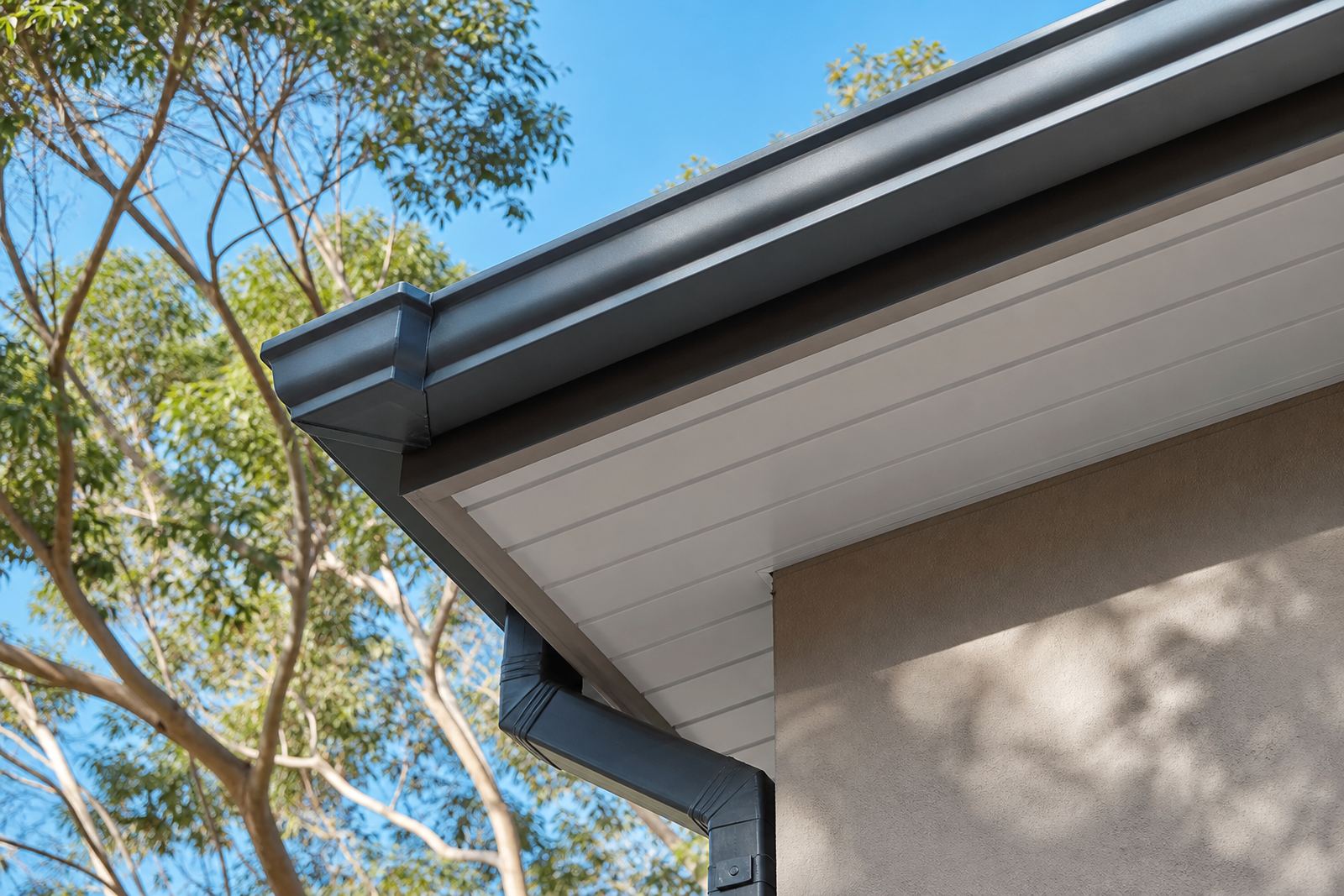
Downpipes and gutters rely on proper support. If brackets are spaced too far apart or fixed poorly, the pipe can pull away from the wall and the discharge point moves out of alignment. That creates leaks at the joints and can leave the outlet directing water onto the wrong patch of ground.
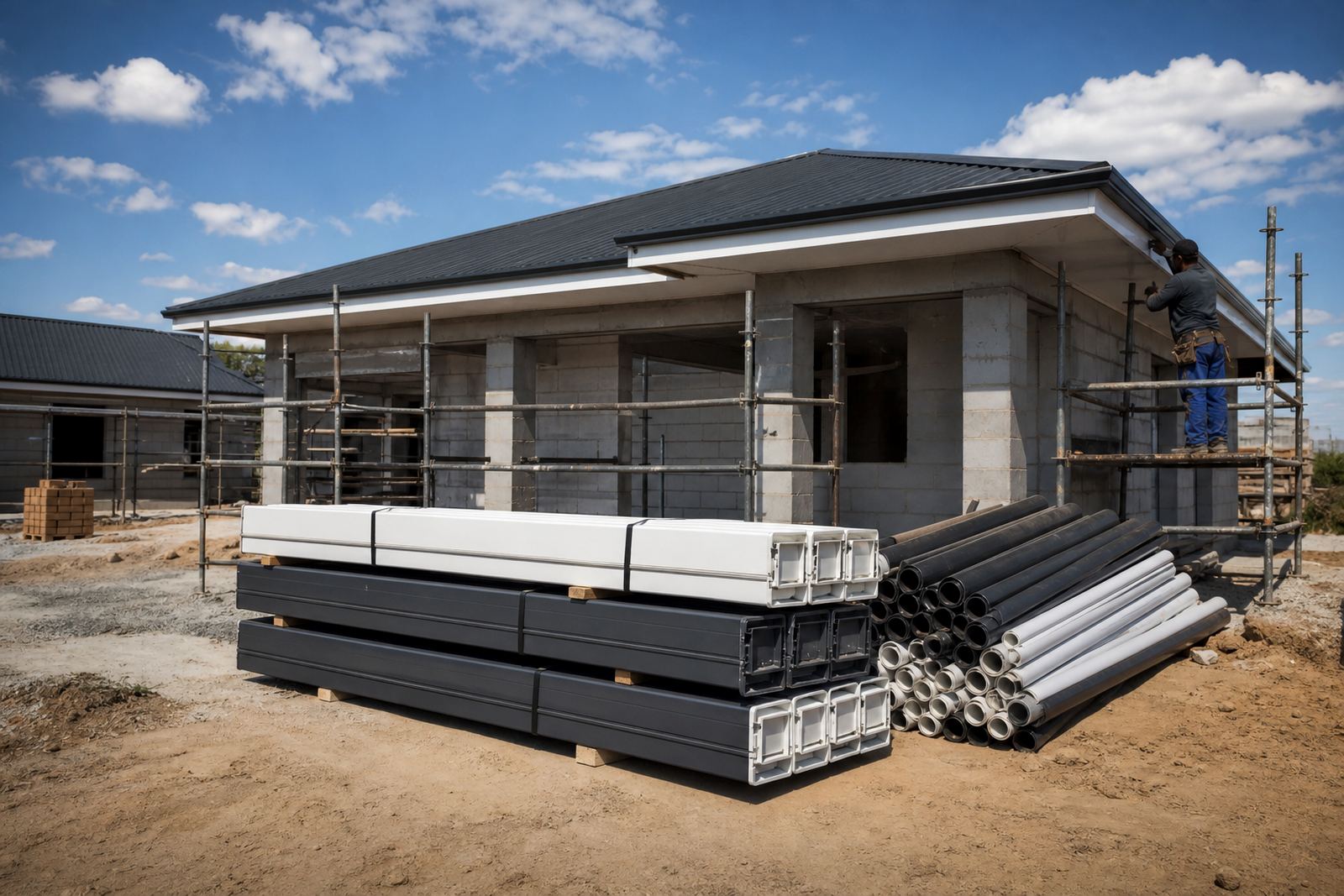
Well placed brackets hold the pipe straight, protect the joints and help the system stay put during wind and heavy rain. The same applies to fascia boards, which must carry the load of the gutter securely. Where the roofline has ageing timber or uneven masonry, the fixing points need checking before any new gutter section is installed. Roofing work at height must be done safely by competent people, with proper access equipment and careful handling.
- Use enough bracket support for the pipe length
- Check the wall fixing points before installation
- Keep joints aligned so the discharge path stays true
- Inspect fascia support where gutters are fixed to the roof edge
Keeping the discharge path clean
A discharge point can fail simply because it has been neglected. Leaves, grit and roof sediment collect in gutters and wash toward the outlet, especially after first rains. If a downpipe is partially blocked, water slows down, backs up and spills over the gutter edge or leaks from a joint. In a busy industrial area like Midrand or Roodepoort, airborne dust and roof debris can build up faster than expected.
Regular maintenance is straightforward but important. Clear the gutter line, check the outlet and inspect the base of the downpipe for erosion, blockages or movement after storms. A leak check can reveal small issues before they turn into damp patches or washout around paving. On homes with trees nearby, more frequent checks are usually needed because leaves and seed pods settle quickly in the system.
- Remove leaf build-up before the rainy season
- Check for standing water after rain
- Look for staining at joints and corners
- Inspect the ground near the outlet for washout or pooling
A Randburg example that shows the difference
On a freestanding home in Randburg, a long eaves line was sending runoff from two roof faces into one downpipe. The outlet ended beside a paved path, and after heavy rain the water crossed the path and pooled near the wall. The gutter itself was sound, but the discharge point was wrong for the site.
After reviewing the roofline and the ground levels, the outlet was redirected to a more suitable drainage arrangement further from the house. The brackets were checked, the gutter fall was corrected where needed and the base area was kept clear so water could move away cleanly. The change was practical rather than dramatic, but it made the yard easier to use and reduced splashback on the wall. That is usually what good stormwater discharge does best: it stays out of the way and keeps the property drier.
Across Johannesburg, Pretoria, Durban, Cape Town and Polokwane, the main rule stays the same. A downpipe should not just carry water off the roof, it should release it where the site can handle it. If the discharge point is wrong, the whole gutter system works harder than it should.