
Why shape matters more than people think
A downpipe does one job, but the shape changes how it fits into the building line, how it handles debris and how easy it is to clip it to walls or posts. On a house in Randburg with a straight façade and neat fascia boards, a rectangular pipe often sits closer to the wall and looks tidy. On a warehouse in Midrand or a bungalow in Durban, a round pipe can suit curved routes, tighter corners or older roof details where the drainage line has to move around obstructions.
Shape also affects how installers plan the fall from the gutter outlet to the stormwater point. The gutter still needs the correct slope, the outlets still need to be sized properly and the brackets must hold the pipe firmly. If the pipe is undersized or badly placed, water can back up at the outlet during a summer storm and spill over the eaves.
Round downpipes for neat routes and compact wall spaces
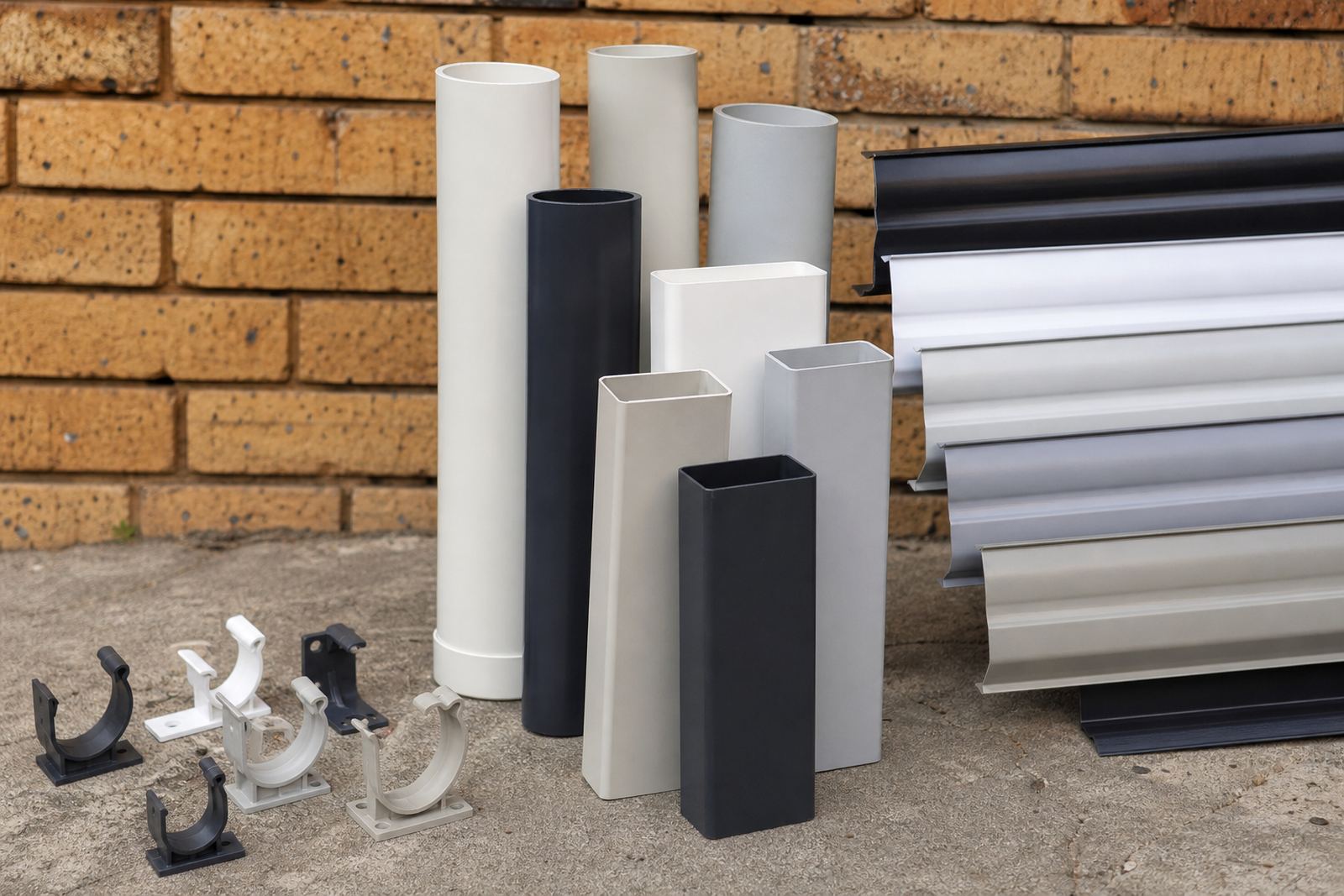
Round downpipes are a familiar choice on many residential roofs because they are easy to run in a straight line and they suit roofs with regular outlet positions. They usually present a smaller visual footprint and can work well where the pipe drops beside a column, through a narrow passage or down a side wall with limited clearance.
They are also handy where the route needs a few bends to reach a drain, soakaway or yard channel. A good installer will keep bends gentle and keep the bracket spacing even so the pipe does not rattle in wind. In coastal towns like Cape Town or Durban, regular cleaning matters too because salt, dust and leaf matter can build up at the first bend.
- Good for compact wall runs and straight drops
- Useful where outlets need light directional changes
- Often chosen for homes with a neat, understated finish
- Needs proper bracket support at intervals and near joints
Rectangular downpipes for square lines and higher flow routes
Rectangular downpipes suit modern wall profiles, box gutters and fascia lines where straight edges matter. They can match the geometry of the building better, especially on commercial façades, new homes or carports with clean lines. When the outlet from the gutter is wide enough, a rectangular pipe can move water efficiently and keep the look consistent from roof to wall.
These pipes are often selected where the system has to handle a larger roof area and a direct route to ground level. On larger buildings in Pretoria or Polokwane, the drain route may need a more deliberate layout with clean offsets and secure brackets to keep the line straight. If the pipe is too small for the roof size, it may not discharge fast enough in a heavy downpour.
- Matches square fascia and modern roof edges
- Fits commercial façades and larger roof areas
- Works well where a straight, boxy finish is preferred
- Needs careful outlet sizing and fixed support at corners
Matching pipe shape to gutters, fascia boards and falls
Downpipe choice should not be made on shape alone. It must match the gutter profile, the fascia board line and the way water moves off the roof. A neat fascia board makes a clean mounting point for brackets, while the gutter outlet sets the discharge point. If the roof pitch is low, the system still needs enough fall in the gutter to keep water moving toward the outlet without pooling.
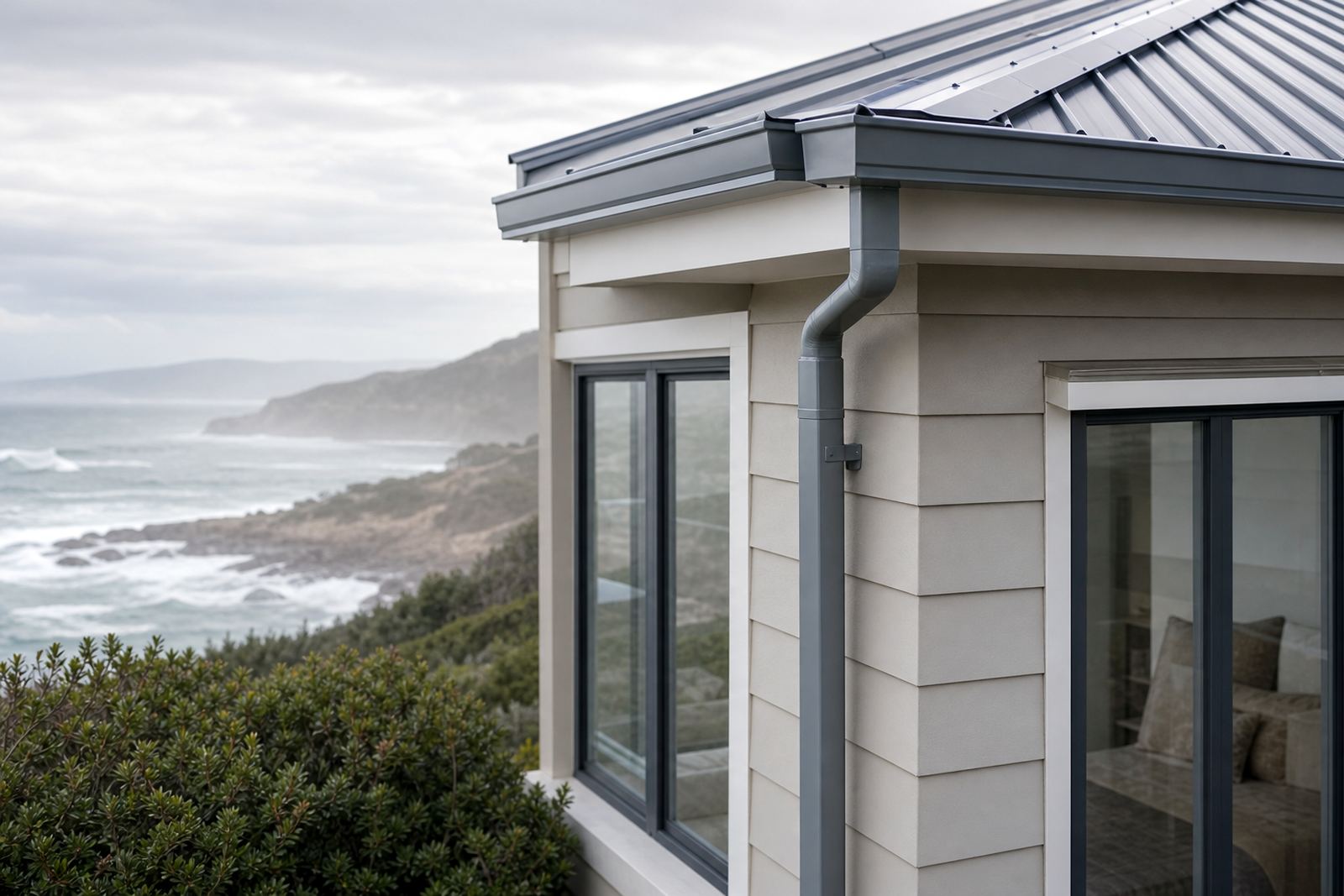
For plastic-steel composite systems, the pipe shape should also suit the fixing method. Rectangular pipes often line up neatly against fascia boards, while round pipes can be easier to rotate and adjust around existing walls. The key is keeping the installation secure, straight and free of stress at the joints. A pipe that is forced into position may split later or pull loose in strong wind.
What competent installers check on site
Roofline work at height must be done safely by competent people. That means proper access, stable ladders or platforms, and careful handling around slippery tiles, sharp metal edges and power lines near the property boundary. The shape of the downpipe affects the work sequence too, because the crew has to check wall clearance, outlet position, and how the pipe will terminate at ground level.
On a typical installation in Johannesburg, the installer will measure the gutter outlet height, confirm the run to the drain point and check whether a shoe, bend or offset is needed at the bottom. In some cases the pipe must run past paving, a driveway or a boundary wall, so the brackets and joints need to be set before the pipe is fixed permanently.
- Check outlet height and wall clearance before cutting pipe
- Use the correct brackets for the pipe shape and weight
- Keep joints aligned so water does not catch on the lip
- Allow a clear discharge point at ground level or into a drain
Maintenance that keeps the flow steady
Downpipes do not need complicated care, but they do need regular attention. Leaves, seed pods, dust and roof grit can collect where the gutter feeds the pipe, especially after windy weather or autumn leaf drop. A blocked pipe can push water back into the gutter and then over the edge, which often shows up as staining on walls or damp patches near the foundations.
For homeowners in Kya Sand, Randburg and builders working on townhouses or offices, the maintenance routine is much the same: inspect the outlet, check the clips, flush the line and look for cracked joints. If a pipe section is dented or sagging, replace it before the next storm. Coastal humidity can also age fittings faster, so exposed areas need a regular once-over.
- Clear the outlet and first bend after windy weather
- Look for loose brackets or joints that have shifted
- Watch for overflow marks on walls and fascia boards
- Inspect more often near trees and in coastal areas
A practical layout for a Randburg home
Consider a family home in Randburg with a tiled roof, long eaves and a boundary wall close to the side passage. A round downpipe may be the better fit on the narrow side because it can run close to the wall and turn neatly toward the yard drain. At the front elevation, where the façade is more square and visible from the street, a rectangular pipe can sit closer to the fascia board and keep the finish tidy.
That mix is not unusual. The best drainage layout often uses different shapes on different sides of the same building, depending on the route, outlet size and visual line. What matters is that each pipe is supported, the gutter fall is correct and the discharge path is kept open. A good roofline plan saves trouble later, especially when summer rain arrives fast and hard.