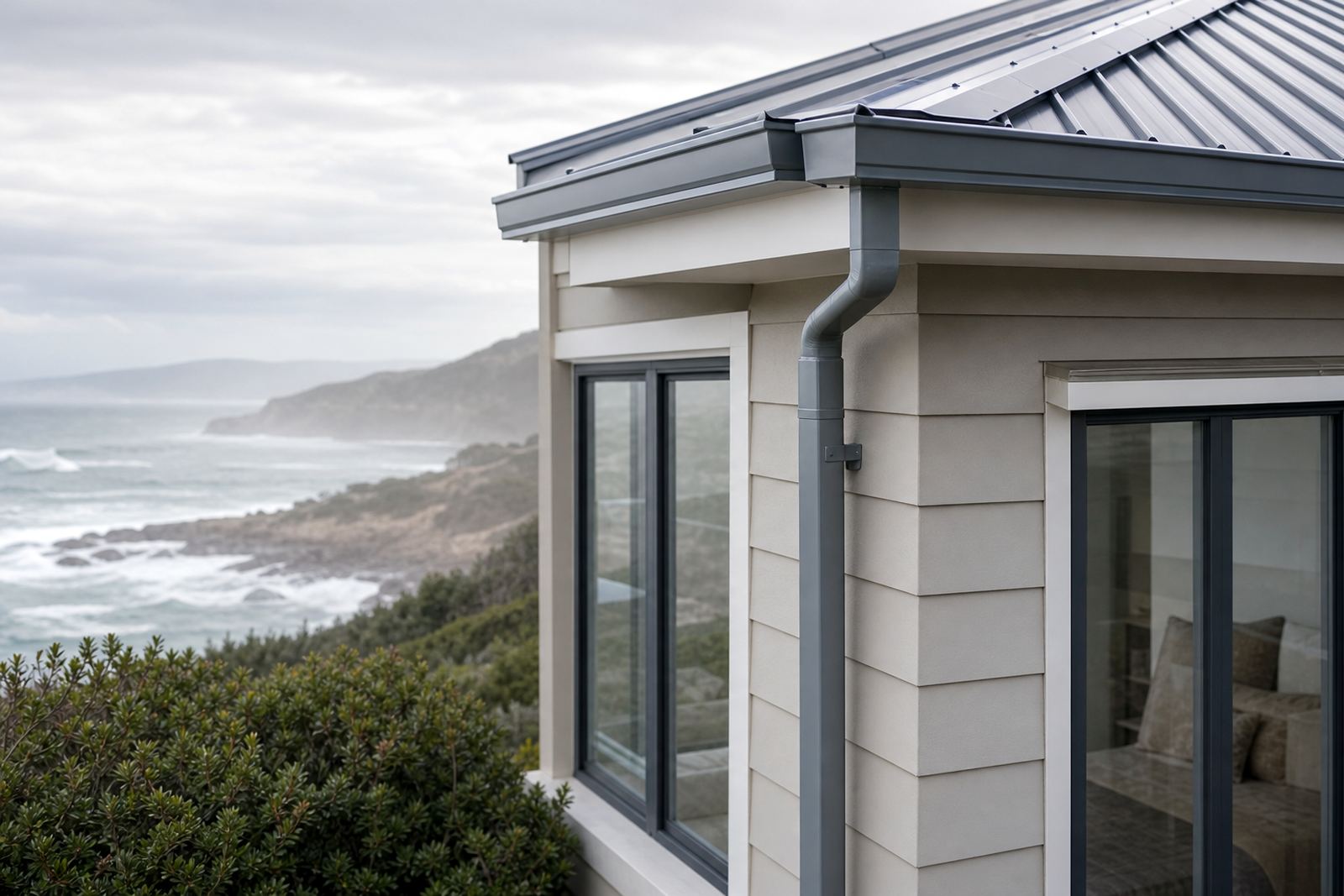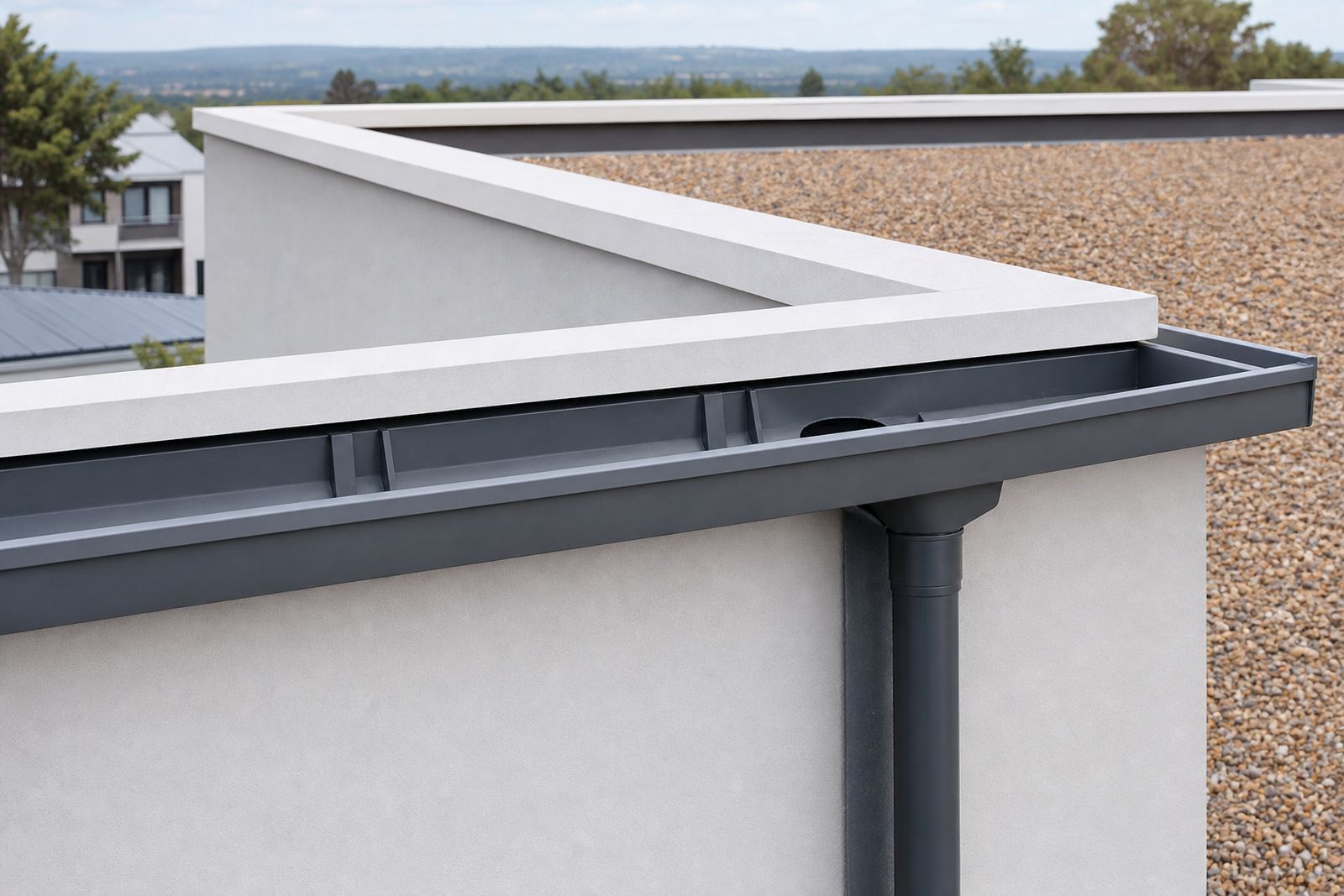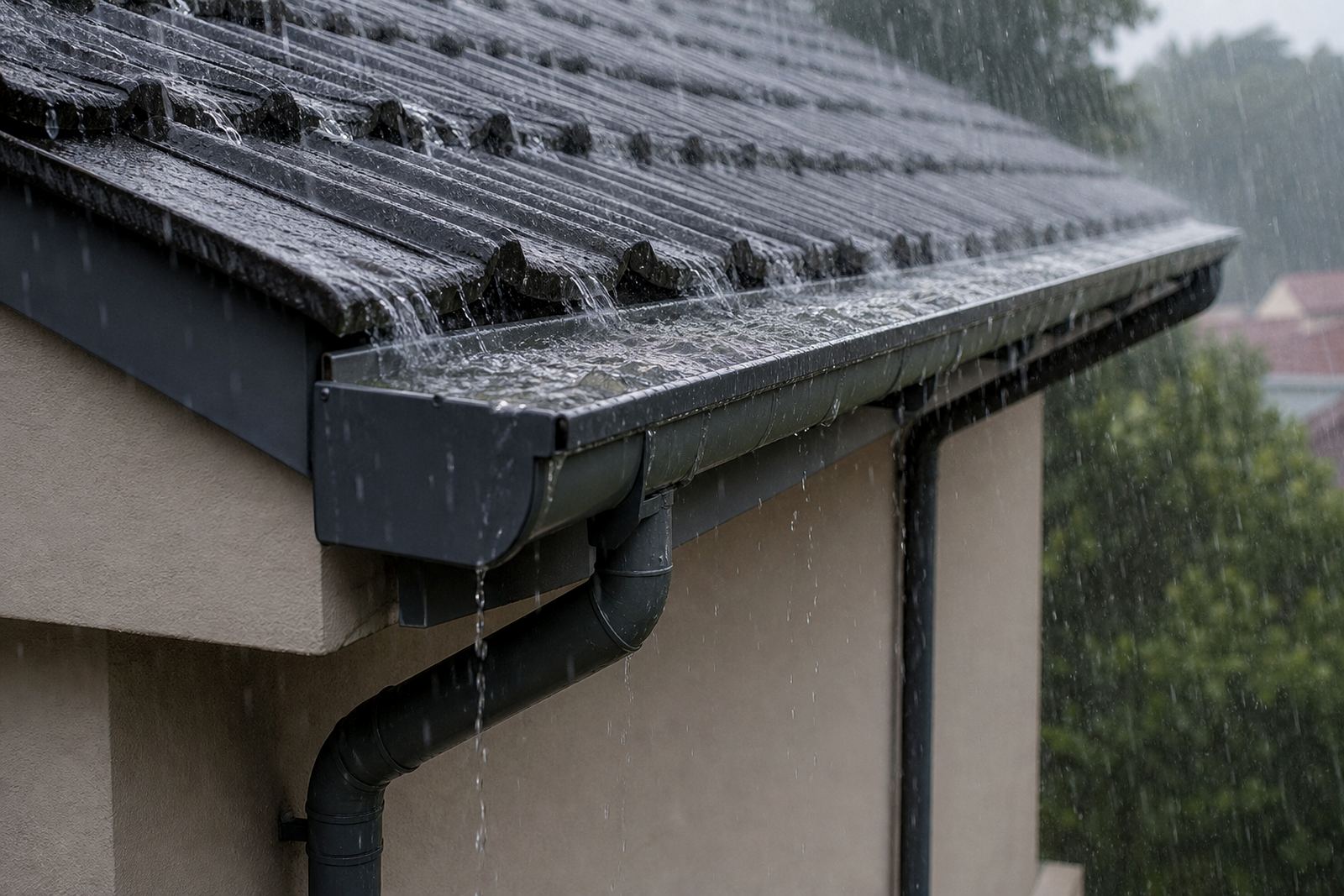

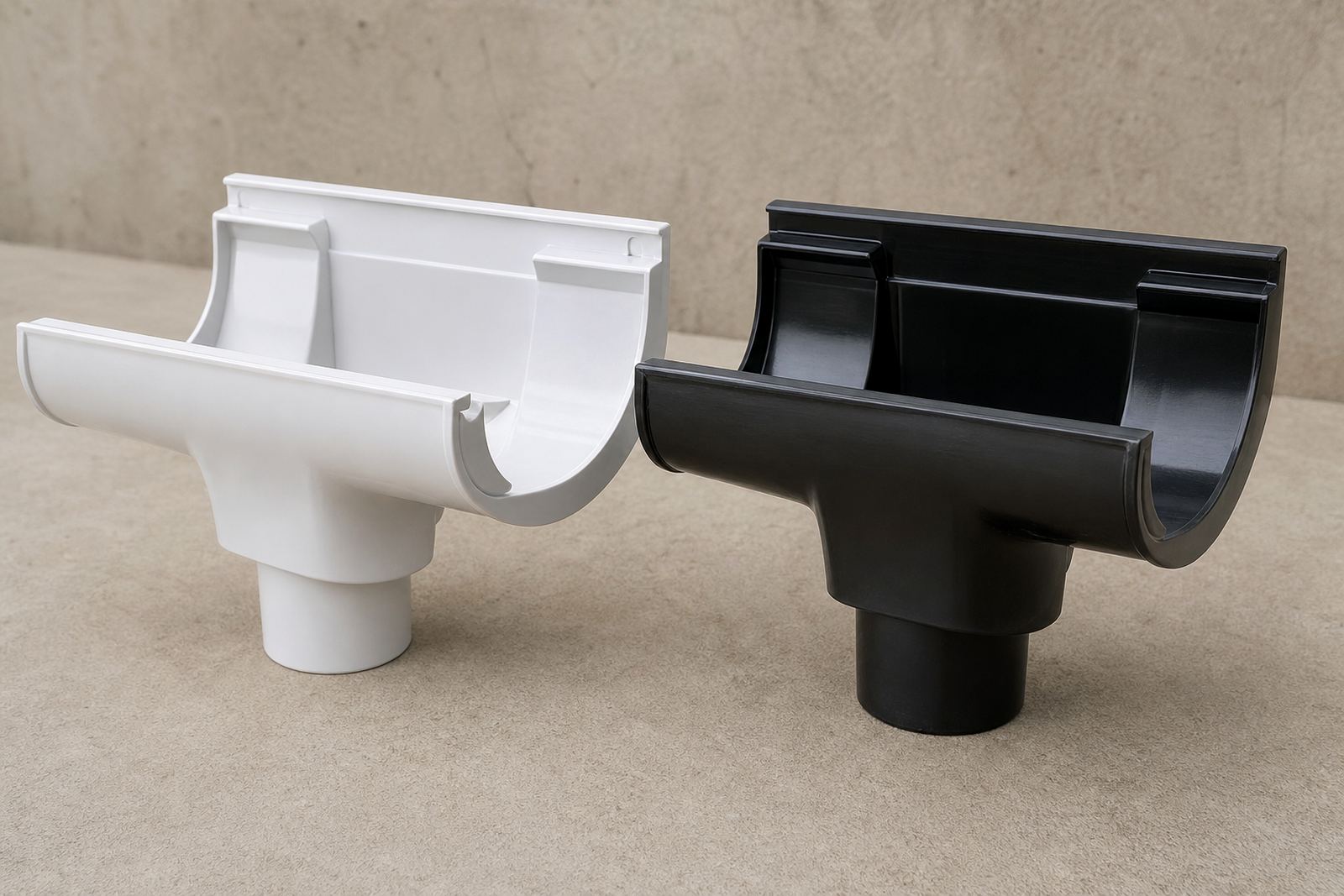
Two outlet styles, two very different roofline layouts
When a gutter run needs to feed a downpipe, the outlet is the point where water leaves the channel and drops into the pipe. In simple terms, there are two common ways to do it: an internal outlet, where the opening sits inside the gutter profile, and an external outlet, where the discharge point is formed on the outside edge or face of the run. Both can work well, but they suit different roof shapes and fixing methods.
On a clean straight roof edge, an external outlet can be neat and easy to line up with the fascia. On a roof with a boxed or deeper profile, an internal outlet often gives a tidier finish because it sits more neatly within the gutter line. The best option is not just about appearance. It also affects how the gutter is bracketed, where the fall starts, and how fast water clears during a summer storm.
In Kya Sand and across Randburg, installers often see roof edges that are not perfectly level, especially on older homes and altered commercial units. That means the outlet choice has to work with the actual building not just the drawing.
How profile shape changes the choice
Gutter profile matters a great deal. Half round, ogee style and square front profiles all behave differently when the first point of discharge is cut into the run. A shallow profile may suit a lower outlet opening, while a deeper profile can give more room for water to move without splashing over the edge.
With a composite gutter and fascia system, the outlet area must be cut and sealed carefully so the surrounding material stays firm. The installer also needs to keep the opening clear of the roof covering and allow for thermal movement, especially on sunny north-facing runs where temperatures move up and down through the day.
- Deeper gutter profiles usually handle larger roof areas better at the outlet point.
- Shallower profiles need cleaner falls so water reaches the outlet quickly.
- Sharp roof corners often call for a shorter, more direct outlet path.
- A continuous fascia board can make external fixing neater on long straight runs.
A practical rule is this: if the gutter run is long, the outlet should not force water to travel too far along a flat section. Too little fall and the gutter will hold debris. Too much fall and the line starts to look uneven. The right outlet sits in the middle of that balance.
Internal outlets where the look must stay tidy
Internal outlets are often chosen where the roofline is visible from the street and the installer wants the discharge point to sit neatly inside the gutter profile. They suit houses with a more finished fascia line, and they can work well where the downpipe lands directly behind a wall corner or into a concealed path down the side of the building.
From a maintenance point of view, internal outlets can be easy to inspect if there is access from the top. The key is to keep leaves, seed pods and roof grit from building up around the opening. In places like Johannesburg, where winter debris can collect after windy days, a blocked outlet is usually where the first overflow starts. A quick clean of the outlet and the first length of downpipe often sorts it out.
There is also a small safety point. Any gutter work done at height must be handled by competent people using safe access equipment. A secure ladder, proper footing and the right fall protection matter more than speed. That applies to both domestic and commercial roofs.
External outlets when the run needs a direct drop
External outlets are useful when the installer wants a more direct drop into the downpipe or needs to work around a fascia shape that does not suit a cut inside the gutter body. They can be a good fit on utility blocks, long factory walls and simple residential rooflines where the downpipe position is fixed by existing walls or paving.
They also help when a gutter run must empty quickly into a side-mounted downpipe. On coastal work in Durban, for example, a short and direct route can reduce the chance of standing water, which is useful in humid conditions where silt and fine leaf matter can stick to wet surfaces. The same logic helps in Pretoria where heavy summer rain can push a lot of water into a short section very fast.
- Use external outlets when the downpipe must sit close to the edge of the roof.
- Choose them where the fascia face allows a clean bracket line.
- They suit straight runs that need a simple path from gutter to pipe.
- They can be easier to coordinate on retrofit work with existing wall positions.
If the outlet is too close to a corner or return, water can splash and trace down the fascia. That is why careful setting out matters. The opening should line up with the gutter fall and the first pipe section should not fight the water flow.
Brackets, falls and spacing around the outlet
No outlet performs well if the gutter is poorly supported. Bracket spacing should keep the gutter steady, especially near the discharge point where water movement is strongest. A good run holds its shape, keeps the correct fall and does not sag between fixings. If the outlet sits in a low spot that is not properly supported, the seal area gets stressed and leaks soon follow.
Falls need to be planned before the first bracket goes up. The gutter should slope gently towards the outlet so water clears without pooling. On longer runs, the outlet may need to sit at the lowest point of a section or at the start of a controlled fall on each side. That is especially important where one roof face feeds several metres of gutter into a single downpipe.
- Check the fall before fixing the full length of the gutter.
- Keep bracket spacing tighter near outlet points and joins.
- Allow enough support where downpipes transfer weight to the wall.
- Match the outlet position with the actual water path from the roof sheet or tile line.
A neat outlet is only half the job. The rest is making sure water can travel to it without standing still along the way. That saves time later and reduces staining on the fascia boards.
Maintenance that keeps either outlet working
Whether the outlet is internal or external, the maintenance routine is much the same. Clear leaves, seed husks and roof grit from the gutter channel, then check that the outlet opening is free and the first section of downpipe is not blocked. In parts of Cape Town and Polokwane, seasonal wind can move a surprising amount of fine debris into roof lines, so a roof that looks clean from the ground can still need attention at the outlet.
Look for signs of trouble after heavy rain: water spilling over the front edge, damp marks on the fascia, or puddling below the downpipe. Those signs usually point to a blockage, a poor fall or a loose connection. If the outlet was cut too tightly around the pipe entry, movement can also open a small gap over time.
Choosing the right outlet style mainly helps by making maintenance more predictable. You know where the water is meant to go, and you know where to inspect first when the weather turns.