When the sky opens up, small mistakes show fast
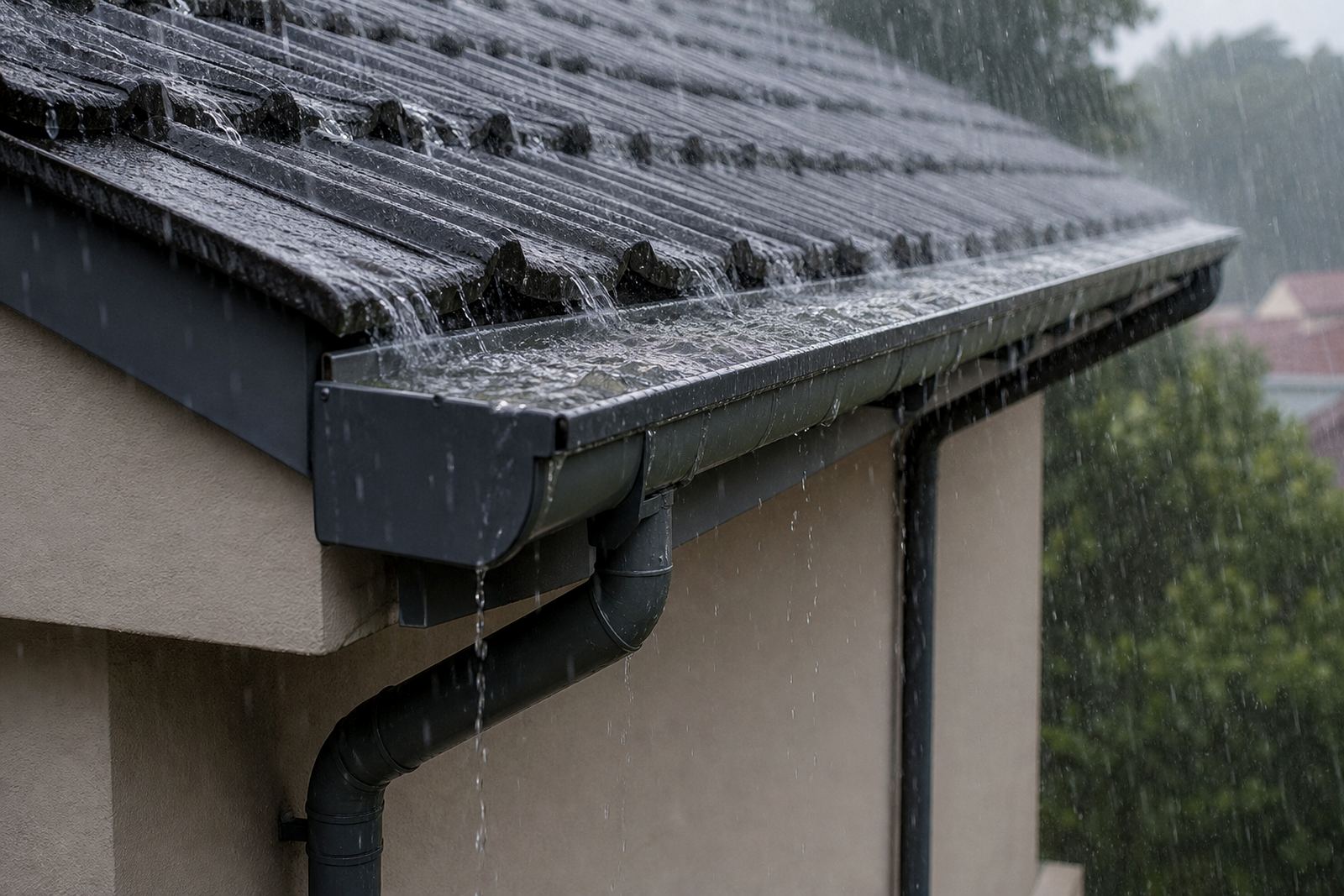
High rainfall areas put a roof edge under real pressure. If a gutter is undersized, pitched poorly or set with too few outlets, water will overshoot the front edge, back up under the roof covering or dump straight down where it can erode paving and soak foundations. In coastal towns humidity and driving rain add another layer of wear, while inland thunderstorm belts can fill a roof edge in minutes.
The first question is not only what material to use but how the system will move water away from the building. A well set gutter line should carry water without pooling, and the downpipe layout should let the water leave the roofline before the trough is overloaded. That is where correct sizing and good spacing make a real difference.
- Check the roof plan for long runs that may need extra outlets.
- Allow for steeper falls where the gutter run is lengthy.
- Use brackets at sensible spacing so the line stays true under water load.
- Match the fascia board condition to the fixing points, not just the visible finish.
Sizing the gutter for the rain that actually falls
In a drier region a standard profile may cope well enough, but in high rainfall areas it is safer to allow for bigger water volume. Larger gutter profiles, wider outlets and more downpipes can reduce overflow on sharp summer storms. Shorter runs between drops are often better than trying to push water too far along one long section.
Roof pitch, catchment size and local storm patterns all play a part. A simple lean-to roof over a patio in Pretoria East may need a different layout from a long commercial roof in Durban where rain can blow sideways. The aim is to let the water leave the roof edge quickly, before it has time to surge across the front lip.
- Longer roof edges may need more than one outlet point.
- Where the run is high capacity, the support spacing must still hold the line steady.
- Box sections and half-round profiles behave differently when heavy water moves through them.
- At complex roof corners, extra attention is needed to avoid slow draining pockets.
Falls and outlet spacing that keep water moving
Fall is one of the most overlooked parts of gutter work. If the gutter is dead level, water can sit in the trough, carry silt and leave stains or rust marks on adjacent parts if the system is metal based. A slight fall toward the outlet helps water move steadily, especially during the first burst of a storm when dust and debris are washed off the roof.
On bigger houses and commercial buildings, it is often better to shorten the distance between outlets rather than relying on one far end to do all the work. Downpipes should be placed where the roof can discharge naturally, and where water will not splash onto a walkway or boundary wall. In high rainfall areas, smart outlet placement can prevent overflow before it starts.
- Keep a consistent fall, not a series of dips and humps.
- Position outlets where the flow path is shortest and cleanest.
- Use downpipe sizes that suit the gutter capacity and roof area.
- Where storms are intense, two smaller discharge points may work better than one overloaded point.
Brackets, fascia boards and the pressure of a wet roof edge
When gutters fill quickly, the fixing points carry more than just the weight of the gutter itself. Water adds load, wind pushes against the front edge and debris can collect in corners. That is why bracket spacing and fascia condition matter so much. A sound fascia board gives the gutter a firm line to sit on, while weak or swollen timber can lead to sagging and leaks at joints.
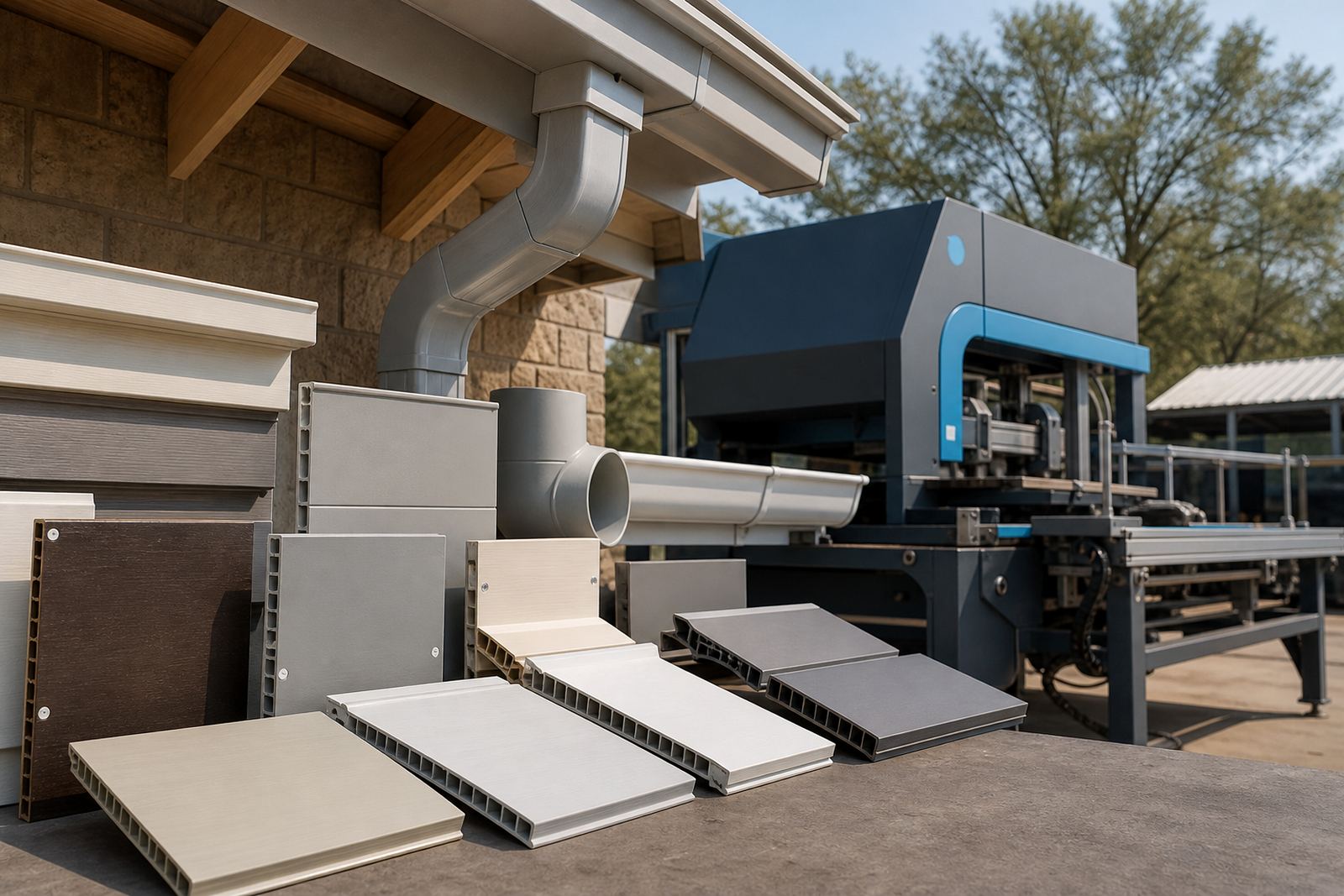
Plastic-steel composite fascia boards suit many South African rooflines because they are used in wet conditions and are designed to stand up to regular exposure. They still need correct installation, neat joining and proper edge support. On site, the small details matter: aligned brackets, level fixing points and enough support at corners, ends and outlets.
- Check for soft, warped or cracked fascia before any replacement work starts.
- Use brackets close enough to stop the gutter bowing when full.
- Reinforce corners and outlet areas where movement often begins.
- Keep fixings straight so the water path is not interrupted by a twisted line.
Maintenance after the first summer storm
High rainfall areas need more than a once-off installation. Leaves, sand, bird nesting material and roof grit can all build up fast, especially in suburbs with mature trees or in windy parts of the coast. A gutter that looks fine from the ground can still hold enough debris to slow the flow and send water over the edge in the next storm.
Regular maintenance visits help catch these issues before they turn into damp patches or ceiling marks. A check should include the gutter line, the outlet points, downpipe runs, seals at joins and the condition of the fascia board. If water is escaping at the joints or backing up at one end, the cause is usually a slope issue, a blockage or a damaged fixing point.
- Clear debris from outlets before peak storm season.
- Look for standing water after rain, it shows the line is not draining properly.
- Watch for stain marks under joints and corners, they often point to minor movement.
- Inspect splash zones around downpipes so water is not undermining paving or soil.
A practical local example for KwaZulu-Natal and Gauteng
Take a family home in Durban or a townhouse block in northern Johannesburg. Both can face sudden downpours, but the roofline and exposure will differ. In Durban, wind driven rain and coastal humidity can expose weak joints and poor falls quickly. In Johannesburg, fast summer storms can overwhelm a roof edge if the gutter run is too long or the outlet count is too low.
For a typical roof in these areas, the safer route is often a larger profile, well spaced brackets, short runs to the outlets and downpipes placed where water can discharge cleanly. Where a section of fascia has weakened, replacing that portion before fitting new guttering saves trouble later. Competent people should handle roof work at height, with proper access and fall protection, because even a short repair can be risky if the roof is wet or steep.
At Plasteel in Kya Sand, Randburg, this is the kind of roofline planning that matters across Johannesburg, Pretoria, Durban, Cape Town and Polokwane. Builders often need materials supplied to spec, while homeowners usually want advice that fits a real roof, not a generic brochure. In heavy rain zones, the best system is the one that moves water away quickly and stays easy to inspect and maintain.