
Why roofline work needs a proper access plan
When a team is measuring, removing old gutters or fixing fascia boards, the task often starts on the ground but finishes near the edge of the roof. That is where a steady ladder, safe footing and clear working space matter more than speed. On homes in Kya Sand, Randburg, the roof pitch may be modest, yet a wet tile, a dusty metal sheet or an awkward wall line can make the job risky very quickly.
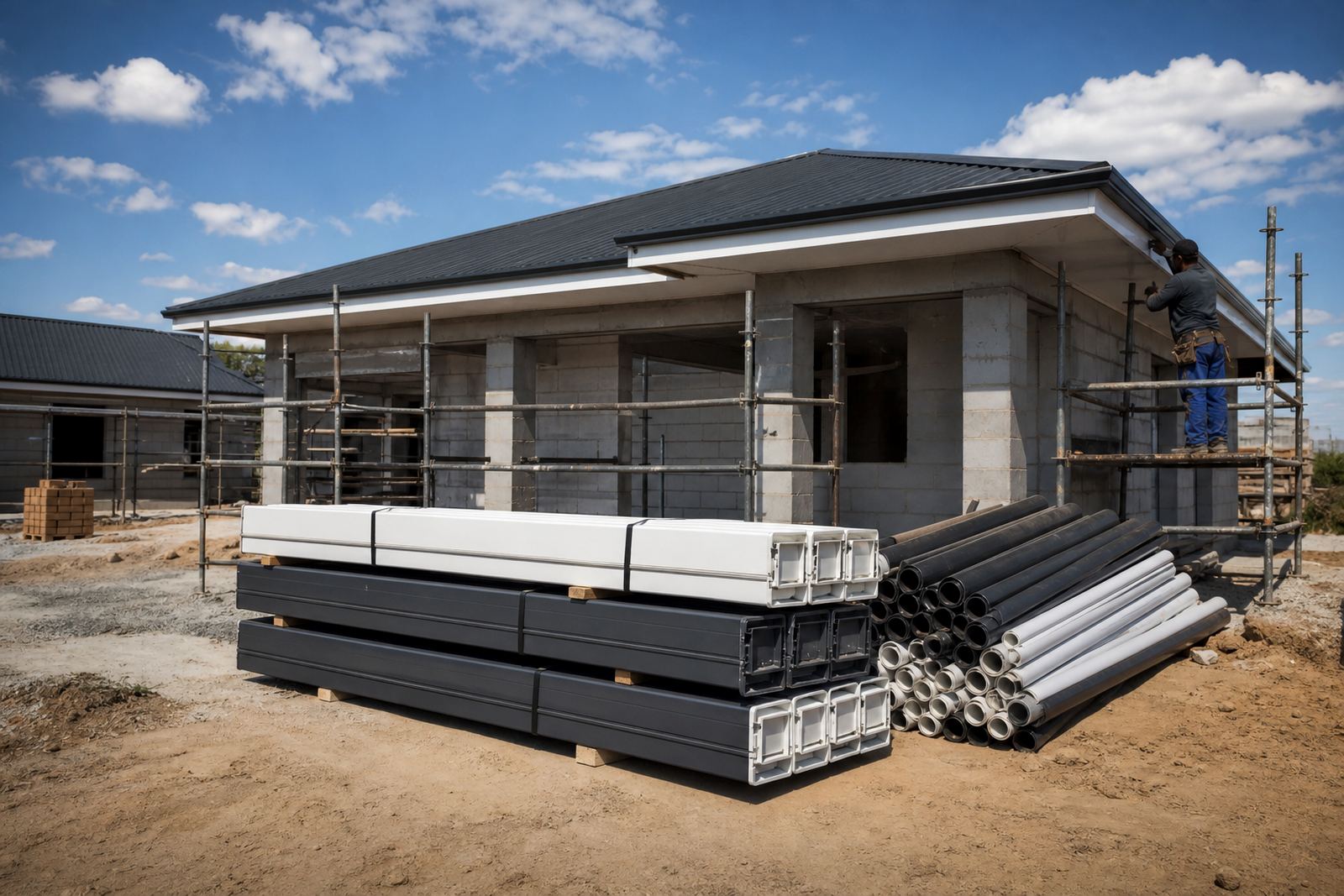
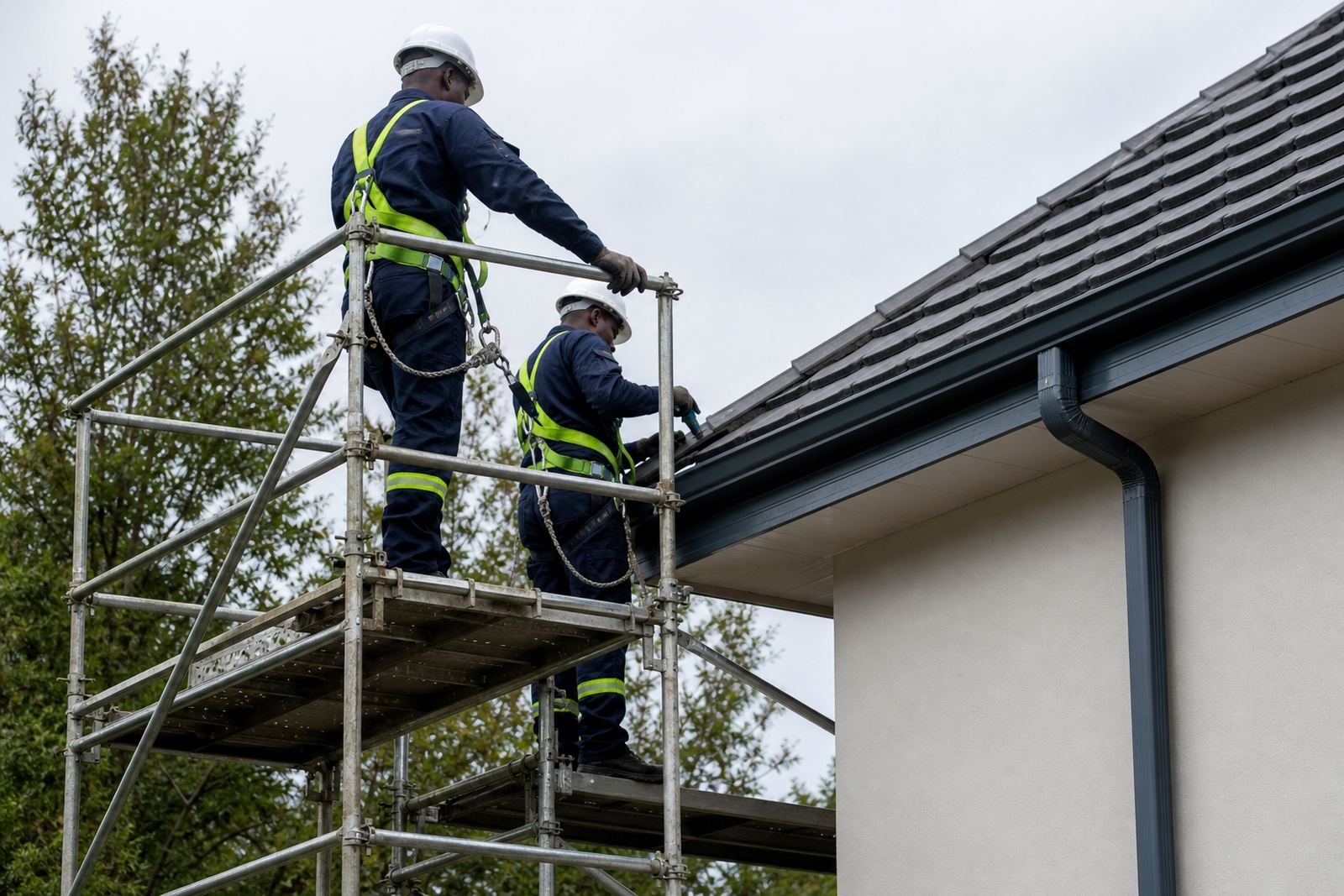
A proper access plan should match the building, not the other way round. A one-storey house with a short eave may only need a ladder set on firm ground and tied off correctly. A bigger commercial roof, or a high fascia run, may need staging, scaffold or another controlled access system. The right choice depends on height, surface, edge exposure and how much movement the work demands.
- Check ground firmness before setting ladders or towers.
- Keep the work zone clear of vehicles, offcuts and loose tools.
- Use a method that gives both hands free for fixing and measuring.
What competent roof access looks like on site
Competent people know that access is not only about reaching the gutter line. It is also about using the correct position, keeping three points of contact where possible and avoiding overreach. A worker leaning too far across a parapet or tile line places strain on the ladder and on their own balance. That is where many near misses happen.
On gutter installation or leak checks, the team should work from a stable position, with tools secured so nothing drops into a driveway or walkway below. Roof work at height should be handled by people who understand the surface underfoot and the fixings they are installing. If a section of fascia is soft, water damaged or loose, it can shift under load and create an extra risk while the job is underway.
- Keep the ladder angle steady and the base level.
- Do not stand on loose ridge caps, cracked tiles or untested roof sheeting.
- Secure tools, screws and sealants so they cannot fall.
Falls, brackets and spacing that keep gutters doing their job
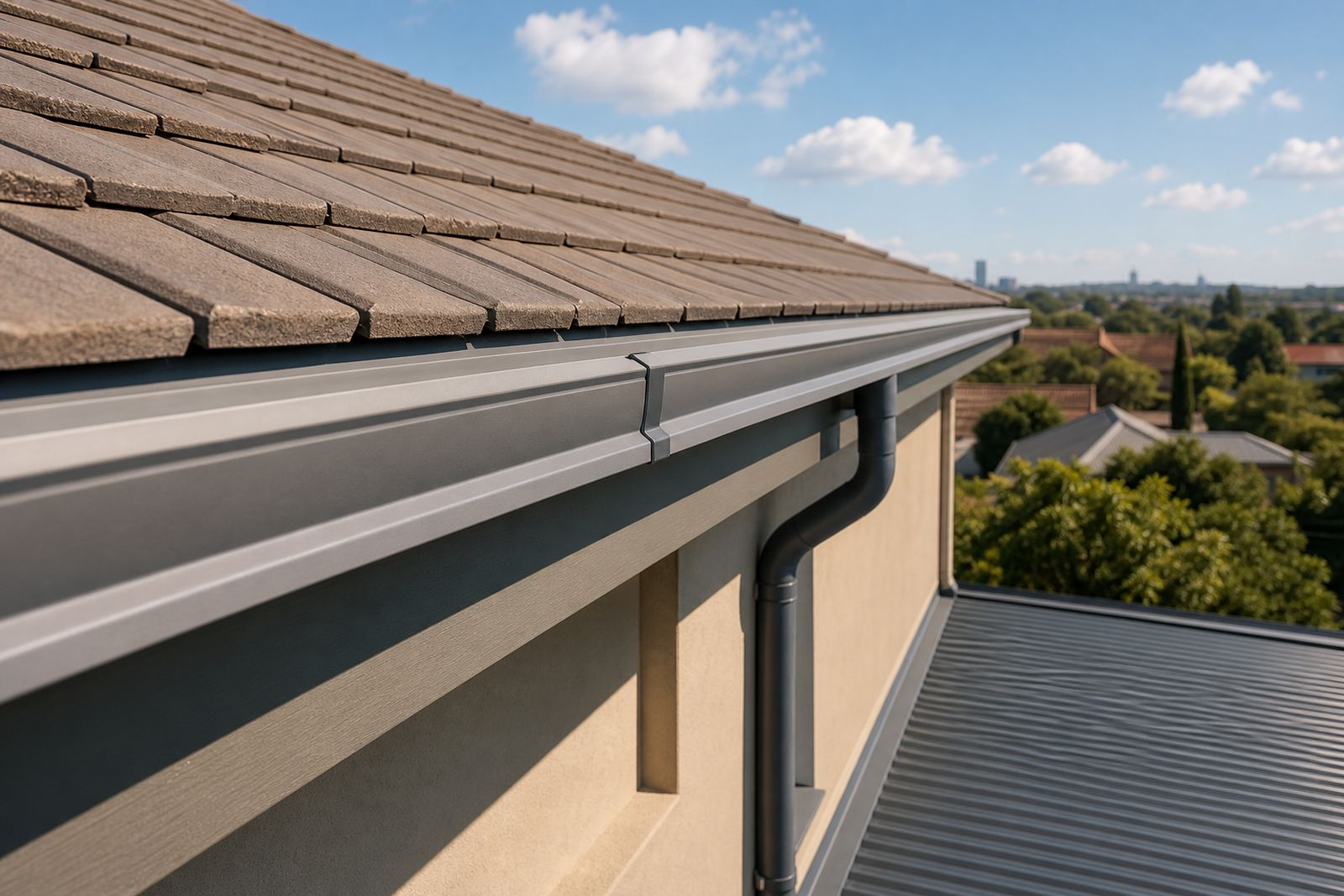
Good roof access goes hand in hand with correct gutter setting out. A gutter that looks level from the ground may still hold water if the fall is wrong. Too little fall can leave standing water and debris. Too much fall can look uneven and place pressure on joints and brackets. The installer has to balance appearance, flow and the actual length of the run.
Bracket spacing matters as much as the fall. If brackets are too far apart, the gutter can sag between supports. That creates puddling and can stress the fascia board behind it. On coastal work in Durban, where salt air and humidity can shorten the life of poor fixings, the team should pay extra attention to support points and corrosion resistance. In hot inland areas like Pretoria or Polokwane, heat movement and sun exposure also need to be allowed for at joints and clips.
- Set the fall before fixing the full run.
- Place brackets where the load is shared evenly.
- Match downpipe positions to the natural flow path.
Safe access on fascia replacement and roofline repairs
Fascia replacement often starts with rotten timber, bent metal trim or old boards that have absorbed years of moisture. Removing these pieces can expose sharp edges and unstable sections. A safe working method lets the crew remove material in controlled lengths, rather than forcing sections free while balanced on a poor ladder position. That matters on homes and light commercial buildings alike.
Where old guttering is being replaced together with fascia boards, the sequence of work should be planned before anyone climbs. The team should know which lengths will be removed first, where fresh brackets will sit and how the downpipes will be aligned back to the wall. On a busy street in Randburg or a retail property in Midrand, the area below also needs attention so pedestrians and parked cars are kept clear.
- Remove damaged sections in a controlled order.
- Keep replacements measured and ready before access starts.
- Protect the area below with clear exclusion space.
A practical Randburg example
Picture a homeowner in Kya Sand with overflow at the front gutter after a heavy summer storm. The first thought may be that the gutter needs cleaning, but the real issue could be a blocked downpipe, a sagging run or a bracket that pulled loose from the fascia. If the team climbs up without checking access, they may miss the cause and put themselves at risk while reaching across the roof edge.
A better approach is to inspect from safe positions first, then decide whether ladders, scaffold or a different access system is needed. The team measures the run, checks the fall, looks at the downpipe entry point and confirms whether the fascia is still sound enough to hold the fixings. That kind of method saves time on the second visit and avoids working at height longer than necessary.
- Start with a ground level inspection where possible.
- Trace the water path from gutter to downpipe outlet.
- Check for movement, rot or rust before fixing new parts.
Maintenance that reduces risky call-outs
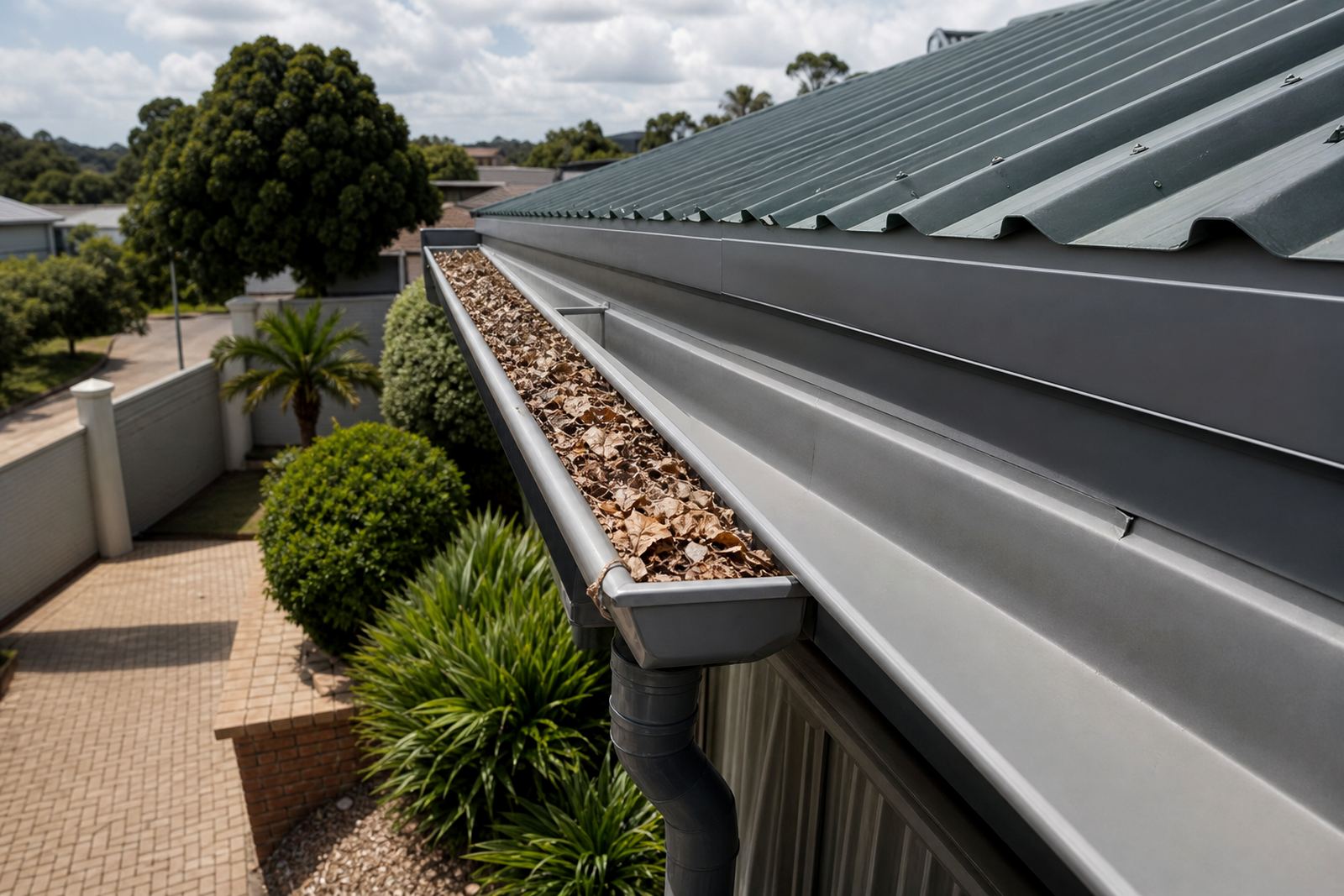
Routine maintenance helps keep roofline work smaller and safer. A blocked gutter that overflows for months can soften fascia boards and stain walls. Once that damage spreads, the job turns from cleaning into repair, and repair often means more time at height. Builders and homeowners can reduce the risk by keeping gutters clear of leaves, seed pods and roof grit, especially after windy weather.
Plasteel supports builder work and homeowner advice by helping match the right gutter, downpipe and fascia material to the building and the conditions. In coastal humidity, inland dust or a shaded courtyard that stays damp, the maintenance pattern changes a bit. The basic habit stays the same though: inspect the roofline, keep access safe, and deal with small faults before they become bigger ones.
- Inspect after storms and seasonal leaf fall.
- Clean downpipes where water slows or backs up.
- Replace loose brackets before the gutter starts to sag.