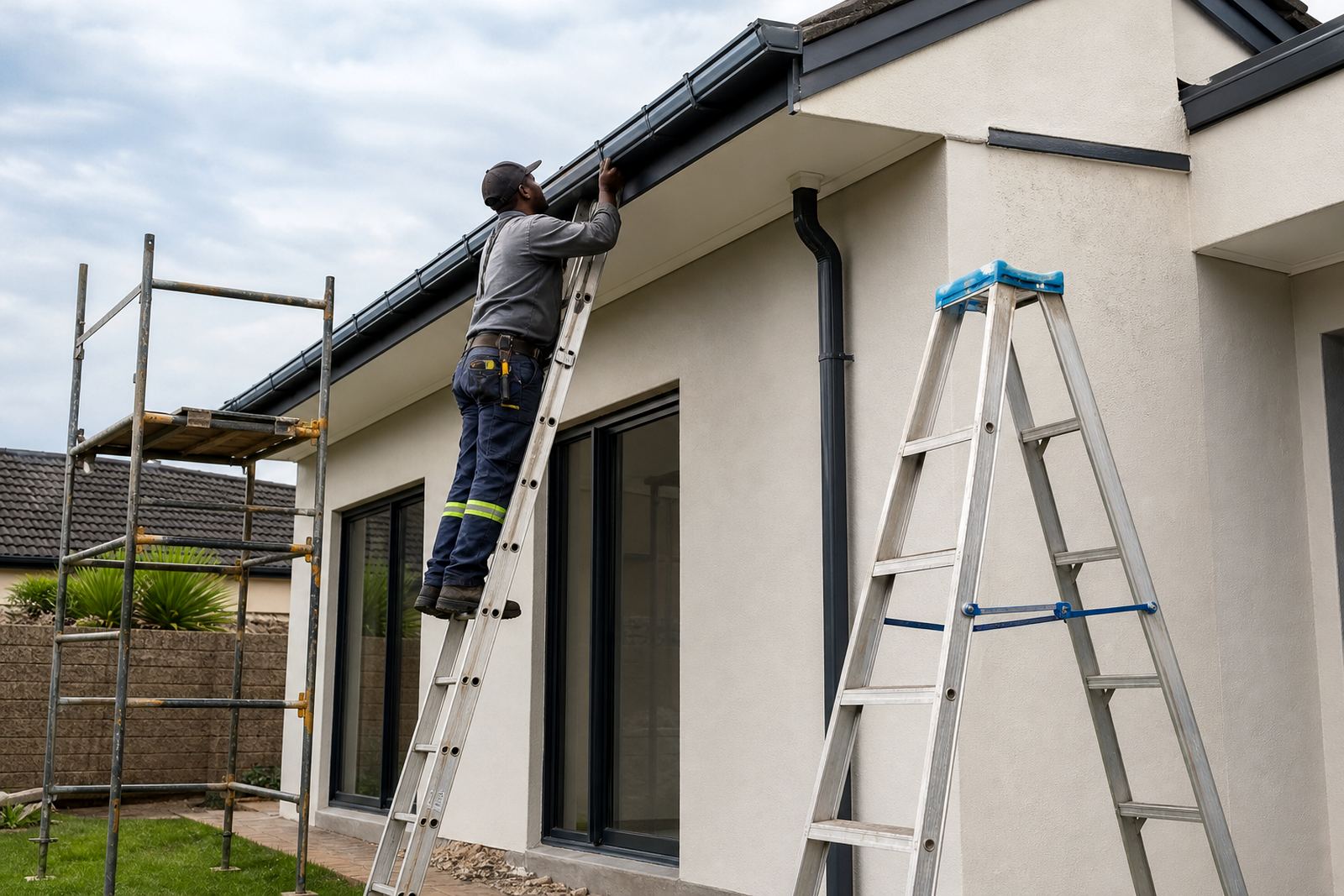
When a ladder will do and when it will not
A ladder works for light duty tasks such as checking a loose bracket from ground level height, clearing a small section of debris, or looking at a visible joint on a single storey edge. It becomes less suitable as soon as the work stretches along a roofline, needs both hands, or requires tools, sealant, fixings and materials to be carried up at the same time.
On many South African homes, especially where roof pitches are steep or the eaves sit higher than a standard extension ladder can comfortably reach, the better answer is a safer access method with a stable working platform. That matters even more in coastal areas where moisture can make surfaces slick, and in windy inland conditions where balance is harder to keep.
Roofline work is also not just about reaching the edge. The person doing the work must check falls, brackets, overlaps, support spacing and outlet positions. Those are details that are difficult to handle properly when a person is standing on rungs and trying to hold material at the same time.
The roofline jobs that need better access
Gutter and fascia work often looks straightforward from the ground. Once you are up there, it is a different story. Long lengths of guttering, fascia boards and downpipes need careful handling, clean positioning and accurate fixing. A person on a ladder can struggle to keep the material straight while also checking slope and alignment.
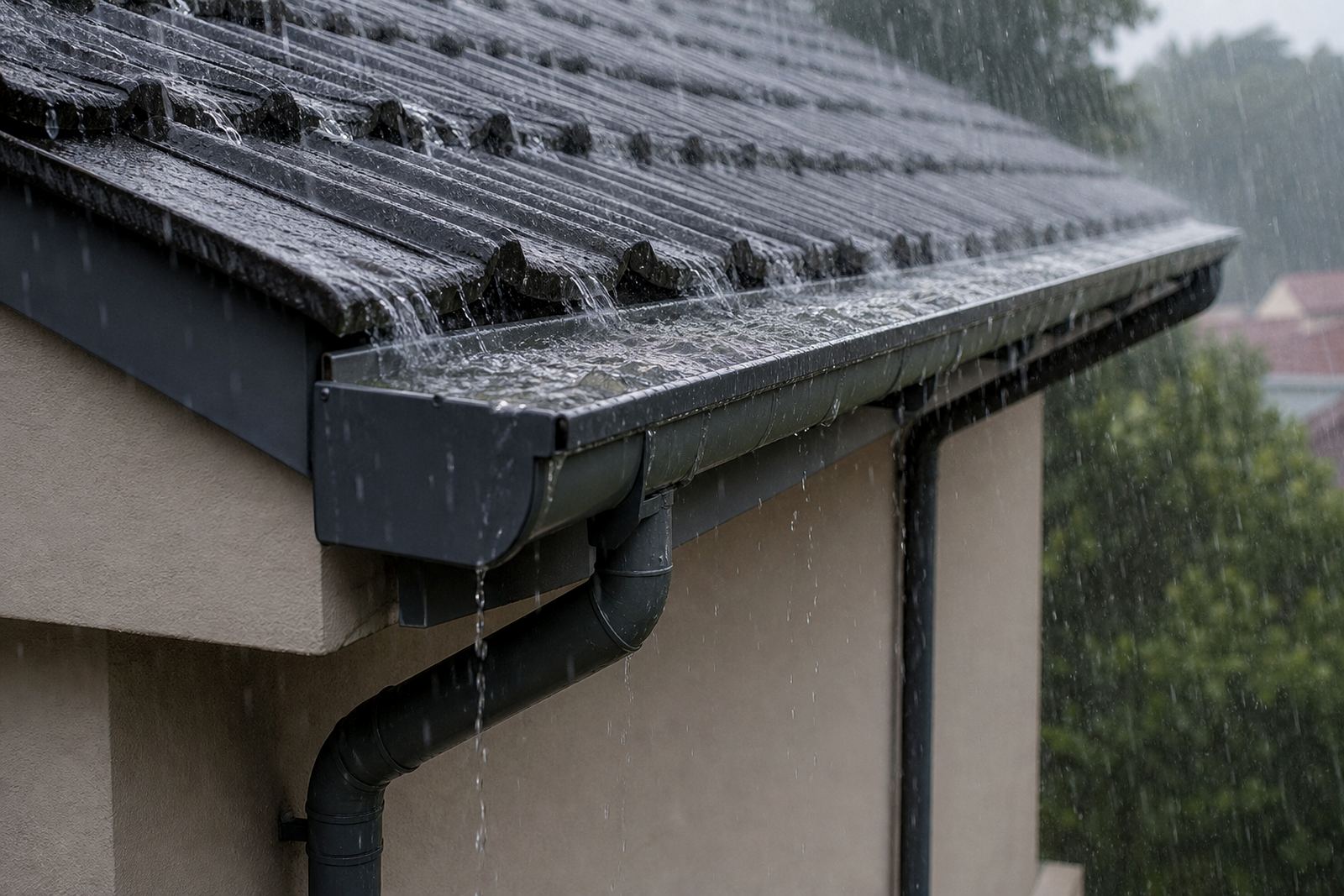
Correct gutter fall is important. If the run is too flat, water can sit in the line and carry dirt, leaves and silt back toward the outlet. If the fall is too sharp in one section, the water can surge and splash over the edge during heavy rain. That is why straight runs need attention from the first bracket to the last.
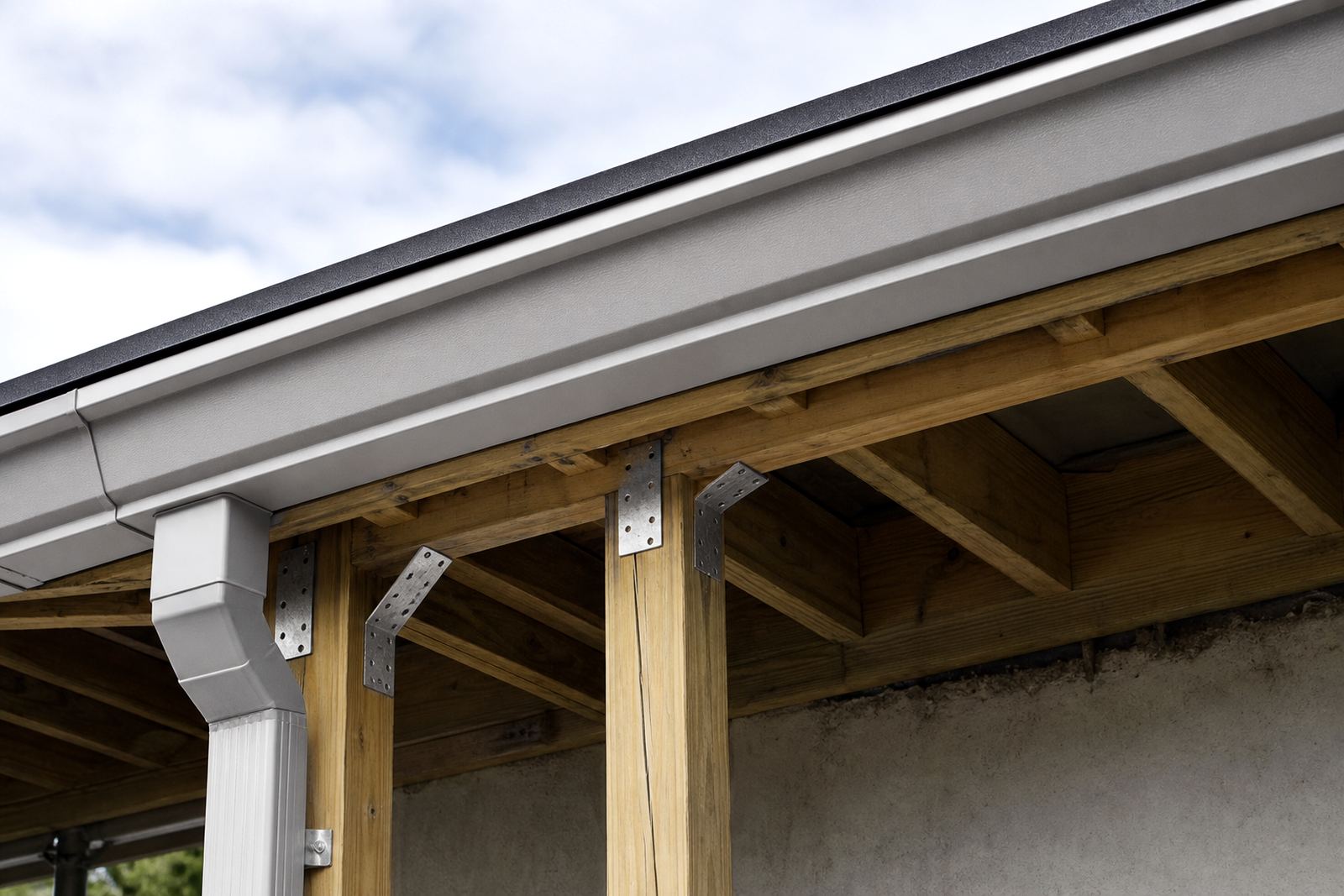
Brackets should be spaced to support the load and hold the line true. Downpipes need secure fixing so they do not pull away in strong wind or under the weight of water. Fascia boards must sit neat and level, otherwise the gutter line follows the same fault. These jobs are easier to do well when the installer has proper access, not just a ladder resting against a wall.
Safety is built into the work, not added later
Roofline work at height must be done by competent people who understand the risk of slips, falls and falling objects. A ladder can move on uneven paving, sink into soft soil, or shift on smooth concrete if it is not set correctly. Even a short task becomes serious when a person is overreaching or trying to work from the side of the ladder.
Safe setup includes firm ground, the right angle, proper footing and a clean work area below. It also means planning where materials will be placed so nothing needs to be passed up awkwardly. In built up areas like Randburg, Midrand or Roodepoort, access can be tight and there may be gates, parked vehicles or boundary walls to work around. That makes planning more important.
Where the job calls for repeated movement along the roof edge, a better access method is usually more practical. It lets the crew work with both hands, measure properly, and keep the gutter line consistent without rushing.
How material choice and access affect the finish
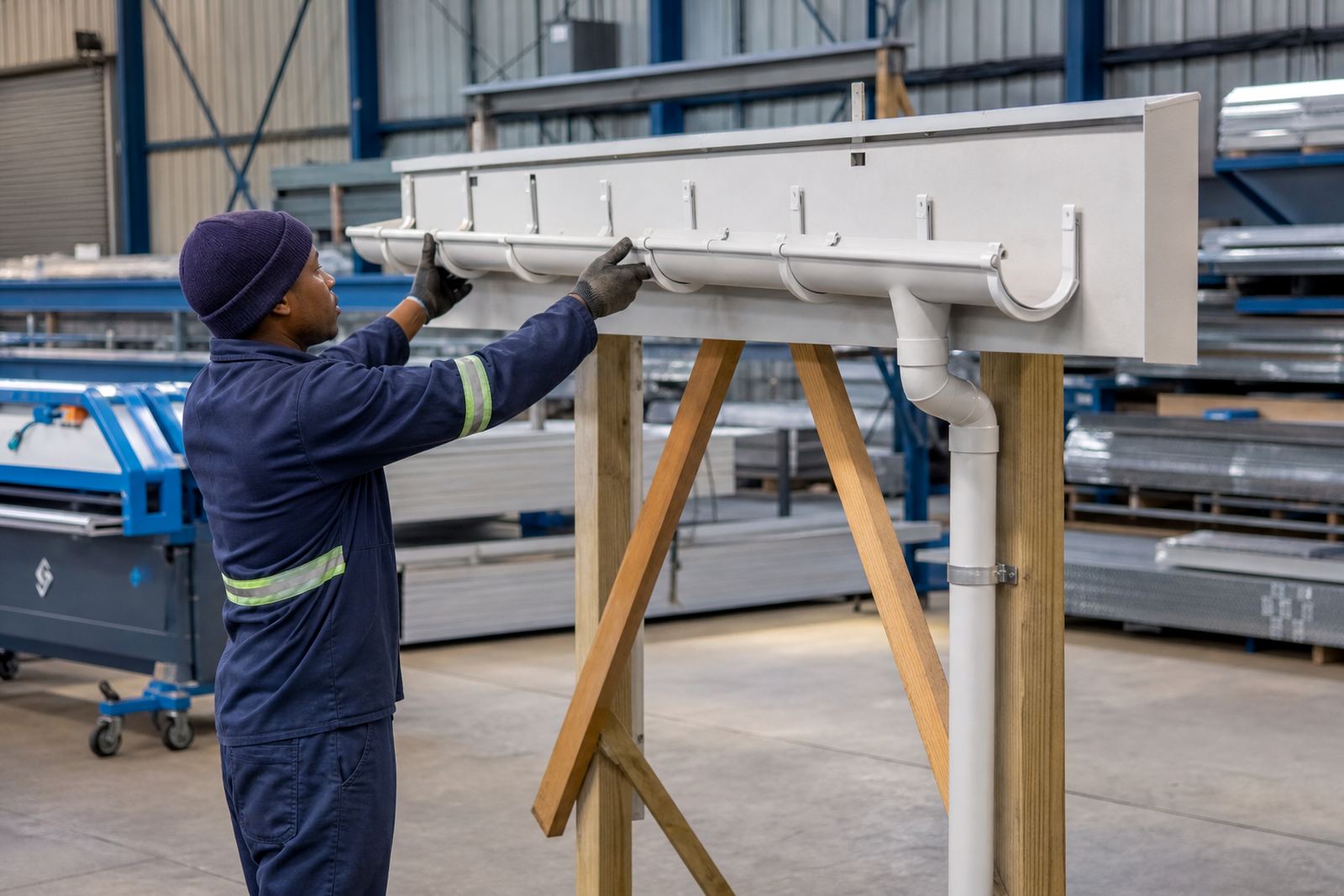
Plastic-steel composite gutter, downpipe and fascia materials need careful handling so the finish stays straight and the fixing points are not damaged. Lighter sections are easier to move than heavy metal lengths, but they still need support during installation. A bent length or stressed joint can create leaks or visible distortion later on.
Typical gutter sizing depends on the roof area, rainfall pattern and the way the water runs off the roof. Homes with larger roof planes, or commercial buildings with long eaves, often need more than a small domestic run. Outlet positions, bracket spacing and downpipe size all work together, so one weak point can affect the whole line.
Maintenance is easier when the system is fitted properly from the start. That means enough slope for water movement, sensible spacing at brackets, and access points that allow cleaning out leaves and grit. In places with heavy summer storms, a neglected gutter can overflow quickly and stain walls, ceilings and paving.
A local case from Kya Sand to the northern suburbs
A common job in Kya Sand or the wider Randburg area is a homeowner or builder asking for a quick roofline repair after a leak near the fascia. The issue may look small from the yard, but once the crew gets up there the problem is often more involved. A loose section of gutter may have sagged, the fall may be wrong, and one downpipe might be carrying too little water for the roof area.
In a situation like that, a ladder can help with an initial check, but it is not the best way to replace a long fascia length or rehang a full gutter run. Proper access allows the team to measure accurately, remove damaged sections cleanly and fit new material without forcing joints into place. That matters whether the building is a house in Pretoria, a retail unit in Johannesburg, or a larger property in Polokwane.
The message for both builders and homeowners is straightforward. If the task is more than a brief inspection, use the right access method and the right crew. It saves time, protects the roofline and lowers the chance of a return fault after the first rain.
What to expect from a practical roofline plan
A sensible roofline plan starts with site measuring and a material takeoff so the right lengths, brackets, outlets and downpipes are ordered. It also includes checking where water should discharge, where access is safe, and how the work will be done without forcing the crew to take risks on the ladder. That is especially useful on busy sites where deliveries, trades and household movement all happen at once.
For Plasteel, the practical part is not only the supply of composite gutters, downpipes and fascia boards. It is also helping builders and homeowners understand what the roofline needs in real conditions, from Durban humidity to inland heat and dust. A neat result depends on the full picture, not only the visible front edge.
Short tasks from a ladder still need proper setup. Bigger roofline jobs need better access, careful fixing and competent hands. That is the difference between a quick look and a finish that stays in line through the next storm.
Maintenance that keeps ladder visits short
Keeping guttering, fascia and downpipes in good condition makes future maintenance easier. A clean run carries water better and gives a clearer view of joints, seals and brackets. If a system is checked regularly, most issues are found early, before stains appear on walls or water backs up into the roof edge.
Basic maintenance should include removing leaves, checking for loose brackets, looking for cracked or open joints, and making sure downpipes are not blocked at the bottom. If the gutter line has settled or shifted, the slope may need correction. That is not a job to force from a ladder if the access is poor or the edge is too high.
For many properties, a planned maintenance visit is safer and more useful than a hurried one off ladder check. It keeps the roofline working as intended and reduces the chance that a small fault turns into a larger repair after the next downpour.