
Why spacing changes from one roofline to the next
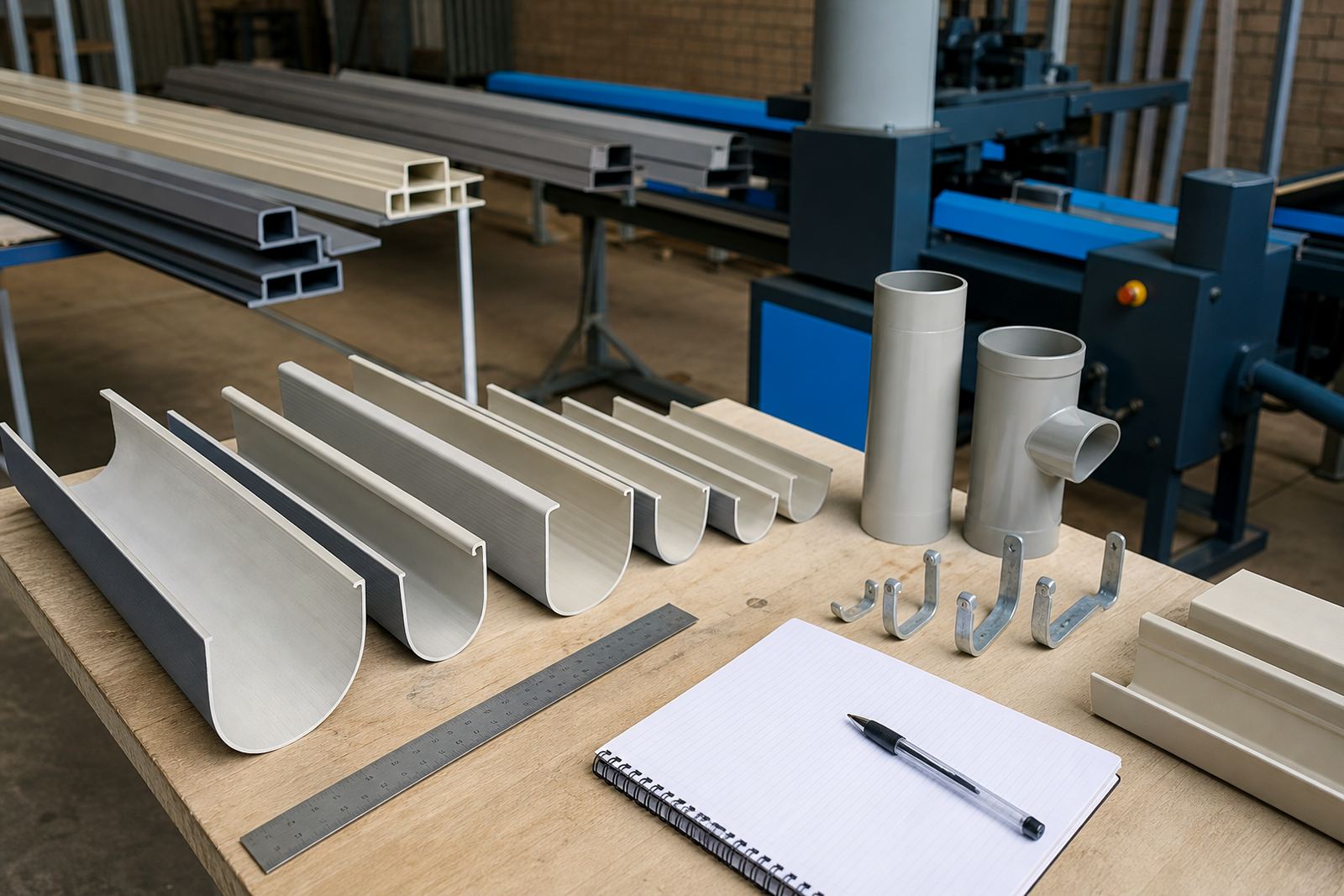
There is no single bracket spacing that suits every gutter run. The right gap depends on the gutter profile, the length of the run, the roof edge, the number of joins and the amount of water the system must carry. A short run on a small home in Randburg will not ask the same thing from its supports as a long commercial roof in Durban where heavy rain and coastal humidity put more strain on the line.
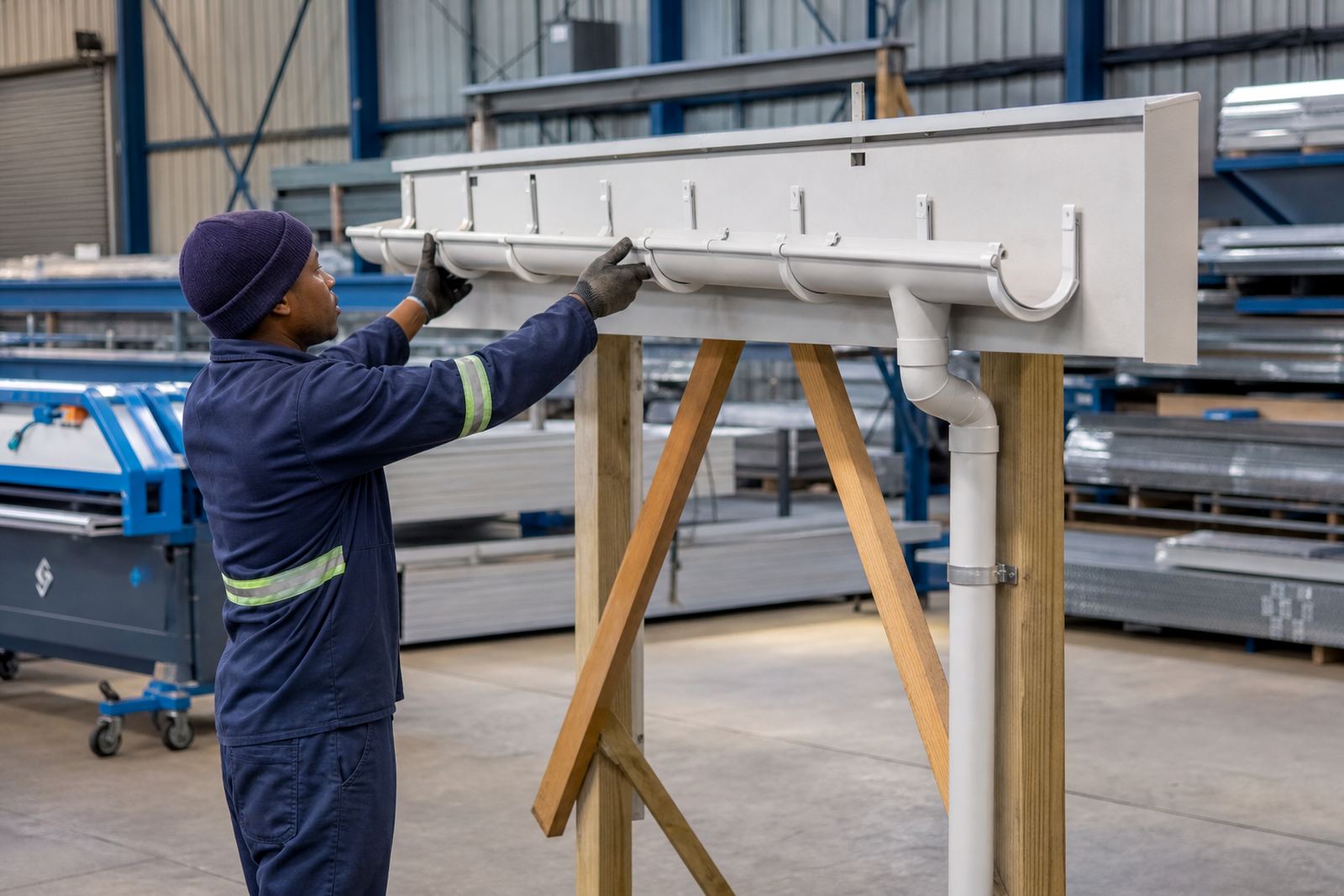
On most jobs, spacing is set to keep the gutter straight, steady and correctly aligned to the fall. If the supports are too far apart the gutter can bow between brackets and lose its shape over time. If they are too close together the installation may be unnecessary hard on labour and materials, with no real gain. The practical answer is to follow the system guidance for the profile being fitted and adjust for site conditions where needed.
- Longer runs usually need closer support near joins and ends.
- Heavier water flow calls for careful spacing and firm fixing points.
- Wind exposure can justify extra supports on exposed roof edges.
The parts that work together on a clean installation
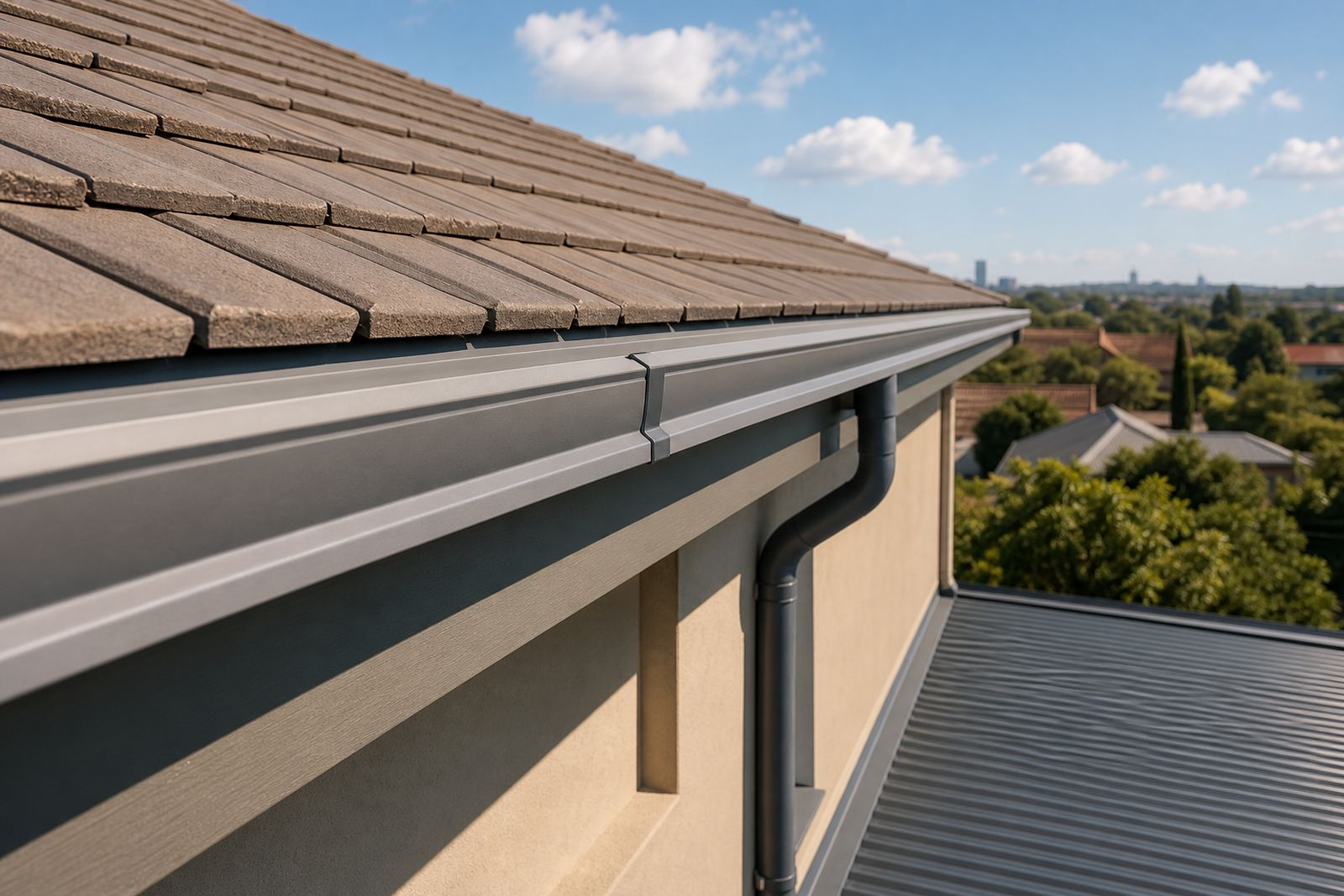
Bracket spacing cannot be looked at on its own. It works with the fascia, the downpipe positions, the gutter fall and the way the roof edge is built. A fascia board that is sound and straight gives the gutter a far better base than one that has softened from moisture or moved over time. If the board is weak, even correct spacing will not stop movement.
The same goes for the downpipes. Where a downpipe is placed well, the gutter can discharge water without backing up. Where a downpipe is too far from the heaviest flow point, the water sits longer in the channel and puts extra strain on the supports. That is why builders and homeowners should think of the roofline as one system, not separate parts fitted in isolation.
- Check that the fascia line is straight before fixing brackets.
- Place downpipes where the gutter can empty freely.
- Keep the fall consistent so water does not pool between supports.
Support at corners, joins and long runs
Corners, stop ends and join points need more attention than the straight sections. These are the places where movement often starts, especially if the run is long or the building shifts with heat and age. Extra support near these points helps keep the line true and reduces strain on the seal joints. On a townhouse block in Pretoria or a warehouse roof in Polokwane, that detail can make a real difference after a hard summer storm.
Long runs also need a measured approach. A gutter that looks fine from the ground can still carry hidden sag between brackets if the spacing is too wide. Once that happens, water can sit in the low points instead of moving toward the downpipe. Over time that standing water speeds up wear and makes cleaning harder.
Where the roof edge is uneven, the spacing may need to be adjusted so the gutter still follows the correct line. This is where measured work matters. A roofline that is fitted by eye alone often gives problems later, especially on older homes with repairs done in stages.
Falling water needs the right slope, not just more brackets
One common mistake is to add more brackets when the real issue is the fall. A gutter needs a slight, steady slope toward the downpipe so water can move without hesitation. If the fall is too flat, water sits in the channel. If it is too steep, the run can look uneven and place unnecessary stress on the fixings.
Good bracket spacing supports the fall rather than fighting it. The supports should hold the gutter at the intended level while letting the line move gradually toward discharge points. That is especially important on longer installations where a small error at one end can affect the full run.
- Use the correct fall for the profile and run length.
- Check the line from end to end before final fixing.
- Do not let uneven spacing force the gutter out of alignment.
What coastal moisture and heat do to the fixing points
In coastal towns like Durban and along parts of the Western Cape, moisture in the air can be hard on fasteners and surrounding materials. In hot inland areas, heat expansion also needs to be considered. A gutter line that is fixed too tightly without allowance for movement may creep out of shape over time. The brackets need to hold the system secure while still allowing the material to behave as it should in changing temperatures.
This is where plastic-steel composite materials earn their place. They are chosen for a practical balance of strength and resistance, but they still need proper fixing and sensible spacing. No material benefits from poor support. A clean installation with the right bracket pattern will always last better than a hurried one, even when the product itself is sound.
Maintenance also plays a role. Leaves, roof grit and moss can add weight to a gutter, so regular checks help. If a bracket has loosened or a section has started to dip, it is easier to correct early than after the run has shifted.
Safe work at height and proper fixing practice
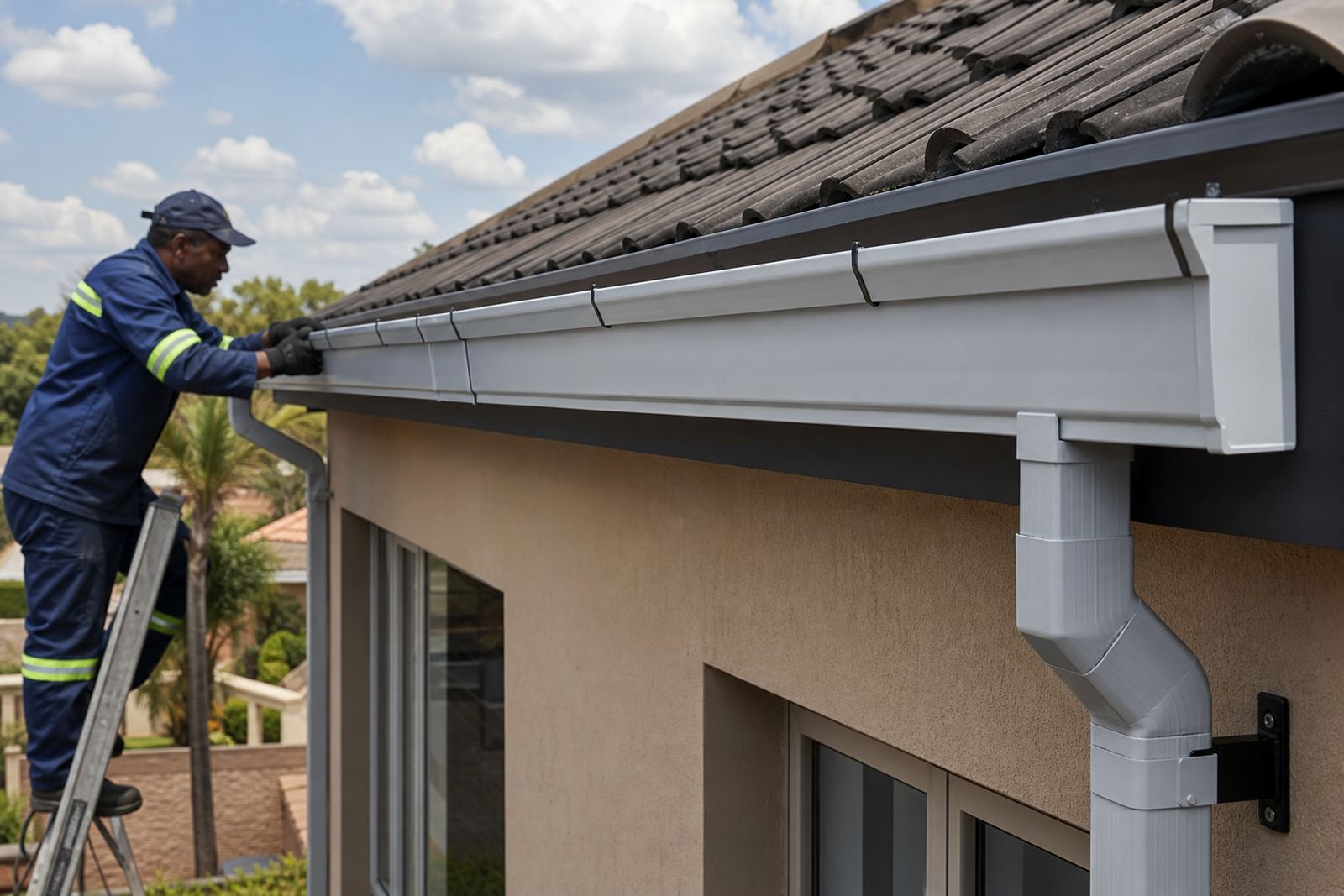
Gutter and fascia work is roofing work, and roofing work at height must be done safely by competent people. Safe access, stable ladders, fall protection where required and proper handling of tools all matter. A neat bracket line is no use if the job is rushed or unsafe.
For builders and maintenance teams, the practical checklist is straightforward:
- Inspect the fascia and replace any weak sections before fitting brackets.
- Mark the run and spacing points before drilling or fastening.
- Set the fall first, then confirm the support points match the line.
- Keep joins, corners and downpipe positions under close control.
- Test the run with water and check for hold-up or movement.
A good installation is measured, steady and repeatable. That is what keeps the gutter working through summer storms, winter rain and the everyday wear of a busy property.
A local example from a mixed building site
On a mixed-use property in Midrand, a roofline upgrade called for different support patterns on two sections of the building. The street-facing side had a long run with more wind exposure, while the courtyard side was shorter but carried water from a tighter roof pitch. The bracket spacing was adjusted to suit each run, with extra care near the corners and the main downpipe points.
That kind of job shows why generic spacing rules are only a starting point. The profile, the fascia condition, the roof pitch and the site exposure all shape the final result. When those factors are read properly, the gutter sits straight, drains well and needs less attention later. For homeowners and builders alike, that is where the real value lies.
Plasteel supplies plastic-steel composite gutters, downpipes and fascia boards for roofline work across South Africa, with practical support for measurements, material takeoff, delivery coordination and installation planning. The right bracket spacing is not a small detail. It is part of the whole system.