
Roof area sets the starting point
The first figure to work from is the catchment area feeding the gutter. A long roof with two slopes may need more capacity than a shorter roof with steeper pitches, even if the building footprint looks similar from the ground. Water coming off a wide sheet of roof sheeting or tiles gathers fast during a summer storm, so the gutter must carry that flow to the downpipes without backing up at the corners.
As a rule, larger roof areas call for deeper gutters, more outlets or both. A small patio roof may manage with a lighter profile, while a full house roof or warehouse edge often needs a deeper section and better support spacing. On a site in Randburg, for example, the same house facing different roof lengths on the front and rear can need different outlet positions because the water load is not equal on all sides.
- Measure each roof plane separately rather than using the building size alone.
- Check where valleys, parapets and roof intersections send water into the gutter line.
- Allow for overflow risk at ends, corners and low points.
Rainfall intensity changes the size conversation
Gutter sizing in South Africa has to take local weather into account. A roof in Durban faces heavier rain bursts and higher humidity than one in Polokwane, while parts of Gauteng can get sudden downpours that hit hard in a short time. That means a gutter that seems fine in dry weather may spill once a strong storm arrives. The profile depth and outlet size must match the rainfall pattern, not only the look of the fascia board.
For homes and light commercial buildings, a wider or deeper profile often performs better where rain can be intense and brief. Coastal conditions also bring salt in the air, so the material choice and fixing details matter as much as the size. Brackets should hold the gutter line steady under load because a full gutter sags and changes the fall, then water starts pooling in the wrong place.
- Coastal roofs often need closer inspection because salt and moisture speed up wear.
- Where storms are short but heavy, outlet spacing becomes as important as gutter depth.
- A gutter line that holds shape during rain will drain more predictably than one that flexes.
Falls and outlet positions do the real work
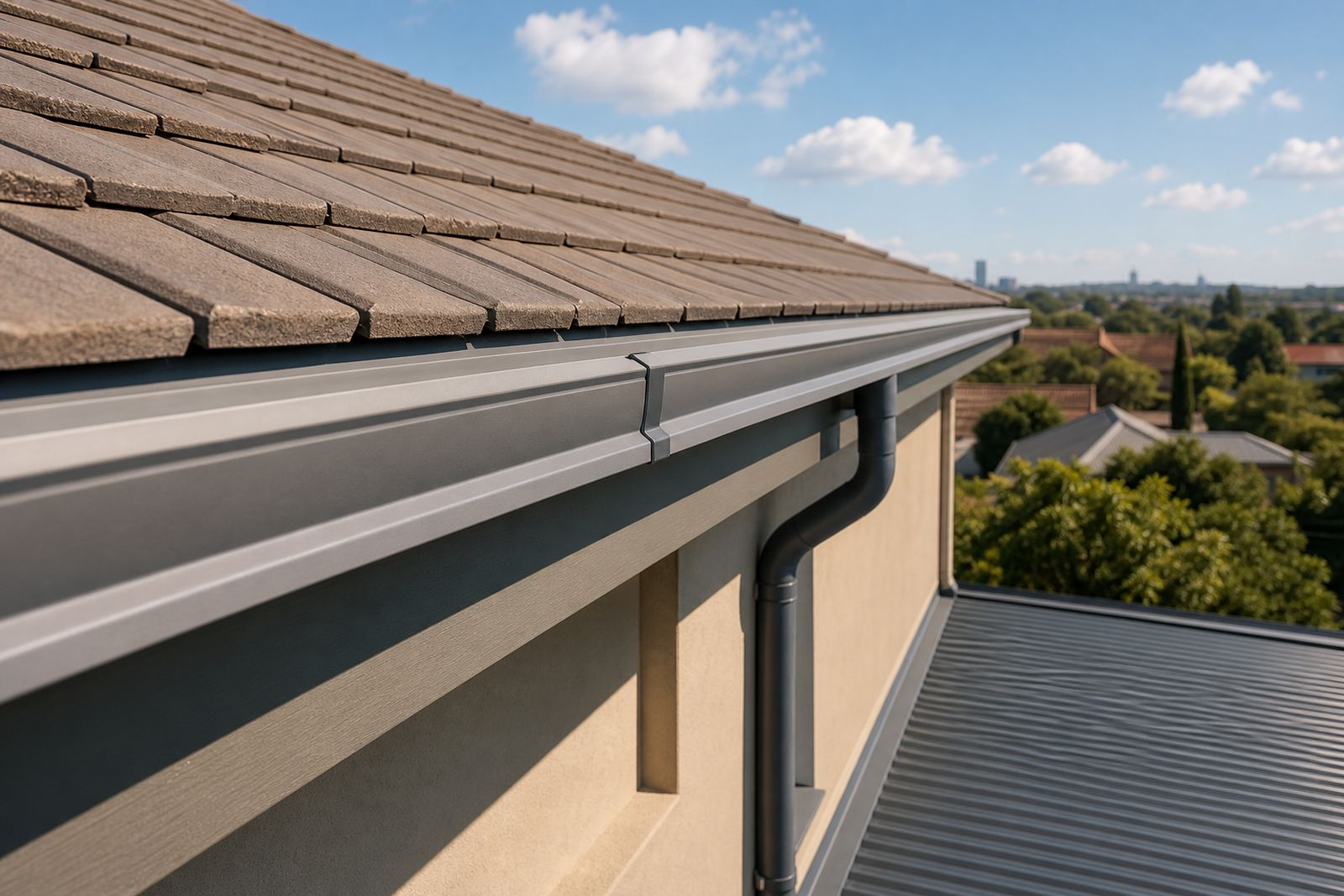
Even a correctly sized gutter can fail if the fall is wrong. Water should move gently toward the outlet, not race or sit in pockets. Too little fall leaves standing water that stains, breeds debris and adds weight. Too much fall can make the gutter look uneven and push water past the outlet during peak flow. The balance is practical, and it starts with careful setting out before the first bracket goes up.
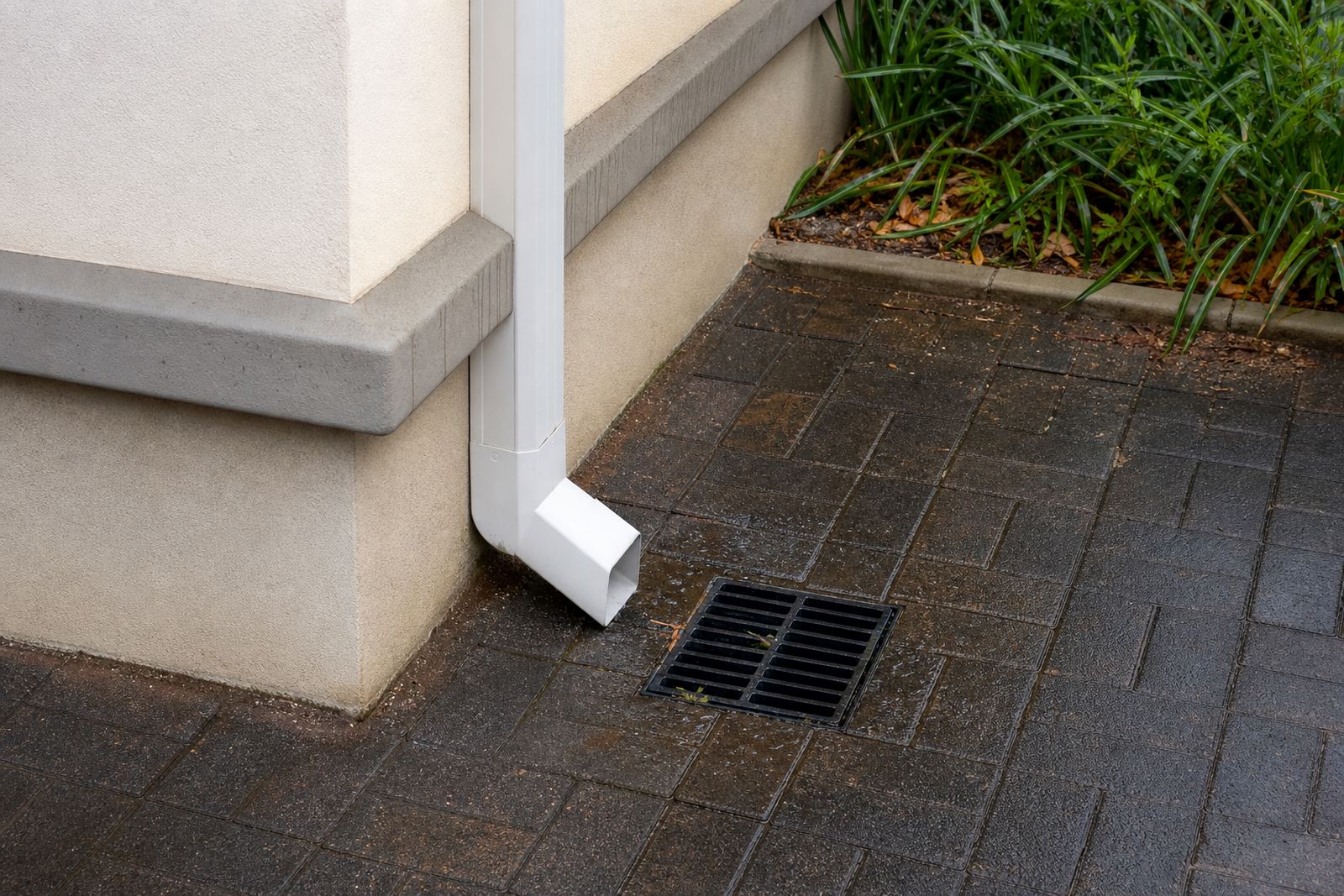
Outlet positions need to suit the roof geometry. A long run may need two outlets rather than one, and a corner detail may need extra attention so water does not overshoot. Downpipes also need to be sized to the outlet and the roof load. A narrow downpipe on a big roof is a bottleneck. If the water cannot leave the gutter quickly enough, it will find the easiest path out over the front edge.
- Set a clear fall along each run before fixing the gutters permanently.
- Use enough outlets to prevent water from travelling too far in one direction.
- Match downpipe size to the gutter capacity and roof area.
Profile depth, brackets and spacing
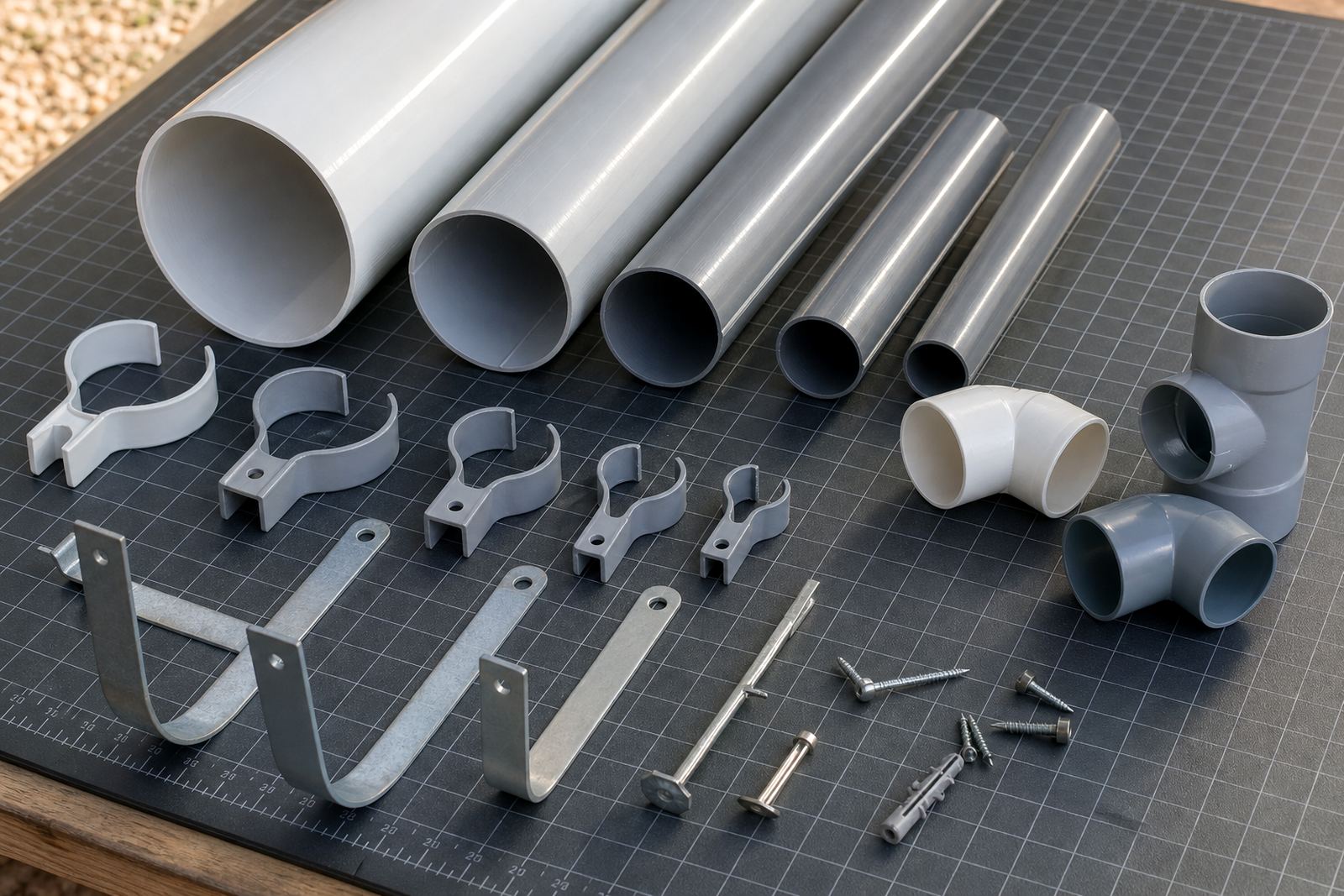
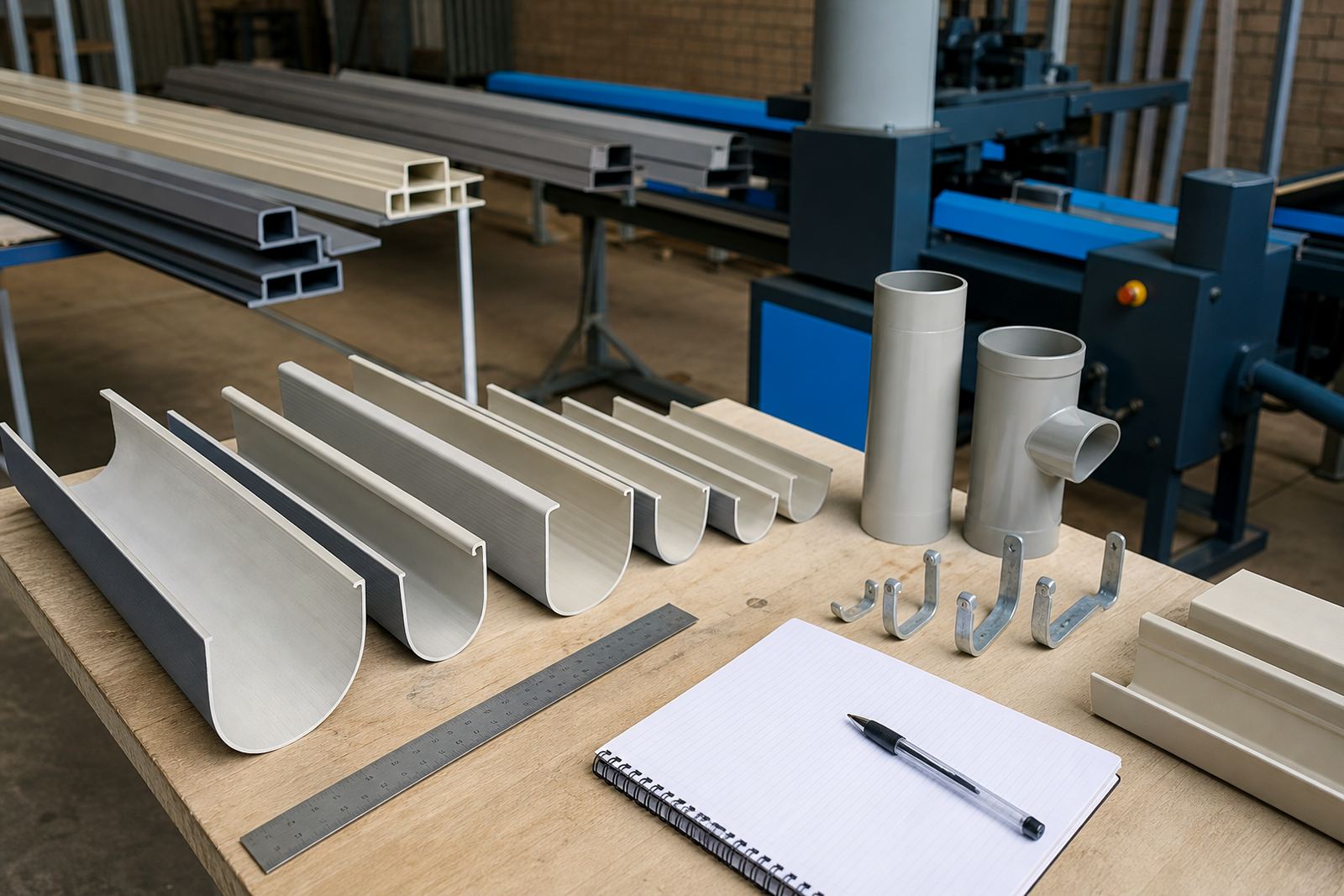
Profile depth affects how much water the gutter can hold before overflow starts. Shallow sections can suit smaller roof edges and light rain, but deeper profiles are better where runoff is stronger. The support system is just as important. Brackets fixed too far apart allow the gutter to flex, especially when it is carrying water or dealing with temperature changes through the day. In summer heat, long exposed runs can move a little and that movement needs to be controlled.
Brackets should be placed at sensible intervals and closer near joints, corners and outlets. Fascia boards need to be straight and sound enough to carry the load. If the fascia is warped or damaged, the gutter line becomes harder to align and leaks can start at the fasteners. On older houses in Roodepoort or Midrand, a roofline replacement may involve checking the fascia first, then choosing a gutter size that fits the real structure rather than the ideal one.
- Deeper profiles handle higher flow and reduce the chance of spillover.
- Closer bracket spacing helps where roofs are long or exposed to wind.
- Sound fascia boards make it easier to keep the gutter line true.
Material choice affects size and service life
Plastic-steel composite gutters are often selected because they combine light weight with practical strength. That matters on residential roofs where handling at height should be controlled and safe, and on commercial buildings where long runs need consistent shape. A lighter material can also be easier to line up cleanly, but the section still needs enough stiffness for the span and the outlet layout. The size of the gutter cannot be separated from the material thickness and fixing method.
Maintenance matters too. Leaves, dust and roof grit collect in gutters, especially near trees and in built-up areas. A larger profile may tolerate debris a bit better, but no gutter should be left to fill up with silt. Regular cleaning, leak checks and bracket inspections keep the system working properly. In coastal towns and industrial areas, fasteners and joints should be checked more often because humidity and airborne grit can affect the whole roof edge.
- Choose a profile that suits both the roof load and the material stiffness.
- Inspect joints, outlets and end caps after heavy rain.
- Keep the gutter clear so the designed capacity is actually available.
A Randburg example that shows the maths
Take a house in Kya Sand, Randburg with a long front roof and two shorter side runs. The front slope sends most of the rain into one line, while the sides drain into separate points. If the front gutter is sized the same as the side gutters without checking the catchment area, the main run may overflow while the smaller runs remain underused. A better approach is to measure each section, set the fall carefully and place outlets where the water naturally gathers.
For builders, this is where site measuring and material takeoff help avoid wasted lengths and mismatched fittings. For homeowners, it is the difference between a gutter that merely sits on the roof edge and one that actually handles a storm. On a property with a steel roof, brick fascia and a shaded garden under trees, maintenance visits may be planned more often because debris builds up faster than people expect. Safe access matters here and roof work at height should always be handled by competent people using proper fall protection.
When the sizing is right, the gutter line looks neat, drains cleanly and puts less strain on the fascia. That is the outcome worth aiming for on houses, workshops, offices and estate units across Johannesburg, Pretoria, Durban, Cape Town and Polokwane.
- Measure the roof, not just the walls below it.
- Check outlet positions before selecting the final profile.
- Keep maintenance regular so the system stays effective through heavy rain.