

When a gutter turns from channel to blockage
A gutter only works properly when water can run through it and out through the downpipes without backing up. Leaves, fine dust, roof grit, flower petals and small twigs build up over time, and once that layer holds moisture it starts to behave like a dam. In places such as Randburg, Midrand and Roodepoort, windblown debris is common after a dry spell, then the first heavy rain pushes it into the corners and around outlets.
The early signs are easy to spot if you know what to look for. Water overflowing at the front edge, stains on fascia boards, damp patches on exterior walls and puddles near the base of the wall often point to a blocked run. On pitched roofs, poor falls can make the problem worse because water hangs back instead of moving cleanly to the outlet. A gutter with the correct slope is easier to keep clear and far less likely to trap silt.
What a proper cleaning check should cover
Cleaning is not just about scooping out loose debris. A proper check should confirm that the gutter is sound, the brackets are holding spacing properly and the downpipes are open from top to bottom. Plastic-steel composite gutters and fascia boards used on South African homes and light commercial roofs are chosen for durability, but they still need regular attention to avoid strain at joints and outlets.
It helps to work through the line in order, starting at the highest point and moving toward the discharge point. Where there are roof valleys, extra debris often collects and can overload the gutter first. In wetter coastal areas, salt residue and wind-driven grit can also settle in the corners, so a clean look from ground level does not always mean the system is clear inside.
- Clear leaves, roof gravel and loose silt from the channel
- Check that outlet holes are not narrowed by debris
- Look for sagging sections where brackets may have loosened
- Inspect fascia boards for moisture staining or soft spots
- Confirm that downpipes are not blocked at bends or at the bottom outlet
Safe access matters more than speed
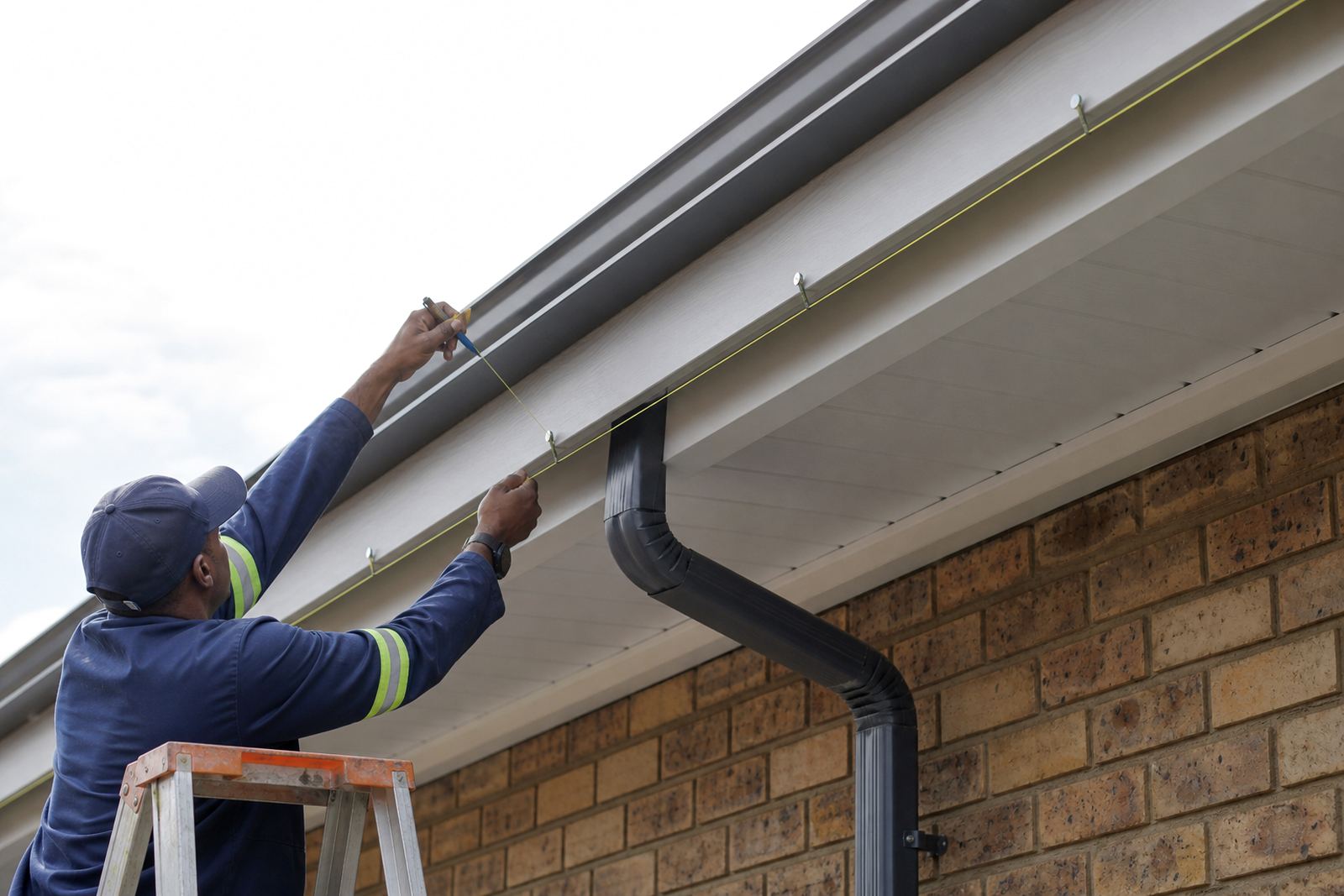
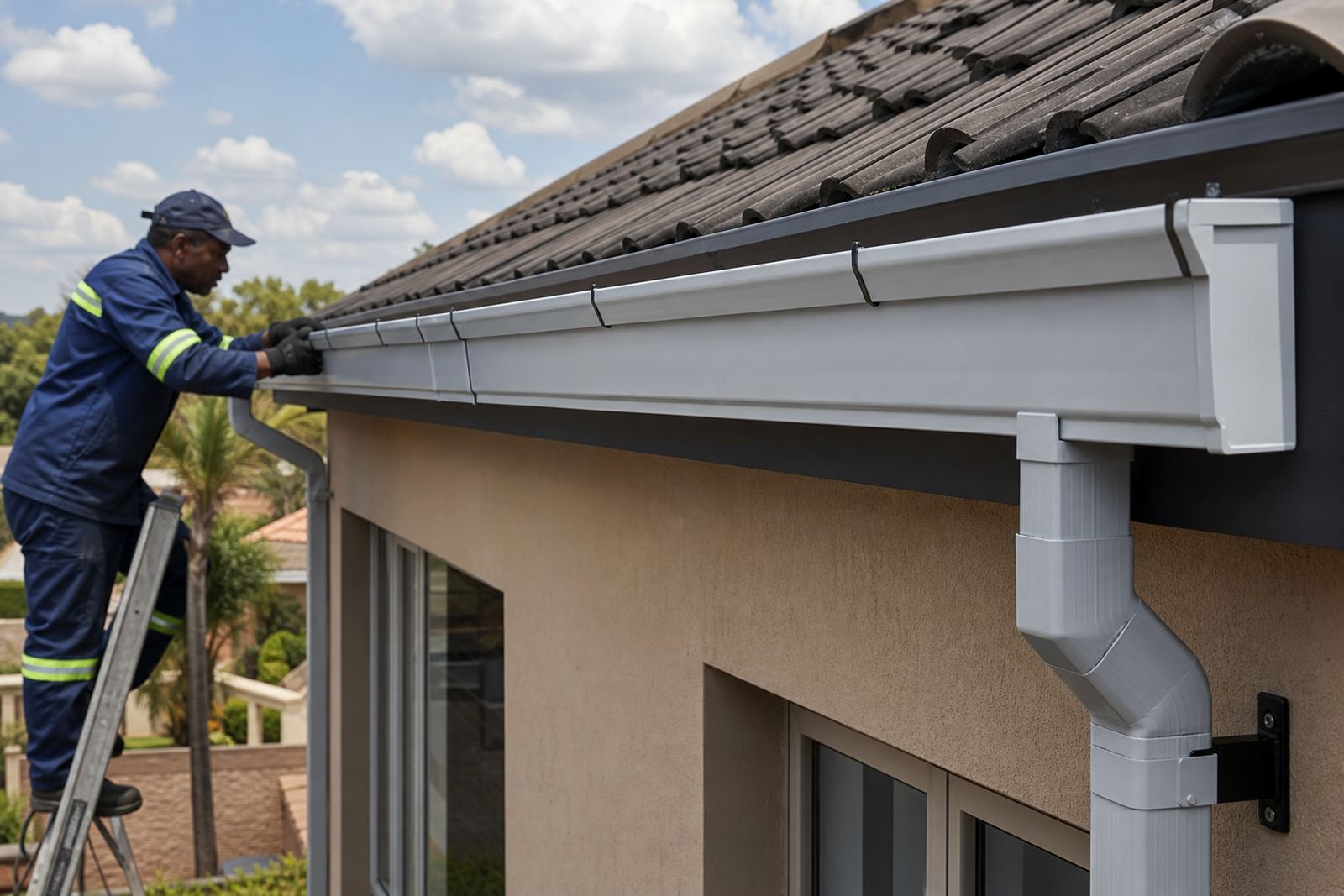
Roofline cleaning is work at height, so the safest method is the one used by competent people with the right access equipment. That may include ladders set on stable ground, roof access gear, edge protection, or a combination suited to the site. A quick reach from a window or a shaky ladder against a wet wall is not a proper plan and can go wrong in seconds.
On homes with two storeys, steeper roof pitches or slippery surfaces after rain, the risk rises quickly. In summer thunderstorms around Pretoria or Johannesburg, a roof can be dry in one moment and slick the next, while a Cape Town morning with coastal mist can leave surfaces unexpectedly damp. If a gutter is high, awkward to reach or fixed close to fragile tiles, the safest option is to let trained people handle it. That is especially important where downpipes run behind walls, through tight corners or along a shared boundary.
- Use stable access equipment suited to the roof height
- Keep clear of wet, loose or damaged roof surfaces
- Do not lean too far from a ladder to reach the next section
- Work with another person on site where practical
- Stop and inspect if a bracket, tile or fascia board looks loose
How gutter design affects cleaning frequency
Some gutter systems are simply easier to maintain than others. A good fall helps water move with enough speed to carry fine debris towards the outlet, while still avoiding standing water in the run. Bracket spacing matters too because a gutter that sags slightly in the middle creates a low point where dirt collects first. Once that happens, each rainfall adds more material and the blockage grows.
Material choice also plays a part. Plastic-steel composite gutters and fascia boards offer a practical balance for South African conditions, especially where heat, heavy rain and day to day wear all test the roof edge. In coastal towns, humidity and salt in the air can be hard on exposed metal fittings, while inland dust and sudden downpours can test the way water moves through the system. The best results come from correct sizing, neat installation and routine cleaning before the blockage becomes a leak.
For larger buildings, the gutter size and number of downpipes should suit the roof area. If a roof section feeds too much water into one outlet, no amount of cleaning will fully fix the strain. That is where builder support, site measuring and material takeoff make a real difference, because the system has to match the roof, not just the appearance of the eaves.
A local job example from a rainy week in Gauteng
Picture a townhouse complex in Randburg after a week of heavy afternoon rain. The front gutters looked fine from the driveway, but water had been spilling over the corner above a pedestrian path. A closer look showed a build-up of leaves near a roof valley, with one downpipe partly blocked by old sealant and grit. The fascia board had started showing dark marks where water had been running behind the gutter edge.
The fix was straightforward once the problem was found. The gutters were cleared, the downpipe outlet reopened, the falls were checked and a loose bracket was tightened so the line held shape properly. After that, the water ran through cleanly instead of spilling over the front edge. Small issues like this are common in built-up suburbs where trees, dust and roof runoff all meet in one line, and they are much easier to deal with before the next storm arrives.
For homeowners, the lesson is simple enough: if one corner repeatedly overflows, do not assume the whole system needs replacing. Sometimes a blocked outlet, sagging bracket or poor fall is the main problem. A proper inspection will show whether the issue is cleaning, repair or a roofline adjustment.
Practical upkeep that saves trouble later
Regular cleaning does not need to be complicated. It just needs to be done before debris hardens and water starts pushing into places it should never reach. In many South African areas, a check before the first major summer rain and again after windy months is sensible, especially where trees overhang the roof or where nearby construction leaves fine dust on the roof sheets and tiles.
Good upkeep also protects the fascia and the wall below it. When gutters stay full for long periods, moisture can creep into joints, soak timber where it is still used, or stain the outer finish of the building. That extra moisture can also shorten the life of sealants and fittings. A clean, correctly sloped gutter with open downpipes is far easier on the whole roof edge than one that is constantly carrying standing water.
- Schedule routine inspections before the wettest part of the season
- Watch corners, valleys and outlet points more closely than straight runs
- Keep trees trimmed back where branches hang over the roof
- Check for stains on the fascia after heavy rain
- Use competent people for any cleaning or repairs at height
Keeping water where it belongs
Clean gutters are not just a neat finish on a roofline. They protect walls, reduce damp, guide rainwater away from the building and help the whole drainage line do its job properly. When the system is clear, the water moves, the downpipes discharge as intended and the roof edge stays under less strain.
If you are dealing with repeat overflow, blocked downpipes or visible wear along the fascia, the answer may be a cleaning visit, a repair, or a review of the gutter size and fall. The right solution depends on the roof and the site, and the safest way to inspect it is with people who are equipped for roofline work. On residential homes and commercial buildings alike, a small maintenance step now can prevent a bigger water problem later.