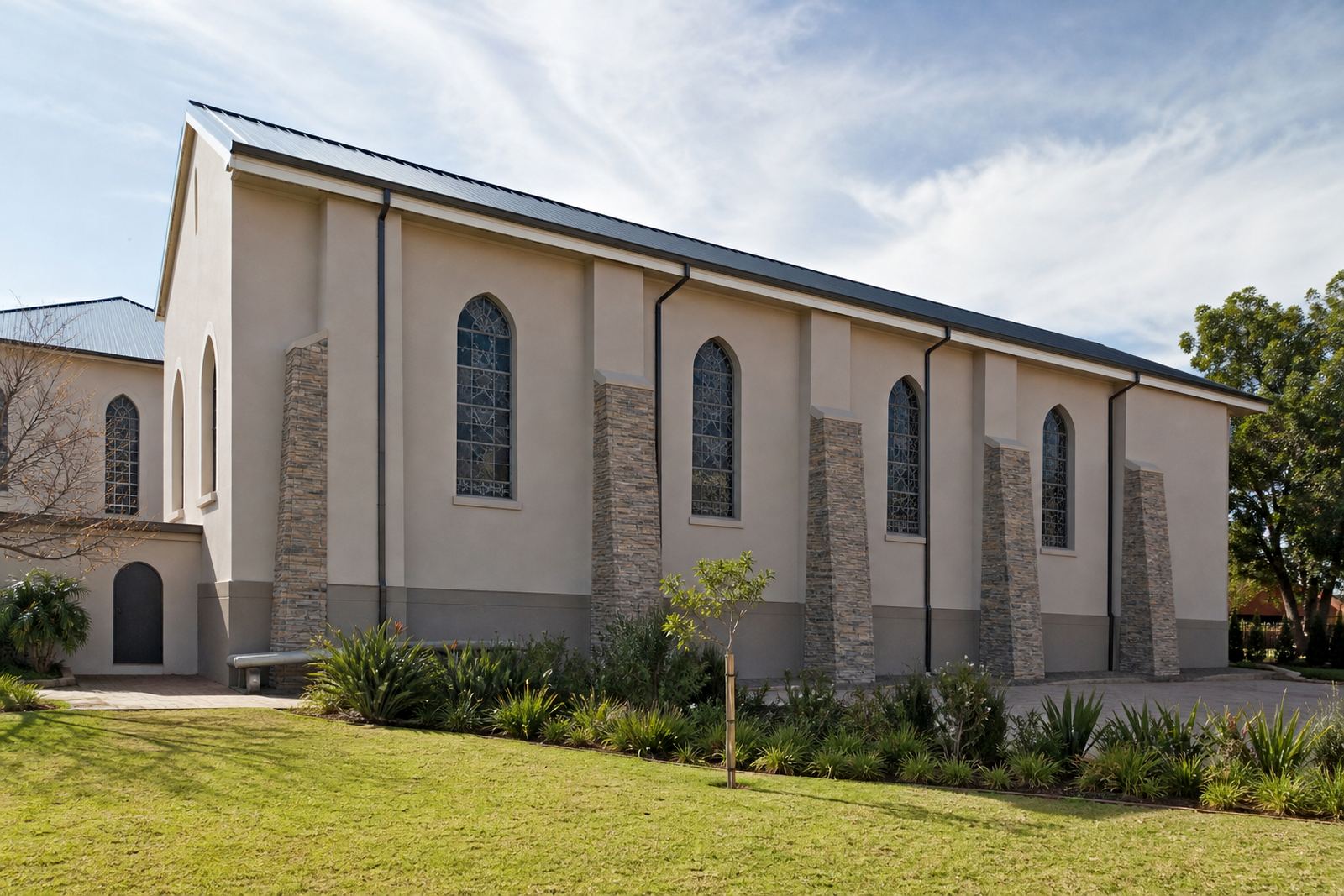

A classroom block with water marks and tired roof edges
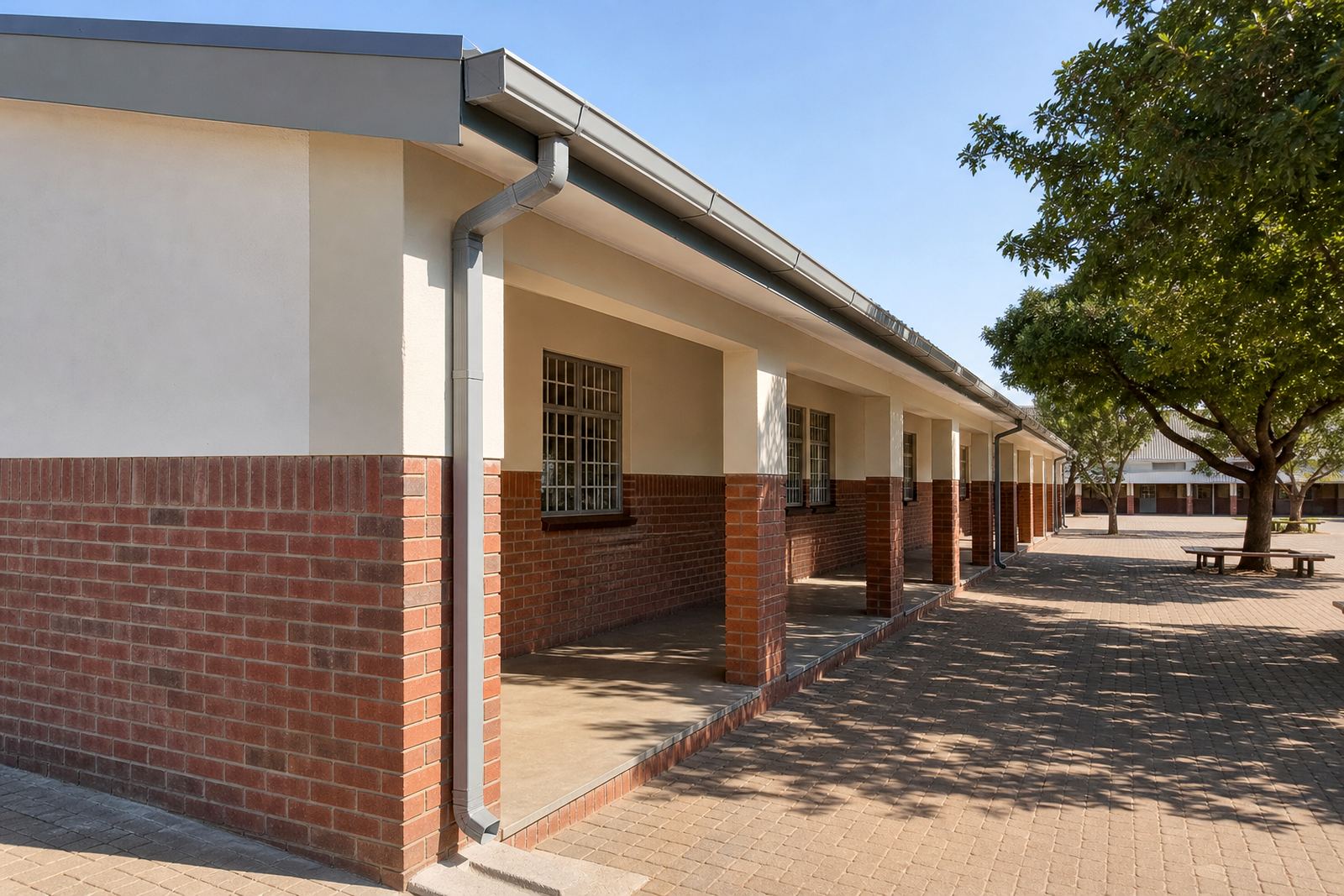
The project site was a school block in Soweto with classroom walls taking the strain from poor runoff and ageing fascia boards. The brief was practical: replace failed roofline material, improve the way water moved off the roof and reduce the chances of splashback and damp patches near the building perimeter.
The school needed work that could fit around teaching hours and movement on site, so the sequence had to stay tidy and controlled. Access was limited in a few areas, there were existing fixtures close to the eaves and some roof sections had different levels, which meant the drainage line had to be checked properly before any new material went up.
- Project type: school block fascia replacement and drainage improvement
- Area: Soweto
- Client type: education facility, no public company name
- Work zone: classrooms, roof edges and surrounding runoff paths
What the brief called for on site
The school asked for fascia material that would hold straight, handle regular weather exposure and keep a neater finish along the roofline. The drainage side needed practical correction rather than a cosmetic touch-up, so downpipe placement and gutter fall were part of the job from the start. Where water had been pooling or running in the wrong direction, the line had to be adjusted rather than patched over.
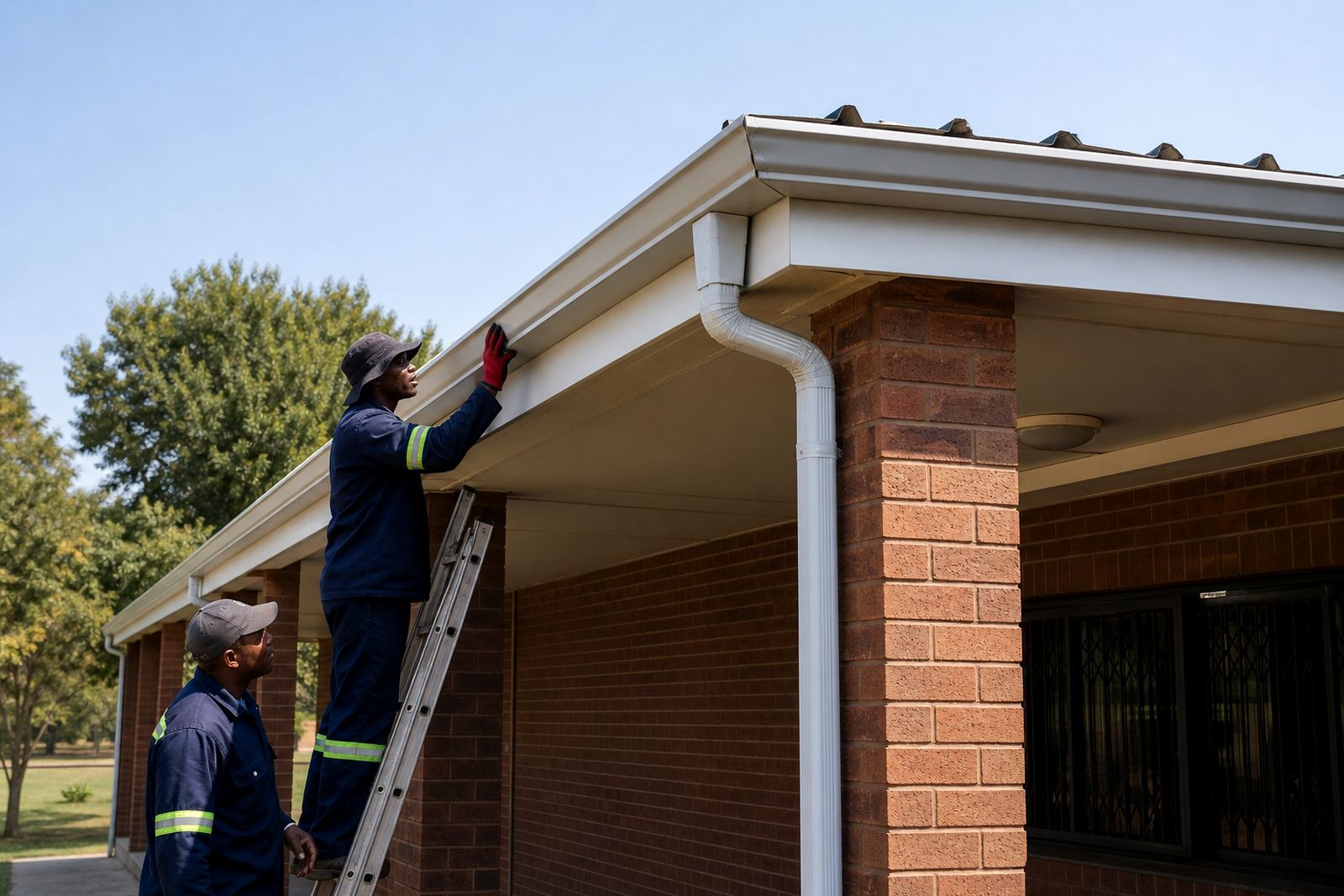
We also had to work around the fact that a school is not an empty building. There were scholars, staff, walkways and boundary areas to protect, so the team had to stage the work in sections and keep loose material under control. Roofline work at height must be done safely by competent people, and that standard guided the full job from measuring through to final inspection.
- Replace worn fascia sections with new composite boards
- Improve gutter fall and water discharge
- Set downpipes to suit the building layout
- Keep access safe around classrooms and pathways
The materials and sizes selected for the roofline
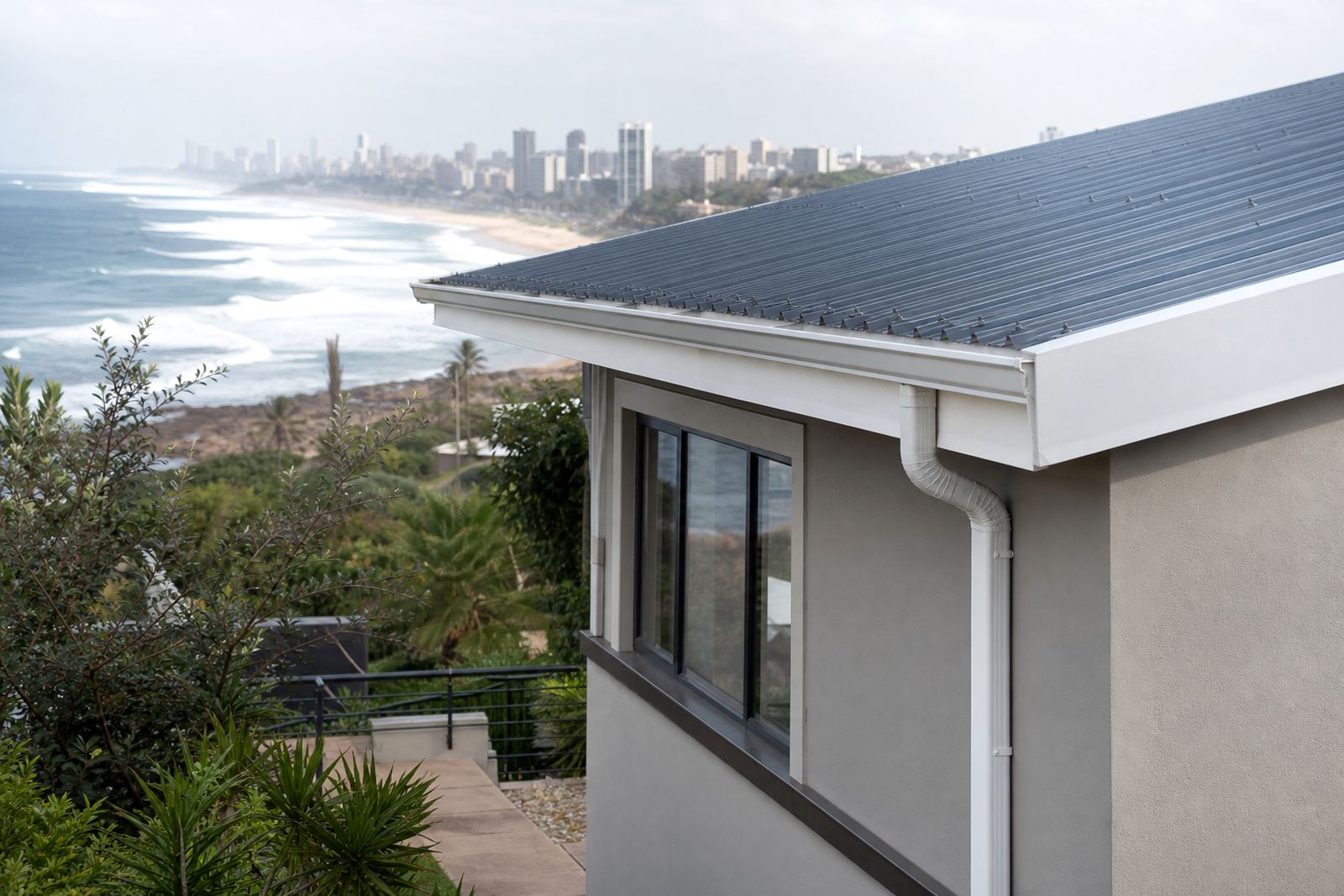
For this school block, the supplied fascia and gutter components were chosen for steady performance in Johannesburg weather, where summer rain can arrive hard and fast. Plastic-steel composite roofline material gives a clean external finish and holds its shape better than many soft alternatives when it is handled properly and fixed to sound backing. The replacement sections were matched to the existing roofline dimensions where possible so the repair looked orderly and did not create awkward joins.
The gutter run was set up with sensible falls so water could move toward the outlets instead of sitting in low spots. Brackets were spaced to suit the span and the expected load of rainwater during heavy storms. Downpipes were positioned where they could discharge cleanly away from classroom foundations and paved areas. On school buildings, even small changes to outlet position can make a big difference to how dry the walkways stay.
- Fascia boards: composite roofline sections for a straight, neat edge
- Gutters: sized to suit the roof run and stormwater volume
- Downpipes: positioned to move water away from walls and paths
- Brackets: fixed to maintain line and support the gutter under load
How the work unfolded across two weeks
The project ran over two weeks, with the first stage focused on measuring, removal and preparation. Old fascia material was taken off where it had warped or failed and the substrate was checked before new sections were fixed. The team then worked through the roof edges in planned lengths so the school could keep functioning while the roofline was being repaired. Timing mattered because the site could not be left open for long, especially with weather changes in Soweto during the rainy season.
Once the replacement boards were in place, the gutters were checked for line, support and outlet flow. We corrected small falls where needed, secured the brackets and tied the downpipe sections into a cleaner drainage route. The final stage included leak checks, fastening checks and a tidy-down of the work area before handover.
- Week 1: measure up, remove failed fascia, prepare fixing points
- Week 1 to 2: install new fascia and gutter sections in planned runs
- Week 2: set falls, fit brackets, install downpipes and inspect flow
- End of job: final check and site clean-up
Results around the classrooms and walkways
The finished roofline gave the school a neater edge and more controlled rainwater movement around the block. The fascia line was straightened, the gutter run was corrected and the downpipes now carry water away in a more orderly way. That means less dripping at the eaves, less splash against walls and better protection for the paths near the classrooms.
For a school, the value is often in the everyday details. When water no longer spills where people walk, the place feels easier to keep dry and cleaner during wet weather. The material choice also reduces the maintenance burden because the composite boards do not need the same constant attention as damaged timber sections. In coastal humidity or inland sun and rain, that matters over the long run.
- Cleaner roof edge finish
- Better drainage control beside classrooms
- Reduced splashback and standing water near walkways
- Less ongoing maintenance at the roofline
What we would keep on a similar school block
On a similar school project, we would again start with accurate measuring and a proper check of the existing falls before any material is fixed. That step avoids poor drainage later and helps the brackets, gutters and downpipes work as one system. We would also keep the installation broken into sections so access stays manageable for staff and learners on a busy site.
For schools and other public buildings, the practical lesson is that roofline repairs are not only about replacing boards. The way the water moves, the spacing of the supports and the discharge point all need to line up with the building. Get those parts right and the roofline does its job without drawing attention to itself.
- Measure first, then set the falls and outlet points
- Use bracket spacing that suits the run and expected rainfall
- Keep work zones controlled around occupied buildings
- Check the whole line at the end, not only the visible sections
Key facts
| Project | Soweto School Block |
|---|---|
| Location | Soweto, Gauteng |
| Scope | Fascia replacement and drainage improvements |
| Duration | 2 weeks |
| Materials | Plastic-steel composite fascia, gutter and downpipe components |
| Key work | Measuring, installation, leak checks, maintenance review |