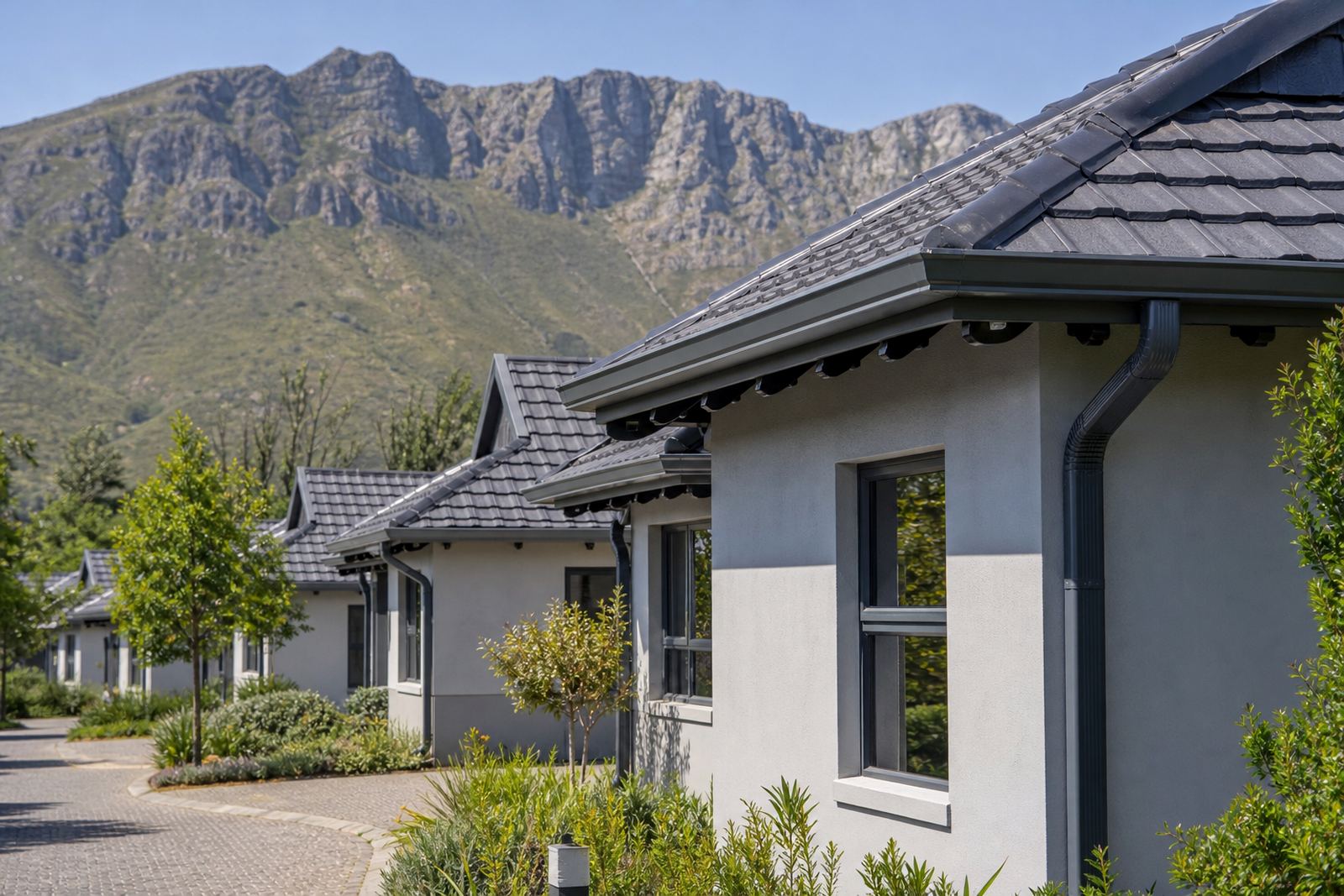
What the Durban roofline needed to handle
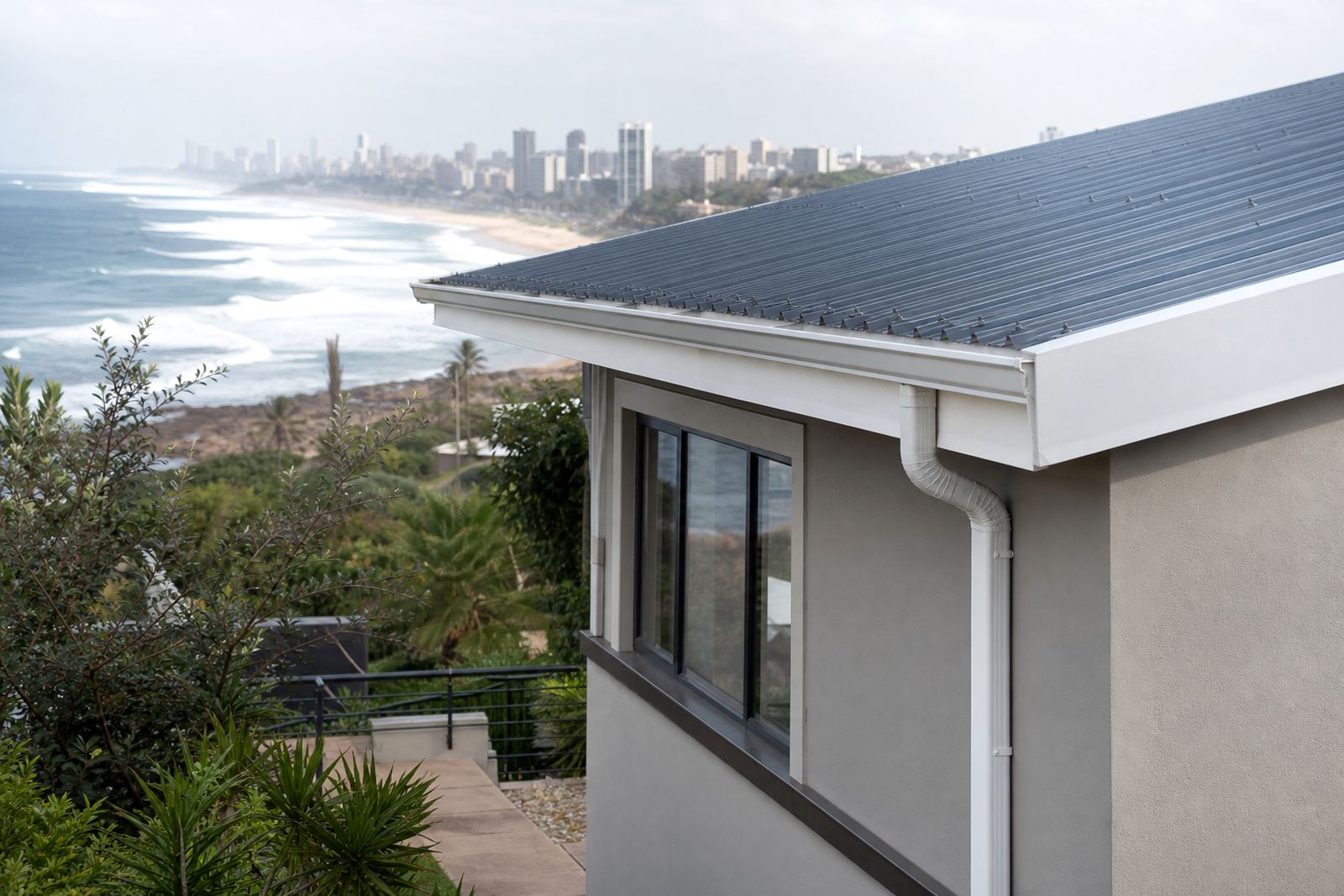
The property sat close enough to the coast for corrosion to be a real concern, so the brief was not just about appearance. The owners wanted gutters and fascia boards that would keep their shape, shed water properly and stay tidy in the face of humid air, afternoon storms and the kind of UV exposure that cooks lesser materials over time. It was a residential house, but the roof edge was long enough that the material choice still had to be handled like a proper site job, not a quick patch-up.
The roof was pitched with multiple runs and a few awkward corners, so the gutter layout needed clean fall, solid fixing points and downpipes placed where water could move away without overshooting during heavy rain. We also had to account for practical maintenance, because in Durban, leaf build-up and salt residue can shorten the life of any roofline if it is left unchecked.
Measured dimensions and material set-out
Our site measuring team checked the eaves, the existing fascia lines and the drop points for the discharge runs before any supply was confirmed. The roofline called for standard domestic gutter sections with matching brackets at regular centres, together with downpipes sized to suit the roof area and rainfall load. Where the roof plane changed, we allowed for expansion gaps and neat joins so the line would stay straight once fixed.
- Gutters supplied in lengths suited to the roof runs, with matching connectors and stop ends
- Downpipes sized for efficient discharge, positioned to manage the catchment area
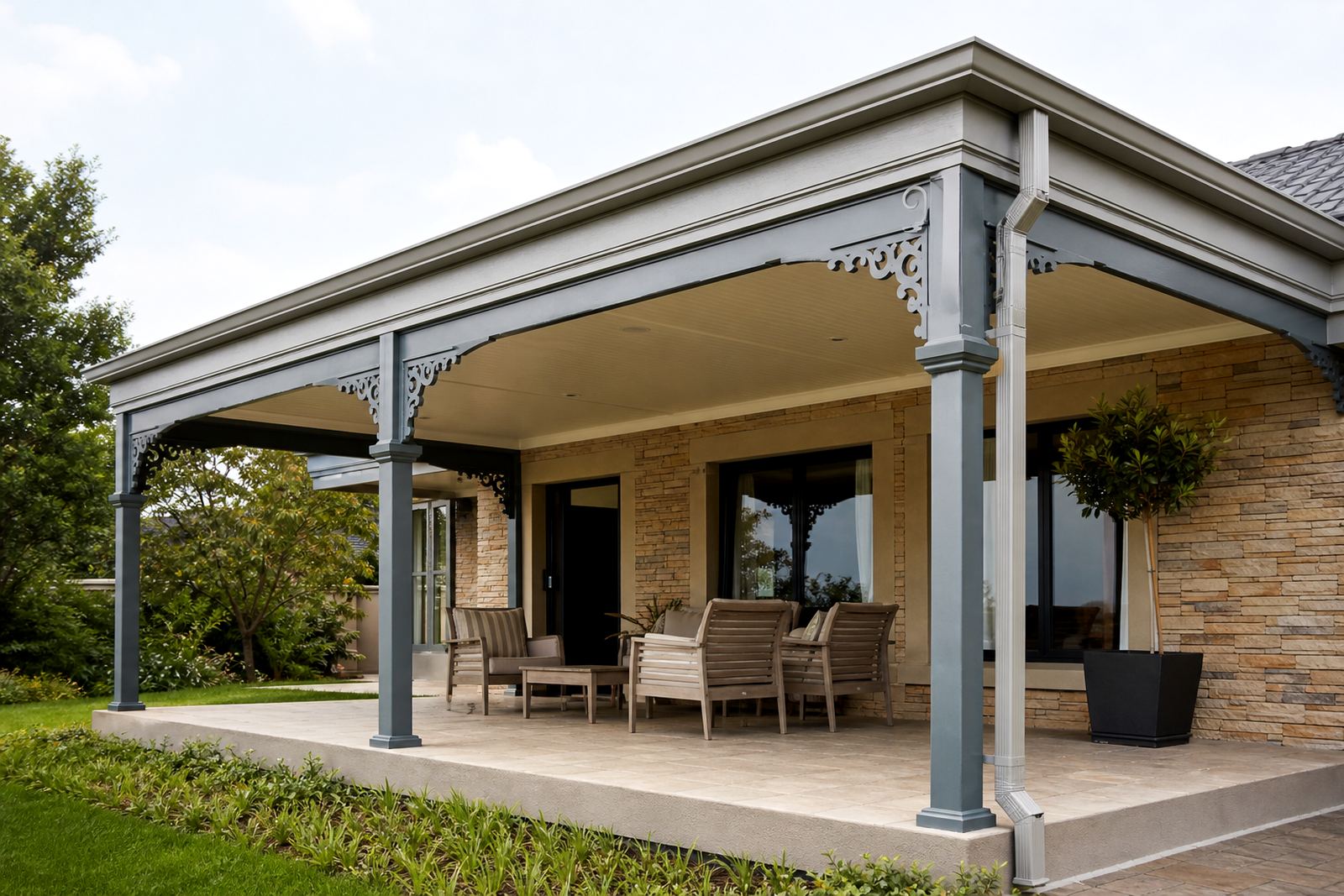
- Fascia boards selected to close off the roof edge and support a clean finish
- Brackets and fixings set to maintain correct fall along each run
- Sealant and accessories matched to the composite system
The composite material gave the client a practical balance between strength and low upkeep. It also suited the coastal setting better than soft timber, which can swell, split or require frequent repainting in humid conditions.
How the installation was handled on site
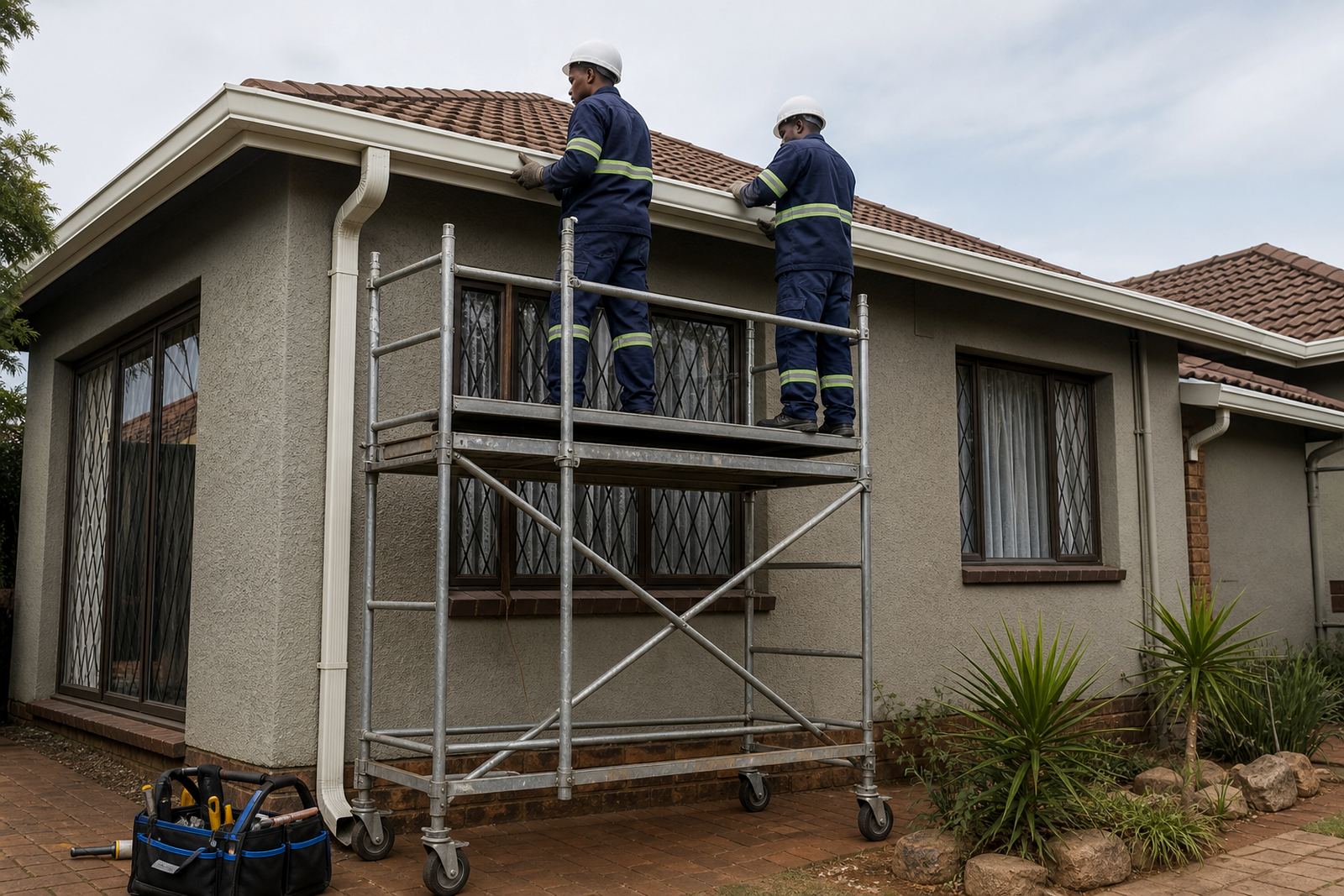
The installation took three weeks from final measure to sign-off, with the weather shaping the working windows at times. Because roofline work happens at height, it was carried out by competent people using safe access and the right fall protection. That matters on a Durban property where a sudden shower can make ladders, roof sheets and scaffolding awkward very quickly.
The fascia boards were fixed first so the gutter line could be set accurately against a straight, stable face. After that, the gutters were installed with the correct fall to each discharge point. A small error in slope can leave standing water in the run, so we checked the line section by section before closing off the joins. Downpipes were then set to clear water away from the wall line and reduce splashback near the foundation.
- Week 1: site measure, material takeoff and delivery coordination
- Week 2: fascia installation and gutter mounting
- Week 3: downpipe fitting, final leak checks and handover
Fixing points, falls and coastal maintenance
For this house, the fixing pattern mattered as much as the material itself. Brackets were spaced to suit the span and the expected rain load, with closer support at corners and outlets. The fall was kept even so water would not sit in the gutter after a storm, and the outlets were set where they could take water without forcing it through tight bends.
In a coastal area like Durban, maintenance should stay simple but regular. A quick rinse to clear salt dust and an occasional check for leaf build-up goes a long way. If the gutters are left full of debris, water can back up at the fascia line and stain the wall. We also advised the owners to inspect the joints after heavy rain, especially after wind has pushed leaves into the roofline.
- Keep gutters clear of leaves, sand and roof grit
- Check brackets and joints after major storms
- Watch for algae or salt film where shade keeps sections damp
- Look at downpipe outlets for blockage after summer rain
What the house gained after the retrofit
The finished roofline looked neat and sat properly against the house, but the real gain was in how the system handled water. The gutters now drain more evenly, the fascia edge is protected, and the downpipes move storm water away from the building with less mess at ground level. That helps the owner avoid repeated touch-ups around the eaves and reduces the risk of moisture finding its way into the roof edge over time.
The composite finish also suits a coastal neighbourhood where materials need to work hard without constant repainting or replacement. For builders, that means a cleaner handover. For homeowners, it means fewer weekend repairs and a roof edge that holds its line through the seasons.
Project details and practical notes
This Durban job was a good example of roofline planning done properly: measure first, match the material to the weather exposure, and keep the installation tidy from the start. The client wanted a durable result without unnecessary fuss, and the final setup met that brief.
For future coastal houses with similar roof geometry, we would approach the work the same way: check the falls carefully, keep the bracket spacing disciplined and make sure the discharge points are positioned for heavy rain. That is the sort of detail that keeps a roofline working long after the first summer storm.
Key facts
| Project location | Durban, KwaZulu-Natal |
|---|---|
| Client type | Homeowner |
| System supplied | Plastic-steel composite gutters, downpipes and fascia boards |
| Roofline scope | Site measuring, material takeoff, supply, installation and leak checks |
| Working timeline | 3 weeks |
| Key conditions | Coastal humidity, salt air, strong sun and heavy rain |