A hall roof that had outgrown the old runoff pattern
The brief came from a public-use hall in Polokwane where the existing gutter line was no longer coping with runoff from the roof area. Water was overshooting in a few places, the outlets were not set where they should have been, and some sections had become difficult to keep clean. On a hall, that kind of problem shows up quickly because there is a lot of foot traffic around the edges, plus dust in dry months and strong rain bursts during summer.
Our task was to replace the gutter run, revise the outlet positions and improve the overall movement of water toward the downpipes. The hall also needed a tidy roof edge finish that would stand up to heat, wind and the usual wear that comes with a public building. Access was limited around the perimeter, so the work had to be planned in sections and kept controlled from start to finish.
- Project type: community hall roof drainage upgrade
- Location: Polokwane
- Work scope: replacement gutters, revised outlets, fascia boards and downpipes
- Main issue: poor runoff handling at a few roof sections
Materials selected for public use and local weather
For this job we supplied plastic-steel composite gutters, fascia boards and downpipes sized to suit the roofline and the expected rain load. The hall roof had a few long runs, so the gutter sections needed enough capacity to carry water without backing up at the joints. We also used brackets at practical spacing to keep the line steady and to reduce movement in wind and heat.
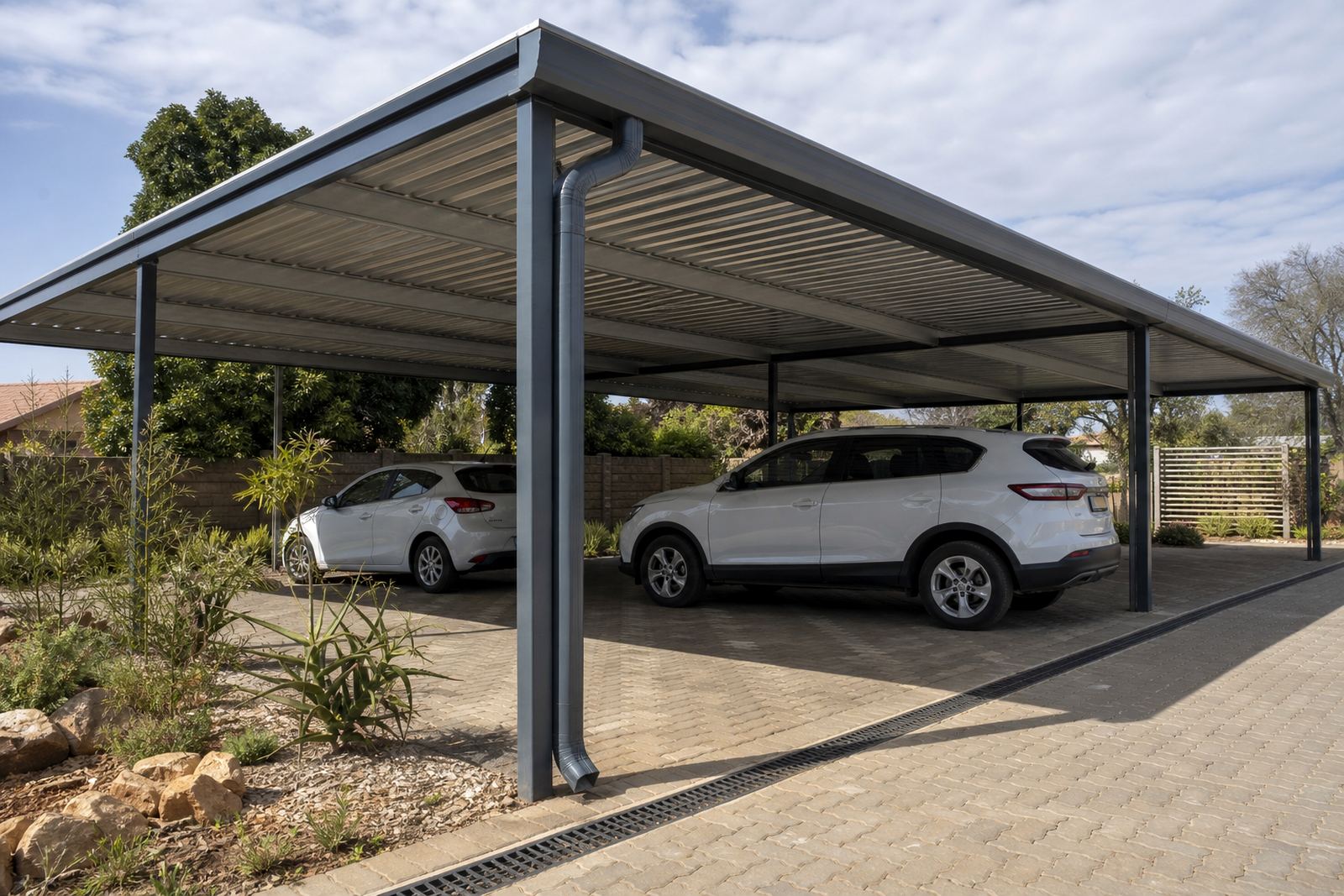
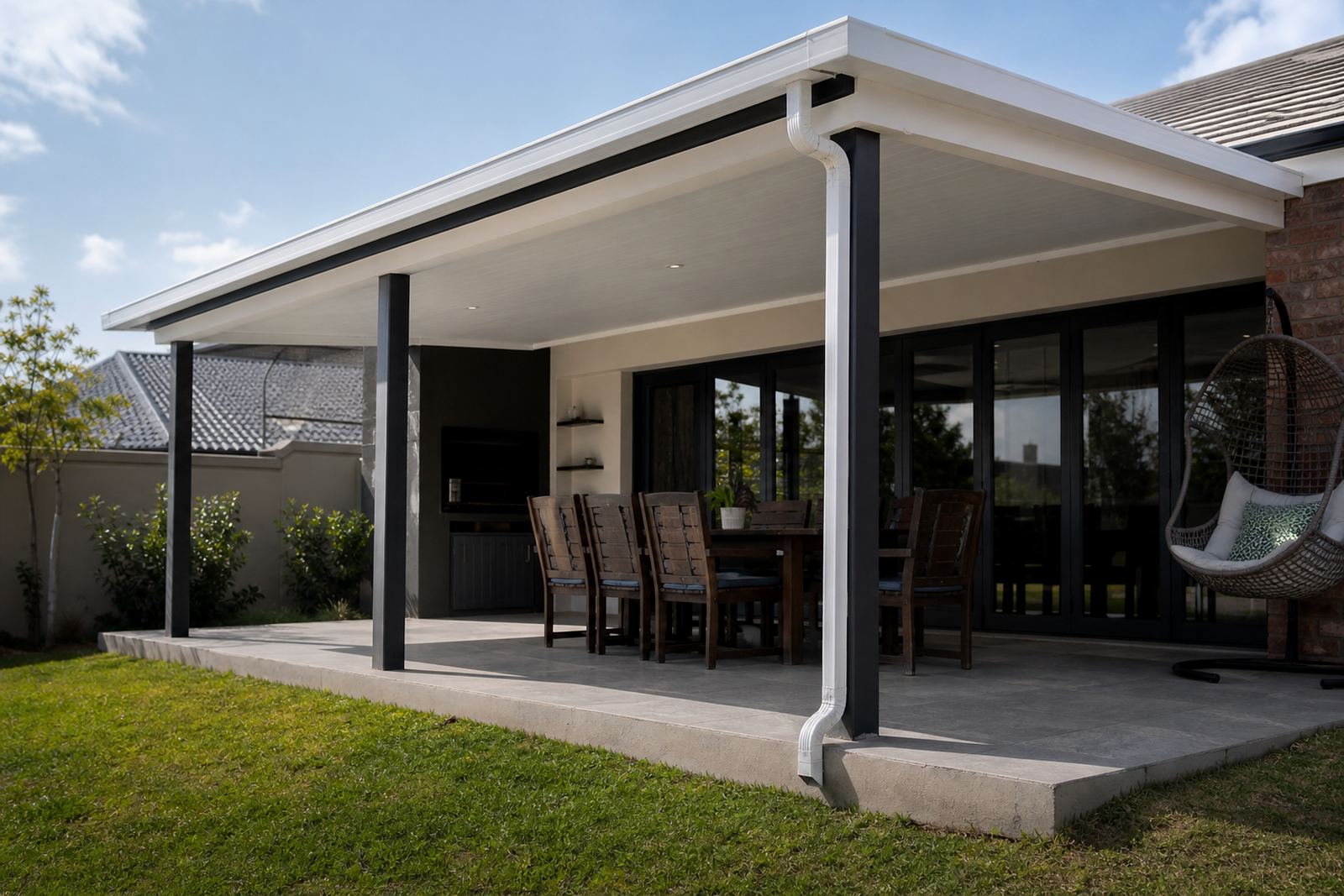
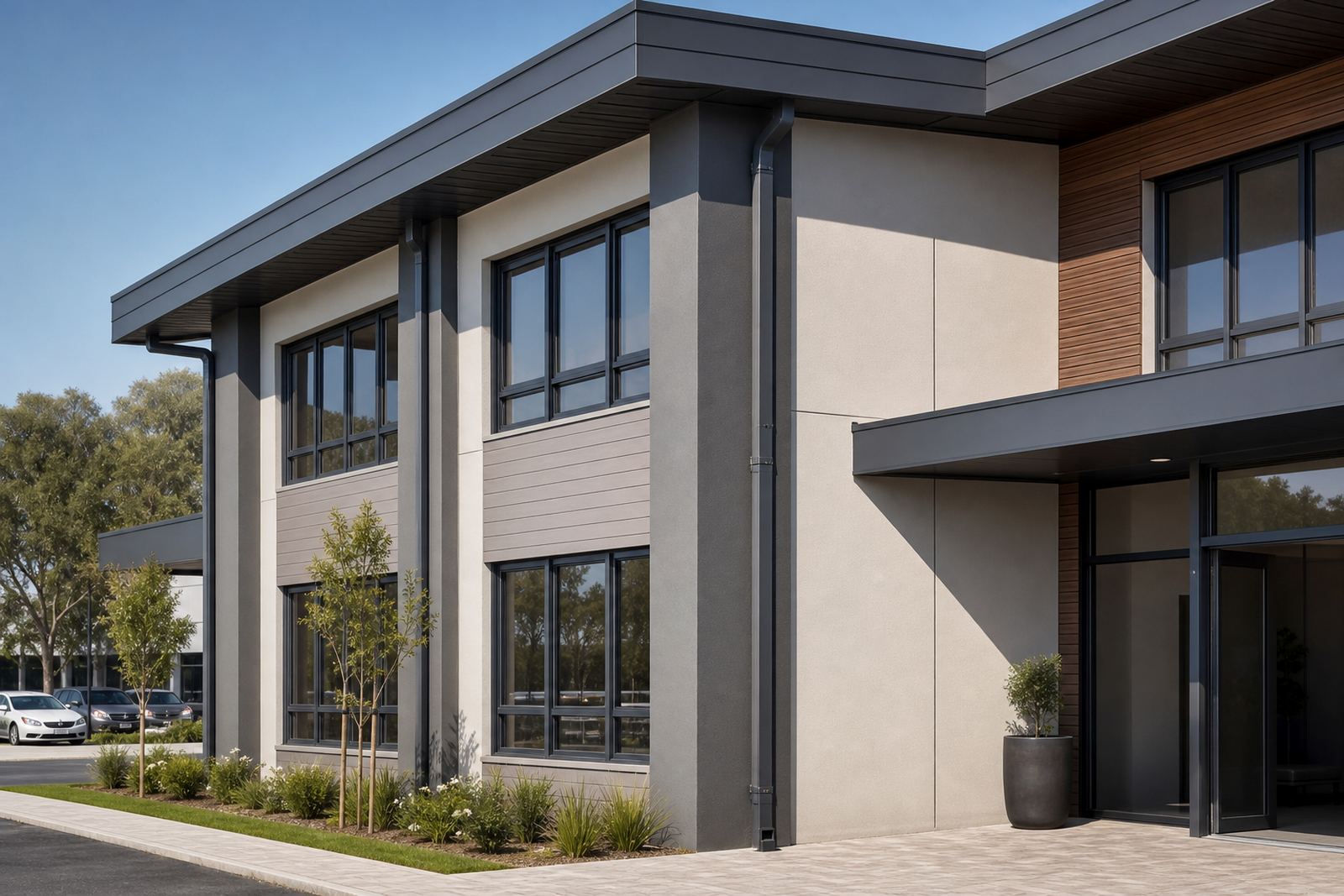
Polokwane can see strong sun, dust and sudden rain, so the material choice mattered. The composite product gives a neat finish with good resistance to moisture and corrosion, which is useful on a building where routine upkeep needs to be manageable. The fascia boards provided a clean fixing line and helped close off the roof edge properly, while the downpipes were placed to take water away from entrances and paved areas.
- Gutter size selected to match long roof runs and outlet spacing
- Downpipes routed away from doorways and high-traffic corners
- Fascia boards used to support the gutter line and finish the roof edge
- Bracket spacing set for secure fixing and cleaner falls
Setting the fall and moving the outlets
The main technical part of the job was the fall. Gutters need a gentle, consistent slope toward the outlets so water moves properly without standing in the channel. On a hall, that can be tricky when roof lengths are uneven or when older outlets are not in the best position for discharge. We marked out the runs, checked the roof edges and adjusted the outlet positions so each section would drain more evenly.
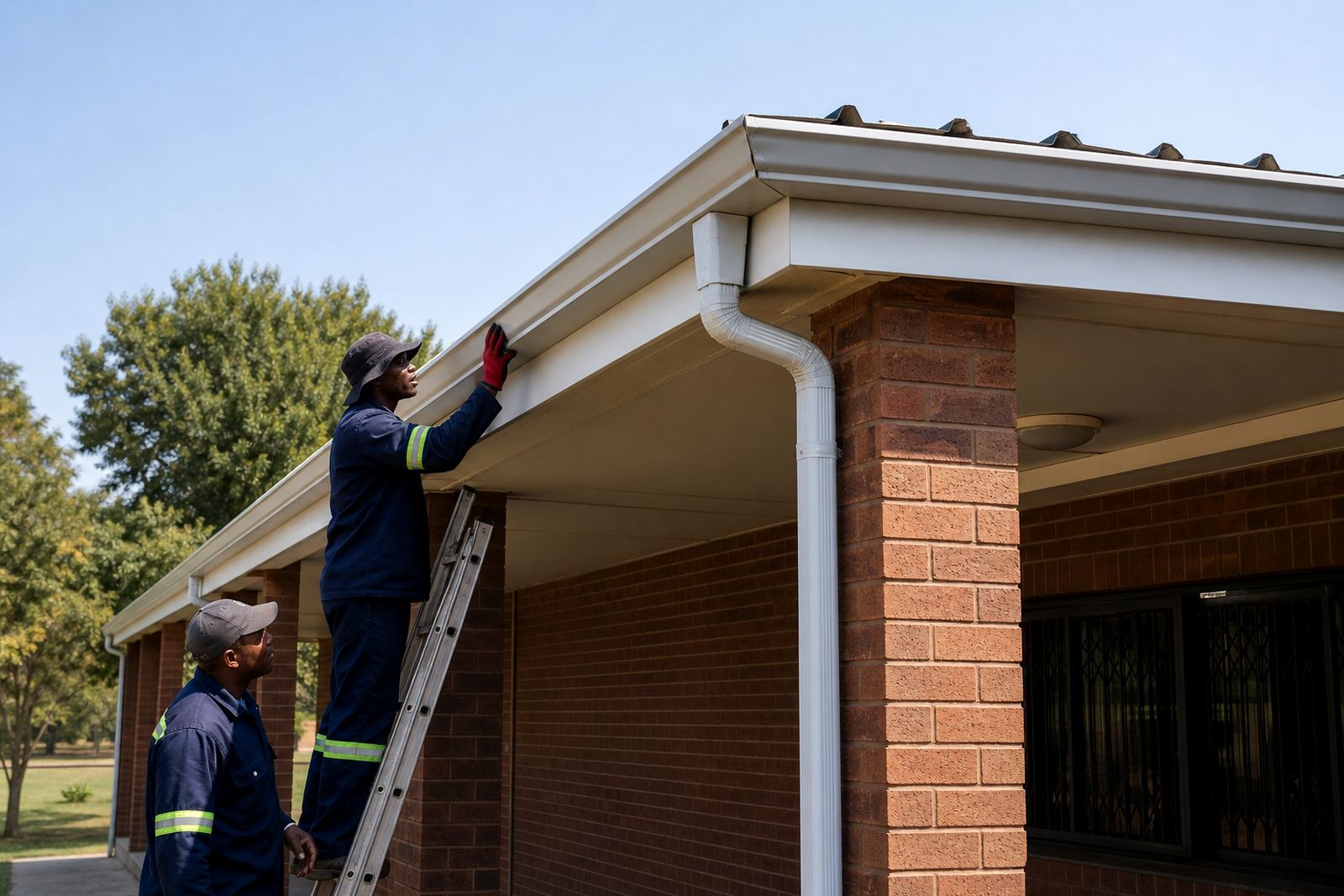
Because this was a public building, we kept the installation tidy and avoided unnecessary disturbance around the site. Any work at height was done safely by competent people with the right access methods and fall protection. That matters on a project like this where the roof edge is not just a job detail, it is a safety matter as well.
The revised outlets helped spread the load more sensibly along the roofline. Instead of forcing too much water through one point, the runoff could move through a better balanced set of discharge points. That reduced the chance of overflow during heavy rain and made the system easier to inspect later on.
- Measured and set a consistent fall along each gutter run
- Repositioned outlets to suit roof geometry and discharge paths
- Used safe access methods for work at height
- Kept fixings neat so maintenance inspections are straightforward
Installation on a working public site
The hall had to remain usable around the work area, so sequencing was important. We completed the roofline in sections, removed the worn components, fitted the new fascia boards, then set the gutters and downpipes into position. Joints were checked as they went in, and the alignment was kept straight so the finished line looked clean from ground level. A small amount of extra time was allowed for careful adjustment at the outlet points, which is normal when you are working on an older building.
The full job ran over two weeks from first site assessment to final check. That included measuring, material supply, removal of the old drainage sections, installation, and a follow-up inspection after the first proper rain. The hall team wanted a system that would not need constant attention, and that was part of our brief from the start. The last thing a busy community venue needs is repeated patching at the roof edge.
- Week 1: site measuring, material takeoff and supply coordination
- Week 1 to 2: removal of old components and installation of new sections
- Week 2: outlet fine-tuning and final inspection
- Post-rain check: confirmation of flow and discharge direction
What changed after the roofline was corrected
Once the new gutters and outlets were in place, the water moved more evenly and there was no longer the same spillover at the problem points. The fascia line gave the roof edge a neater finish, and the downpipes carried runoff away from the access areas more cleanly. That matters on a hall where people come and go in groups, and standing water near entrances quickly becomes a nuisance.
The building also became easier to maintain. With the gutter line properly supported and the outlet positions corrected, routine cleaning can focus on leaves, dust and any minor debris rather than chasing repeated overflow faults. For a public hall in Polokwane, that means fewer callouts and less risk of water staining the walls or damp patches forming at the base of the building.
From a practical point of view, the result was a more controlled drainage system that suits the roof shape and the local climate better. It is a straightforward improvement, but it makes a real difference when the first heavy rain arrives after a dry spell.
What the Polokwane Community Hall job taught us
If we were handling a similar community building again, we would follow the same sequence: measure carefully, check the roof fall, place the outlets where discharge makes sense, and match the gutter and downpipe sizes to the roof area rather than guessing. That approach keeps the system practical, not overcomplicated. It also helps the people who look after the building later on, because the layout is easier to understand and inspect.
We would also keep the maintenance side in view from the start. A hall roof benefits from brackets that hold well, joints that are neat, and outlet positions that can be cleaned without awkward access. In Polokwane, where the weather can switch from dry heat to hard rain quickly, that kind of planning pays off. It is not flashy work, just good roofline sense done properly.
For builders and public facility managers, the value is in a system that handles runoff cleanly and stays presentable. That is what this project achieved, and it is the standard we work to on similar roofline replacement jobs.
Key facts
| Project | Polokwane community hall gutter replacement |
|---|---|
| Location | Polokwane, Limpopo |
| Scope | Replacement gutters, revised outlet positions, fascia boards and downpipes |
| Material | Plastic-steel composite roofline components |
| Timeline | 2 weeks |
| Outcome | Improved runoff handling and cleaner roof edge finish |