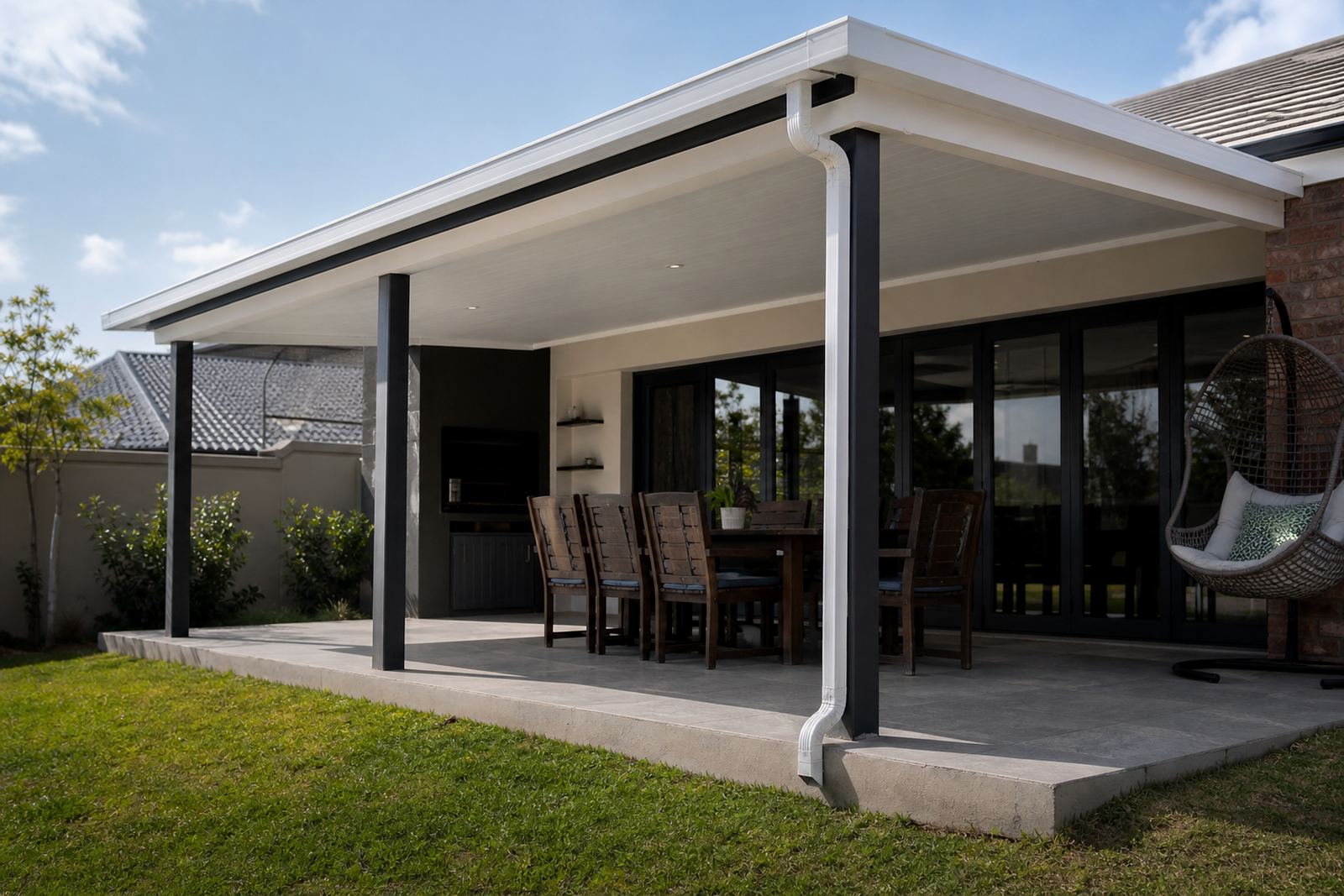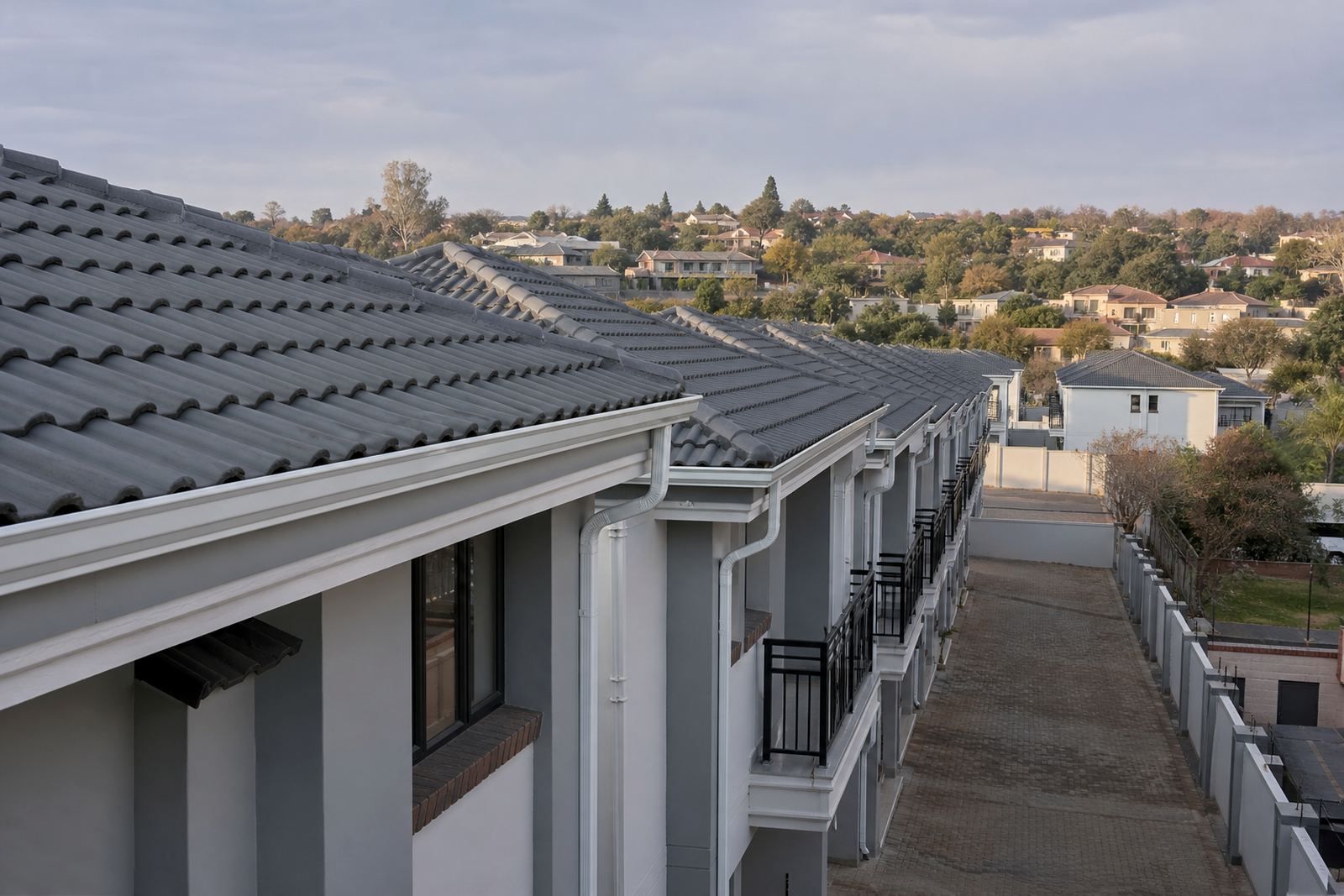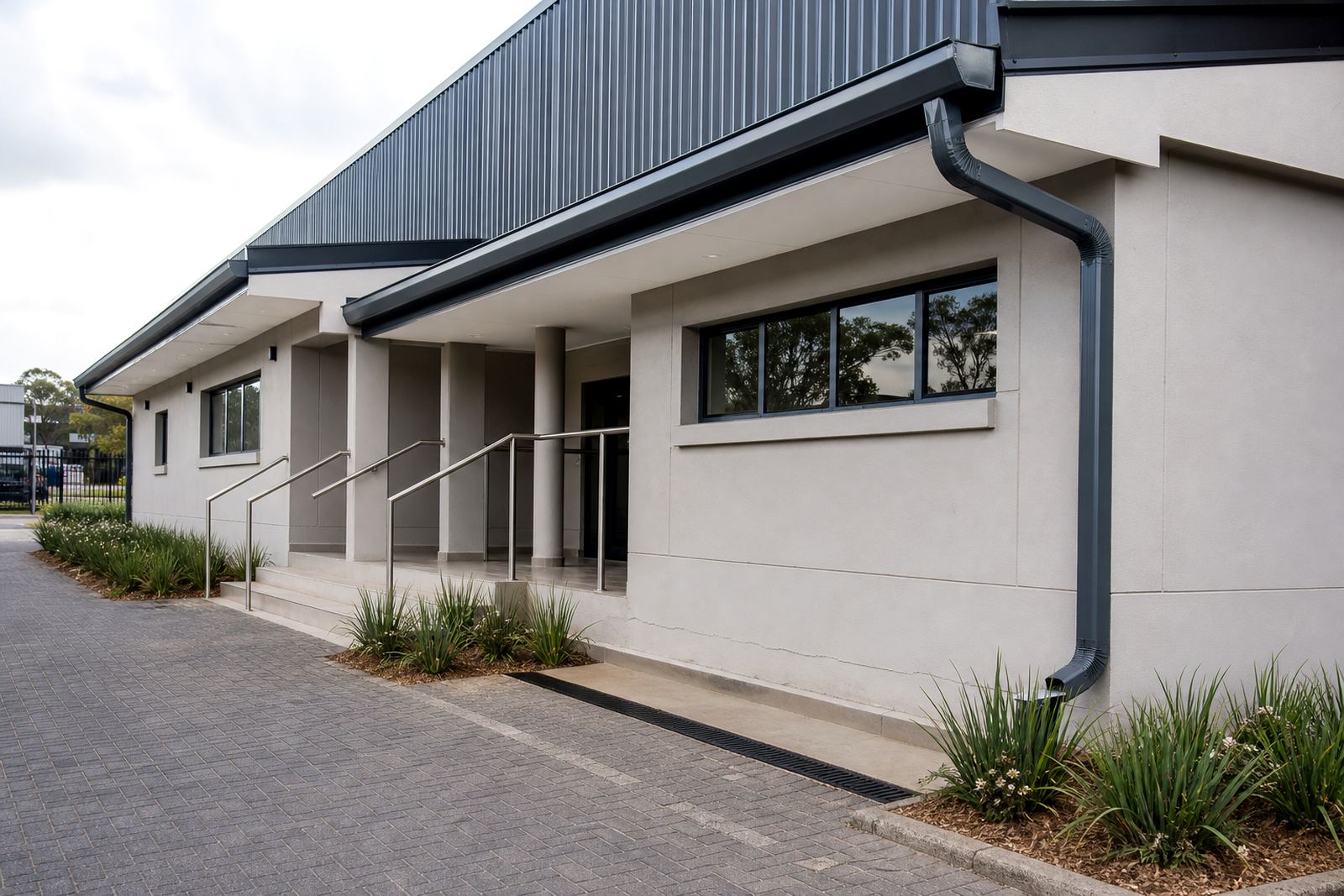

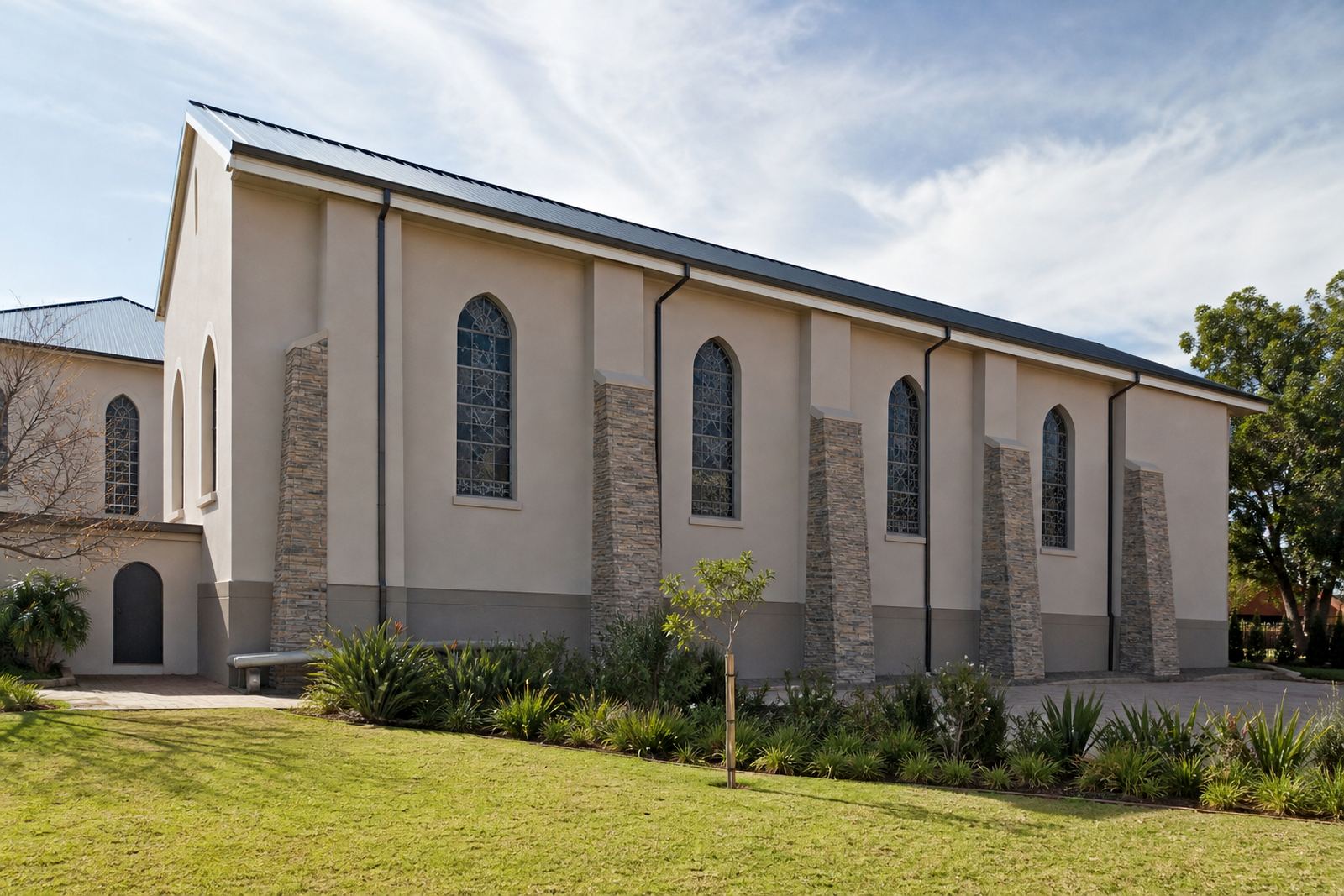
High eaves and long roof edges in Krugersdorp
The brief came from a church team in Krugersdorp that needed help with ageing roofline sections on a large building used through the week and on weekends. The main concern was long gutter runs along the eaves, with water overflowing in heavy rain and staining the wall line below. Because the walls were high and the roof edges stretched across several sections, the layout had to be planned carefully before any fixing started.
We supplied plastic-steel composite gutters, downpipes and fascia boards sized to suit the roof spans and the expected water flow. On a building of this type, the rainwater path has to be planned from the start, not adjusted later. Downpipes need to land where they can drain cleanly and not dump water across walkways or planted areas. The job was handled with proper access gear and competent roofline installers, as work at height carries real risk and needs good control.
What the church asked us to solve
The existing roofline had a mix of tired sections, uneven support and a few areas where water had not been carrying through at the right fall. At church entrances, even a small overflow can create slippery paving and marks on plaster. The client wanted a neater edge, better drainage and a finish that would hold its shape over time without constant patching.
We walked the roofline, checked the lengths, marked the outlet positions and looked at where the downpipes could drop without clashing with windows, gates or public walkways. The eaves were long enough that the gutter needed consistent fall from one end to the outlet points. In a project like this, the bracket spacing and line set out matter as much as the material choice. If the run sags, water pools, dirt collects and the system starts asking for more maintenance than it should.
- Long gutter runs along the main roof edges
- Careful outlet placement at high wall sections
- Clean runoff away from entrances and pedestrian areas
- Matching fascia boards to close off the roof edge neatly
Materials sized for the roofline
We supplied gutter sections, downpipes, fascia boards, unions, end caps, outlets and brackets in sizes suited to the job. The gutter profile chosen allowed for a practical water channel on a broad roof edge, while the downpipes were sized to move storm water without backing up at the outlets. Fascia boards were used to give a neat face at the eaves and to support the gutter line properly.
For churches and other public buildings, maintenance access is always worth thinking about. A system should be easy to inspect after a summer storm and simple to clear when leaves or grit build up. The plastic-steel composite material also helps where the building faces strong sun, dusty air and weather changes. It keeps a cleaner look than bare timber and does not need the same level of repainting. The finish on this job was chosen to sit quietly against the roof, not shout for attention, and that suits a place like this.
- Gutter lengths cut and joined to suit the actual eaves line
- Outlet points set where the roof pitch delivered water most effectively
- Downpipe clips fixed at practical intervals for support
- Fascia board sections aligned to keep the roof edge straight
Installation on the roof edge
The installation took place over two weeks, with the first week focused on measuring, setting out and removing the old roofline sections where needed. The second week covered fitting the fascia, hanging the gutter runs, fixing the outlets and running the downpipes to their discharge points. That sequence matters on a building with high walls, because each stage depends on the previous one being set accurately. A few millimetres out at the start can turn into a poor fall by the end.
Bracket spacing was kept even along the long runs to stop flex and reduce sagging between fixing points. At the same time, the team checked that joints were sealed and that the gutter line moved water toward the outlets without standing water left behind. On site, we also had to work around church access times, so the practical side of the job mattered just as much as the technical side. The result was a cleaner roof edge with water channelled where it should go, no fuss.
Fit for churches, halls and other busy roofs
Buildings used by the public need roofline parts that can handle weather and regular attention from cleaning teams, volunteers or maintenance contractors. This project showed the value of using materials that do not warp easily and that keep their line once fixed properly. With the right fall, the gutter drains better in heavy rain. With the right bracket layout, it keeps its shape. With the right downpipe position, water leaves the roofline without making a mess near doors or footpaths.
Krugersdorp gets hot summer storms and dusty conditions for much of the year, so a roofline system has to do its work quietly. The church team now has a neater edge, better drainage and fewer chances of overflow staining the walls. It also gives the building a more orderly finish from ground level, which matters on a property that people notice every week.
- Cleaner rainwater control along the eaves
- Less splashback near entrances and walls
- Better support on longer gutter sections
- Lower routine upkeep than old timber roofline parts
What we would keep on a similar roof
If we were handling a similar church roofline in Krugersdorp or a nearby West Rand town, we would keep the same approach. Measure the roofline properly, confirm the outlet positions early, allow for the right fall and keep the fixing points consistent from end to end. That sort of planning saves time on site and avoids small problems later when the first heavy rain arrives.
We would also keep the maintenance plan straightforward. A visual check after strong wind or a heavy downpour, a clear-out of leaves and grit when needed, and a quick look at the downpipe bases will usually keep the system working well. Roofline work is easy to ignore once it is in place, but the best results come from proper set-out and sensible upkeep. This project followed that pattern from the start, and the roof now carries water in a much more controlled way.
Key facts
| Project type | Church roofline gutter, fascia and downpipe works |
|---|---|
| Town | Krugersdorp |
| Scope | Long gutter runs, high-wall downpipe positioning, fascia installation |
| Material | Plastic-steel composite gutter, downpipe and fascia components |
| Timeline | 2 weeks |
| Key concern | Safe runoff control on high eaves with long spans |
| Work included | Site measuring, material takeoff, supply and installation |