Clinic entrance drainage needed a cleaner path
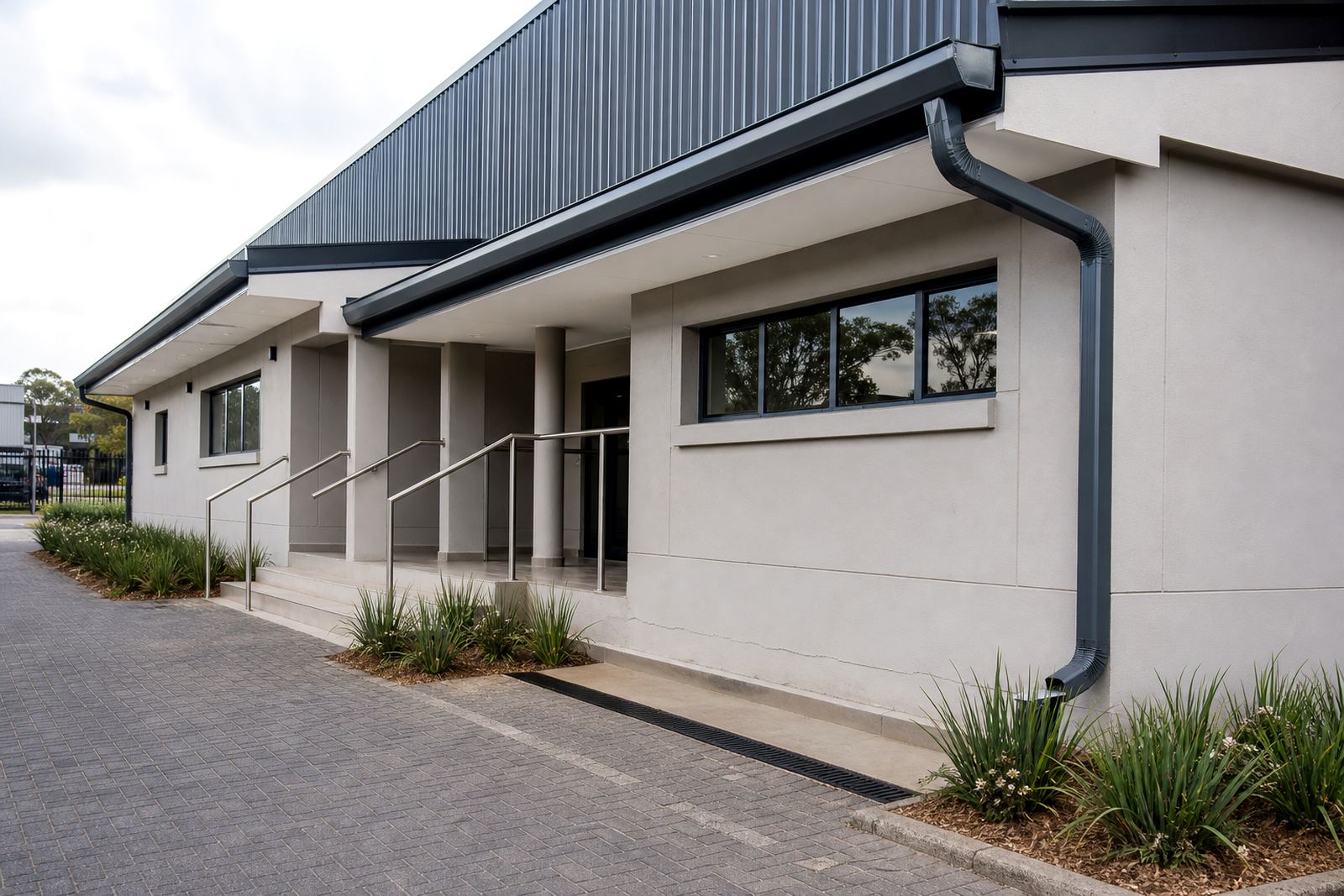
The site was a working clinic in Pretoria with patient movement at the front and side entries, so the guttering had to do more than catch rain. The brief was to move roof water away from walkways, steps and wall bases, while keeping the roofline neat enough for a public-facing building. On the earlier setup, water was spilling in the wrong places during heavier showers, which meant wet paving, dirty splash marks and extra maintenance around the access points.
Because it was a live healthcare property, the work had to be planned around movement at the entrances and without leaving loose material in walk areas. The roof geometry also meant that the falls had to be checked properly so water would move toward the outlets and not sit in low points. Roofing work at height was handled by competent people with the right access equipment and fall protection, as required for safe work on any occupied site.
- Property type: clinic building with public access points
- Town: Pretoria
- Main issue: overflow and splashback near entrances
- Priority: controlled drainage and tidy roof edge finish
Measurements, falls and outlet positions
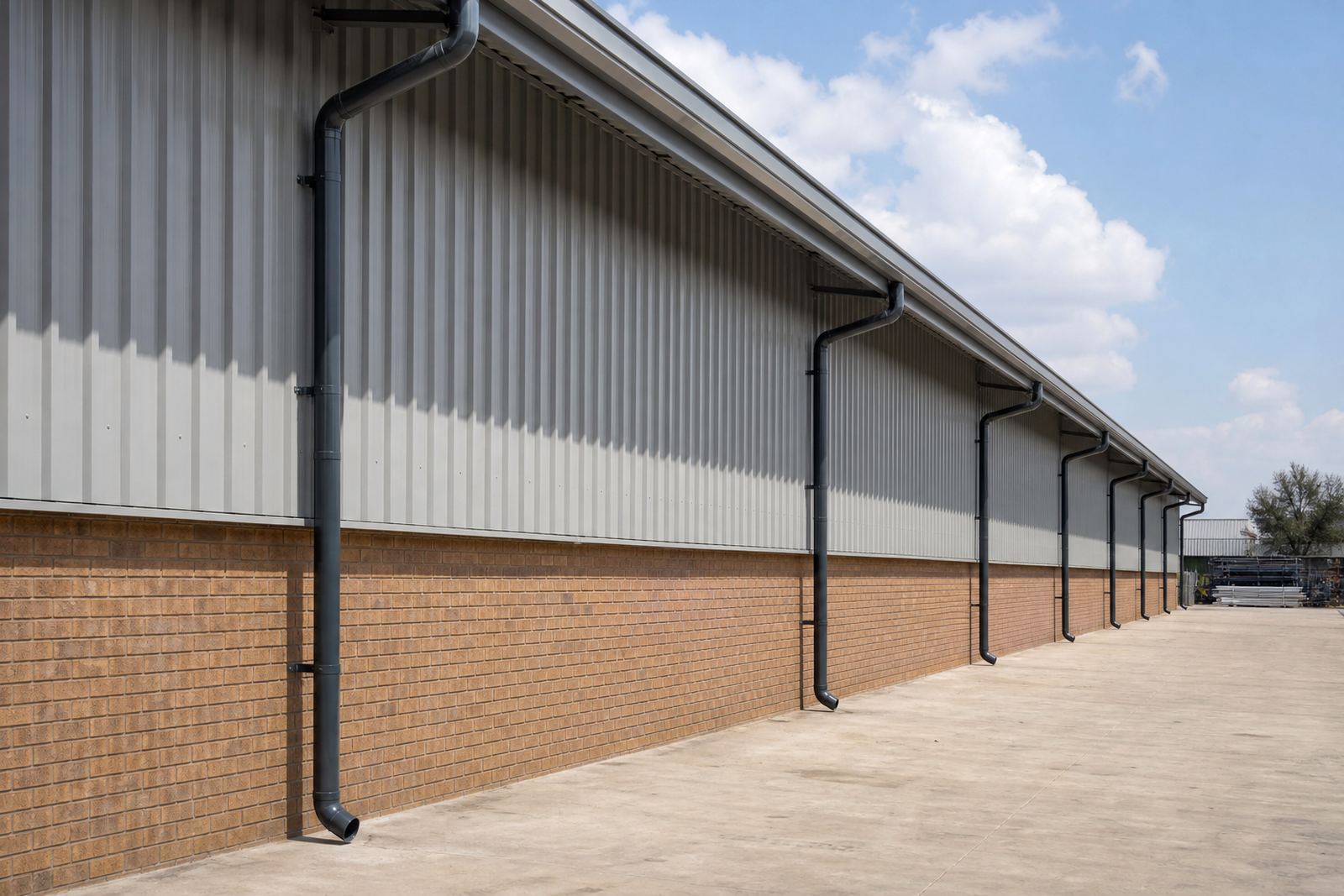
We first carried out site measuring and material takeoff so the gutter runs, outlets and downpipe positions could match the roofline properly. On a clinic, the important detail is not only the amount of rainwater but where it ends up once it leaves the roof. We checked the lengths on each elevation, the likely flow direction, the low points, and the best places to take water down to ground level without crossing busy pedestrian routes.
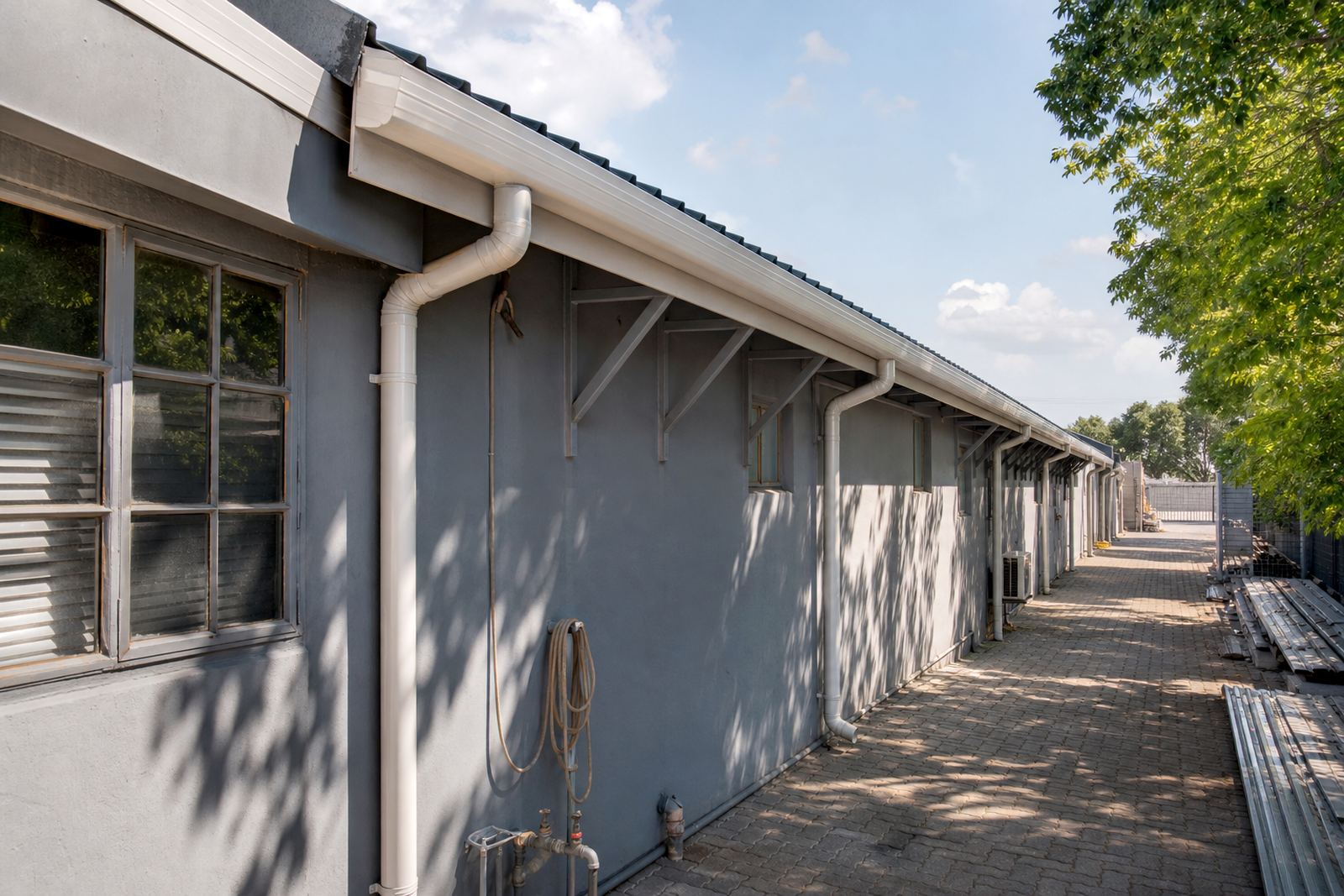
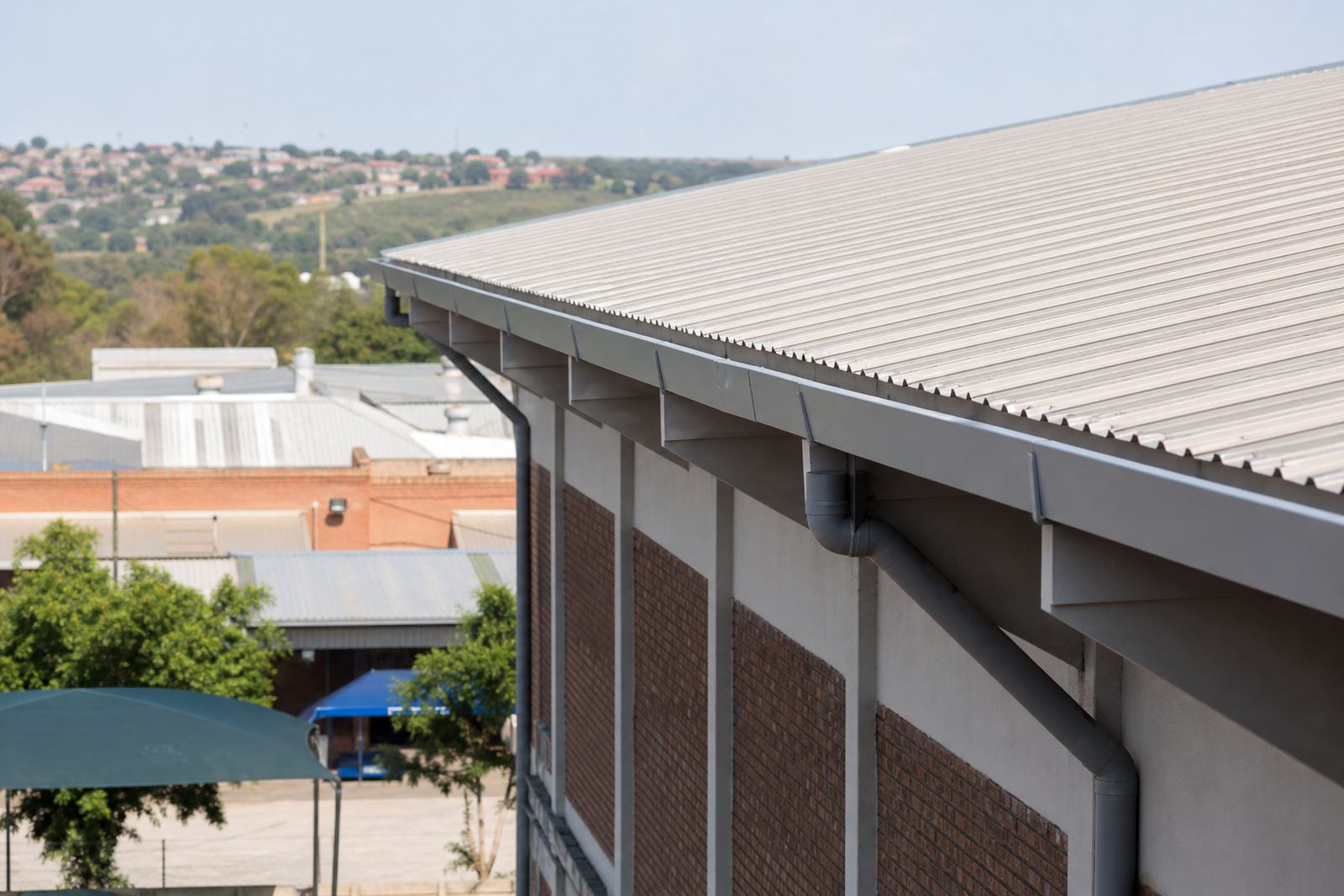
The gutter sections were set with a slight fall toward the outlets, which is standard practice for reliable drainage. In simple terms, gutters need enough slope to move water along but not so much that they look uneven or work against the fascia line. Brackets were spaced to support the runs firmly, especially where longer lengths and outlet points needed extra holding. The downpipes were placed to keep discharge clear of the entrance paving and wall surfaces.
- Measured roof edge lengths before supply and fit
- Checked falls so water moved cleanly to outlets
- Set bracket spacing for stable support along the runs
- Positioned downpipes away from high foot traffic areas
Plastic-steel composite materials used on the job
For this project we supplied plastic-steel composite gutters, downpipes and fascia boards suited to commercial use. The material choice was important because the site needed something that could cope with sun, summer rainfall and general exposure without the maintenance burden that comes with frequent repainting. On a clinic, appearance matters too, so the fascia line had to look straight and finished rather than patched together.
The gutter profile used on the site was sized to suit the roof area and rainfall load from the surrounding roof planes. Downpipes were selected to match the outlet size and the expected water volume from each section of roof. Fascia boards were fitted to give a clean edge under the roof line and to provide a proper fixing line for the gutter brackets. The result was a cleaner and more controlled roof edge with fewer visible signs of weathering.
- Plastic-steel composite gutters for durability and a tidy finish
- Matching downpipes to suit the outlet size and flow
- Fascia boards fitted to support the gutter line neatly
- Components selected for Pretoria sun and seasonal rain
Installation around a live medical site
The installation was planned in stages over two weeks, with the work organised to avoid unnecessary interruption around the clinic entrances. Where possible, sections were completed and secured before the next area was opened up, which helped keep the site orderly. Old fittings were removed carefully, the substrate was checked, and the new line was fixed square to the roof edge before the final adjustments were made.
We also paid attention to sealing at joints and outlet points, since even a small misalignment can lead to drips, staining or water tracking back onto the wall. Downpipes were installed with proper alignment and secure brackets, and the discharge points were set to keep water moving away from paths. The job needed practical coordination, because on a busy property a neat finish means little if the water still lands where people walk.
- Two-week project window
- Phased work to suit clinic access
- Old fittings removed and replaced in sections
- Joints and outlet points checked for correct sealing
What changed after the roofline update
Once the new gutters and downpipes were in place, the roofwater began moving away from the building in a more controlled way. The splashback at the entrance edges was reduced, and the drainage path no longer left the same wet patches near the doors. That matters on a clinic site where people may be arriving on foot, by taxi or being assisted in and out, and the approach area needs to stay as dry and tidy as possible.
There was also a visual improvement. The fascia line gave the roof edge a cleaner look, and the gutter system sat more evenly against the building. For a public-facing property, that kind of finish is noticeable even if it is not the first thing people talk about. It helps the building present well and reduces the amount of ongoing patch-up work after heavy rain. The client also had a clearer drainage layout for future maintenance checks.
- Better control of rainwater near entrances
- Reduced splashback and wet paving issues
- Cleaner appearance along the roof edge
- Clearer route for future maintenance inspections
Maintenance points for clinic and commercial rooflines
After a job like this, basic maintenance makes a big difference. Gutters should be kept free of leaves, grit and loose debris so the fall can keep working properly. Downpipes should be checked after heavy rain to make sure nothing is blocking the outlet or backing up inside the pipe. Where a property sits under trees or close to building activity, regular inspection becomes even more important because small blockages can quickly turn into overflow at the roof edge.
Fascia boards should also be looked at during routine building checks, especially where there is persistent sun exposure or moisture near the eaves. Fixings, brackets and joints should stay secure, and any movement should be dealt with before it becomes a bigger problem. For a site like this in Pretoria, the aim is steady water control through the seasons, with practical upkeep rather than major repair work later on.
- Clear gutters of debris after storms and windy periods
- Inspect downpipes for blockage at outlets and bends
- Check fascia fixings and bracket alignment during routine upkeep
- Plan periodic maintenance visits where roof access is safe and permitted
Key facts
| Project type | Clinic roofline upgrade |
|---|---|
| Town | Pretoria |
| Products supplied | Plastic-steel composite gutters, downpipes and fascia boards |
| Work completed | Site measuring, supply, gutter installation, fascia installation, downpipe installation, leak checks |
| Project duration | 2 weeks |
| Outcome | Controlled runoff away from entrances and improved roof edge finish |