A matched roofline across the estate
The client was an estate homeowner group in Centurion working with builders and body corporate oversight, so the roofline had to look consistent from one house to the next. That meant matching gutter, downpipe and fascia profiles on multiple homes, while keeping the finished look neat around parapets, valleys and eaves of different lengths.
The estate had a mix of single and double storey roofs, with some units exposed to stronger afternoon sun and fast moving summer rain. On jobs like this the visual finish matters, but so does drainage performance. If the gutter run is out by even a small amount, water pools, stains the fascia and can spill over onto walkways and boundary walls.
What Centurion needed from the roof edge
The main requirement was a roofline system that could be fitted across several homes without each unit looking slightly different. The homeowners wanted a clean profile, proper fall to the outlets and materials that would hold their shape in heat. In Centurion, wind driven rain and dust can build up along the eaves, so the system had to be easy to inspect and easy to clean.
- Consistent gutter profile for all selected units
- Downpipes placed to suit existing stormwater paths
- Fascia boards selected to match the roof edge width
- Bracket spacing planned for long straight runs and corners
- Access kept practical for future checks and cleaning
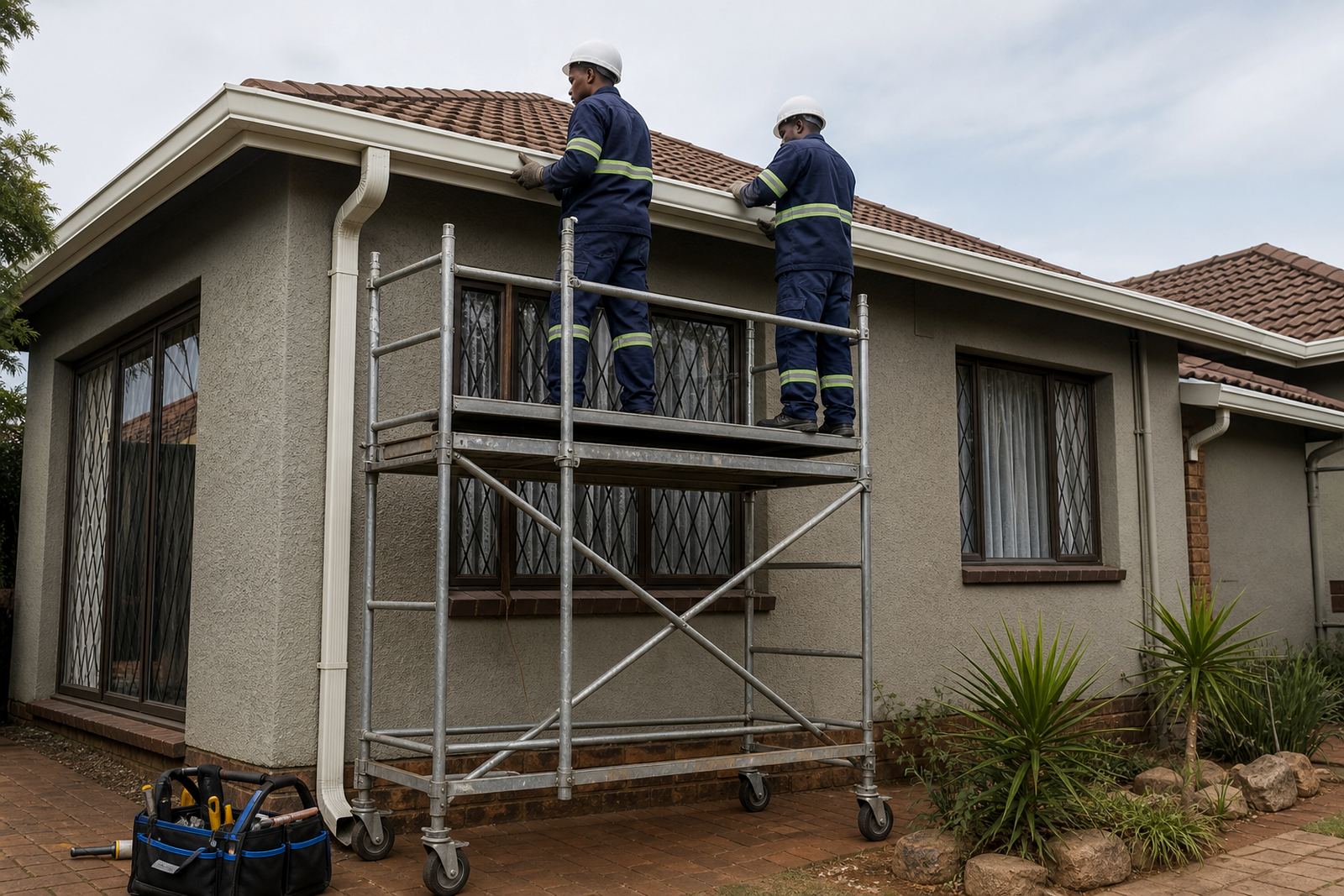
The roofs also had to be treated carefully because work at height needs competent people, safe access and the right fall protection. That shaped the sequence of work and the way each house was handled.
Materials and sizing used on the project
We supplied plastic steel composite roofline materials suitable for residential use, with a neat finish and practical resistance to day to day weather exposure. The gutter sections used standard lengths that could be joined cleanly on site, while the downpipes were sized to suit the roof catchment and the water load expected during heavy rain.
For the estate homes, the gutter runs were planned with enough fall to keep water moving towards the outlets. Brackets were spaced to keep the line true, especially on longer straight sections where sagging would be visible. Fascia boards were selected to cover the roof edge properly and give a clean fixing line for the gutter hangers.
- Gutter length planning based on each roof run
- Downpipe diameter matched to roof area and outlet points
- Bracket layout set for straight alignment and support
- Joiners, outlets and corners chosen to suit each roof shape
- Fascia boards cut to suit eaves and return sections
Site work from measure to fit
The project ran over three weeks from initial measuring through to final handover, with each stage set around the estate schedule and access windows. The first step was site measuring and material takeoff, so the quantities for each unit could be separated correctly. That avoided mixed lengths and kept the delivery sequence organised.
Once the material list was confirmed, supply was arranged per house grouping. Our team then supported the builders with installation planning, including the positions for outlets, corner pieces and the best fall direction for each roof line. On the installation days, the focus was on fixed lines, correct brackets and tidy jointing so the finished work would read as one consistent system across the estate.
- Week 1: measuring, takeoff and layout confirmation
- Week 2: supply and delivery coordination to the estate
- Week 3: installation support, fitting and final checks
Drainage details that mattered on the day
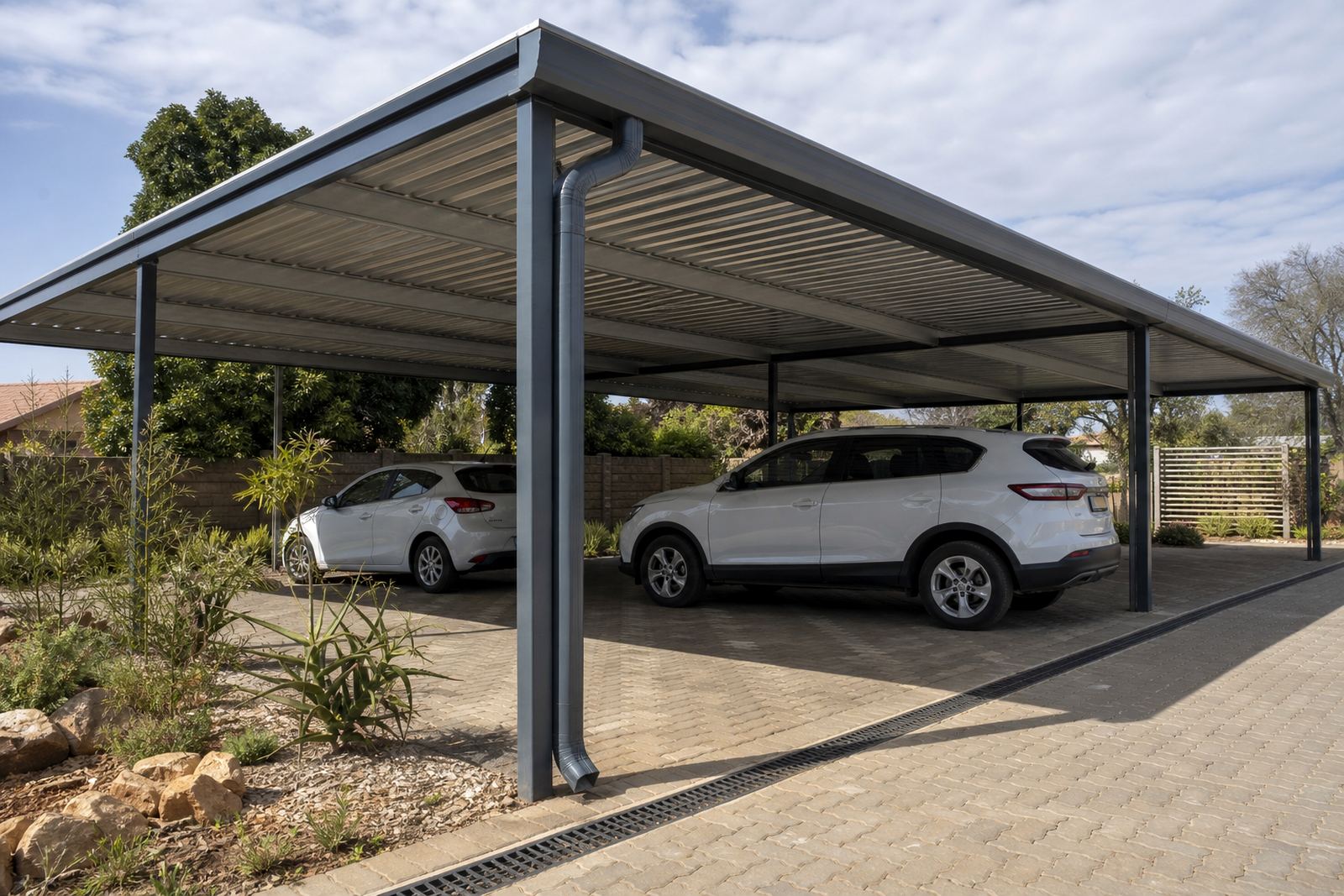
Estate roofing often looks uniform from the street, but the real test is how water moves through the system when a storm hits. The gutter fall was set so that water would not sit in low points, and each downpipe position was checked against paving, boundary lines and garden routes. On some units the outlets needed to be shifted slightly to avoid awkward discharge points near entrances.
Maintenance was also considered. The homeowner group wanted a setup that could be rinsed out and checked without complicated dismantling. That is important in leafy streets and around new developments where dust, leaves and general roof debris can collect along the eaves. A clean gutter line helps avoid overflows, staining and unnecessary patching on walls.
Result across the Centurion estate homes
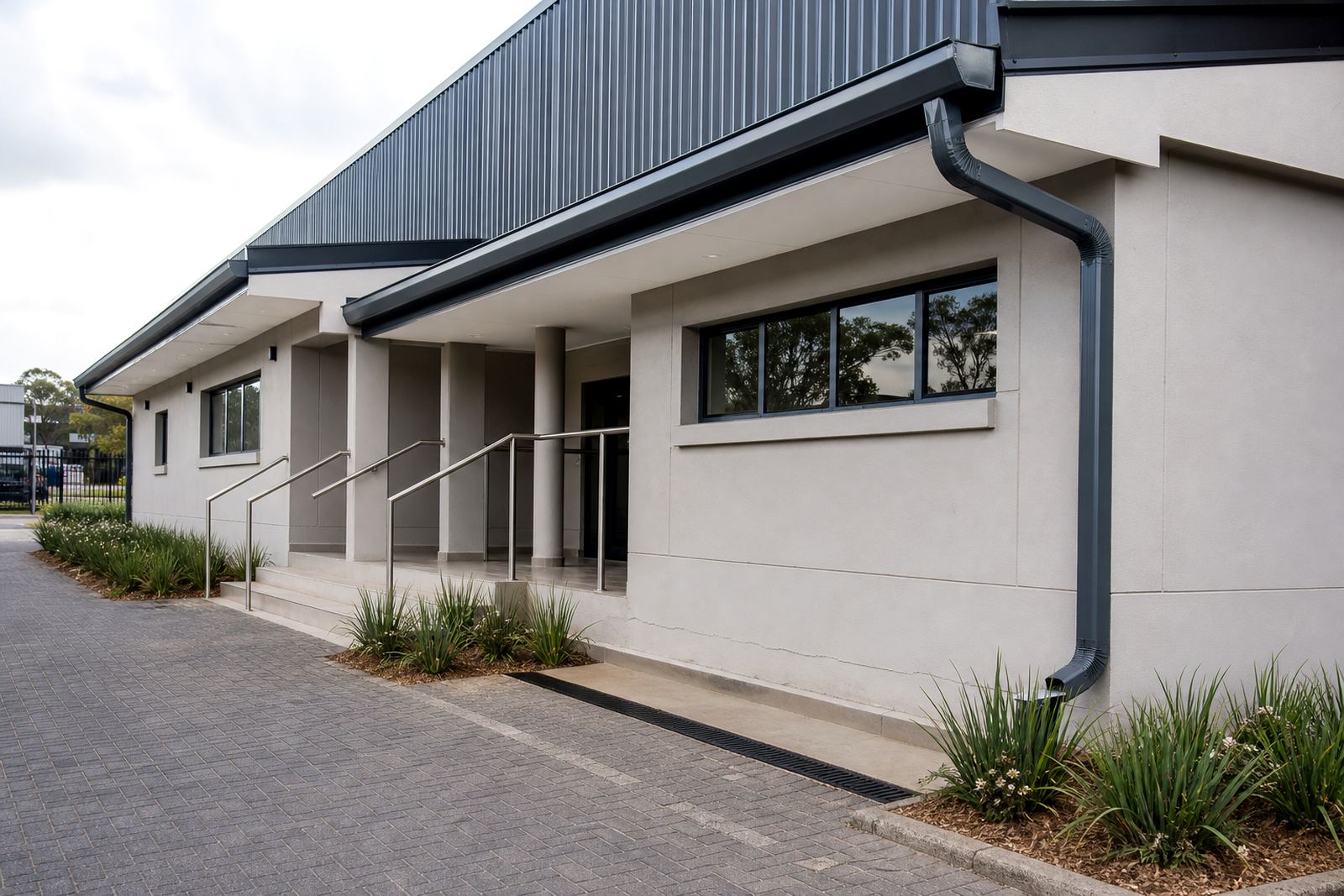
The completed roofline work gave the homes a consistent appearance from unit to unit, with the gutters and fascia boards lining up neatly and the downpipes placed without drawing unnecessary attention. The estate kept a uniform look, while the drainage system was set up for practical use during Gauteng storms.
The client also valued the way the work was coordinated. Builders had a clear material schedule, the homeowners could see that the roof edge treatment matched across the development, and the finished units were easier to maintain. That matters on estate work where a small mismatch in colour, profile or bracket spacing stands out immediately.
- Uniform roof edge appearance across multiple homes
- Cleaner water discharge from correctly placed downpipes
- Reduced risk of gutter pooling from set falls
- Easier cleaning and visual inspection for owners
What we would keep on a similar project
On a similar estate project in Centurion or another Gauteng suburb, we would use the same approach: measure each roof individually, separate the takeoff by unit, confirm outlet positions before supply and keep bracket spacing consistent from the start. That method saves time on site and helps prevent small alignment problems that become obvious once the fascia line is complete.
We would also keep the aftercare practical. A roofline system works best when it is checked after hard rain, cleared of leaves and other debris from time to time, and inspected where joints, corners and outlets meet. That kind of upkeep suits residential estates and helps the material perform well over the long term.
Key facts
| Project | Centurion Estate Homes roofline supply and installation support |
|---|---|
| Location | Centurion, Gauteng |
| Scope | Matching gutter, downpipe and fascia materials for several estate homes |
| Materials | Plastic steel composite gutter, downpipe and fascia components |
| Timeline | 3 weeks from measuring to final handover |
| Services Used | Site Measuring, Material Takeoff, Product Supply, Gutter Installation, Fascia Installation, Downpipe Installation, Delivery Coordination |