
What a valley gutter section does on a pitched roof
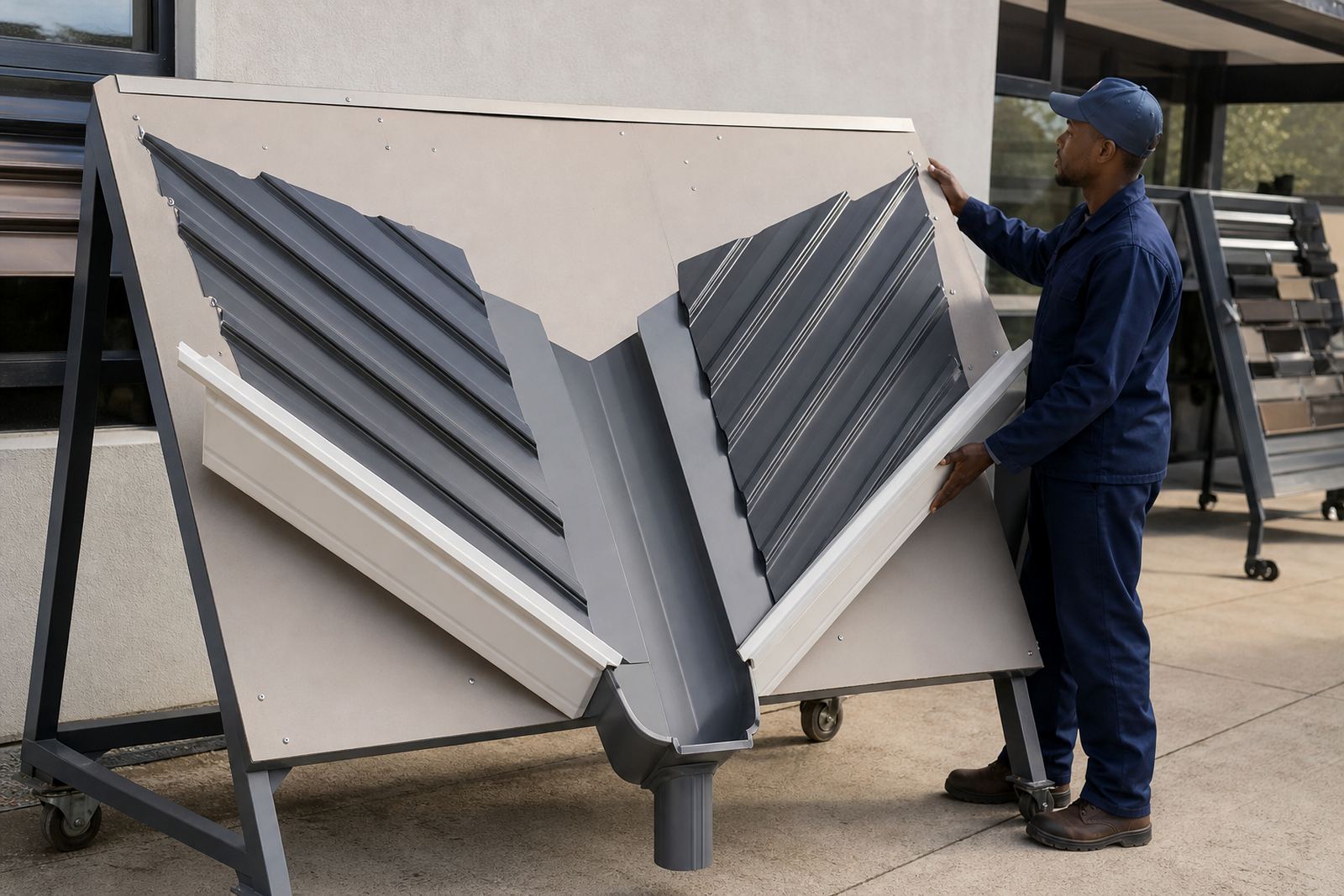
A valley gutter sits in the internal angle between two roof planes and collects water that would otherwise rush down the roof in a narrow, fast-moving stream. On homes and larger buildings, that flow can be heavier than the rest of the roofline, so the section has to hold shape, move water cleanly and tie into the main drainage line without backing up.
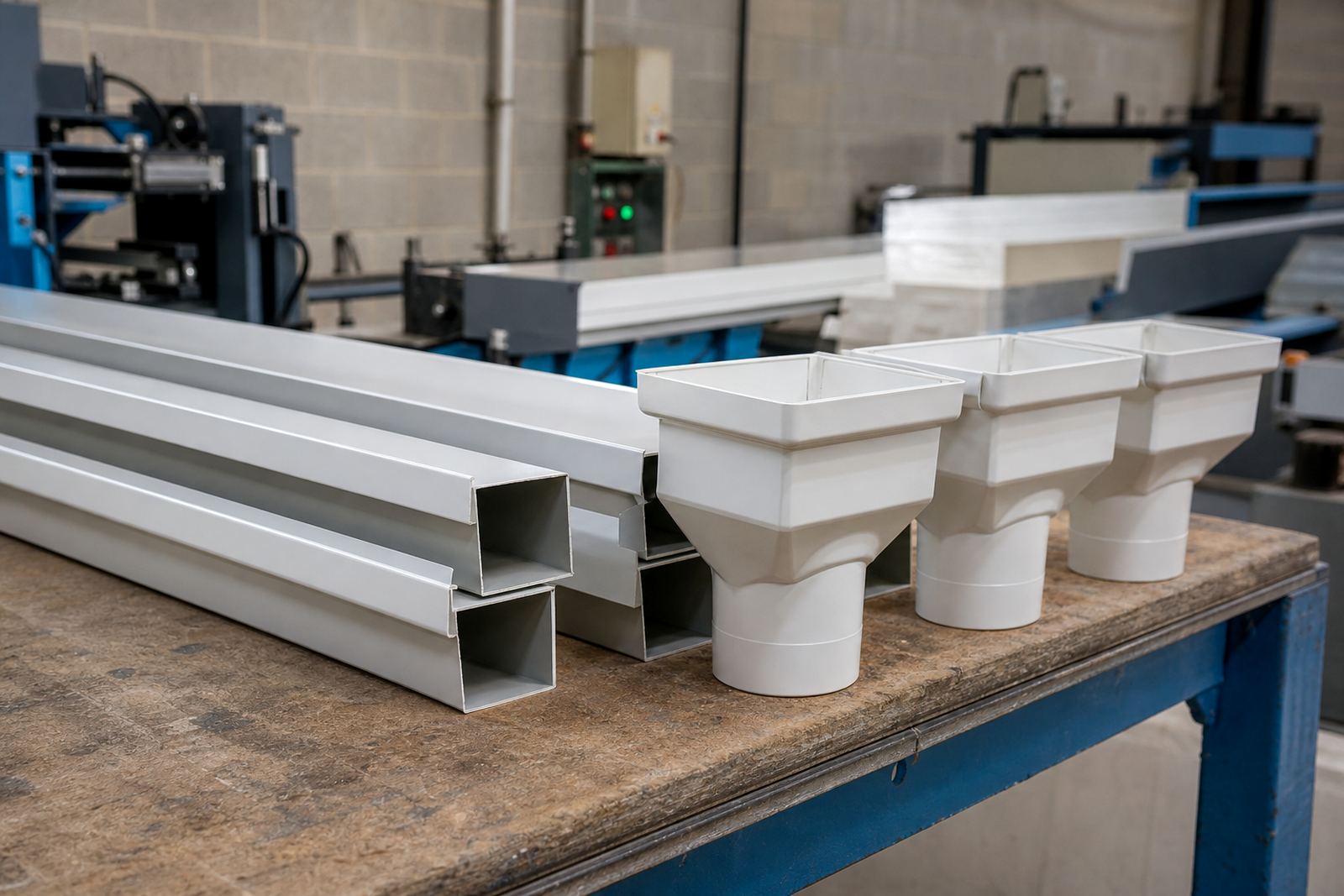
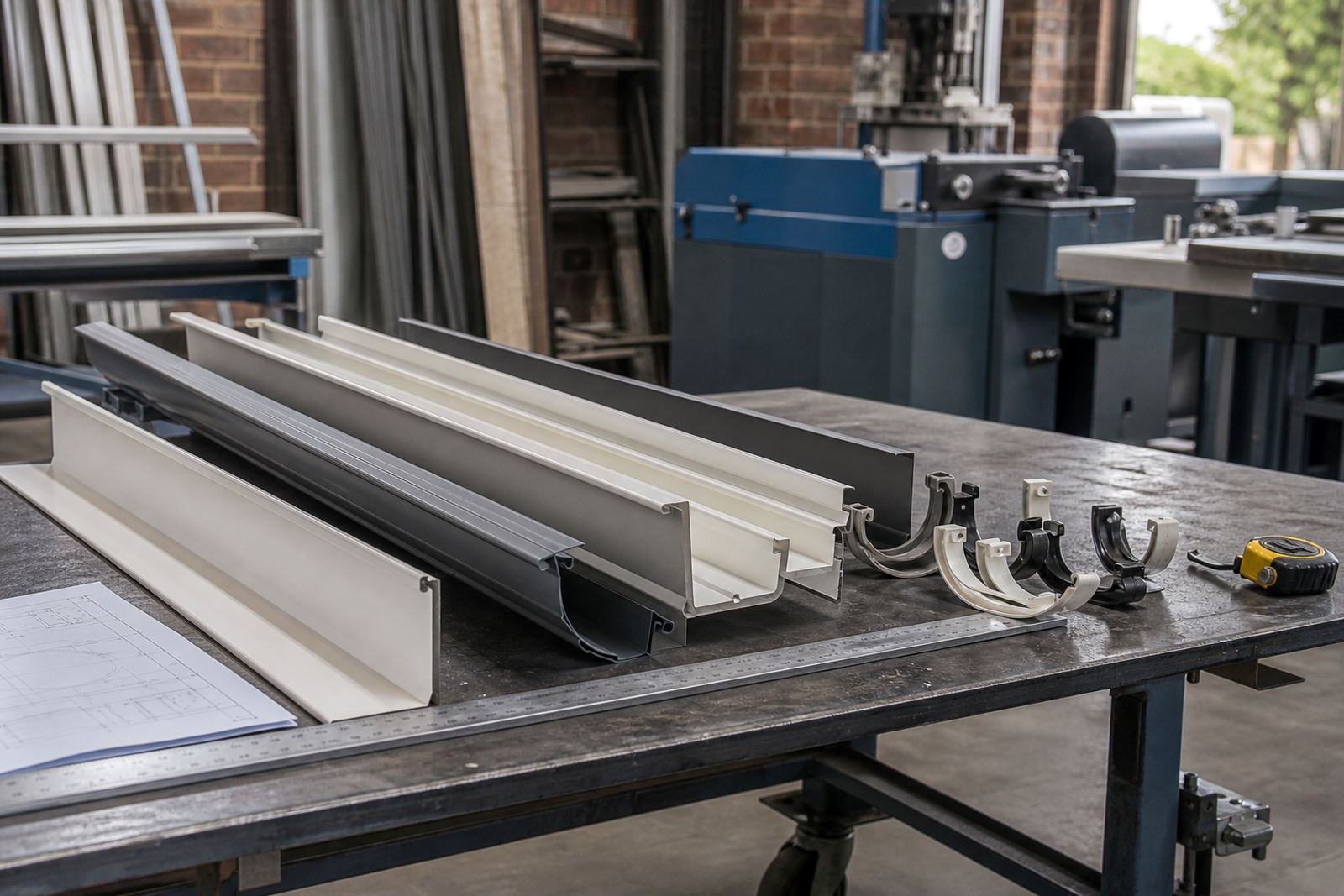
Plasteel valley gutter sections are specified for use with plastic-steel composite roofline systems where a neat, durable junction is needed between the roof covering and the gutter run. The material choice suits wet coastal air, hot inland sun and the temperature swings common across South Africa. Fittings must be installed by competent people working safely at height, with proper access equipment and fall protection.
Sizes, profiles and the parts that matter
Valley gutters are ordered to suit the roof geometry, not just the building size. The width, depth and slope all affect how well the section clears water during heavy rain. On steep roofs or large catchment areas, a wider profile and careful jointing help keep the flow moving toward the outlet.
- Typical widths are selected to match the valley angle and expected roof run-off.
- Lengths are set to suit the roof span and the number of joints needed.
- Outlet position must line up with the downpipe route and the nearest discharge point.
- Brackets or supports should keep the section firm, with no sagging between fixing points.
- Sealant and joiners must suit the composite material and the local weather exposure.
When ordering, measure the valley length, roof pitch, cladding type and the position of any obstructions such as parapets, skylights or wall returns. If the valley feeds into a section that already carries roof water from another side, the combined load needs to be checked carefully.
Where valley gutters are best used
These sections are common on homes with intersecting roof shapes, on double-storey buildings, on townhouses and on commercial roofs with broken roof lines. They are also useful where a roof valley directs water into a boxed-in area that needs a more controlled outlet than a normal eaves gutter can provide.
In places like Johannesburg, Pretoria and Polokwane, summer storms can put a short, sharp load into the valley. In Durban and other coastal areas, the system must also cope with humid air and more frequent weathering. A properly sized valley section helps reduce overspill, staining and water tracking onto walls or fascia boards.
- Intersections of two pitched roof sections
- Roof areas that discharge into a single gutter run
- Replacement work where old metal sections are rusted or patched
- Homes and light commercial buildings with multiple roof slopes
- Sites where neat water control is needed near entrances, walls or paving
Fitting details that save trouble later
Good performance starts with setting the fall correctly. A valley gutter should move water steadily toward the outlet, with no flat spots where leaves, grit or standing water can build up. Supports need to be spaced so the section keeps its line under rain load and does not twist where it meets the roof structure.
Flashings, laps and joins must be fixed carefully, with attention to the roofing material around the valley. If the roof sheeting or tiles are already in place, the fitter has to work around existing lines and seal the junctions properly. At height, the work must be handled by trained people using safe access methods, because one loose edge or awkward reach can cause damage or injury.
- Confirm fall direction before cutting or fixing any section
- Check that the outlet clears into the correct downpipe size
- Allow for thermal movement in long runs
- Keep fixing points even, especially near joints and ends
- Match the valley profile to the roof material and pitch
Care, cleaning and seasonal checks
Valley gutters need regular checking because they catch more debris than straight runs. Leaves, roofing grit, twigs and windblown dirt tend to settle in the low point first. In leafy suburbs and near mature trees, a quick clean-out after heavy rain can prevent overflow and stains on walls or ceilings.
A simple maintenance routine should include checking the outlet, inspecting joints for movement and looking for signs of ponding after rainfall. Any cracked seal, loose fixing or sagging support should be repaired before the next storm. In coastal towns, salt exposure can also shorten the life of metal fixings, so the fasteners and support points should be inspected closely.
What to check when ordering
For valley gutter supply, the right details make a proper difference on site. The section needs to fit the roof layout, match the drainage line and work with the selected fascia and downpipe arrangement. If the roof is already measured, provide the actual lengths and any changes in direction so the parts can be prepared to suit.
- Valley length and the number of sections needed
- Roof pitch and the angle of the valley
- Outlet size and downpipe position
- Roof covering type, such as tile or sheeted roofing
- Support spacing and fixing method required on site
- Whether the work is new installation, replacement or a repair to an existing line
Plasteel supplies plastic-steel composite valley gutter sections for builders and homeowners across South Africa, with delivery coordination available into Johannesburg, Pretoria, Durban, Cape Town, Polokwane, Midrand and Roodepoort. For measured work, site details should be checked before materials are cut or fixed, especially where the roof layout has more than one valley or a tight parapet edge.
Key facts
| Product type | Plastic-steel composite valley gutter sections |
|---|---|
| Use | Roof valleys that channel concentrated rainwater into the drainage line |
| Typical sizes | Sized to suit roof pitch, valley angle and outlet requirements |
| Fixing method | Supported with brackets, joints, sealant and matched outlet fittings |
| Best suited to | Homes, townhouses, light commercial roofs and roof replacement work |
| Maintenance | Clear debris, inspect joints, check fall and confirm outlet flow after storms |