
Small roof edges, neat water control
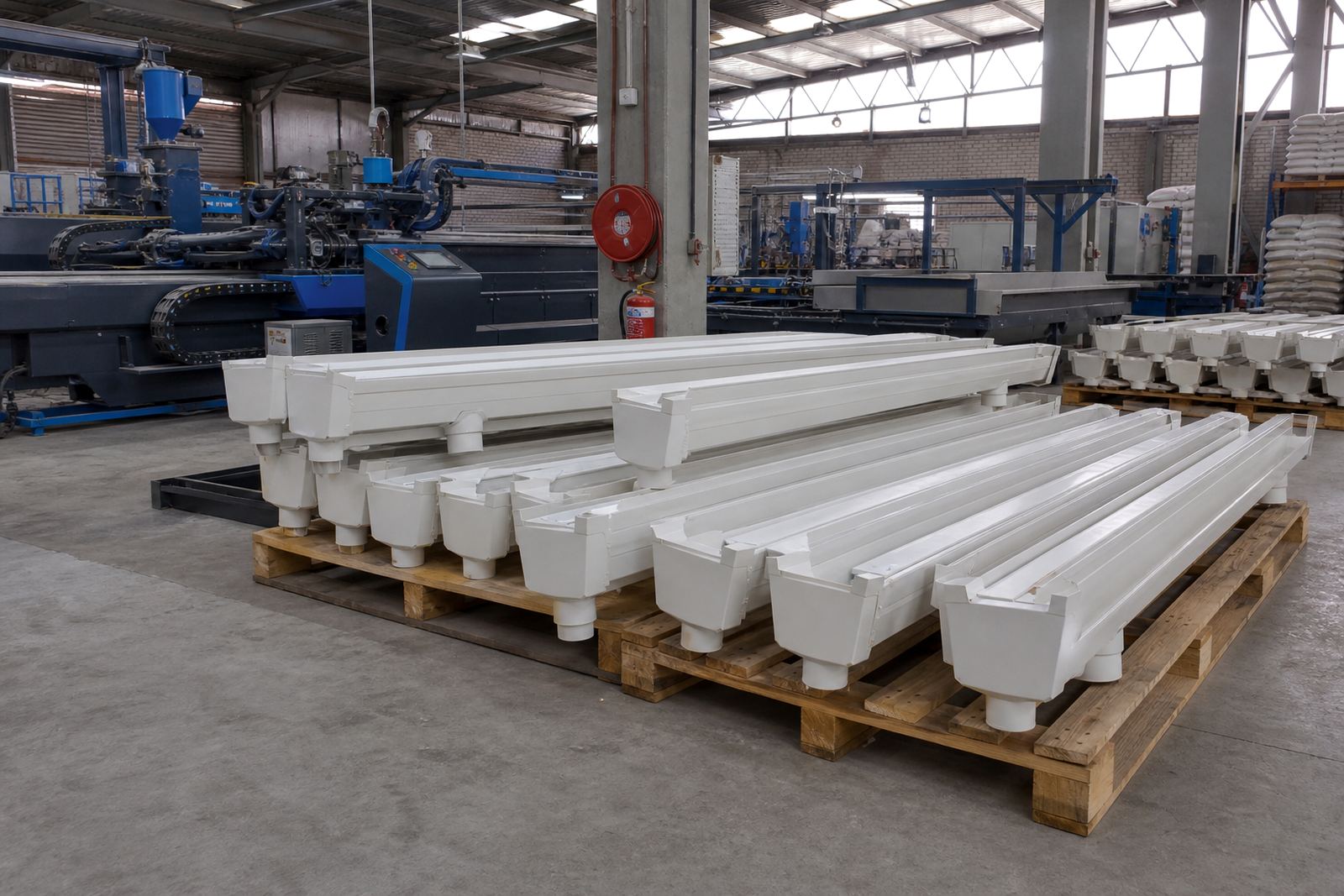
Mini gutters are made for roof sections that need proper rainwater control without the bulk of a larger profile. They are a practical fit for porches, garden rooms, covered walkways, braai areas, tool rooms and narrow lean-to structures where the roof edge is short and the catchment area is limited. The profile is smaller, but the job is the same: move water off the roof edge and into a downpipe without dribbling over fascia boards or pooling at the eaves.
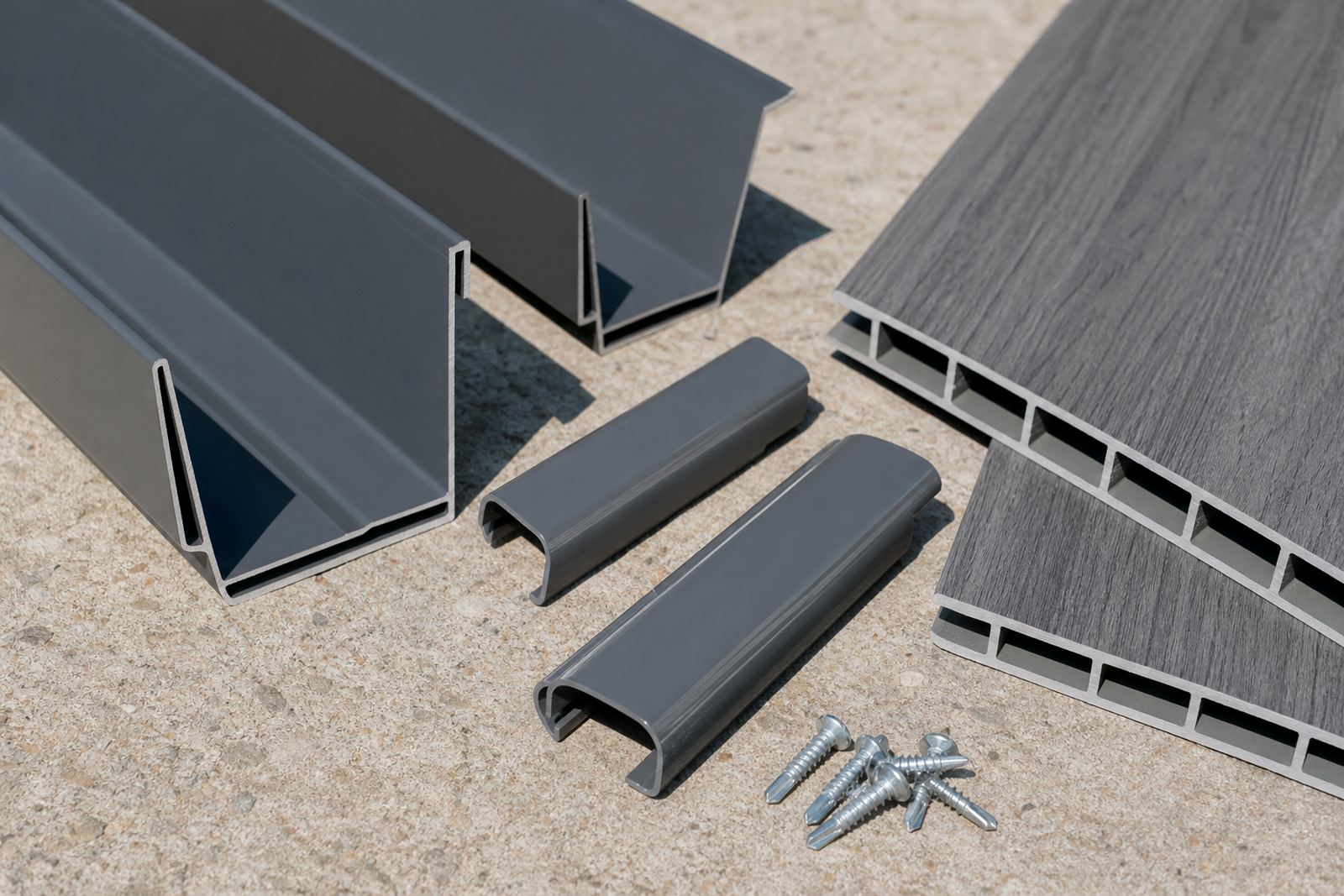
In a plastic-steel composite system, the gutter body gives a neat finish while the reinforced sections help the profile keep its shape across ordinary building spans. On smaller roofs, the look matters as much as the function, especially where the gutter is visible from street level or under a patio roof. The right mini gutter also helps in tight boundary areas where a deeper system would sit too low or catch on nearby finishes.
Sizes, profiles and matching parts
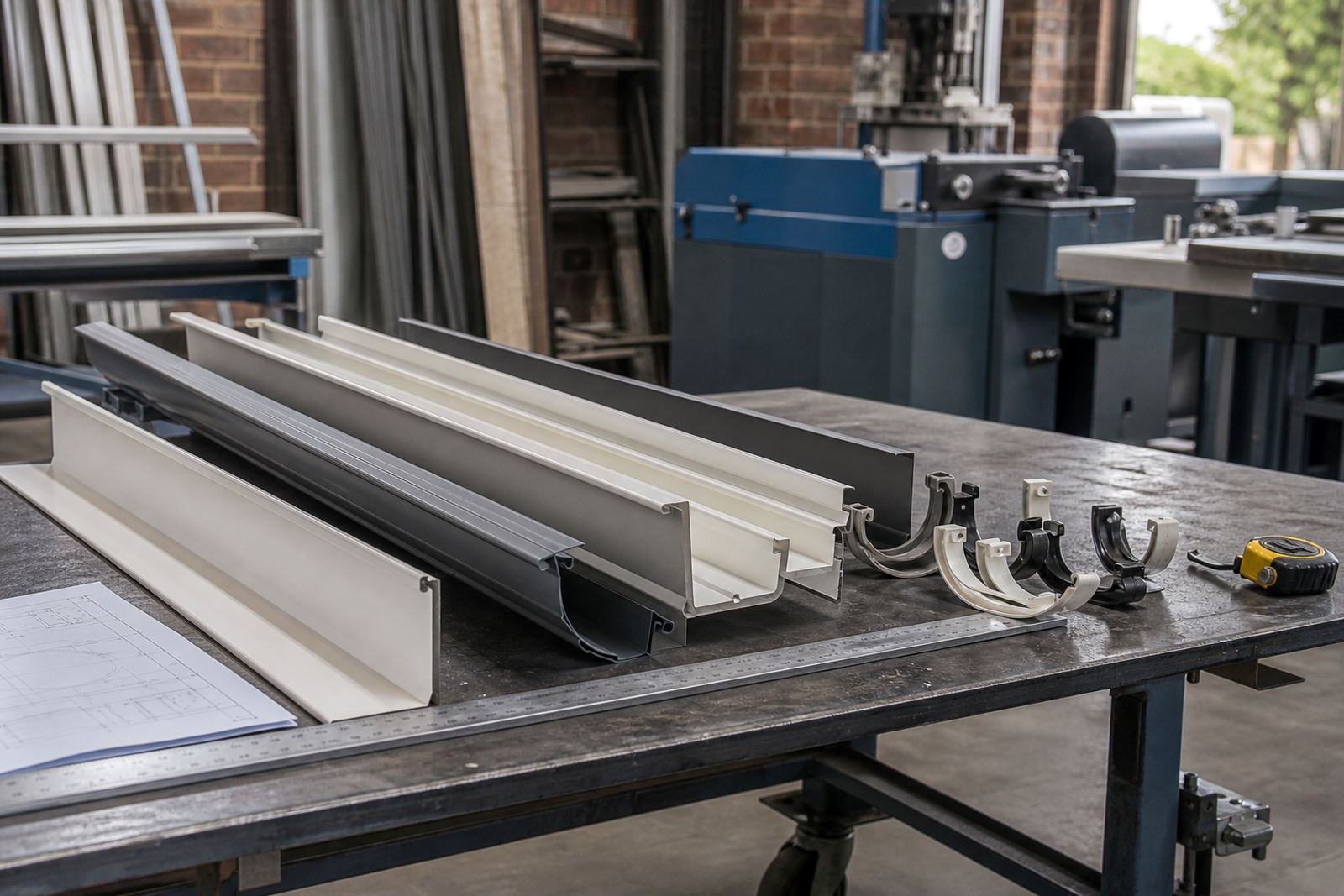
Mini gutters are usually selected by the roof size, rainfall exposure and the way the roof edge is finished. For light roof areas, a smaller half-round or squareline style profile is often enough, provided the fall and outlet size are set correctly. The exact size should be checked against the roof width, pitch and the likely water run-off from the sheet or tile profile.
- Gutter lengths commonly used on small jobs: 2,4 m and 3,0 m sections
- Typical mini outlet and downpipe sizes: 75 mm to 90 mm, depending on flow demand
- Bracket spacing: generally 600 mm to 900 mm, closer where the roof edge is uneven or exposed to wind
- Falls: about 5 mm to 10 mm per 3 m run for steady drainage on short lengths
- Fascia cover matching: selected to suit the gutter face, fixing line and roof edge height
On exposed coastal or high-wind sites, the fixing layout matters. In Durban and Cape Town, salt air and driving rain can show up weak joints and loose brackets quickly, so the support points need to be set properly from the start.
Where mini gutters fit best
Mini gutters suit smaller structures where a compact roofline needs a tidy drainage edge. They are often used on garden rooms, outside laundry covers, entrance canopies, veranda extensions and low-slope lean-tos. On domestic work in Randburg, Roodepoort or Midrand, they are often chosen where the roof projection is short and the gutter should not dominate the front elevation. On light commercial work, they can suit staff shelters, security huts and small service covers.
The key is matching the profile to the roof surface rather than guessing by appearance. A small roof with a steep pitch and a long run into one outlet may still need more discharge capacity than expected. A competent installer will check the roof length, the catchment size, the position of the outlet and the number of downpipes before setting out the brackets and joins.
- Best suited to small roof areas with limited run-off
- Useful where the eaves line is narrow or low
- Helps keep small facades neat on residential and light commercial work
- Can be paired with fascia boards and short downpipe runs for a complete roof edge finish
Fitting details that keep the line straight
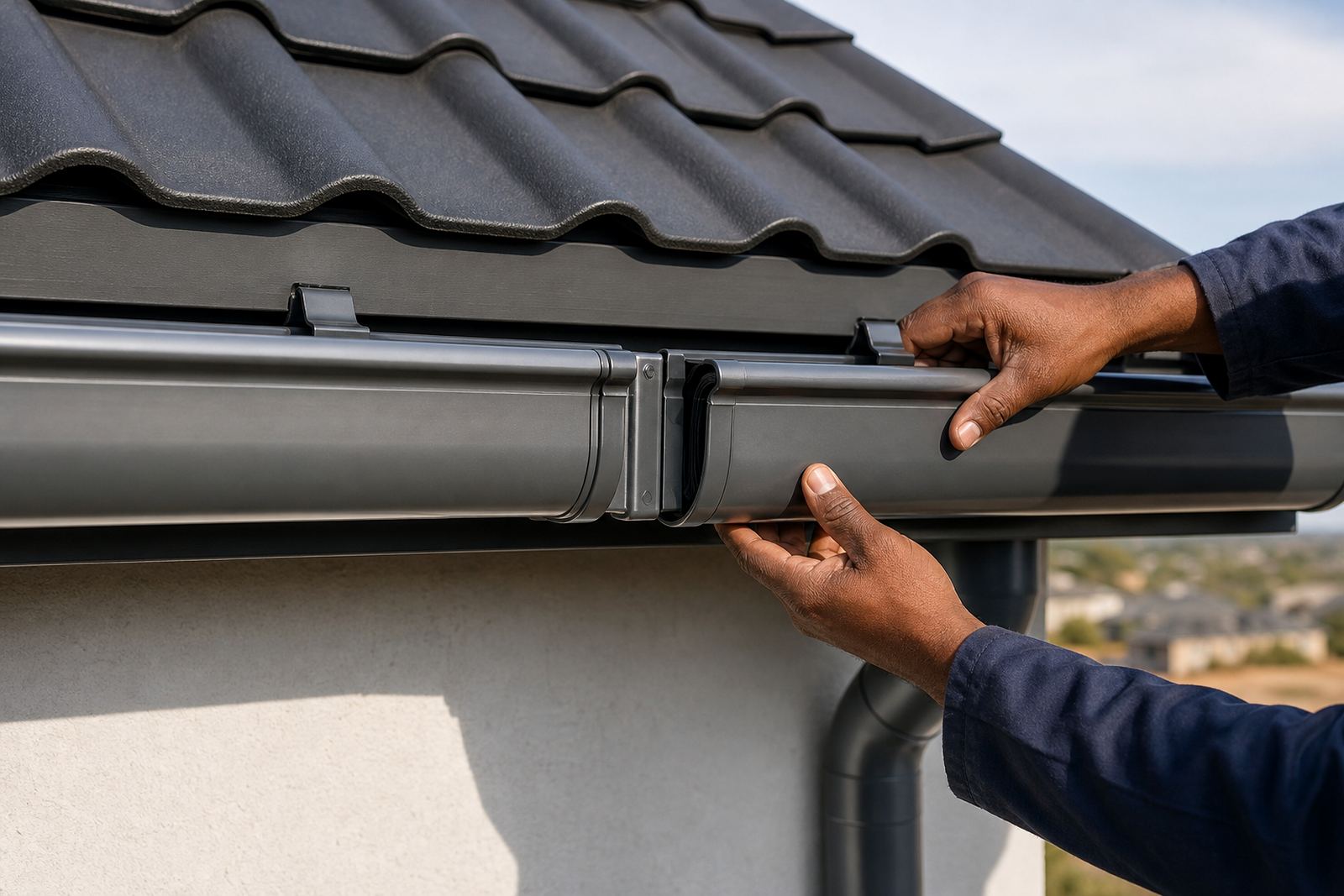
Mini gutters still need proper setting out. The gutter should not sit flat across the full length, and it should not sag between brackets. A small fall to the outlet helps water move without standing in the channel after rain. Joints, stop ends and outlets must be aligned so water does not back up against the fascia board or overflow at a high point. On tile roofs, care is needed at the tile tail so the gutter can sit under the run-off line without being fouled by broken mortar or loose debris.
Roofing work at height must be done safely by competent people with the right access equipment, fixing method and fall protection. Small jobs can still be risky if the ladder base is uneven or the roof edge is slippery after rain. For composite gutter and fascia installations, the fitter also needs to check support spacing, sealing points and the condition of the existing roof edge before any parts go up.
Care, cleaning and long service in local conditions
Mini gutters stay in better shape when leaves and grit are cleared out before they build up near the outlet. In tree-lined suburbs and around older properties, the first sign of trouble is often water spilling at one point because the outlet has packed with debris. A quick inspection after heavy rain helps catch that early. If the gutter has a visible joint line, check that it remains straight and sealed, with no opening at the corners.
Plastic-steel composite parts are a practical choice for areas that see strong sun, coastal moisture or repeated temperature changes. The surface should still be washed down now and then, especially near dusty roads or where roof residue stains the fascia. Avoid scraping the profile with metal tools. A soft brush and clean water are usually enough for routine care.
- Clear outlets and downpipe heads of leaves, seed pods and roof grit
- Check brackets for movement after storms or high winds
- Watch for staining that points to slow leaks at joints
- Inspect fascia boards for any soft spots before refixing the gutter line
Mini Gutters: roof measurements to confirm
To supply the right mini gutter parts, the key details are the roof edge length, the roof type, the outlet position and whether the gutter is fixing to timber fascia, metal framing or a replacement fascia board. It also helps to know the town and exposure. A porch in Polokwane has different sun and storm patterns to a sea-facing canopy in Durban, and that can influence bracket spacing and outlet count.
When asking for supply or installation support, have these details ready:
- Total run length in metres for each roof edge
- Roof covering type, such as tile, sheet or lightweight canopy sheeting
- Fascia condition, including whether boards need replacement
- Preferred outlet side and downpipe drop length
- Site location for delivery or supply planning
- Any tight corners, wall returns or narrow boundary clearances
Taking proper measurements from the start saves time on site and helps avoid mismatched fittings. Mini gutters are small, but the finish still depends on clean measuring, correct falls and the right connection between gutter, fascia and downpipe.
Key facts
| Product type | Mini gutter system for small roof areas |
|---|---|
| Common uses | Porches, garden rooms, lean-to roofs and narrow canopies |
| Typical section lengths | 2,4 m and 3,0 m |
| Typical outlet size | 75 mm to 90 mm |
| Bracket spacing | About 600 mm to 900 mm, depending on span and exposure |
| Installation notes | Set with a slight fall, secure brackets properly and match outlet position to the downpipe run |