A square channel for harder-working roof drainage
Box gutters are formed as a rectangular channel fixed between roof sections or along a parapet line, rather than hanging off the edge like a standard half-round gutter. That shape gives a deeper water path and a cleaner line for roofs that catch a lot of rain, such as long spans, parapet roofs and buildings with several roof planes feeding into one outlet.
In South African work, box gutters are often specified where the water flow is concentrated and the gutter has to sit neatly within the roof build-up. The channel must be sized to suit the roof catchment area, the local rainfall pattern and the number of outlets available. In coastal towns the material choice matters too, because wind-driven rain and salty air can shorten the life of ordinary components if they are not selected properly.
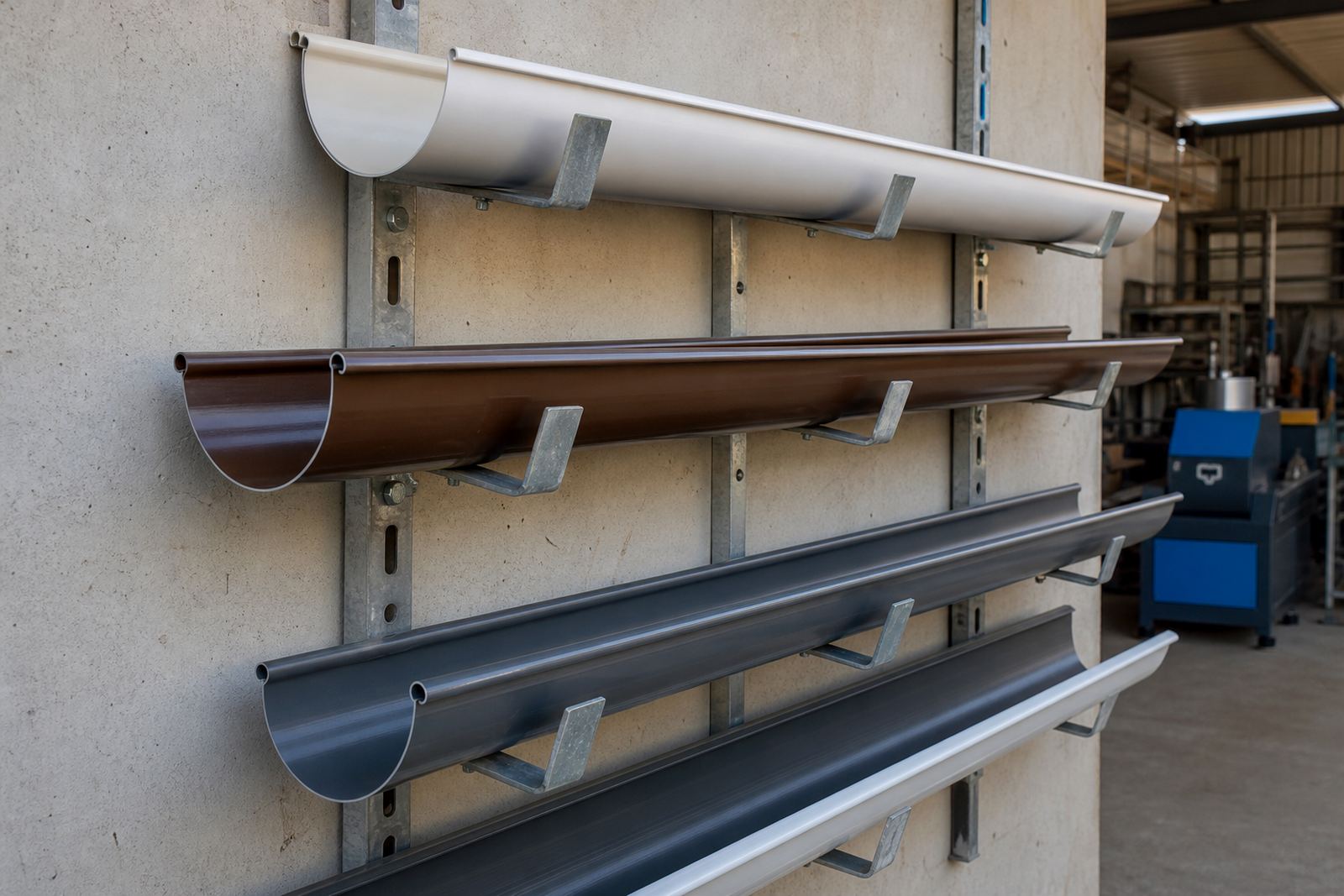
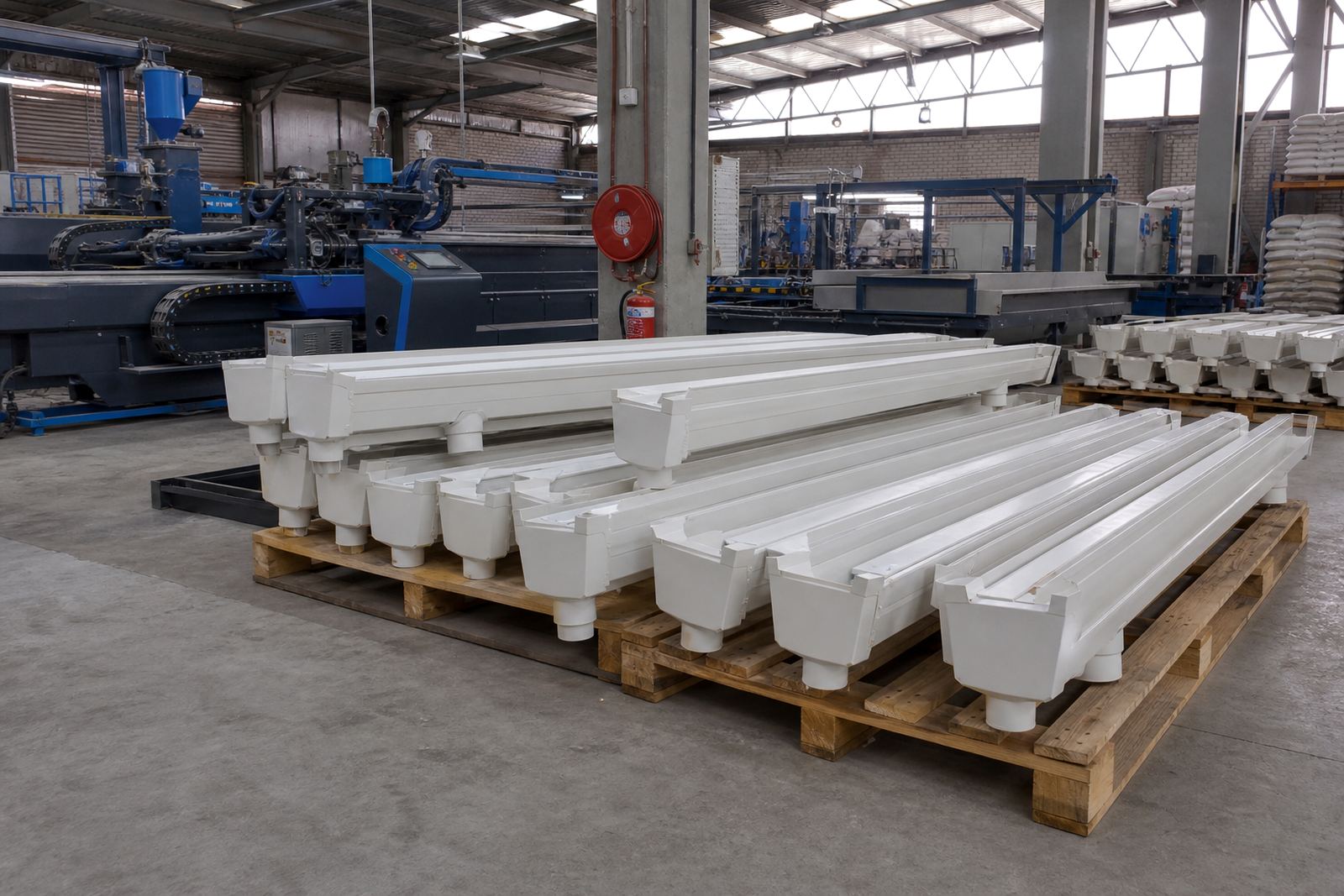
Plasteel’s plastic-steel composite box gutter materials are made for builders who want a straight, stable profile with practical handling on site. The composite format is suited to roof edges, internal gutters and other rainwater sections where a neat finish and regular maintenance access are both important.
Sizes, profiles and the parts that make the run work
Box gutters are not one-size-fits-all. The width, depth, wall thickness and outlet position all need to be checked before material is cut or fixed. A deeper gutter can carry more water, but only if the falls are correct and the outlets are positioned to suit the roof geometry. Shallow channels on busy roof areas can overflow when leaves, sand or roof grit build up.
- Typical sizes are chosen by width and depth, often from compact domestic runs to larger commercial sections.
- The channel line may be straight, stepped, or formed to suit roof intersections and parapet details.
- Brackets or support members must be spaced to hold the gutter line firm without sagging.
- Joints, stop ends and outlet points need neat sealing and correct alignment.
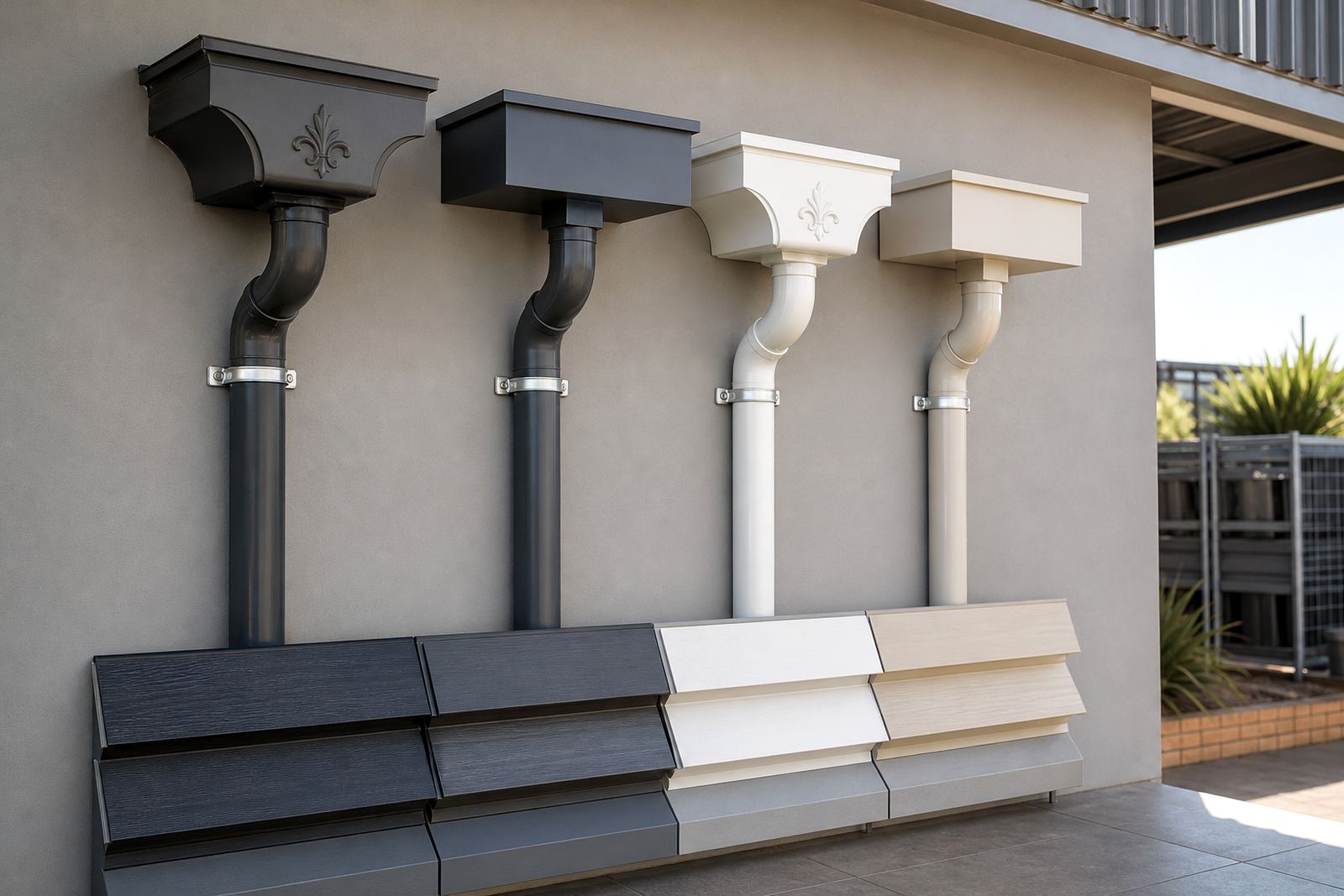
- Downpipe positions must allow the water to clear the channel quickly during heavy rain.
When ordering, it helps to confirm the roof pitch, the length of each gutter run, the number of corners, and whether the gutter will feed into one or more downpipes. If the roof area is large, it is worth checking the expected runoff from both sides of the roof so the channel does not become the weak point in the drainage line.
Where box gutters suit local buildings best
These gutters suit homes, flats, offices, workshops, schools and retail buildings where roof water must be guided through a controlled line. They are also useful on parapet roofs and modern profiles where the gutter must remain hidden or tucked into the roof design. In Johannesburg, Pretoria, Durban, Cape Town and Polokwane, the same basic rule applies: the roof shape and rainfall exposure should decide the gutter size, not guesswork.
On buildings with long roof valleys or internal drainage points, box gutters can carry a high volume of water if the falls are planned correctly. They are often chosen where appearance matters as much as function, because the straight edge suits a clean roofline. For light domestic work, they can be used on smaller sections too, as long as the outlets are not undersized and the maintenance access is practical.
Because box gutters sit in a more enclosed position than exposed edge gutters, they need proper checking at installation and during maintenance visits. Debris can gather at corners and outlets, and a blocked outlet can cause water to back up into the roof edge faster than many people expect.
Fitting details that prevent leaks and ponding
Good installation is more important than the profile itself. The gutter must be set to a clear fall so water moves toward the outlet points instead of sitting in low spots. A flat run may look neat at first, but after one heavy storm any small sag can start holding water and that leads to staining, joint stress and possible overflow. Roofing work at height must be handled by competent people using safe access equipment and proper fall protection.
For box gutters, the installer should check the support spacing, joint sealing, outlet location and the way the gutter ties into the roof covering. Flashings and edge details need to be properly dressed so water does not work under the roof sheets or tiles. Where gutters meet parapets or adjoining roof planes, the corners should be formed carefully because these are common leak points.
- Set a steady fall toward each outlet, with no reverse dips.
- Use brackets or support members at regular spacing so the channel stays true.
- Allow for expansion and movement in longer runs.
- Keep sealant lines neat and continuous at joints and stop ends.
- Check that overflows and downpipes are sized for heavy rain events.
Care, cleaning and maintenance in real weather
Box gutters need routine cleaning because leaves, twigs, roof grit and bird debris collect in the channel and around the outlets. In leafy suburbs and on commercial roofs with nearby trees, the gutters may need more frequent attention. In coastal areas, salt residue and sand can also build up, so a simple wash-down and inspection schedule helps the system last longer.
The best maintenance approach is practical: clear the gutter, inspect the joints, test the outlet flow and look for stains that may point to a slow leak. If the gutter shows standing water after rain, the falls or outlet sizes should be checked. Loose brackets, open joints and cracked seal areas should not be left for later because water damage tends to spread into fascia boards, ceilings and wall finishes.
For plastic-steel composite sections, mild cleaning and visual inspection are usually enough when the profile is correctly installed. Harsh scraping can damage the surface, so soft cleaning methods are better. Where a roof has ongoing movement or settlement, the support points should be inspected again after repair work, since small shifts can change the gutter line.
What to confirm before ordering the gutter run
Before a box gutter is supplied, a builder or homeowner should confirm the key measurements and roof details so the right profile and fittings are issued. A careful takeoff reduces waste and helps the installation team arrive with the correct lengths, outlets and accessories.
- Total linear metres for each gutter run
- Width and depth required for the roof catchment area
- Number of corners, joints, stop ends and outlet points
- Bracket spacing and support method
- Roof type, parapet detail and the position of any flashings
- Downpipe size, route and discharge position
Plasteel supplies box gutter materials for builders and homeowners across South Africa, with collection and delivery coordination available from Kya Sand, Randburg to areas including Randburg, Johannesburg, Pretoria, Durban, Cape Town, Polokwane, Midrand and Roodepoort. For site measuring, material takeoff, product supply, installation support and maintenance visits, clients can use the enquiry form on the contact page.
Key facts
| Profile | Plastic-steel composite box gutter sections |
|---|---|
| Common use | Roof water collection on parapet, internal and long-span rooflines |
| Typical sizing | Selected by width, depth and catchment area |
| Support | Brackets or support members at regular spacing |
| Drainage | Falls toward outlet points and downpipes |
| Care | Routine clearing, joint checks and outlet inspection |