
A rounded gutter profile that moves water cleanly
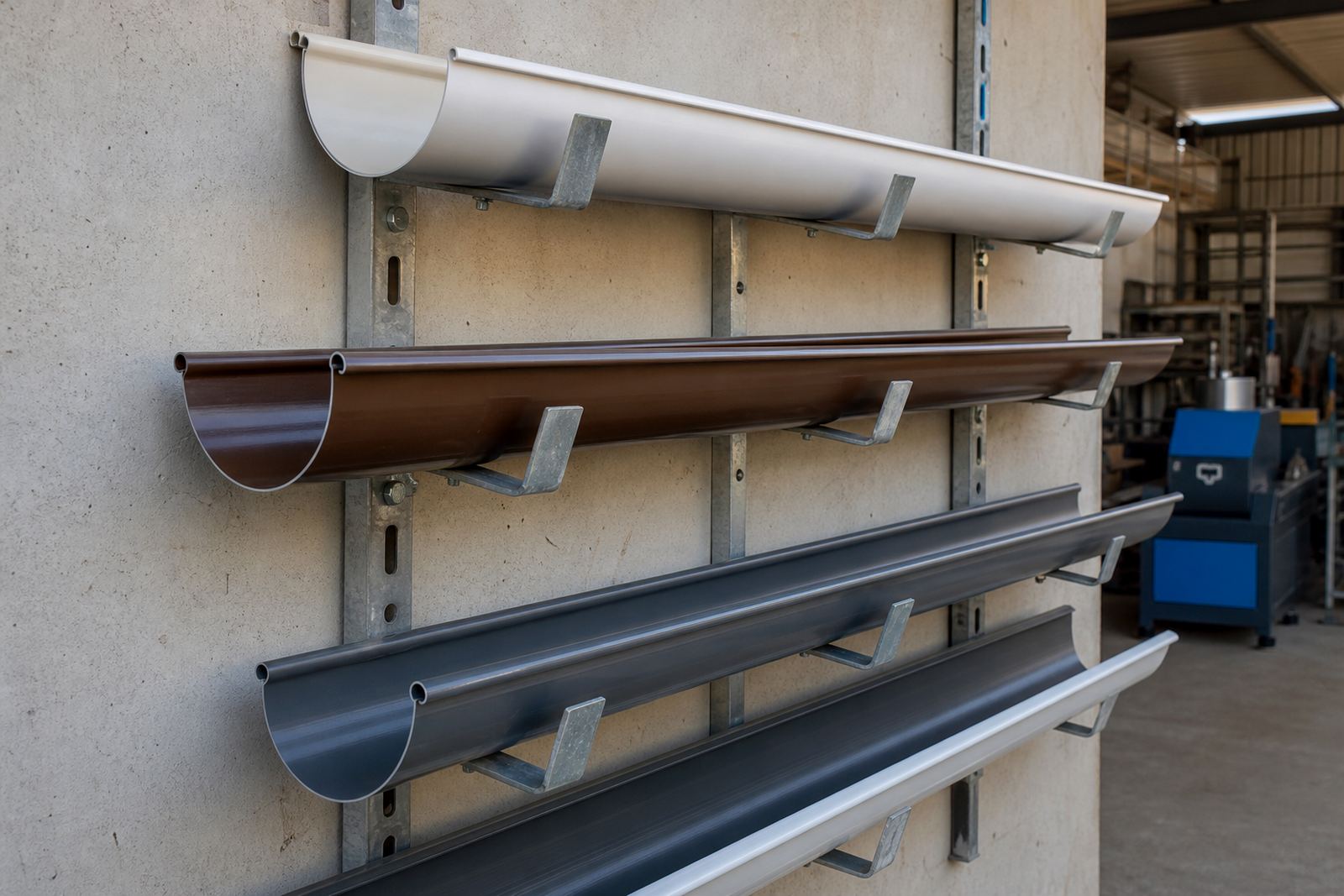
Half round gutters have a smooth curved channel that carries rainwater from the roof edge to the downpipe. The shape gives water an even path and helps leaves and dust wash through more easily in some roofline setups, especially where the gutter is set with the correct fall. For builders and homeowners, that means a practical drainage line that looks tidy on both modern and older buildings.
Our plastic-steel composite gutter material is made for South African conditions, from dry inland heat to coastal humidity and salt air. It is used on residential roofs, light commercial buildings and replacement work where an existing line needs a straight, durable finish. The profile suits corrugated sheets, tiles and mixed roof structures, provided the fascia line and pitch are checked properly before fitting.
For good performance, the gutter must be supported at the right centres and installed with a steady fall toward the downpipe points. If the line sags or the pitch is uneven, water can hold in low spots and place extra strain on joints and brackets. That is why correct measuring matters before any supply or fitting work starts.
Sizes, lengths and fitting options
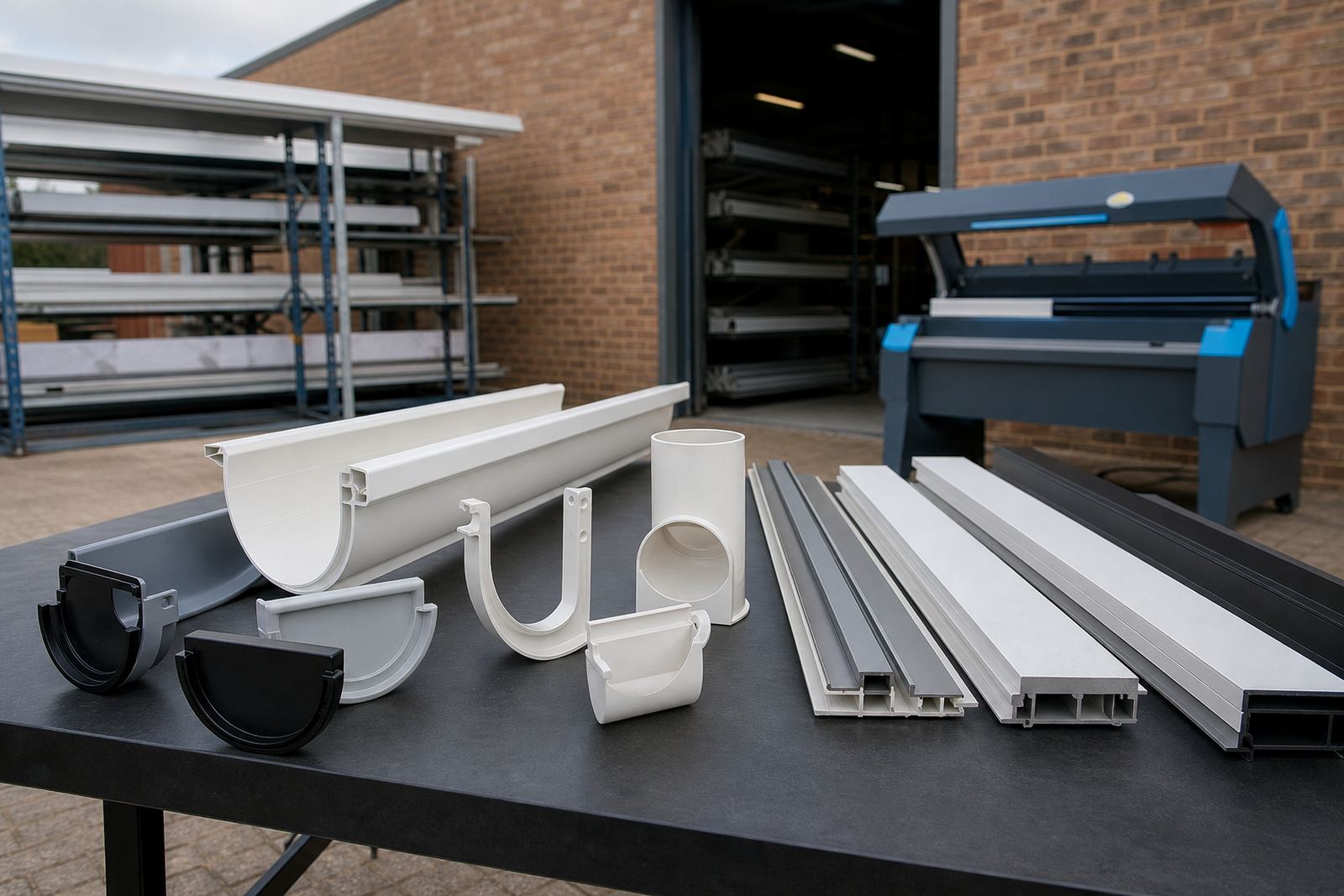
Half round gutters are commonly supplied in set lengths and matched with joining pieces, stop ends, brackets and outlet fittings. The right size depends on roof area, local rainfall, and how many downpipes the line will feed. A small courtyard roof in Randburg will not call for the same capacity as a broad warehouse roof in Pretoria or a long street-facing eave in Cape Town.
When sizing a gutter system, the roof plane and the amount of water reaching it are both important. Bigger roof areas and steeper pitches send more water into the gutter in a shorter time. Larger outlets, wider gutters and well spaced downpipes help reduce overflow at heavy rain periods. On long runs, extra outlets may be needed so water does not travel too far in one channel.
- Typical gutter lengths are cut to suit the job layout and transport needs
- Common accessories include joiners, stop ends, outlets, brackets and fascia supports
- Downpipe diameters should match the gutter outlet and roof drainage load
- Fixing centres must suit the roof structure and the expected water weight
For clean order preparation, it helps to confirm the eave length, number of corners, outlet positions and the gutter profile already on site if there is a tie-in to existing work.
Where half round gutters fit best
Half round gutters are often chosen where appearance and drainage need to work together. They are neat on homes, apartment blocks, office units, patio roofs and simple commercial buildings. The rounded shape also suits roof edges that are visible from the street, because it gives a softer line than square channel profiles.
Half round gutters are a practical match for rooflines with regular falls and clear runoff points. They are also useful for replacement work where the existing fascia line is sound and the new gutter has to tie in without changing the roof edge too much. In coastal areas such as Durban, a material choice that copes with damp air and repeated weathering is important. Inland, where sun and dust are more of a factor, the surface should stay stable and easy to wash down.
For builders, the profile can be paired with fascia boards and downpipes in the same material range to keep the roofline uniform. For homeowners, it gives a straightforward look that is easy to inspect after heavy rain and easier to clean when leaves, blossoms or roof dust build up.
Fitting points that matter on site
Half round gutters must be fixed to a straight, secure fascia line with the right bracket spacing and outlet placement. The gutter should fall gently toward the outlet without sharp dips, and corners must be aligned so water does not slow down at the joins. Competent installers working at height need proper access equipment, safe tie-off where required, and care around roof edges, ladders and wet surfaces.
When fitting or replacing a gutter line, the installer should check the fascia condition, roof edge straightness and the position of any existing outlets. If the fascia board is damaged, soft or uneven, the gutter may not hold its line. In roofline replacement work, the downpipe route should be checked as well so water can move away from the building without splash-back at the base.
- Bracket spacing must suit the profile, span and local wind exposure
- Falls should be set before final fixing, not left to chance
- All joints should be aligned and sealed as specified for the system
- Downpipes need secure clips and clear discharge points at ground level
On large buildings or long runs, measurement accuracy matters more than guesswork. A small error at one end can leave the gutter holding water at the other, which leads to stains, overflow and early wear.
Keeping the line clear and serviceable
Half round gutters are often easier to inspect because the curved channel lets dirt, leaves and roof grit show up quickly. Routine cleaning is still necessary, especially after windy periods, jacaranda season, or where trees sit close to the roof. In many South African towns, sudden summer storms can load a gutter with debris fast, so regular checks are worth doing before the rainy months gather pace.
Maintenance is usually straightforward: remove loose debris, flush the channel, check the outlets, and inspect the brackets and joints for movement. If water is sitting in one section, the line may need the fall corrected or the outlet cleared. Paint staining on walls can point to overflow, blocked downpipes or a gutter that is no longer holding its shape.
- Inspect after heavy rain for standing water or drip marks
- Clear leaves from outlets, corners and any leaf traps fitted to the system
- Check that brackets have not loosened from the fascia
- Look for cracks, open joints or sagging in long runs
A clean gutter line protects the roof edge, fascia and wall finish. It also helps avoid water running back under tiles or sheets where it can damage the eaves over time.
Details to check before you order
To make sure the half round gutters suit the job, confirm the profile size, length of each run, number of corners, outlet positions and the downpipe diameter required. If the work is for a new build, the roof plan and fascia height should be available. If it is for a replacement, it helps to know what is already installed so the new parts line up with the existing roof edge and discharge points.
It is also useful to confirm colour, bracket type, fascia board match and whether the delivery is going to Randburg, Midrand, Roodepoort, Johannesburg, Pretoria, Durban, Cape Town or Polokwane. On site measuring can assist where the roofline is irregular or where a partial replacement must tie into an older section. For builders, material takeoff support helps avoid short counts on joins, stop ends and clips. For homeowners, clear advice on fitting and upkeep makes planning easier before the work starts.
Half round gutters are best selected with the whole roof drainage line in mind, not just the visible front run. Once the channel, outlet size and fall are set properly, the system works with far less fuss and stays easier to maintain through the seasons.
Key facts
| Product type | Half round gutter system for roof drainage |
|---|---|
| Material | Plastic-steel composite |
| Typical use | Residential, commercial and roofline replacement work |
| Available matching parts | Gutter lengths, joiners, stop ends, brackets, outlets and downpipe accessories |
| Installation note | Requires correct fall, secure bracket spacing and competent work at height |
| Service areas | Kya Sand, Randburg, Johannesburg, Pretoria, Durban, Cape Town, Polokwane, Midrand and Roodepoort |