
Closing Off the Gutter Run Properly
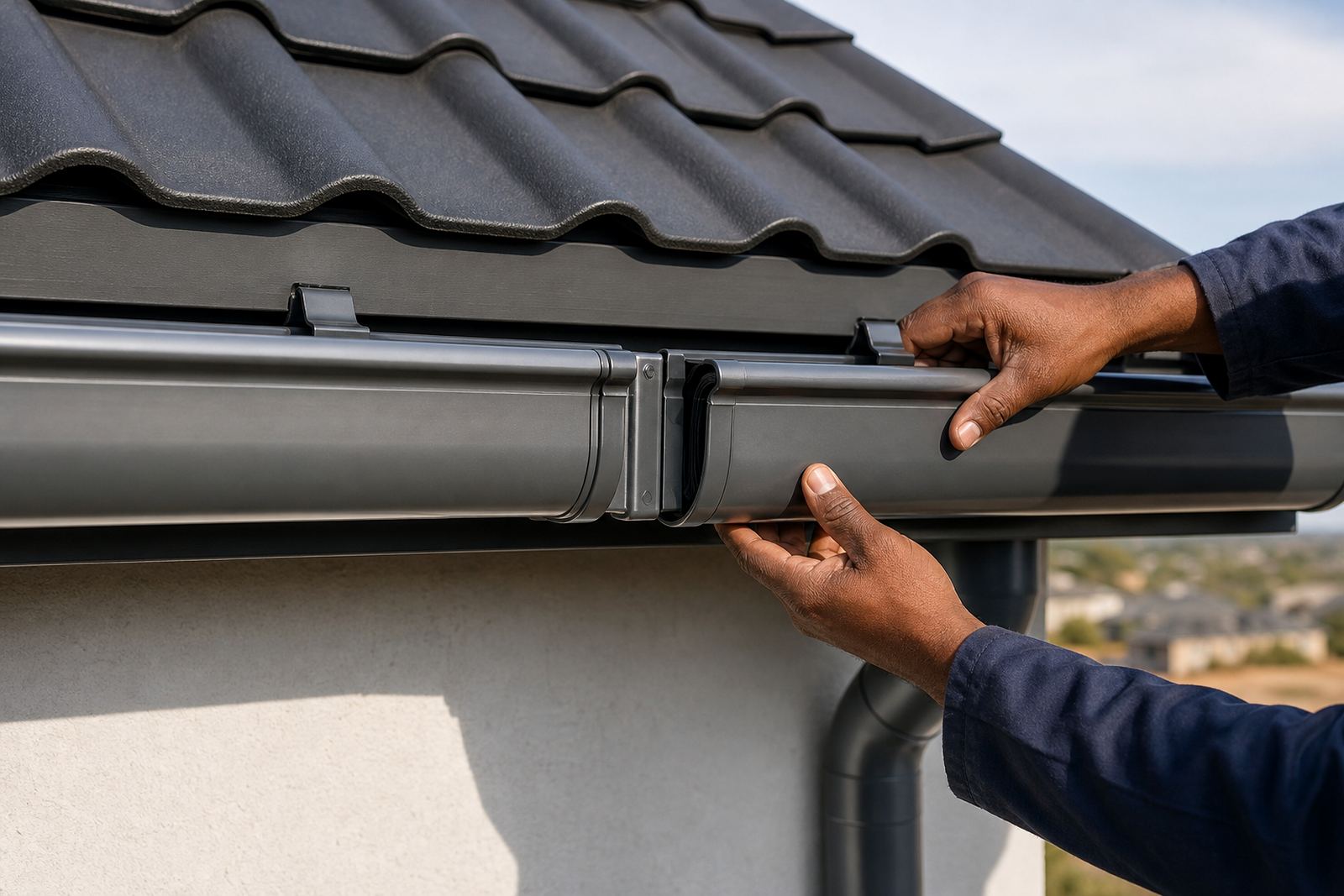
A stop end is the closing piece fitted to the end of a gutter section. It is used where the gutter does not continue into another length, and it helps complete the line so rainwater can be directed along the run and into the outlet. On most roofs the stop end is chosen with the same profile as the gutter body, so the face lines up neatly and the fit stays tight against the fascia board.
Plastic-steel composite stop ends are suited to building work where the roof line is exposed to sun, wind and heavy summer rain. In coastal areas, Durban and other humid zones, fittings can be exposed to salt air and constant moisture, so a material that holds its shape and keeps a clean edge is useful. On inland homes in Randburg, Pretoria or Polokwane, the main concern is UV, dust and movement at the roof edge.
A properly matched stop end helps reduce leakage at the end of the gutter run. It also gives the installation a neat finished look, which matters on boundary walls, street-facing eaves and commercial rooflines. For safe work at height, fitting must be done by competent people using the correct access equipment and fall protection.
Profile Match, Handing and Size Choices
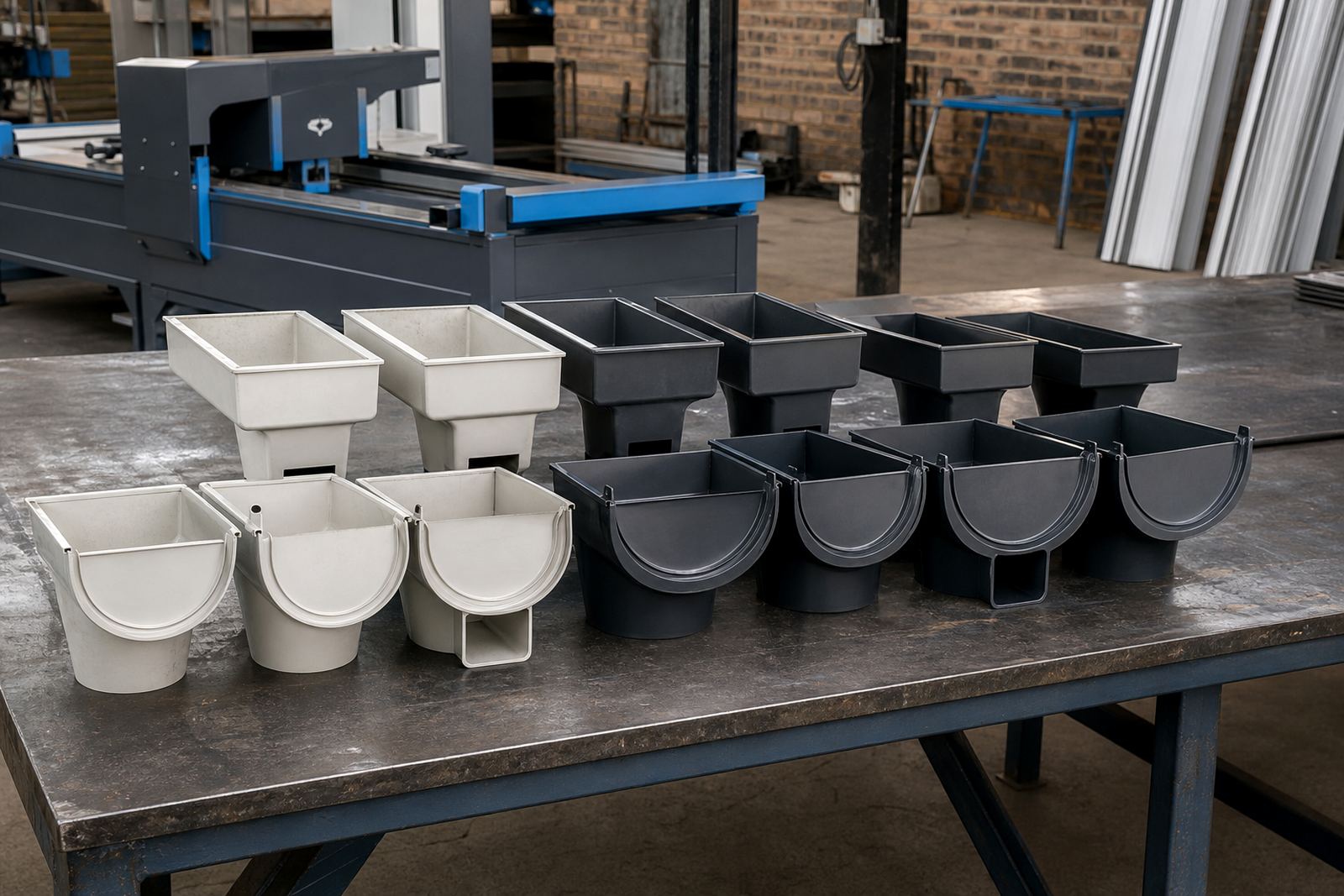
Stop ends are not a one-size item. The profile must suit the gutter shape, and the handed side must suit the end being closed off. A left-hand stop end will not sit correctly where a right-hand one is needed, so the end position on site needs checking before supply. The same applies when a run changes direction near a corner or parapet wall.
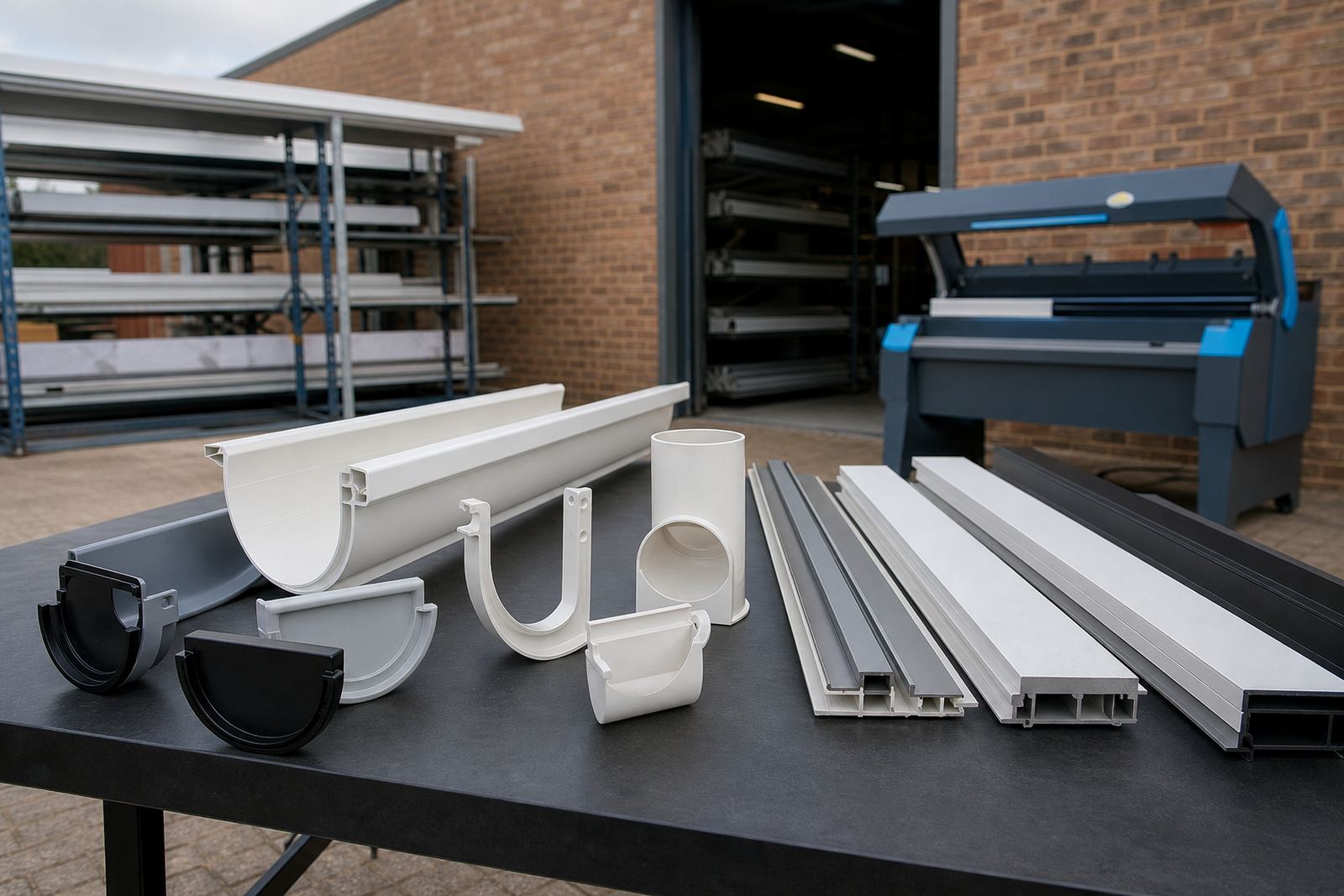
Common checks include the gutter face depth, the back height against the fascia and the lip or bead shape. If these points are off, the stop end may leave a gap or sit under tension. For composite gutter systems, the end piece is usually supplied in the same finish and form as the rest of the line so the colour and section remain consistent.
- Profile match to the gutter section in use
- Left-hand or right-hand handed end as needed
- Overall width and depth to suit the run
- Fixing style to suit the installation method
- Finish to match fascia boards and visible roof edges
Lengths and section sizes should always be checked against the actual gutter installed on the property. On larger commercial roofs, the gutter size is often selected for rain volume and roof area, while smaller residential jobs may use a lighter section but still need the correct end closure.
Where Stop Ends Are Used on Local Rooflines
Stop ends are fitted wherever a gutter run terminates. That may be at the end of a dwelling, at a change in roof line, beside a parapet wall or where a run finishes before a downpipe position. They are also used on partial runs over patios, carports, walkways and boundary structures where water is collected only on one side.
On homes in coastal towns, fittings should be checked for salt build-up and staining. In dry inland areas, dust can collect at the end corners and around seal lines, so regular inspection helps keep the run clear. On commercial and light industrial buildings, the end closure must stay firm where wind and roof movement place extra strain on the line.
- Residential eaves and patio roof edges
- Commercial awnings and boundary roof sections
- Gutter ends near corners, returns and parapets
- Replacement work on older rooflines with worn fittings
Fitting Notes for Builders and Maintenance Crews
Installing a stop end starts with a clean, true gutter end. The edge must be square and free of old sealant, corrosion, dirt or brittle material. Where the system uses a sealant or adhesive, the surfaces should be dry and properly prepared before the end cap is fixed. Mechanical fixing points must line up with the gutter profile so the closure is not pulled out of shape.
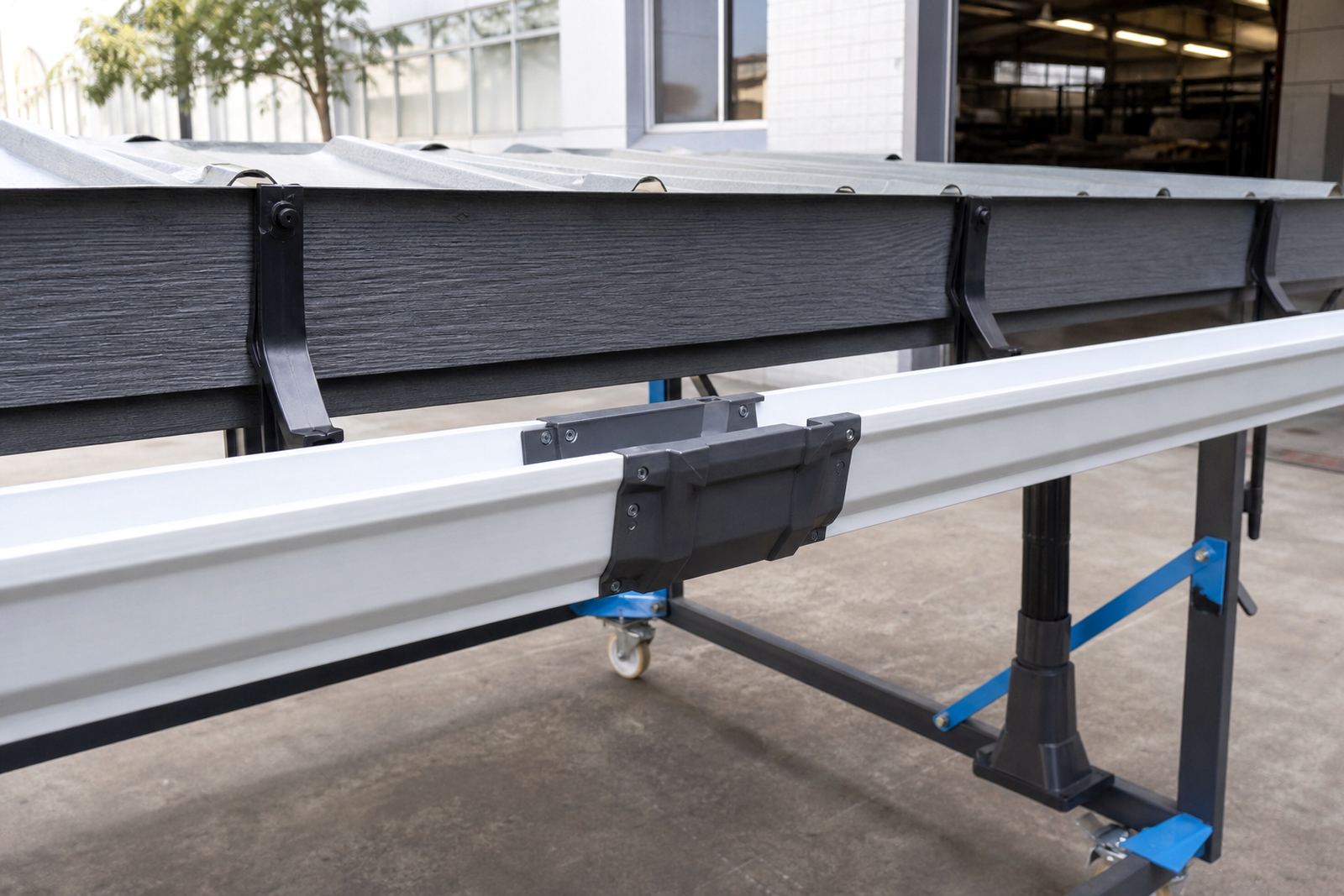
If the gutter run is long, the brackets and fall must already be correct before the end closure is fitted. A gutter that sags or twists can place pressure on the stop end and create a leak line. The downpipe position should also be confirmed so the end piece is not installed before the water route has been set out.
Work at roof level must be handled safely by competent people with the correct ladders, staging or access equipment. On steep roofs or multi-storey buildings, extra precautions are needed because a small fitting job can still involve a serious fall risk.
- Check the gutter profile and handed side before fixing
- Clean and dry the end of the gutter section
- Confirm bracket spacing and fall on the run
- Seal or fasten according to the system used
- Test for drips after the first rain or water test
Keeping the End Seal in Good Shape
Stop ends do not need much attention, but the surrounding gutter line does. Leaves, twigs, roof grit and cement dust can sit against the end closure and keep water standing at the joint. That is when small leaks often begin. A maintenance visit should include a check for movement, loose fixings and cracking around the edge.
If the roofline is close to trees, the end of the gutter can collect debris more quickly than the middle section. In windy suburbs around Johannesburg and Pretoria, fine dust can also build up around the outside face of the gutter. On a coastal property, rinsing off salt residue and checking the seal line can help the fittings last longer.
If a stop end turns brittle, warps or shows staining from overflow, replacement is usually the better choice than another patch. A proper replacement also lets the installer check the gutter fall, the nearest brackets and the outlet position.
Details to Confirm Before Supply
For the correct stop end, the profile and handed side are the first items to confirm. After that, the gutter size, colour or finish, fixing method and whether the end is for a left or right termination all need to be checked. On site, the contractor should also note whether the run ends at a fascia return, corner or open edge.
Plasteel supplies composite roofline components for builders and homeowners across South Africa, including Johannesburg, Pretoria, Durban, Cape Town and Polokwane. The right information helps avoid delays on site and keeps the gutter line consistent from one section to the next.
- Gutter profile and section size
- Left-hand or right-hand orientation
- Colour and finish to match the roofline
- Whether the fit is for new work or replacement
- Any outlet or corner detail near the end of the run
- Delivery area or collection point needed for the order
For measuring and ordering support, the team can assist with site measurements, material takeoff, product supply, installation coordination and maintenance visits across the listed service areas.
Key facts
| Product type | Stop end for gutter closure |
|---|---|
| Material | Plastic-steel composite |
| Use | Closes off the end of a gutter run |
| Fitment | Profile matched and handed left or right |
| Typical application | Residential and commercial rooflines |
| Service areas | Kya Sand, Randburg and major South African metro areas |